Auteur: Peter Boel

  • De klare lijn

    De klare lijn

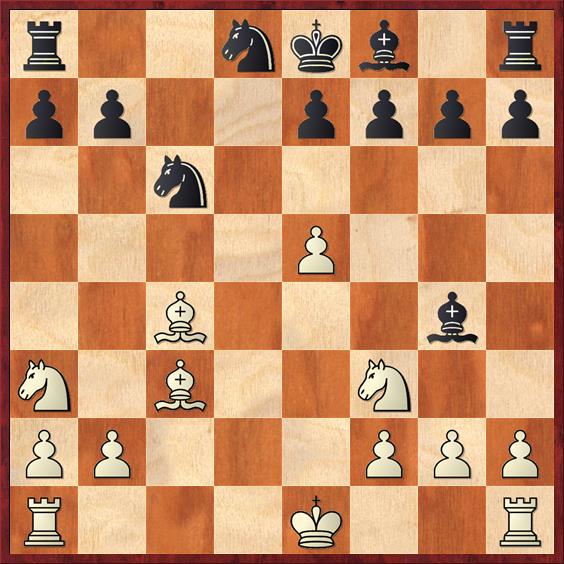
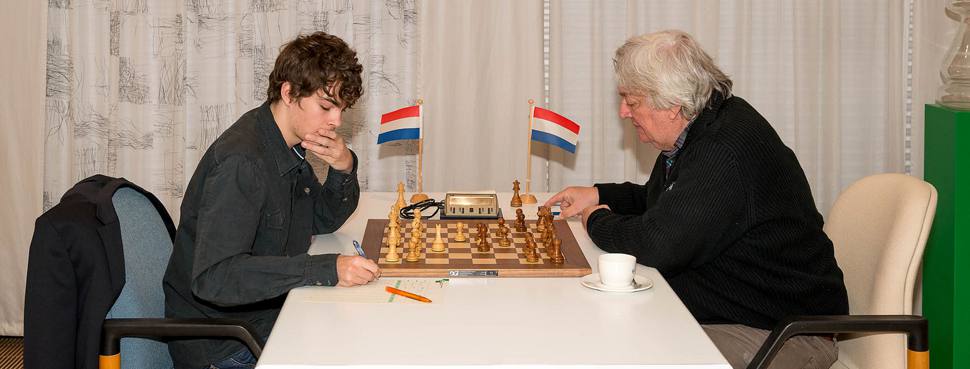
    Zagen we tijdens de vorige dagen vaak bizarre verwikkelingen, vandaag zorgden met name de meer geroutineerde spelers voor helder, strategisch spel. Het bracht Jan Timman zijn eerste volle punt tegen Jorden van Foreest.


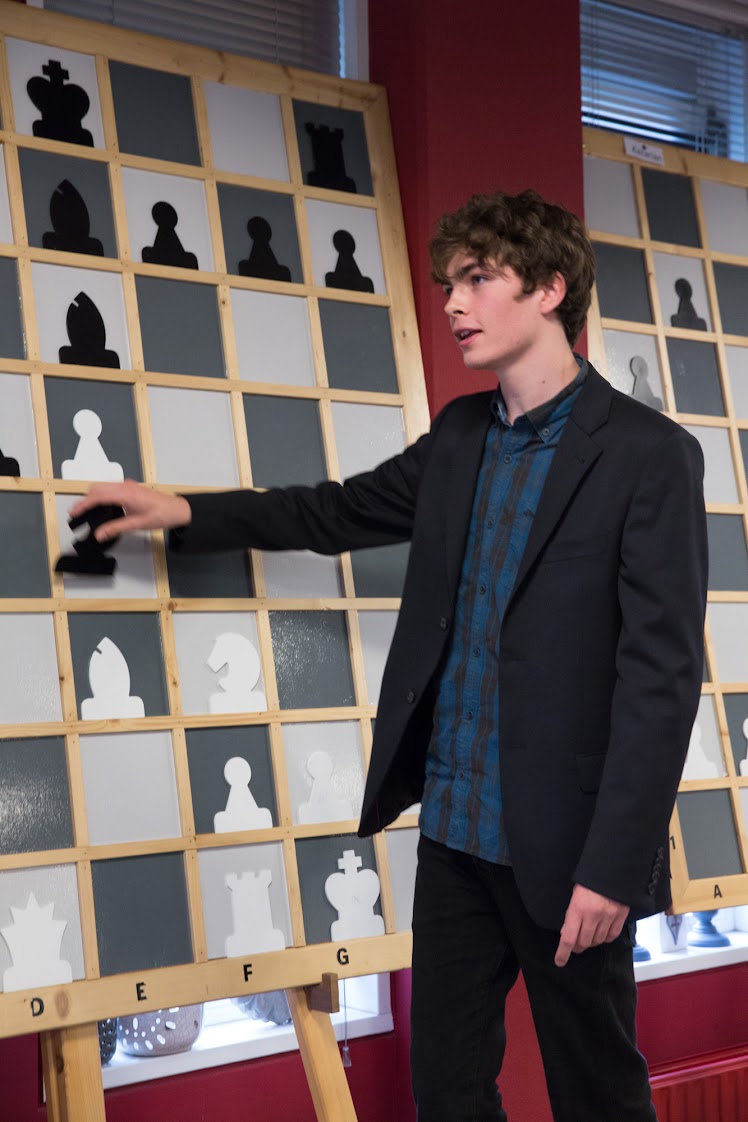
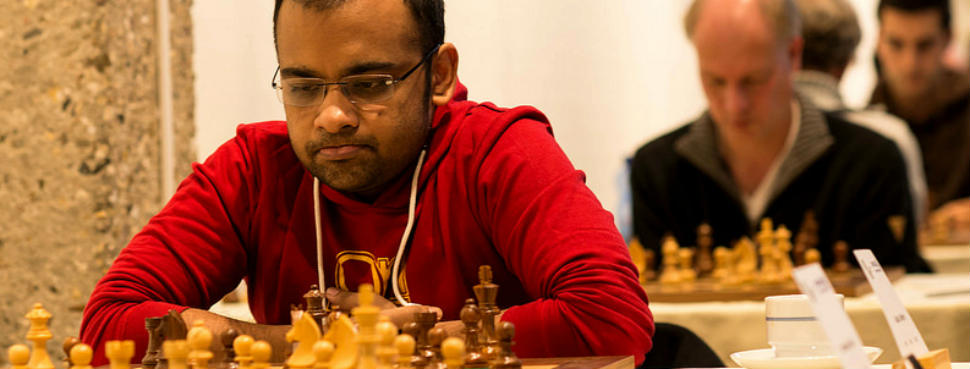
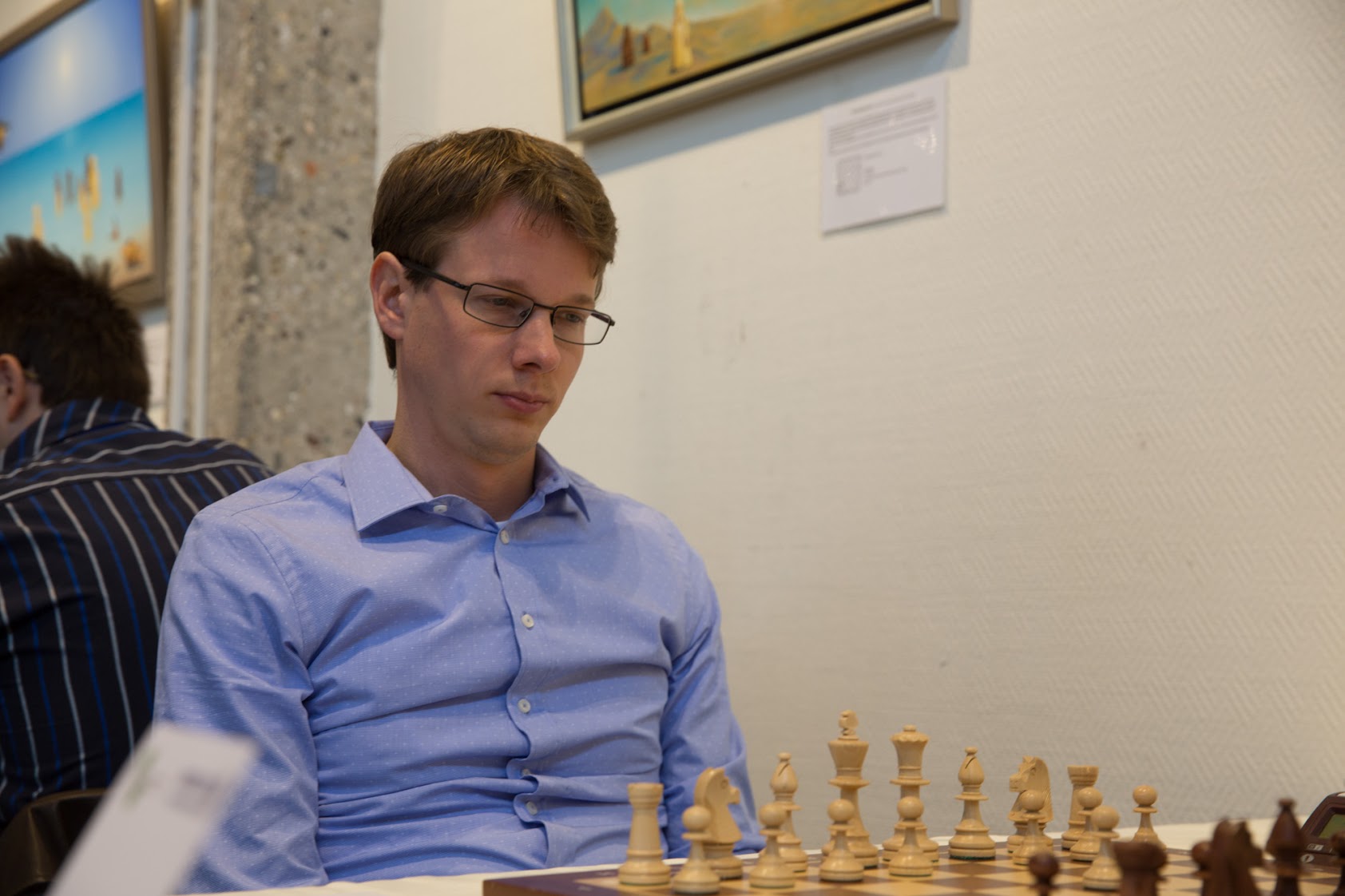
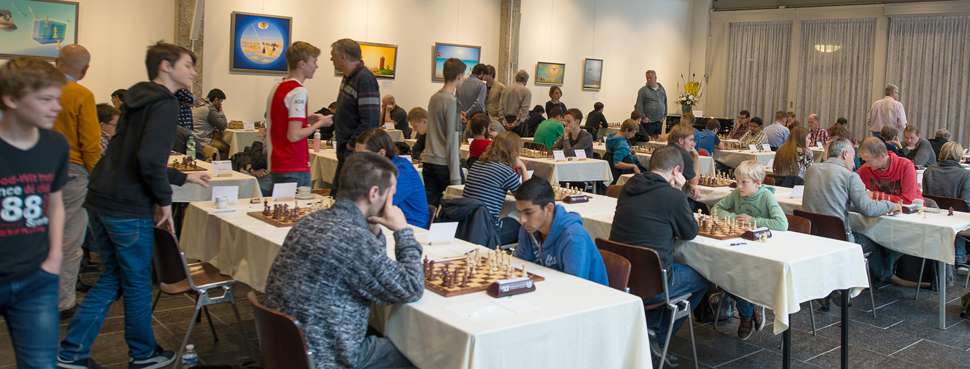
    Foto: Frans Peeters
     

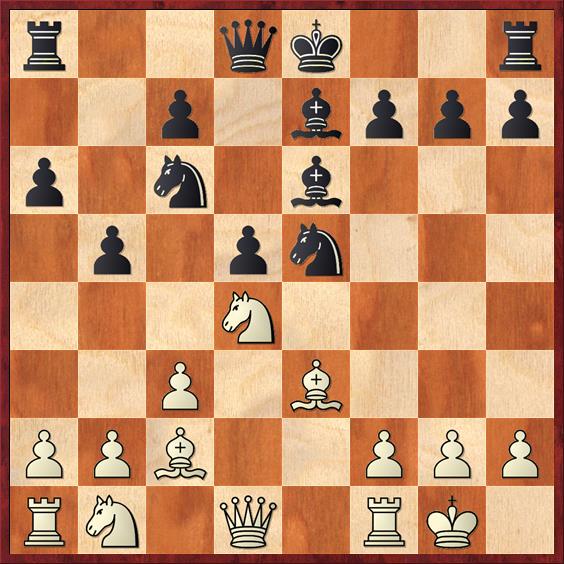
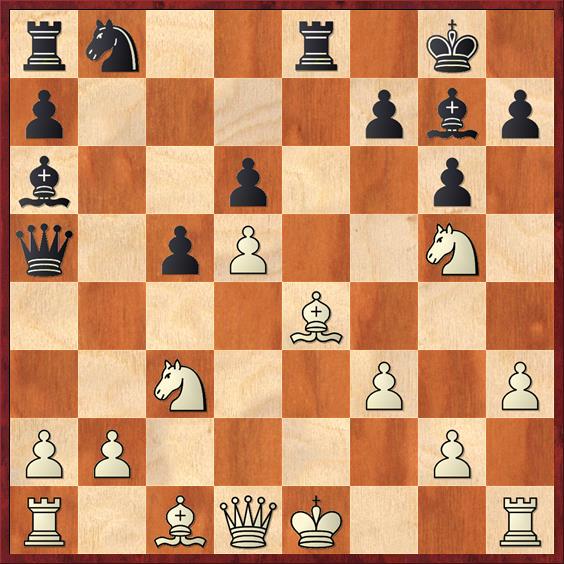
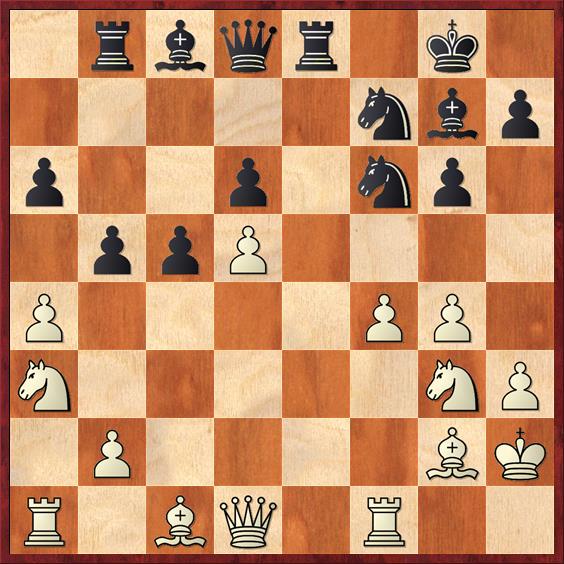
    Van Foreest – Timman

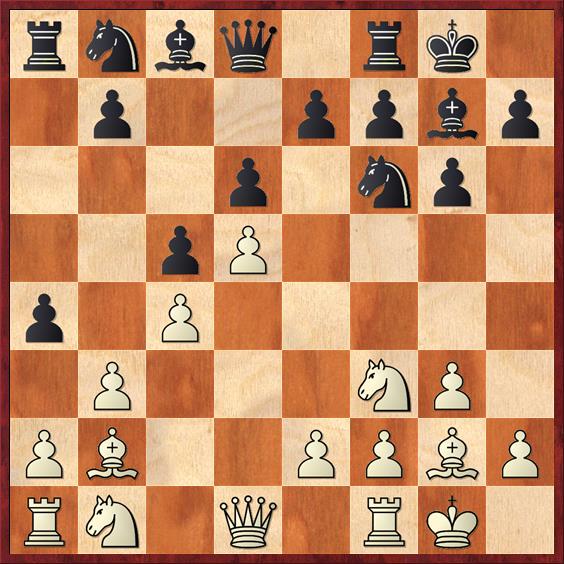
    1.e4 c6 2.d4 d5 3.e5 Lf5 4.Pf3 e6 5.Le2 Pd7 6.0–0 Pe7 7.Pbd2 h6 8.c3 Dc7

    In plaats van 8…Pg6 uit de eerste partij, waarna de zaak meteen gecompliceerd werd. “Te Jobava-achtig”, zei Timman. Hij kiest nu voor de klare lijn.

    9.Te1 c5

    “Wits 9.Te1 is goed tegen …f7-f6 en …g7-g5, maar niet tegen deze zet”, legde Timman uit.

    10.Pf1 Pc6 11.Pg3 Lg6 12.Le3 Le7 13.a3

    Timman bekritiseerde deze zet: “…c5–c4 komt toch.”

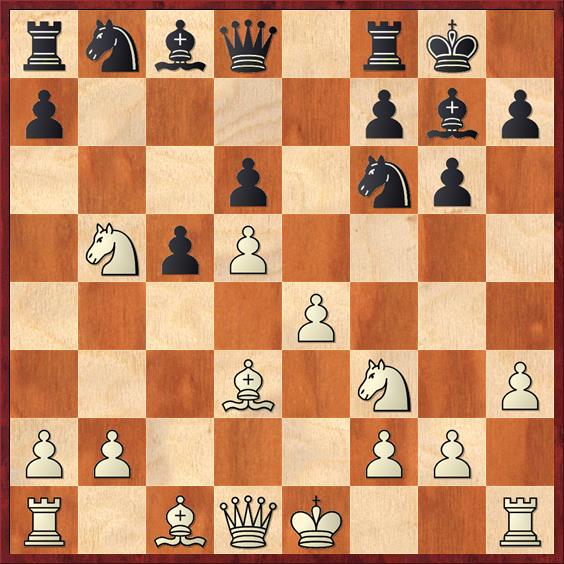
    13…c4 14.Pd2 0–0–0


    In de commentaarzaal noemde Dimitri Reinderman dit ‘een opmerkelijke zet’. Alles hangt af van de vraag of wit hier kan breken met b2-b3.

    15.f4

    15.b3 cxb3 16.Pxb3 was mogelijk een betere praktische keuze. Het spel is opener en hoewel de witte stukken nog niet goed staan voor een aanval op de damevleugel, kan het daar misschien ooit van komen. Aan de andere kant, als zwart c4 stevig in handen krijgt kan dat ook weer averechts werken.

    15…f5

    Zwart legt de stelling vast, zowel op de dame- als op de koningsvleugel. Daarna kan hij gaan aanvallen over de g- of h-lijn.

    16.Tb1

    Achteraf werd hier 16.exf6 gesuggereerd, om de partij een andere wending te geven. “Maar zwart slaat met de pion terug, speelt …f6–f5 en zet zijn paard op e4”, zei Timman.

    16…Pb6 17.Pgf1

    17.b3 gaat nu ook niet goed op: 17…cxb3 18.Pxb3 Pc4 19.Lxc4 dxc4 20.Pd2 Pa5.

    17…Kb8 18.Lf2 Le8!


    Nu beheerst zwart het hele bord. …g7-g5 komt eraan en deze loper kan ook naar a4. Dit idee had Van Foreest gemist.

    19.Pe3 g5 20.g3 Pa5 21.Lf3 La4 22.De2 Tdg8 23.fxg5

    Opent de h-lijn voor zwart. Achteraf vonden de spelers het afwachtende 23.Kh1 beter, waarna het nog niet makkelijk is om erdoorheen te komen.

    23…hxg5 24.g4 f4 25.Pef1 Le8 26.Dd1 Lg6

    Pakt nog eens een mooie diagonaal. Timman voelde zich kiplekker in deze stelling.

    27.Ta1 Ld8 28.Dc1 Th6


    29.Kh1

    Timman opperde hier nog 29.h4!? zodat wit in ieder geval niet ge-h-lijnd wordt. Het had waarschijnlijk uitstel van executie betekend.

    29…Tgh8 30.Lg1 Dh7 31.Te2 Th3 32.Lg2 Th4 33.Lf3 Th3

    Even de zetten herhalen, hoewel het Van Foreest was die hier in tijdnood was.

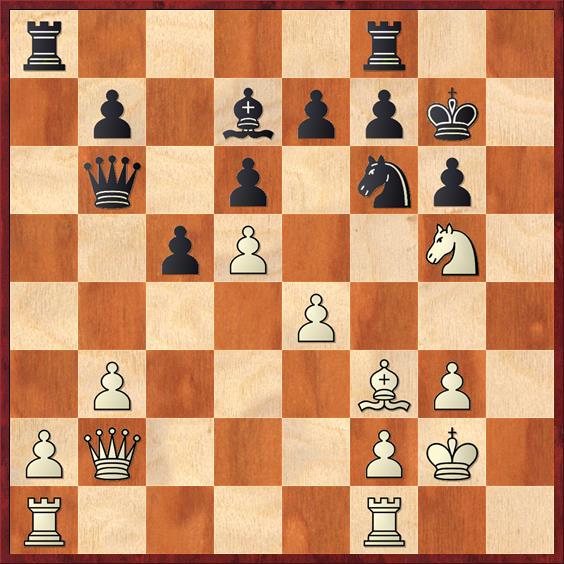
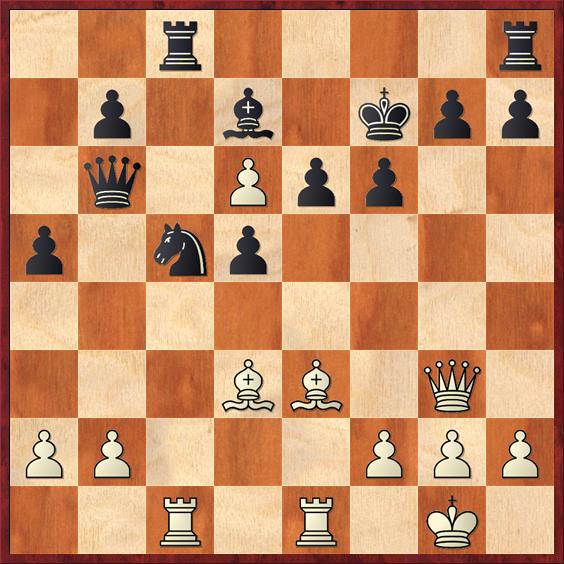
    34.Lg2 Ld3 35.Tf2 Pb3!

    Nu komt het van alle kanten.

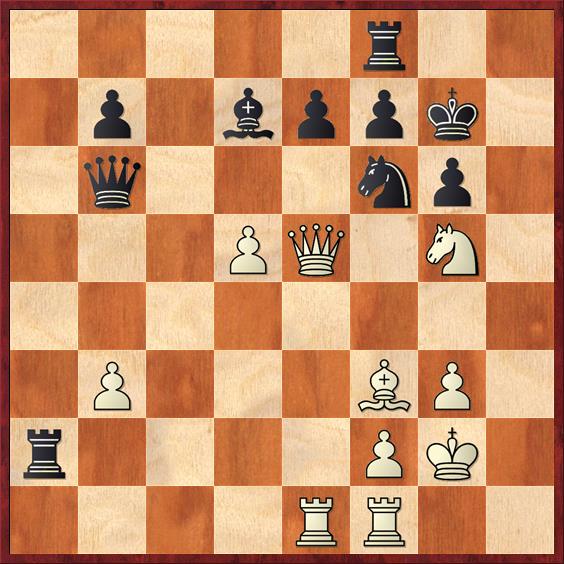
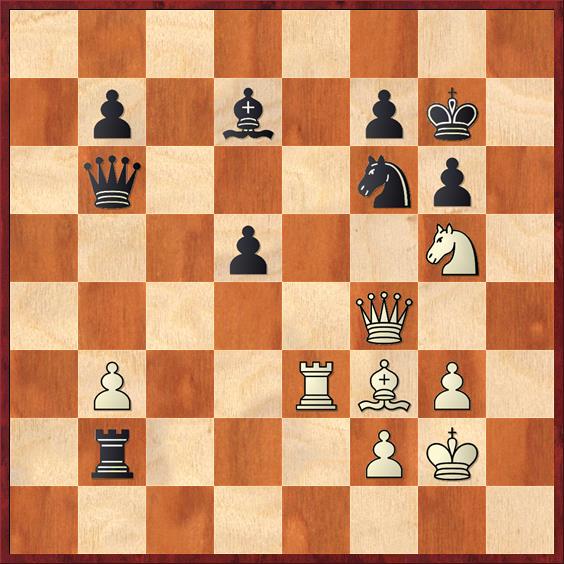
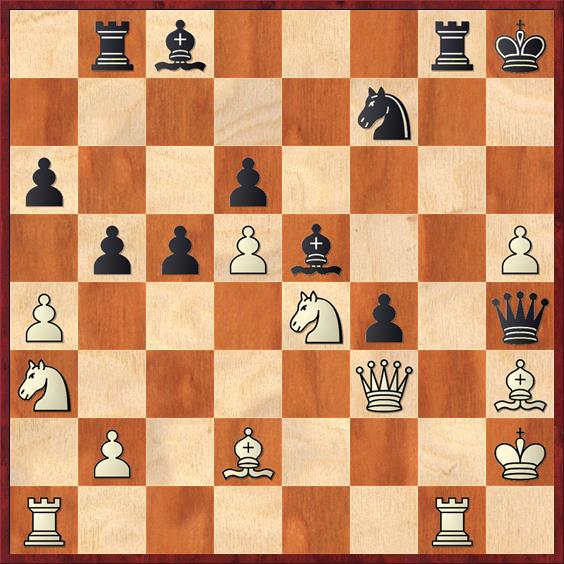
    36.Pxb3 cxb3 37.Dd1 Pc4 38.Dxb3 Pe3


    Eindelijk is h2 niet meer te handhaven.

    39.Db4 Pxf1 0–1


    Foto: Frans Peeters

    En ook Sopiko Guramishvili koos voor een ‘change in strategy’. Het leverde haar meer werk op, maar wel opnieuw een vol punt. Bemoedigend voor Anna-Maja Kazarian was dat ze lang sterk weerwerk bleef leveren.

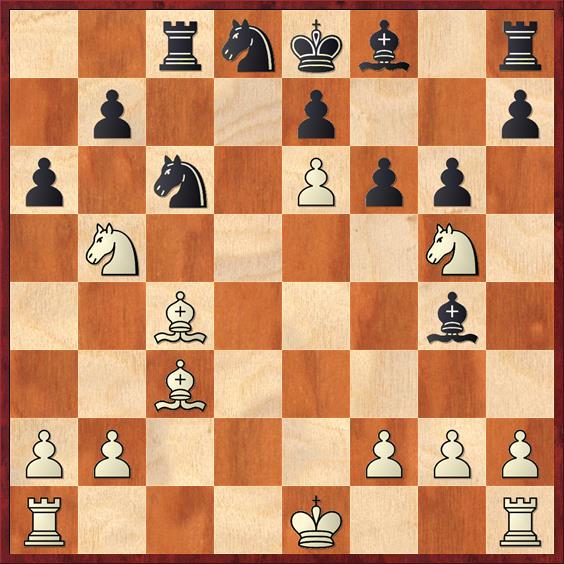
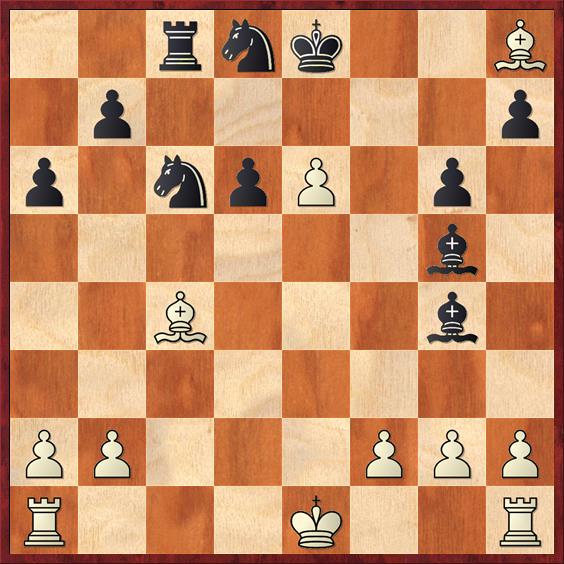
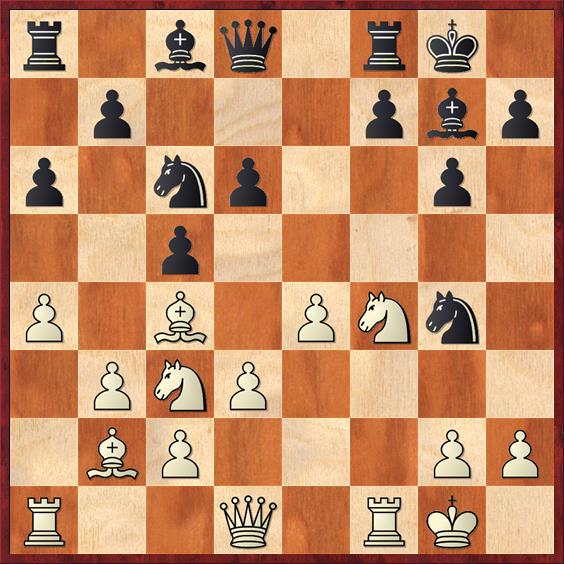
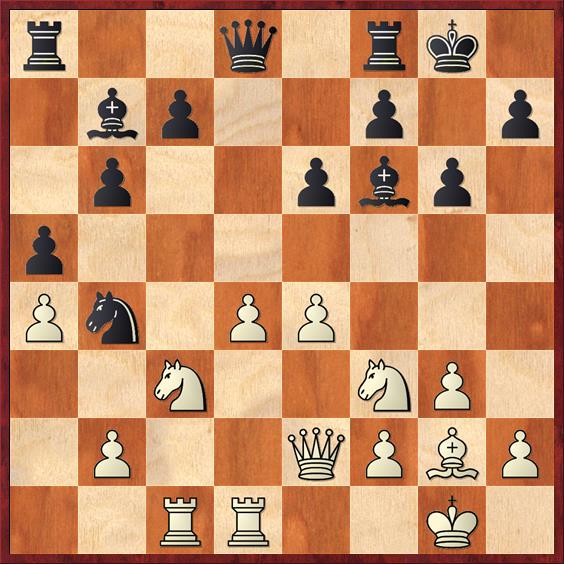
    Guramishvili – Kazarian

    1.d4 d5 2.c4 c6 3.Pf3 Pf6 4.e3 e6 5.b3

    De structurele aanpak. In de eerste partij speelde Miss Tactics 5.Pc3 en g2–g4. Kazarian zal daar iets op bedacht hebben, maar Guramishvili is haar voor.

    5…Pbd7 6.Ld3 b6 7.0–0 Lb7 8.Lb2 Le7 9.Pc3 0–0 10.Dc2 h6 11.Tfd1 Tc8 12.Tac1 Dc7 13.De2!


    13…Tfd8?

    Niet goed, volgens de witspeelster: “Normaal speelt zwart hier 13…Db8 . Nu heb ik een voordelige afwikkeling vanwege de penning over de c-lijn.”

    14.cxd5 exd5 15.Lf5 g6

    Zet de loper op een iets ongunstiger veld, maar verzwakt ook haar koningsstelling licht.

    16.Lh3 Lb4

    Om betere controle over e4 te krijgen, maar nu komt het witte paard met kracht op e5.

    17.Pe5 Lxc3 18.Txc3 Dd6

    Zwart wil zich loswurmen met …Tc7. Het gewelddadige 18…Pe4 ging niet, want na iets als 19.Tc2 is er geen 19…f5 omdat pion g6 hangt. Nu dreigt dat wel.

    19.f3 Tc7 20.Pxd7

    Jammer van het actieve paard, maar direct 20.e4 dxe4 21.fxe4?? is niet zo goed wegens 21…Pxe5.

    20…Pxd7 21.e4 Te8 22.Te3

    22.Lc1! zag er ook sterk uit. Kazarian toont nu, voor het eerst in deze match, haar taaiheid en blijft lang in de partij.

    22…Pf8 23.e5 De7 24.f4 f5 25.g4 Lc8


    26.gxf5

    “Misschien heb ik de stelling te vroeg geopend”, bedacht Guramishvili zich. Maar hoe komt wit anders verder? Na iets als 26.Tg3 reageert zwart met 26…Df7 en dreigt ze zelf op g4 te slaan. Er volgt nu een manoeuvreerfase waarin wit niet echt verder komt.

    26…Lxf5 27.Lxf5 gxf5 28.Dh5 De6 29.Tg3+ Tg7 30.Kf2 Txg3 31.hxg3 Dg6 32.Df3 Pe6 33.Tc1 Pc7 34.Dc3 Te6 35.Dd3 h5 36.Th1 Df7 37.a4 Th6 38.Dc2 Dg6 39.La3 Pe8 40.Le7 Th7 41.Lg5 Tc7


    42.g4!

    Een aantrekkelijke zet. Zwart kan natuurlijk niet nemen, maar ze blijft staan.

    42…Pg7 43.gxh5 Pxh5 44.Tg1 Tg7 45.Dd1

    “Ik dacht dat zwart hier zo’n beetje in zetdwang was”, zei Guramishvili, “maar het is niet zo eenvoudig.”

    45…Kf7 46.Ke3 Ke6 47.Dc1 De8 48.Da3


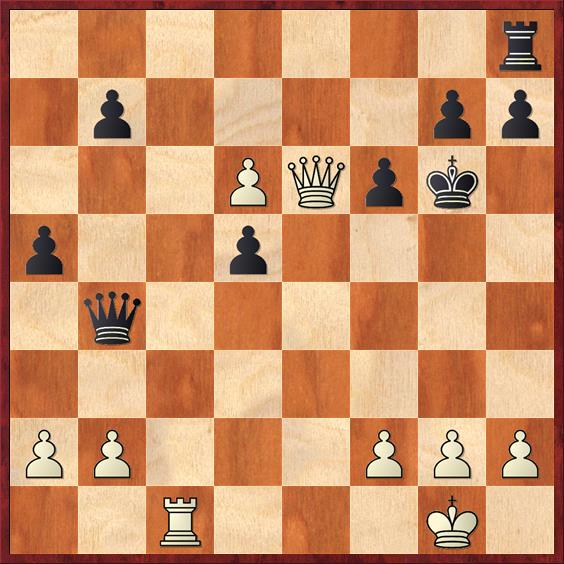
    48…c5!

    Voor deze zet had Guramishvili wel waardering. “Een interessante zet, waarmee ze een pion geeft voor tegenspel.”

    49.dxc5 d4+ 50.Kf2

    50.Kxd4?? Pxf4! is helemaal mis.

    50…Dc6 51.b4?!

    Met het subtiele 51.Da2! kon wit voordeel behouden, bijvoorbeeld 51…Dxc5 52.b4+ Dd5 53.Dxd5+ Kxd5 54.Th1 Th7 55.Th4 en de vrije e-pion is een grote handenbinder voor zwart.

    51…bxc5

    Afgekeurd door Guramishvili: “Beter was 51…Dd5 om de spanning erin te houden, met …d4–d3 enzovoort.”

    52.bxc5


    52…Tb7?

    Opnieuw 52…Dd5 was de beste kans.

    53.Tc1!

    Misschien nog sterker was 53.Te1! gevolgd door 54.Da2+, dameruil en doorlopen met de e-pion.

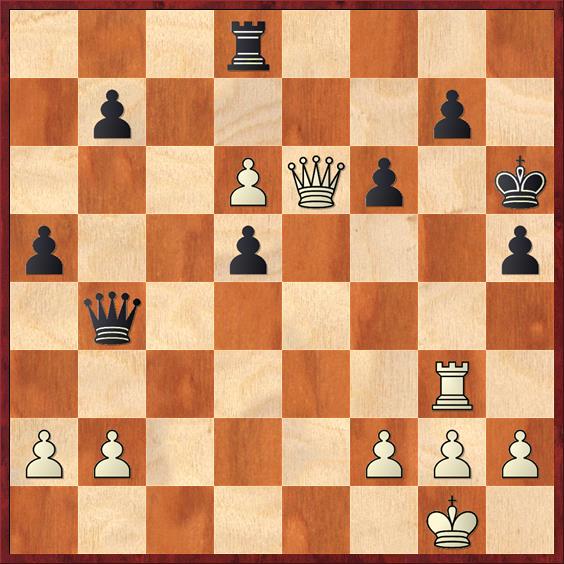
    53…Td7?

    “Deze was echt niet goed”, zei Guramishvili. Nu wint wit achter elkaar. 53…Pg7 was nodig: wit moet dan 54.Lh6 of 54.Dd3 proberen (54.Dh3? Tb2+).

    54.Db3+ Dd5

    54…Td5 55.Th1.

    55.Db8! Da2+ 56.Kg1 Dd2


    57.Dg8+

    Het ziet er nog gevaarlijk uit, maar de zwarte koning bevindt zich al in een matnet.

    57…Tf7 58.De8+ Kd5 59.Da8+ Tb7

    59…Ke6 60.Dc6#.

    60.Dxb7+ Ke6 61.Db3+ Kd7 62.c6+

    En Kazarian gaf op, net voor de matzet.

  • Contingency abounds

    Contingency abounds

    We are not halfway through the matches yet. Anything can still happen. But just like her husband Anish Giri last year against Alexey Shirov, Sopiko Guramishvili has struck mercilessly in the first two days. The struggle between Jorden van Foreest and Jan Timman is still balanced, but today too, the game was subject to seismic swings.

    Timman – Van Foreest

    1.Nf3 Nf6 2.g3 d5 3.Bg2 c6 4.c4 Bg4 5.Ne5 Be6 6.b3 Nbd7 7.d4

    A very logical move, but in this position it is a novelty. The beaten paths haven’t yet been trodden in the wedding room of the town hall.

    7…Nxe5!?

    This looks debatable. More logical was 7…g6 followed by 8…Bg7 and kingside castling.

    8.dxe5 Nd7 9.cxd5 Bxd5 10.e4

    I may have underestimated this a bit’, said Van Foreest.

    10…Be6 11.f4

    11…f5!?

    In the commentary room, 11…f6 was suggested. After 12.f5 Bxf5!? (the computer gives 12…Bg8 here, which is undoubtedly the best move) 13.exf5 Qa5+ 14.Kf1 Qxe5 15.Qc2 Black doesn’t have enough for the piece.

    However, 11…Nc5 looks more logical.

    12.Be3 Qa5+ 13.Qd2 Qxd2+ 14.Nxd2

    Now White gets a mighty centre.

    14…fxe4 15.Bxe4 Nb6 16.0–0 Bd5

    What went wrong for White? Van Foreest couldn’t give anything concrete after the game. ‘Maybe in this phase he should already have exchanged less pieces’, he suggested.

    17.Bxb6 axb6 18.Bxd5 cxd5 19.e6

    This looks very strong too, ‘but maybe it’s not so bad’, Van Foreest said.

    19…g6 20.Nf3 Bg7 21.Rac1 0–0 22.Rc7 Bf6

    With that pawn on e6, Van Foreest didn’t want to give up his own e-pawn. But here also, 22…Rxa2 23.Rxe7 Re2 was possible.

    23.a4 Rad8


    24.Rxb7

    It’s hard to imagine that this could be wrong, but 24.Ne5 looks more powerful, for example: 24…Rd6 (after 24…Bxe5 25.fxe5 Rfe8 26.Rxb7 Black is rather squeezed to death) 25.Nd7 Ra8 (25…Rd8 26.Re1) 26.Nxf6+ exf6 27.f5! gxf5 28.Rxf5 with strong pressure along the seventh rank.

    24…Rd6 25.Re1 Rc8

    Now Black has protected everything, and he is ready to start counterplay.

    26.g4?!

    This does little but weaken the f4-pawn, and with hindsight, Timman was not satisfied with this move.

    In the commentary room, Jorden thought that 26.Rd7 would have been White’s best chance: he had considered 26…Rxd7 (26…Kf8! looks like a good defence – Black will lay siege on the e6-pawn, possibly with …Ke8) 27.exd7 Rd8 28.Ne5 (the direct 28.Re6! is also problematic for Black; the passed a-pawn becomes strong) 28…Bxe5 29.Rxe5 Rxd7 30.Re6 and this endgame is highly unpleasant for Black.

    26…Bc3! 27.Rd1 Rxe6 28.Rxd5 Re4 29.Kg2 Rxf4 30.Kg3!?

    In fact this comes down to an exchange sacrifice.

    30…Rcf8 31.Rd3 Bb4 32.Rxb6 Bd6


    33.Rbxd6

    Clearly forced.

    33…exd6 34.Ng5 Rb4 35.Ne6

    Van Foreest thought he had played badly after this.

    35…Re8?

    35…Rc8 keeps a better check on the knight.

    36.Nc7 Re1?

    This was the worst possible move’, Van Foreest said. ‘I wanted to play 37…Rg1+ and 38…Rxg4, but I had missed the fork on f6.’

    37.Nd5 Rb7 38.b4 Ra1

    Now it’s already equal, even though it still looks tense. Van Foreest offered a draw, and this was accepted by Timman, whose faced had turned a little red by now.


    Already early in the afternoon Anna-Maja Kazarian was looking at a ruin on the board, and there was nothing she could do about it anymore. Still, after the game she kept a brave face: ‘There’s still four games to go.’

    Kazarian – Guramishvili

    1.e4 c5 2.Nf3 e6

    A surprise for Kazarian. Until now Guramishvili had always played the Najdorf. We had to ask: was this Anish’s doing? ‘Could be’, is Guramishvili’s answer in such cases.

    3.d4 cxd4 4.Nxd4 Nc6 5.Nb5 d6 6.c4 Nf6 7.N1c3 a6 8.Na3 Be7 9.Be3!?


    A tad better is fast development with 9.Be2 and kingside castling. Guramishvili’s reaction is very alert:

    9…Qa5! 10.f3?!

    10.Qd2.

    10…0–0

    Here already, 10…d5 was quite interesting. Guramishvili keeps the move up her sleeve for a while – with devastating effect.

    11.Qd2 Rd8 12.Rd1?


    After this mistake things immediately go horribly wrong for White. Guramishvili had looked at 12.Qf2 Nd7, or even 12…Re8 13.Bb6 Qb4 ‘or another square. Her pieces are still misplaced.’

    12…d5!

    Of course. Now this breakthrough has enormous consequences. First of all any move with the d-pawn is threatened.

    13.cxd5

    13.Qf2 Bxa3 14.Bb6 Qb4 15.Bxd8 Bxb2 also turns out bad for White.

    13…exd5 14.Nxd5

    14.exd5 Nxd5 and everything is hanging, for example: 15.Nxd5 Bb4 – which, by the way, would have been better than the game, but an extra exchange is also sufficient for the point.

    14…Bb4 15.Qxb4 Nxb4 16.Bb6

    This only looks picturesque.

    16…Nd3+ 17.Ke2 Nf4+ 18.Kf2 Rxd5 19.Bxa5 Rxd1

    And Black had a full extra rook. Kazarian played on for a bit, to recover from the shock, and then resigned. ‘This was quite shocking’, she said afterwards. ‘Tactically, Sopiko is simply very strong. Maybe I will have to play more strategically in the last four games
’ The Georgian player doesn’t carry the nickname ‘Miss Tactics’ for nothing: ‘That’s women’s chess’, she laughed. ‘Anything can happen.’

  • Vishnu seizes his chance

    Vishnu seizes his chance

    Because the three leaders drew their games (the rivals Sengupta and l’Ami with each other, and Debashis against Benjamin Bok), Vishnu Prasanna became the co-leader with an outstanding victory over Jaan Ehlvest, who doesn’t have an easy time in this tournament so far. The Indian player, now also on 3œ points, played a very strong game against Ehlvest’s Aekhine Defence.
     

    Vishnu – Ehlvest


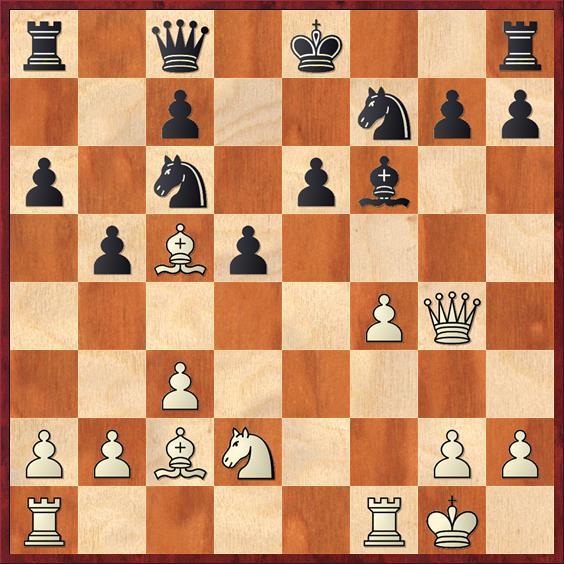
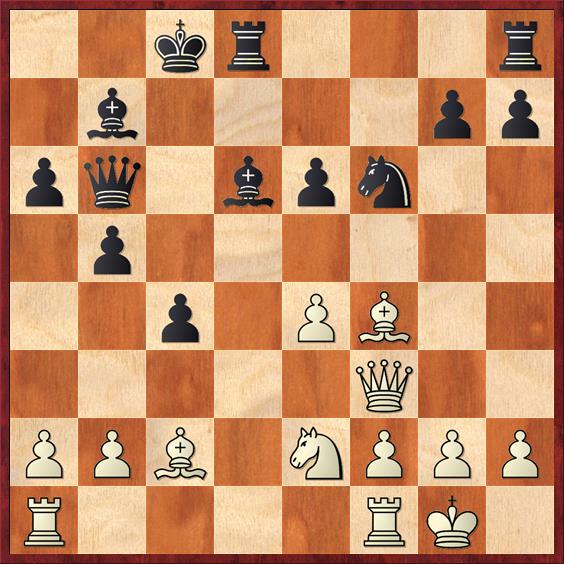
    Black has some problems with his king. If he castles, then Bxh6 is in the air. So:
     
    25…h5 26.Bf5 0–0 27.Qd3!


    The problems are mounting. If Black protects the bishop with 27…Qe8 then White does not have to take on g6 right away – 28.Bd2! is even more clever, with the threat of 29.Bb4, e.g. 28…Qd7 29.b4! and after this it’s time to take on g6.
     
    27…c5 
     
    A desperate bid for activity.
     
    28.Bxg6 fxg6 29.dxc5 Rxf2 30.Bxf2! 
     
    Not the automatic 30.Rxf2? d4! and it’s equal again.
     
    30…bxc5 31.Qxd5 
     
    And later on White won a few more pawns. Despite Ehlvest’s tenacious defence, Vishnu finished the job neatly.


    On 5th board, Rajpara Ankit and Sipke Ernst agreed a draw fairly quickly. Huh… Ernst? A quick draw?


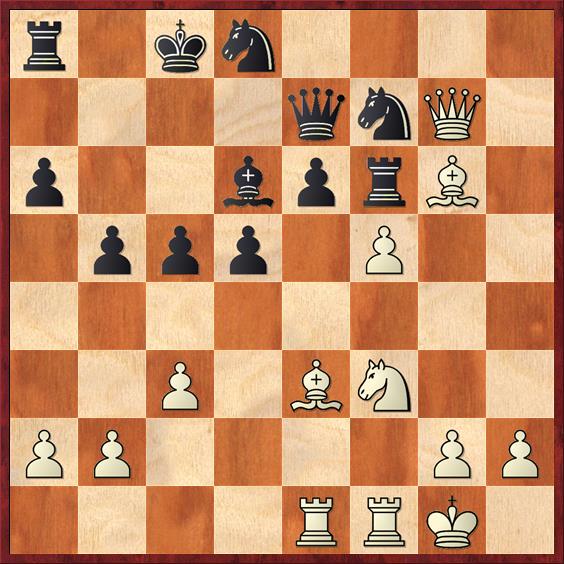
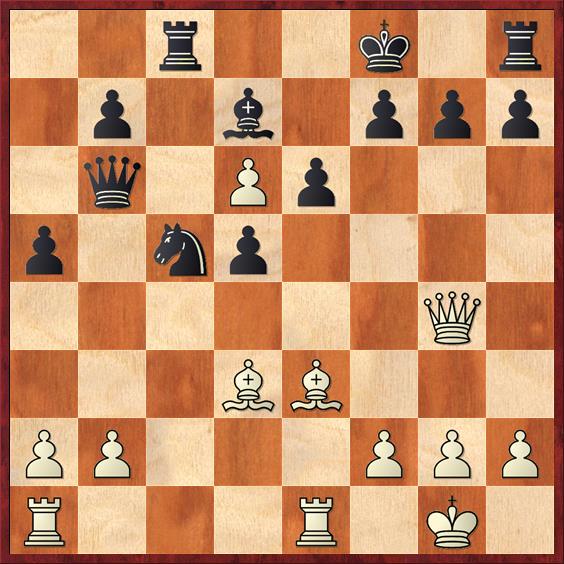
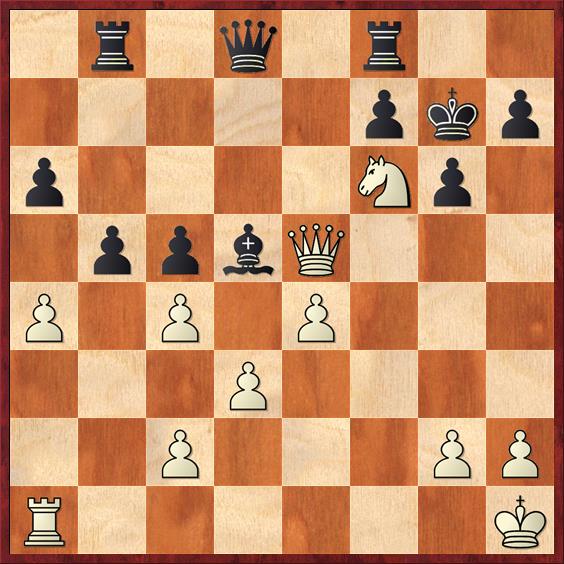
    Ankit – Ernst

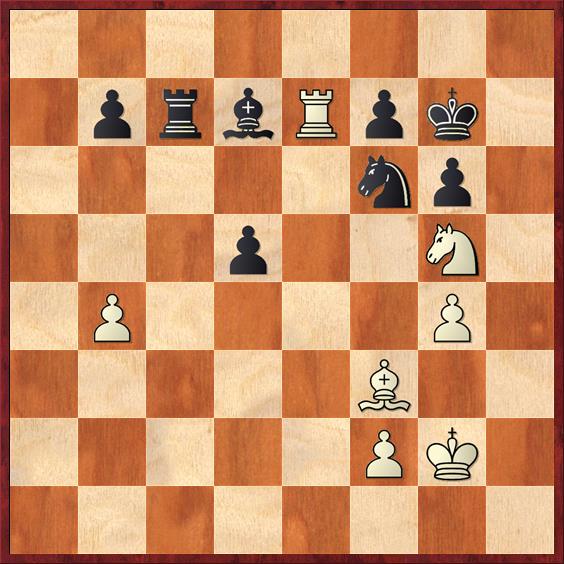
    In this position Ernst offered a peace treaty. Happy with this good result against 60 extra Elo points, Ankit accepted. But of course Ernst’s offer hadn’t been for nothing. In the pressroom he said that he had seen 18.d5 Bd7 19.Bxh6! coming. After 19…gxh6 20.Qxh6 the threat of 21.Nf5 is deadly, because the knight on f6 is hanging. If Black protects it with 20…Qd8 then there follows 21.axb5! Qe7 (he couldn’t take back with the pawn immediately in view of 22.Rxa8 Qxa8 23.Nf5) 22.Nf5 Qf8 (22…Bxf5 23.exf5 Nf4 24.Qg5+ Kh8 25.Ra4! Ng8 26.bxa6 with 4 pawns and an overwhelming position for the piece) 23.Qxf8+ Rxf8 24.Rxa6, also with 4 pawns and beautiful play for the piece.

    One of the most striking names in the enormous contingent of three-pointers is Iozefina Paulet. Today she played a wonderful game against the former winner of the Leiden Chess Tournament (2014).

    Das Arghyadip – Paulet


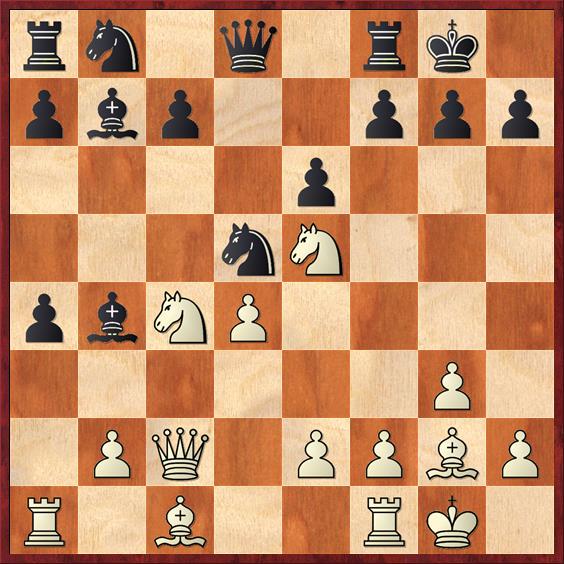
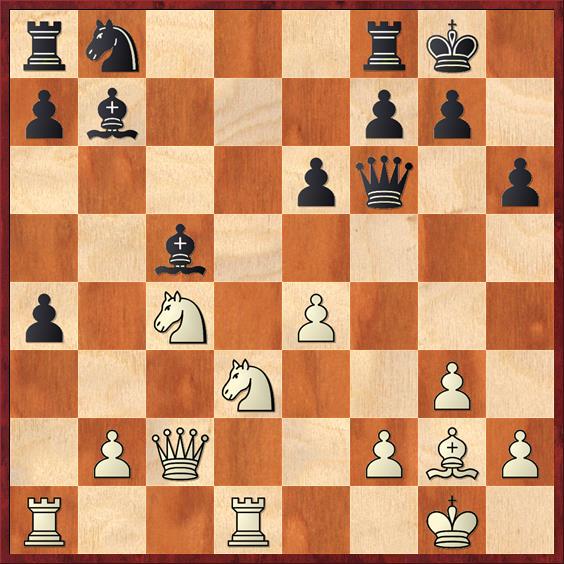
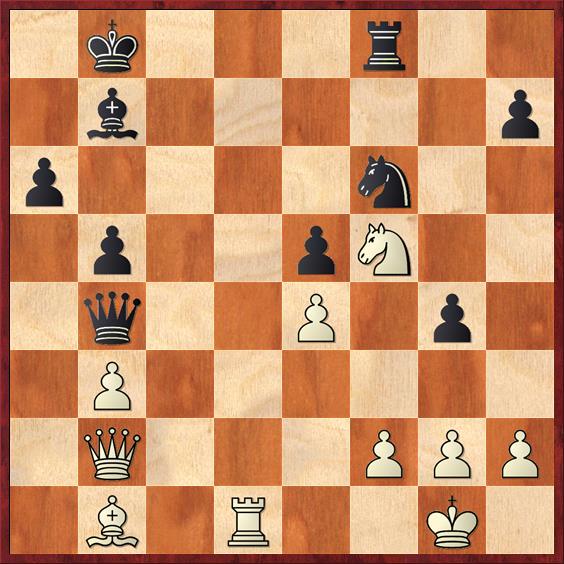
    Paulet has skillfully built up her Sicilian attack on White’s king on the queenside, and now she strikes:

    33…Rc3! 34.Rd3

    The opening of the diagonal has of course disastrous consequences after 34.bxc3 Nxc3+.

    34…Rxd3 35.Qxd3 Qg1 36.Qe4 Nxb2 37.Re1

    What else?

    37…Na4!


    38.Bd2

    38.Rxg1 Nc3+ 39.Ka1 Nxe4+ 40.Bb2 Rxc2 is game utterly over.

    38…Nc5 39.Qf4 Qg2 40.Nxc5 dxc5 41.c4 Qxh3 42.Re3 Qd7 43.d6


    43…Qa4

    Oh… White actually thought that the black attack was over.

    44.Bc1 Bd4 45.Bb2 Bxe3 46.Qxe3

    46.Qe5? Bd4.

    46…Qd1+ 47.Ka2 Qxd6 48.Qc3 Qd4 49.Qc2 Qe3

    And the counterattack along the long diagonal did not get off the ground:

    50.Bc1 Qe5 51.Bb2 Qxg5 52.Qc3 f6 53.Qf3 Rf8 0–1


    Another surprising three-pointer is Stijn Gieben. In a far queenless middlegame his pieces suddenly cooperated in a miraculous way against Luuk van Kooten, who has almost 400 Elo points more.

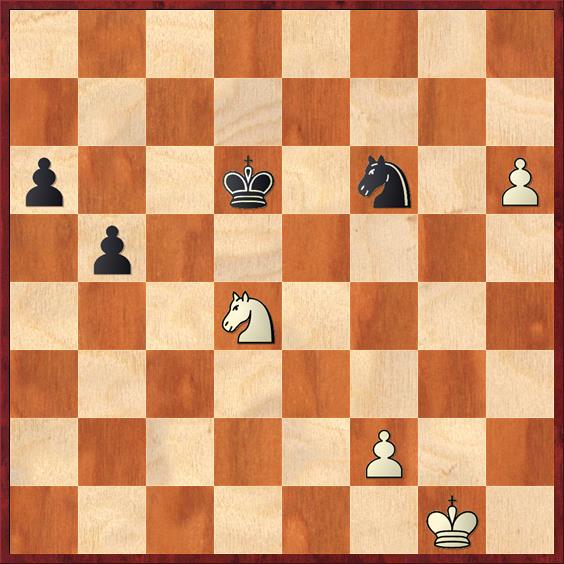
    Gieben – Van Kooten


    37.Ra7+ Kb8?

    37…Kc8 38.Ra8+ is equal.

    38.Rxd7! Nxd3

    38…Rxd7 39.Bxe5+ Kc8 40.Nxf4 and now the bishop on d3 is also covered again!

    39.Rxe7 Nf2+ 40.Kg1 Rd1+ 41.Ne1 Nxe4


    42.f6?!

    White could have won two more pawns in a very funny way by 42.Bxe5+ Kc8 43.Bxg3! Nxg3. Now the Ne1 is protected again, and so 44.f6 will follow. But the text move also wins.

    42…Nxc3 43.f7 Rxe1+ 44.Kg2 Re2+ 45.Kxg3 Re3+ 46.Kxg4 Re4+ 47.Kg5 Rf4 48.Re8+ Kc7 49.f8D


    And with his active king and rook, White prevailed in the ending.

  • Vishnu klampt aan

    Vishnu klampt aan

    Doordat de drie koploper remise maakten (de rivalen Sengupta en l’Ami tegen elkaar, Debashis tegen Benjamin Bok) kwam Vishnu Prasanna mede op kop via een uitstekende zege op Jaan Ehlvest, die het niet makkelijk heeft in dit toernooi. De IndiĂ«r, nu dus ook op 3œ, speelde een ijzersterke partij tegen Ehlvest’s Aljechin Verdediging.


    Vishnu – Ehlvest


    Zwart heeft wat problemen met zijn koning. Als hij rokeert, hangt Lxh6 in de lucht. Dus:

    25…h5 26.Lf5 0–0 27.Dd3!


    De problemen stapelen zich op. Als zwart dekt met 27…De8 hoeft wit niet direct op g6 te slaan – 28.Ld2! is nog iets slimmer, met de dreiging 29.Lb4, bv. 28…Dd7 29.b4! en hierna wordt het tijd om op g6 te slaan.
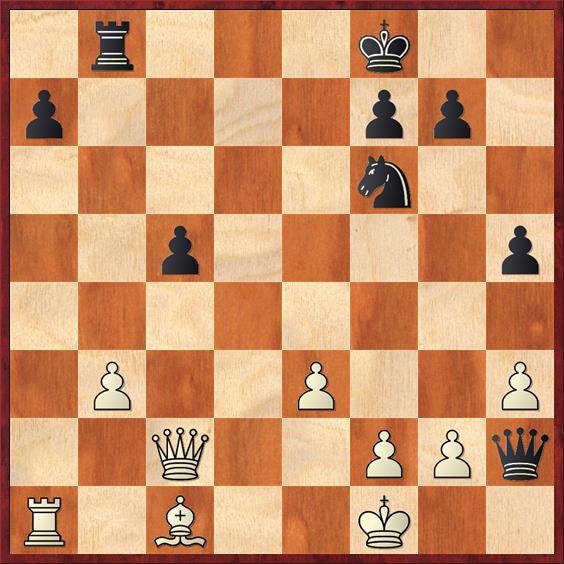
    27…c5

    Een wanhopige poging tot activiteit.

    28.Lxg6 fxg6 29.dxc5 Txf2 30.Lxf2!

    Niet het automatische 30.Txf2? d4! en het is weer gelijk.

    30…bxc5 31.Dxd5

    En later won wit nog meer pionnen. Ondanks taai verweer van Ehlvest maakte Vishnu het netjes af.


    Aan bord 5 werd vrij snel remise overeengekomen tussen Rajpara Ankit en Sipke Ernst. Huh… Ernst? Een snelle remise?


    Ankit – Ernst

    In deze stelling stelde Ernst vrede voor. Blij met dit goede resultaat tegen 60 Elopunten meer accepteerde Ankit. Maar het aanbod van Ernst was natuurlijk niet voor niets. In de perskamer vertelde hij dat hij 18.d5 Ld7 19.Lxh6! had zien aankomen. Na 19…gxh6 20.Dxh6 is de dreiging 21.Pf5 dodelijk omdat het paard op f6 hangt. Dekt zwart dat met 20…Dd8 dan volgt 21.axb5! De7 (direct met de pion slaan kon niet wegens 22.Txa8 Dxa8 6.Pf5) 22.Pf5 Df8 (22…Lxf5 23.exf5 Pf4 24.Dg5+ Kh8 25.Ta4! Pg8 26.bxa6 met 4 pionnen en een overweldigende stelling voor het stuk) 23.Dxf8+ Txf8 24.Txa6, ook hier met 4 pionnen en mooi spel voor het stuk.
     

    Een van de opvallende namen in het enorme contingent aan dreipunters is Iozefina Paulet. Vandaag speelde ze een geweldige partij tegen de ex-winnaar van het Leiden Chess Tournament (2014).

    Das Arghyadip – Paulet


    Paulet heeft haar Siciliaanse aanval op de lang gerokeerde witte koning vakkundig opgebouwd en slaat nu toe:

    33…Tc3! 34.Td3

    Het openen van de diagonaal heeft natuurlijk desastreuze gevolgen na 34.bxc3 Pxc3+.

    34…Txd3 35.Dxd3 Dg1 36.De4 Pxb2 37.Te1

    Wat anders?

    37…Pa4!


    38.Ld2

    38.Txg1 Pc3+ 39.Ka1 Pxe4+ 40.Lb2 Txc2 is helemaal uit.

    38…Pc5 39.Df4 Dg2 40.Pxc5 dxc5 41.c4 Dxh3 42.Te3 Dd7 43.d6


    43…Da4

    Oh… wit dacht eigenlijk dat het afgelopen was met die aanval.

    44.Lc1 Ld4 45.Lb2 Lxe3 46.Dxe3

    46.De5? Ld4.

    46…Dd1+ 47.Ka2 Dxd6 48.Dc3 Dd4 49.Dc2 De3

    En de tegenaanval over de lange diagonaal kwam niet van de grond:

    50.Lc1 De5 51.Lb2 Dxg5 52.Dc3 f6 53.Df3 Tf8 0–1


    Nog een verrassende driepunter was Stijn Gieben. In het verre dameloze middenspel werkten zijn stukken plotseling op wonderbaarlijke wijze samen tegen Luuk van Kooten, die bijna 400 Elopunten meer heeft..

    Gieben – Van Kooten


    37.Ta7+ Kb8?

    37…Kc8 38.Ta8+ is gelijk.

    38.Txd7! Pxd3

    38…Txd7 39.Lxe5+ Kc8 40.Pxf4 en nu is ook de loper op d3 weer gedekt!

    39.Txe7 Pf2+ 40.Kg1 Td1+ 41.Pe1 Pxe4


    42.f6?!

    Wit kon op bijzonder grappige wijze nog twee pionnen meepakken met 42.Lxe5+ Kc8 43.Lxg3! Pxg3 en nu is Pe1 weer gedekt door de toren, dus volgt 44.f6. Maar ook de tekstzet wint.

    42…Pxc3 43.f7 Txe1+ 44.Kg2 Te2+ 45.Kxg3 Te3+ 46.Kxg4 Te4+ 47.Kg5 Tf4 48.Te8+ Kc7 49.f8D


    En met zijn actieve koning en toren won wit het eindspel.

  • Onvoorspelbaarheid troef

    Onvoorspelbaarheid troef

    We zijn nog niet halverwege de matches. Alles kan nog gebeuren. Maar net als haar echtgenoot Anish Giri vorig jaar tegen Alexey Shirov heeft Sopiko Guramishvili in de eerste twee dagen al ongenadig hard toegeslagen. De strijd tussen Jorden van Foreest en Jan Timman is nog in evenwicht, maar ook vandaag was de partij weer aan seismische schommelingen onderhevig.
     

    Timman – Van Foreest

    1.Pf3 Pf6 2.g3 d5 3.Lg2 c6 4.c4 Lg4 5.Pe5 Le6 6.b3 Pbd7 7.d4

    Een zeer logische zet, maar in deze stelling is het een nieuwtje. Gebaande paden zijn nog niet betreden in de Trouwzaal.

    7…Pxe5!?

    Dit ziet er aanvechtbaar uit. Meer voor de hand lag 7…g6 gevolgd door 8…Lg7 en korte rokade.

    8.dxe5 Pd7 9.cxd5 Lxd5 10.e4

    “Dit had ik misschien een beetje onderschat”, zei Van Foreest.

    10…Le6 11.f4

    11…f5!?

    In de commentaarzaal werd 11…f6 gesuggereerd. Na 12.f5 Lxf5!? (de computer geeft hier 12…Lg8 aan, wat ongetwijfeld de beste zet is) 13.exf5 Da5+ 14.Kf1 Dxe5 15.Dc2 heeft zwart te weinig voor het stuk.

    Logischer oogt echter 11…Pc5.

    12.Le3 Da5+ 13.Dd2 Dxd2+ 14.Pxd2

    Nu krijgt wit een machtig centrum.

    14…fxe4 15.Lxe4 Pb6 16.0–0 Ld5

    Wat er fout ging bij wit kon Van Foreest achteraf ook niet concreet aangeven. “Misschien had hij in deze fase al minder stukken moeten ruilen”, opperde hij.

    17.Lxb6 axb6 18.Lxd5 cxd5 19.e6

    Dit oogt ook zeer sterk, “maar misschien valt het tegen”, zei Van Foreest.

    19…g6 20.Pf3 Lg7 21.Tac1 0–0 22.Tc7 Lf6

    Van Foreest wilde met het oog op die e6-pion zijn pion op e7 niet geven. Maar hier was ook 22…Txa2 23.Txe7 Te2 mogelijk.

    23.a4 Tad8


    24.Txb7

    Het is moeilijk voor te stellen dat dit fout is, maar krachtiger ziet 24.Pe5 eruit, bijvoorbeeld 24…Td6 (na 24…Lxe5 25.fxe5 Tfe8 26.Txb7 staat zwart behoorlijk aangeplempt) 25.Pd7 Ta8 (25…Td8 26.Te1) 26.Pxf6+ exf6 27.f5! gxf5 28.Txf5 met sterke druk over de zevende rij.

    24…Td6 25.Te1 Tc8

    Nu heeft zwart toch alles gedekt en is hij klaar voor tegenspel.

    26.g4?!

    Dit doet weinig anders dan f4 verzwakken. Timman was naderhand dan ook niet te spreken over deze zet.

    Jorden meende in de commentaarkamer dat 26.Td7 wits beste kans was geweest: hij had gekeken naar 26…Txd7 (26…Kf8! lijkt een goede verdediging – zwart gaat de e6-pion belegeren, eventueel met …Ke8) 27.exd7 Td8 28.Pe5 (28.Te6! direct is ook lastig; de vrije a-pion wordt sterk) 28…Lxe5 29.Txe5 Txd7 30.Te6 en dit eindspel is uiterst vervelend voor zwart.

    26…Lc3! 27.Td1 Txe6 28.Txd5 Te4 29.Kg2 Txf4 30.Kg3!?

    Dit komt in feite neer op een kwaliteitsoffer.

    30…Tcf8 31.Td3 Lb4 32.Txb6 Ld6


    33.Tbxd6

    Duidelijk gedwongen.

    33…exd6 34.Pg5 Tb4 35.Pe6

    Van Foreest meende dat hij het vanaf hier slecht had gedaan.

    35…Te8?

    35…Tc8 houdt het paard beter in bedwang.

    36.Pc7 Te1?

    “Dit was de allerslechtste”, aldus Van Foreest. “Ik wilde 37…Tg1+ en 38…Txg4 spelen, maar had daarbij het vorkje op f6 overzien.”

    37.Pd5 Tb7 38.b4 Ta1

    Inmiddels staat het weer gelijk, hoewel het er nog best spannend uitziet. Van Foreest offreerde remise, en dat werd door een inmiddels nogal rood aangelopen Timman aangenomen.


    Reeds vroeg in de middag keek Anna-Maja Kazarian tegen een ruïne aan, en daar kon ze niets meer aan veranderen. Toch bleef ze na afloop moedig lachen: “Er zijn nog vier partijen te gaan.”

    Kazarian – Guramishvili

    1.e4 c5 2.Pf3 e6

    Een verrassing voor Kazarian. Tot nu toe speelde Guramishvili altijd de Najdorf. We moesten het toch vragen: zat Anish hier achter? “Dat zou best kunnen”, is dan altijd het vriendelijke antwoord.

    3.d4 cxd4 4.Pxd4 Pc6 5.Pb5 d6 6.c4 Pf6 7.P1c3 a6 8.Pa3 Le7 9.Le3!?


    Een tikje beter is de snelle ontwikkeling met 9.Le2 en korte rokade. Guramishvili reageert uiterst alert:

    9…Da5! 10.f3?!

    10.Dd2.

    10…0–0

    Ook hier al was 10…d5 interessant. Guramishvili houdt de zet nog even in portefeuille – met daverend effect.

    11.Dd2 Td8 12.Td1?


    Na deze fout is het meteen helemaal mis met wit. Guramishvili had nog gekeken naar 12.Df2 Pd7 (of zelfs 12…Te8 13.Lb6 Db4 “of een ander veld. Haar stukken blijven slecht geplaatst.”.

    12…d5!

    Natuurlijk. Nu heeft de doorbraak enorme consequenties. Voor alles dreigt om het even welke zet met de d-pion.

    13.cxd5

    13.Df2 Lxa3 14.Lb6 Db4 15.Lxd8 Lxb2 loopt ook niet goed af.

    13…exd5 14.Pxd5

    14.exd5 Pxd5 en alles hangt, bijvoorbeeld 15.Pxd5 Lb4 – wat overigens beter was geweest dan de partij, maar kwaliteitswinst is ook voldoende voor een punt.

    14…Lb4 15.Dxb4 Pxb4 16.Lb6

    Dit oogt alleen maar pittoresk.

    16…Pd3+ 17.Ke2 Pf4+ 18.Kf2 Txd5 19.Lxa5 Txd1

    En zwart had een volle toren meer. Kazarian speelde nog even door om van de schrik te bekomen en gaf toen op. “Dit was best wel schokkend”, zei ze na afloop. “Tactisch is Sopiko gewoon heel sterk. Misschien moet ik het in de laatste vier partijen wat strategischer aanpakken…” De Georgische noemt zich niet voor niks Miss Tactics. “That’s women’s chess”, lachte ze. “Anything can happen.”

  • Wildwest in the Matches

    Wildwest in the Matches

    Today the two matches started with rockets and thunder strokes. Anna-Maja Kazarian tried too hard after the opening and went down tactically. The struggle between Jorden van Foreest and Jan Timman went heavily up and down. First Van Foreest seemed to be cruising to a win, but later it was Timman who missed the win. ‘I didn’t calculate deep enough’, the veteran thought. The 16-year-old GM (he still has to be appointed the title by FIDE, but we will already call him a GM) shook his head when he saw so many missed tricks. But hey, that was when we had turned on the computer.

    The first Van Foreest-Timman game was one where the computer’s assessment swings, it differs per engine, and the players didn’t think it could be trusted blindly here.


    Photo: Frans Peeters

    Van Foreest – Timman

    1.e4 c6 2.d4 d5 3.e5 Bf5 4.Nf3 e6 5.Be2

    The Short Variation: White wants to build up quietly and exploit his space advantage. In this game that’s not really going to work out…

    5…Ne7 6.0–0 h6 7.Nbd2 Nd7 8.c3 Ng6

    The black pieces don’t look very comfortable on g6 and f5. He would have preferred to withdraw his bishop and put his knight on f5.

    9.g3 f6!? 10.Ne1!

    Suddenly Black has an acute problem: 11.g4. Timman finds a creative solution.

    10…h5 11.f4

    11.Bxh5?! fxe5 12.g4 gives Black too much play after 12…Rxh5 13.gxh5 Nf4, as commentator Gert Ligterink explained in Het Korfje, the canteen of the Hoogeveen town hall.

    11…fxe5!?

    11…c5.

    12.fxe5 Qb6 13.Bxh5


    13…Ndxe5!?

    Timman opts for the most interesting move. Objectively strongest, according to the computer, was 13…c5, with some counterplay for the pawn.

    14.Kh1?!

    White could have won here with 14.Qe2 0–0–0 15.g4, and Black has to lose material.

    14.Rf2 0–0–0 15.Nb3 is also problematic for Black.

    14…0–0–0! 15.dxe5 Nxe5

    Due to White’s less clever 14th move Black now suddenly has a lot of compensation for the piece.

    16.Nb3?!

    This one doesn’t look too clever either. Better was 16.Nef3 Be4 (16…Rxh5 17.Nxe5 Be4+ 18.Nxe4 Rxe5 19.Ng5) 17.Qe2 Rxh5 18.Nxe4 Nxf3 (18…dxe4 19.Nxe5 Rxe5 20.Bf4 more or less amounts to the same) 19.Qxf3 Rf5 20.Bf4 dxe4 21.Qxe4.

    16…Be4+ 17.Ng2 Nd3 18.Qe2


    18…Bd6?!

    The best possibility here seems to be 18…Rxh5 (the move Van Foreest feared) 19.Be3 (19.Qxh5 Nf2+ 20.Rxf2 Qxf2 is game over) 19…Bxg2+! 20.Kxg2 Re5 21.Bxb6 (21.Rf3 Qb5) 21…Rxe2+ 22.Kf3 axb6 (22…Rxh2 23.Bxd8 Bd6 24.Bg5 (24.Bh4 g5 25.Bxg5 Ne5+ amounts to the same) 24…Ne5+ 25.Ke3 Nc4+ is a draw) 23.Kxe2 Nxb2 was calculated in the commentary room; Black certainly has enough compensation for the exchange.

    19.Be3 Qc7 20.Qg4?

    White could beat off the attack here with 20.Rf7! Td7 21.Rxd7 Qxd7 22.Nd2. Now it’s Black’s turn again.

    20…Ne5! 21.Qxe6+ Kb8 22.Nc5?!

    The engine gives the crazy 22.Bf7!? Rd7 23.Bg8! here. In his new book Bologan’s Ruy Lopez (out soon!), Viktor Bologan calls this ‘Aronian’s move’ (when in the Marshall Black plays …Bb1 to lock in the Ta1). But here the bishop will be collected with 23…b6 24.Bg5 Qc8.

    A little more human is 22.Nd2 Rxh5 23.Nxe4 dxe4 and Black has his piece back, with good play.

    The problem is that the bishop cannot move back in view of loss of the queen: 22.Be2? Rde8!.

    22…Bxg2+

    Now, after some complications, we are steering for a draw, as it often goes. Strong was the immediate 22…Bxc5! 23.Bxc5 Rxh5. Both players didn’t quite trust Black’s position after 24.Rf8, but here 24…Nf3! turns out to be lethal. Van Foreest thought that White had 25.h4 here,

    (analysis diagram)


    but he hadn’t seen 25…Rxh4+!. After 26.Nxh4 Nxh4+ 27.Kh2 Rxf8 and 28.Bd6 Nf3+ 29.Kg2 Ng5+ Black wins on points.

    So White has to play 25.Rxd8+ Qxd8 26.Qd6+ (26.Bd6+ Ka8 loses a piece after 27…Rh6) 26…Qxd6 27.Bxd6+ Kc8 28.g4 Rh3 and in this endgame White is not to be envied.

    23.Kxg2 Rxh5 24.Rae1 Bxc5 25.Bxc5 Nd3 26.Be7

    26.Bxa7+ was perhaps better. White wins a pawn, but after 26…Kxa7 27.Qe3+ c5 28.Qxd3 Tdh8 Black has counterchances.

    26…Nxe1+ 27.Rxe1 Rhh8 28.Bxd8 Rxd8 29.Rf1 a5 30.b3

    30.Rf7 Qb6 31.b3 d4 couldn’t worry Timman too much.

    30…d4 31.cxd4 Rxd4 32.Rf7 Rd2+ 33.Rf2 Rd4 34.Rf7

    With a draw, after a few repetitions.


    Both ladies were also in the mood today.


    Photo: Frans Peeters
     

    Guramishvili – Kazarian

    1.d4 d5 2.c4 c6 3.Nc3 Nf6 4.e3 e6 5.Nf3 Nbd7 6.Qc2 Bd6 7.g4

    ‘I wanted to play sharply’, said Guramishvili. ‘That’s women’s chess today. I thought maybe she had prepared this, because I had one earlier game with it. But she started thinking here. And Kazarian didn’t accept::

    7…h6 8.h3 dxc4 9.e4 e5 10.Bxc4


    10…b5!?

    Kazarian also said that she felt she had to play actively. A known sequence is 10…exd4 11.Nxd4 Ne5 12.Be2 Ng6, but as Ligterink said, Black often has a hard time here if White plays Le3 and castles queenside.

    11.Be2 Bb7 12.dxe5 Nxe5 13.Be3 Nxf3+ 14.Bxf3 Qe7

    This looks logical, but Black will have to castle sometime – and where?

    15.0–0–0 b4

    Here perhaps 15…0–0 should have been played, but the prospect of 16.h4 and g4-g5 wasn’t to Kazarian’s liking. Again she opts for the active move, but this leaves a great many holes in her position.

    16.Na4 c5!?


    Creative, but this is really too much for the black position.

    17.Rhe1

    With this calm move, Guramishvili rejects 17.Rxd6 Qxd6 18.e5 Qc7 because after 19.exf6 Bxf3 the rook on h1 is hanging. However, White still wins here with 20.fxg7! Rg8 21.Re1 because after 21…0–0–0 22.Qf5+ she wins back the bishop.

    17…0–0

    A better defence seems 17…Nd7, but White has 18.e5 anyway. Now it seems as if Black saves herself with 18…Bxf3 19.exd6 Bxd1, but White wins with 20.Qxd1! and the black queen is lost.

    18.Rxd6!

    Now, yes. ‘I had seen this’, said Kazarian, ‘but I thought I could get counterplay.’

    18…Qxd6 19.e5 Qxe5 20.Bxb7 Tad8 21.Kb1 Nd5 22.Qxc5 Rfe8 23.Bxd5 Rxd5 24.Qxb4 Rb5 25.Qc3 Qe4+ 26.Qc2


    But it doesn’t materialize. After a few more moves Kazarian had to cease her attempts.

    The game in this round weren’t exactly free from mistakes, but they were certainly entertaining. Let’s hope it will stay this way in the coming days.

  • Grandmasters in trouble

    Grandmasters in trouble

    Today’s biggest surprise in the Open was the defeat of the top-seed, Abhijeet Gupta, against his fellow countryman Ankit Rajpara. And with white, too – Gupta went down in a sideline of the Queen’s Gambit gone wrong. With the Dutch contingent things went better; Erwin l’Ami and Benjamin Bok won their games, as did the other three GMs Sipke Ernst, Jan Werle and Roeland Pruijssers. Things seemed to get even better for the Netherlands when Migchiel de Jong overplayed the strong grandmaster Deep Sengupta.

    De Jong – Sengupta

    1.Nf3 d5 2.d4 Nf6 3.c4 dxc4 4.Na3 c5 5.Nxc4 Nc6 6.Be3

    6…Nd5!?

    You won’t believe it, but the above position had occurred one time before, in a game Giri-Van Kampen, in a tournament in Hamburg last year. That game is so funny that I will give it in its entirety here: 6…cxd4 7.Nxd4 Nxd4 8.Bxd4 e6 9.a3 b5 10.Ne5 Bb7 11.e4 a6 12.f3 Bd6 13.Nd3 Bxh2 14.Bc3 Bg3+ 15.Ke2 Rc8 16.Rh3 Bb8 17.Qe1 Rc4 18.Nf2 Ba7 19.Rd1 Qb6 20.Rd3 a5 21.Bxa5 Rc2+ 22.Kd1 Qc6 23.Rc3 Rxc3 24.Bxc3 0–0 25.Nd3 Rc8 26.Qd2 Qc4 27.Bxf6 gxf6 28.Be2 Qd4 29.Rg3+ Kh8 30.Qh6 Rg8 31.Rxg8+ Kxg8 32.Qf4 Bc6 33.Qc7 Be8 34.Kc2 Qe3 35.Bd1 Qd4 36.Be2 Qe3 37.Bd1 Qd4 38.Qe7 Bc6 39.Qc7 œ–œ.

    7.Bg5 h6 8.Bh4 Bf5 9.dxc5 g5 10.Bg3 Bg7 11.a3 b5 12.Nce5 Qa5+ 13.b4

    13…Ndxb4

    Of course this was Black’s intention, but it looks hardly correct.

    14.axb4 Qxb4+ 15.Qd2 Qxd2+ 16.Kxd2 Rd8+ 17.Ke1

    17.Kc3? or 17.Kc1 is no good on account of 17…Rd5.

    17…Nb4 18.e4!


    This is the way out for White. The weakness of b5 offers him sufficient chances.

    18…Nc2+ 19.Ke2 Nxa1 20.exf5 Rd5 21.c6

    This pawn will become a nail in Black’s coffin.

    21…0–0

    Also after 21…Rc5 Black still has enormous problems, for example: 22.Ke3 Nc2+ 23.Ke4 a6 24.c7 Rxc7 (24…0–0 25.Nd7 is even more miserable) 25.Nxf7 Kxf7 26.Bxc7.

    22.c7 Rd6

    A creative little move. Black prevents 23.Nc6, but eases the pressure on the e5-knight.

    23.h4 Rc8 24.Nd3!?

    Stronger was 24.Nxf7! Kxf7 25.Bxd6 exd6 26.hxg5 hxg5 27.Nxg5+ and 28.Ne6, and the c-pawn keeps irritating Black.

    24…Rd5

    More tenacious was 24…g4 25.Nh2 Rd7 26.Nxg4 Nb3 and now Black has possibilities like …Nd4+xf5 and …a7-a5.

    25.Nb4 Rc5 26.hxg5 hxg5 27.Nxg5 Nb3 28.Ke3

    Earlier on, White’s pieces were rather stumbling over each other, but after this king push, commentator Gert Ligterink thought things were pretty ‘harmonious’ again.

    28…Nd4 29.Bd3 a5


    30.Na6

    Here White could win already with 30.f6! Bxf6 31.Bh7+ Kg7 32.Ne4 R8xc7 33.Bxc7 Rxc7 34.Nxf6 exf6 35.Bd3.

    30…Rc3 31.f6!

    Also here this move is very strong, even though the d3-bishop is pinned now.

    31…Nf5+ 32.Kd2 Nxg3 33.Bh7+!

    With this and the next zwischenschach White wins a piece.

    33…Kf8 34.fxg7+ Kxg7 35.Kxc3 Nxh1 36.Be4 Nxf2 37.Bb7 Rh8


    Books could be written about all the strange things that a won chess position can do to a man’s brain. De Jong wants to prevent Black giving the rook for his beautiful pawn, after which he would of course be completely winning, but perhaps the endgame of bishop+knight versus lone king was looming up before his mind’s eye. Therefore he now starts the knight manoeuvre Na6-b8-c6-d8.

    38.Nb8 b4+ 39.Kc4 a4 40.Nc6

    It’s really unbelievable that White doesn’t just take on b4 here.

    40…b3 41.Nxf7?

    After 41.Nd8 b2 42.c8Q White has no checks, and so there is time for 42…b1Q, and Black wins.

    41.c8Q Rxc8 42.Bxc8 e6 43.Nxe6+ fxe6 44.Bxe6 was still a draw, because the bishop and king will stop the pawns.

    41…Rh4+ 42.Kc3

    42.Kd5 would have made things more difficult for Black. After 42…b2 43.c8Q b1Q 44.Nxe7 a totally bizarre position arises.

    42…Nd1+ 43.Kd2 b2


    And again, White has no check after the promotion. Black wins in the attack.

    44.c8Q b1Q 45.Nce5 Rd4+ 46.Ke1 Ne3+

    And De Jong resigned. He must have seriously considered quitting chess altogether. Please don’t, Migchiel, your games bring us so much joy!


    Lucas van Foreest – Ehlvest

    Ehlvest has overplayed his opponent in time-trouble, and here he has two ways to win: 47…Qf4+ 48.Kg1 (48.Kh1 Qf1+ 49.Kh2 Bg3#), or also 47…Ba5! 48.Qf3 (after 48…Bc7+ he has to prevent the follow-up …Qg3, and on 48.Nxa5, 48…Qf4+ wins) 48…Bc7+ 49.Kh1 Qxf3 50.gxf3 Rxb3. However, he sees a fork on f4 and plays:

    47…Rxb3

    A curious moment. Van Foreest the Younger was pacing up and down in the playing hall, but as soon as Ehlvest had placed this move, he dived behind the board like a hawk and played Ă  tempo:

    48.Qa8+! Kh7 49.Qe4+

    As if he had counted on the mistake! White wins his piece back, and now he has two dangerous passed pawns.

    49…f5 50.Qxe1 Qxe1 51.Rxe1 Ra3 52.Rc1RTxa4 53.c6 Ra8

    And this endgame was eventually drawn.
     

    One player obeyed our appeal to nominate games for the daily brilliance prize today. 15-year-old Marijn den Hartog concluded his game with Talitha Munnik with a beautiful combination.

    Munnik – Den Hartog


    21…Rxg2+! 22.Kh1

    22.Kxg2 Bxf3+ 23.Qxf3 Rg8+ is faster.

    22…Rg4! 23.Qxg4

    The best try here.

    23…Bxf3+ 24.Kg1 Bxg4 25.Nxb7 Rg8

    25…Kxb7 was perhaps better, but the text is more stylish.

    26.Nd6+ Bxd6 27.Rfc1?!

    But after 27.f3 or 27.f4 Black will be a piece down.

    27…Be2+ 0–1

  • Grootmeesters in het nauw

    Grootmeesters in het nauw

    De grootste verrassing van vandaag in het open was de nederlaag van de top-seed, Abhijeet Gupta, tegen zijn landgenoot Ankit Rajpara. Met wit nog wel – Gupta ging ten onder in een mislukte zijvariant van het Damegambiet. Met Nederland ging het beter; Erwin l’Ami en Benjamin Bok wonnen hun partijen, evenals de overige drie GM’s Sipke Ernst, Jan Werle en Roeland Pruijssers. Het was bijna nog mooier geworden voor Nederland, want Migchiel de Jong speelde de sterke grootmeester Deep Sengupta van de mat.


    De Jong – Sengupta

    1.Pf3 d5 2.d4 Pf6 3.c4 dxc4 4.Pa3 c5 5.Pxc4 Pc6 6.Le3

    6…Pd5!?

    U zult het niet geloven, maar deze stelling is een keer eerder voorgekomen, en nog wel in een partij Giri-Van Kampen, in een toernooi in Hamburg vorig jaar. Die partij is zo grappig dat ik hem hier in zijn geheel geef. 6…cxd4 7.Pxd4 Pxd4 8.Lxd4 e6 9.a3 b5 10.Pe5 Lb7 11.e4 a6 12.f3 Ld6 13.Pd3 Lxh2 14.Lc3 Lg3+ 15.Ke2 Tc8 16.Th3 Lb8 17.De1 Tc4 18.Pf2 La7 19.Td1 Db6 20.Td3 a5 21.Lxa5 Tc2+ 22.Kd1 Dc6 23.Tc3 Txc3 24.Lxc3 0–0 25.Pd3 Tc8 26.Dd2 Dc4 27.Lxf6 gxf6 28.Le2 Dd4 29.Tg3+ Kh8 30.Dh6 Tg8 31.Txg8+ Kxg8 32.Df4 Lc6 33.Dc7 Le8 34.Kc2 De3 35.Ld1 Dd4 36.Le2 De3 37.Ld1 Dd4 38.De7 Lc6 39.Dc7 œ–œ.

    7.Lg5 h6 8.Lh4 Lf5 9.dxc5 g5 10.Lg3 Lg7 11.a3 b5 12.Pce5 Da5+ 13.b4

    13…Pdxb4

    Dit was natuurlijk zwarts bedoeling, maar correct lijkt het amper.

    14.axb4 Dxb4+ 15.Dd2 Dxd2+ 16.Kxd2 Td8+ 17.Ke1

    17.Kc3? of 17.Kc1 gaat niet goed wegens 17…Td5.

    17…Pb4 18.e4!


    Dit is de uitweg voor wit. De zwakte van b5 biedt hem voldoende kansen.

    18…Pc2+ 19.Ke2 Pxa1 20.exf5 Td5 21.c6

    Deze pion wordt een nagel aan zwarts doodskist.

    21…0–0

    Ook na 21…Tc5 houdt zwart grote problemen, bijvoorbeeld 22.Ke3 Pc2+ 23.Ke4 a6 24.c7 Txc7 (24…0–0 25.Pd7 is helemaal erbarmelijk) 25.Pxf7 Kxf7 26.Lxc7.

    22.c7 Td6

    Een creatief zetje. Zwart verhindert 23.Pc6, maar verlaagt ook de druk op het paard op e5.

    23.h4 Tc8 24.Pd3!?

    Sterker was 24.Pxf7! Kxf7 25.Lxd6 exd6 26.hxg5 hxg5 27.Pxg5+ en 28.Pe6, en de c-pion blijft zwart irriteren.

    24…Td5

    Taaier was 24…g4 25.Ph2 Td7 26.Pxg4 Pb3 en nu heeft zwart mogelijkheden als …Pd4+xf5 en …a7–a5.

    25.Pb4 Tc5 26.hxg5 hxg5 27.Pxg5 Pb3 28.Ke3

    Eerder stond het een beetje over elkaar geschoven bij wit, maar nu was het volgens Ligterink alweer behoorlijk ‘harmonieus’.

    28…Pd4 29.Ld3 a5

    30.Pa6

    Wit kon hier al winnen met 30.f6! Lxf6 31.Lh7+ Kg7 32.Pe4 T8xc7 33.Lxc7 Txc7 34.Pxf6 exf6 35.Ld3.

    30…Tc3 31.f6!

    Ook nu nog sterk, hoewel de d3-loper nu is gepend.

    31…Pf5+ 32.Kd2 Pxg3 33.Lh7+!

    Met dit en het volgende tussenschaakje wint wit een stuk.

    33…Kf8 34.fxg7+ Kxg7 35.Kxc3 Pxh1 36.Le4 Pxf2 37.Lb7 Th8


    Er zijn boeken te schrijven over alle vreemde dingen die een gewonnen stelling kan doen met het brein van een mens. De Jong wil verhinderen dat zwart de toren geeft voor zijn mooie pion, waarna hij natuurlijk volledig gewonnen zou staan, maar misschien doemde het eindspel loper+paard tegen kale koning op voor zijn geestesoog. Daarom start hij nu de paardmanoeuvre Pa6-b8-c6-d8.

    38.Pb8 b4+ 39.Kc4 a4 40.Pc6

    Werkelijk niet te geloven dat wit hier niet gewoon op b4 slaat.

    40…b3 41.Pxf7?

    41.Pd8 b2 42.c8D heeft wit geen schaaks, dus is er tijd voor 42…b1D en zwart wint.

    41.c8D Txc8 42.Lxc8 e6 43.Pxe6+ fxe6 44.Lxe6 was nog net remise, omdat de loper en de koning de pionnen tegenhouden.

    41…Th4+ 42.Kc3

    42.Kd5 had het nog wat spannender gemaakt. Na 42…b2 43.c8D b1D 44.Pxe7 is een compleet bizarre stelling ontstaan.

    42…Pd1+ 43.Kd2 b2

    En weer heeft wit na de promotie geen schaaks. Zwart wint in de aanval.

    44.c8D b1D 45.Pce5 Td4+ 46.Ke1 Pe3+

    En De Jong gaf op. Hij moet ernstig overwogen hebben om voorgoed te stoppen met schaken. Migchiel, doe het alsjeblieft niet, we genieten zo vaak van jouw partijen!


    Lucas van Foreest – Ehlvest

    Ehlvest heeft zijn tegenstander in de tijdnoodfase overspeeld en had hier twee manieren om te winnen: 47…Df4+ 48.Kg1 (48.Kh1 Df1+ 49.Kh2 Lg3#) , of ook 47…La5! 48.Df3 (hij moet na 48…Lc7+ de vervolgzet …Dg3 verhinderen, en op 48.Pxa5 wint 48…Df4+) 48…Lc7+ 49.Kh1 Dxf3 50.gxf3 Txb3. Hij ziet echter een vorkje op f4 en speelt:

    47…Txb3

    Een curieus moment. Van Foreest de jongere was aan het ijsberen in de zaal, maar zodra Ehlvest deze zet had gespeeld dook hij als een havik achter het bord en speelde Ă  tempo:

    48.Da8+! Kh7 49.De4+

    Alsof hij op de fout had gerekend! Wit wint zijn stuk terug en nu heeft hij twee gevaarlijke vrijpionnen.

    49…f5 50.Dxe1 Dxe1 51.Txe1 Ta3 52.Tc1 Txa4 53.c6 Ta8

    En dit eindspel werd remise.


    Aan onze oproep om mooie partijen te nomineren voor de schoonheidsprijs gaf één speler gehoor vandaag. De 15–jarige Marijn den Hartog besloot zijn partij met Talitha Munnik met een mooie combinatie.


    Munnik – Den Hartog


    21…Txg2+! 22.Kh1

    22.Kxg2 Lxf3+ 23.Dxf3 Tg8+ gaat sneller.

    22…Tg4! 23.Dxg4

    Nog het beste.

    23…Lxf3+ 24.Kg1 Lxg4 25.Pxb7 Tg8

    25…Kxb7 was misschien beter, maar de tekstzet is stijlvoller.

    26.Pd6+ Lxd6 27.Tfc1?!

    Maar na 27.f3 of 27.f4 komt zwart een vol stuk achter.

    27…Le2+ 0–1


  • Wildwest in de Matches

    Wildwest in de Matches

    De twee matches startten vandaag met vuurpijlen en donderslagen. Anna-Maja Kazarian wilde na de opening te veel en sneed in haar eigen vingers. Ze ging tactisch ten onder. Het duel tussen Jorden van Foreest en Jan Timman ging flink op en neer. Eerst leek Van Foreest te gaan winnen, later miste Timman een winst. “Niet diep genoeg gerekend”, meende de veteraan. De 16-jarige GM (de FIDE moet hem nog benoemen, maar wij noemen hem gewoon al zo) schudde het hoofd bij het zien van zo veel gemiste trucs. Maar ja, dat was toen de computer werd aangezet.

    De eerste partij Van Foreest-Timman was er zo één waarbij het oordeel van die computer schommelt, per engine verschilt, en volgens de spelers zelf ook niet blindelings te vertrouwen was.


    Foto: Frans Peeters

    Van Foreest – Timman

    1.e4 c6 2.d4 d5 3.e5 Lf5 4.Pf3 e6 5.Le2

    De Short-variant: wit wil rustig opbouwen en profiteren van zijn ruimtevoorsprong. Dat komt in deze partij niet helemaal uit de verf…

    5…Pe7 6.0–0 h6 7.Pbd2 Pd7 8.c3 Pg6

    De zwarte stukken ogen niet prettig op g6 en f5. Liever zou zwart zijn loper terugtrekken en zijn paard op f5 zetten.

    9.g3 f6!? 10.Pe1!

    Ineens heeft zwart een acuut probleem: 11.g4. Timman vindt een creatieve oplossing.

    10…h5 11.f4

    11.Lxh5?! fxe5 12.g4 geeft zwart veel te veel spel na 12…Txh5 13.gxh5 Pf4, betoogde Ligterink in Het Korfje.

    11…fxe5!?

    11…c5.

    12.fxe5 Db6 13.Lxh5

    13…Pdxe5!?

    Timman kiest voor de interessante optie. Objectief het sterkste volgens de computer was 13…c5 met enig tegenspel voor de pion.

    14.Kh1?!

    Wit kon hier winnen met 14.De2 0–0–0 15.g4 en zwart moet materiaal verliezen.

    14.Tf2 0–0–0 15.Pb3 is ook problematisch voor zwart.

    14…0–0–0! 15.dxe5 Pxe5

    Door wits niet zo handige 14e zet heeft zwart nu ineens veel compensatie voor het stuk.

    16.Pb3?!

    Deze lijkt ook niet handig. Beter was 16.Pef3 Le4 (16…Txh5 17.Pxe5 Le4+ 18.Pxe4 Txe5 19.Pg5) 17.De2 Txh5 18.Pxe4 Pxf3 (18…dxe4 19.Pxe5 Txe5 20.Lf4 komt ongeveer op hetzelfde neer) 19.Dxf3 Tf5 20.Lf4 dxe4 21.Dxe4.

    16…Le4+ 17.Pg2 Pd3 18.De2

    18…Ld6?!

    De beste mogelijkheid lijkt hier 18…Txh5 (de zet die Van Foreest ook vreesde) 19.Le3 (19.Dxh5 Pf2+ 20.Txf2 Dxf2 is afgelopen) 19…Lxg2+! 20.Kxg2 Te5 21.Lxb6 (21.Tf3 Db5) 21…Txe2+ 22.Kf3 axb6 (22…Txh2 23.Lxd8 Ld6 24.Lg5 (24.Lh4 g5 25.Lxg5 Pe5+ komt op hetzelfde neer) 24…Pe5+ 25.Ke3 Pc4+ is remise) 23.Kxe2 Pxb2 werd uitgerekend in de commentaarzaal; zwart heeft zeker voldoende compensatie voor de kwaliteit.

    19.Le3 Dc7 20.Dg4?

    Wit kon hier de aanval afslaan met 20.Tf7! Td7 21.Txd7 Dxd7 22.Pd2 Nu mag zwart weer.

    20…Pe5! 21.Dxe6+ Kb8 22.Pc5?!
    De engine geeft hier het krankzinnige 22.Lf7!? Td7 23.Lg8!. In zijn nieuwe boek Bologan’s Ruy Lopez noemt Viktor Bologan dit ‘Aronian’s move’ (in de Marshall doet zwart …Lb1 om de Ta1 af te sluiten). Maar hier wordt de loper opgehaald met 23…b6 24.Lg5 Dc8.

    Iets menselijker is 22.Pd2 Txh5 23.Pxe4 dxe4 en zwart heeft zijn stuk terug, met goed spel.

    Het probleem is dat de loper niet terug kan wegens dameverlies: 22.Le2? Tde8!.

    22…Lxg2+

    Hiermee stevenen we via vele verwikkelingen af op remise, zoals dat zo vaak gaat. Sterk was meteen 22…Lxc5! 23.Lxc5 Txh5. Beide spelers vertrouwden het hier niet helemaal voor zwart na 24.Tf8, maar hier blijkt 24…Pf3! dodelijk. Van Foreest dacht dat wit hier 25.h4 had,

    (analysediagram)

    …maar had 25…Txh4+! niet gezien. Na 26.Pxh4 Pxh4+ 27.Kh2 Txf8 en na 28.Ld6 Pf3+ 29.Kg2 Pg5+ wint zwart op punten.

    Wit moet dus 25.Txd8+ Dxd8 26.Dd6+ spelen (26.Ld6+ Ka8 verliest een stuk met 27…Th6) 26…Dxd6 27.Lxd6+ Kc8 28.g4 Th3 en in dit eindspel is wit niet te benijden.

    23.Kxg2 Txh5 24.Tae1 Lxc5 25.Lxc5 Pd3 26.Le7

    26.Lxa7+ was misschien beter. Wit wint een pion, maar na 26…Kxa7 27.De3+ c5 28.Dxd3 Tdh8 heeft zwart tegenkansen.

    26…Pxe1+ 27.Txe1 Thh8 28.Lxd8 Txd8 29.Tf1 a5 30.b3

    30.Tf7 Db6 31.b3 d4 kon Timman niet zo verontrusten.

    30…d4 31.cxd4 Txd4 32.Tf7 Td2+ 33.Tf2 Td4 34.Tf7

    En remise na nog een paar herhalingen.


    Foto: Frans Peeters
     

    Beide dames hadden er ook duidelijk zin in vandaag.

    Guramishvili – Kazarian

    1.d4 d5 2.c4 c6 3.Pc3 Pf6 4.e3 e6 5.Pf3 Pbd7 6.Dc2 Ld6 7.g4

    “Ik wilde het scherp opzetten”, zei Guramishvili. “Zij sloeg wel aan het nadenken, dus ik weet niet of ze iets had voorbereid. Ik had 7.g4 wel een keer eerder gespeeld.” Kazarian slaat in ieder geval niet:

    7…h6 8.h3 dxc4 9.e4 e5 10.Lxc4

    10…b5!?

    Kazarian zei ook dat ze het gevoel had dat ze actief moest spelen. Bekend was nog 10…exd4 11.Pxd4 Pe5 12.Le2 Pg6 maar zoals Ligterink vertelde heeft zwart het hier vaak moeilijk als wit Le3 speelt en lang rokeert.

    11.Le2 Lb7 12.dxe5 Pxe5 13.Le3 Pxf3+ 14.Lxf3 De7

    Dit ziet er logisch uit, maar zwart zal toch eens moeten rokeren – waarheen?

    15.0–0–0 b4

    Hier had misschien 15…0–0 moeten gebeuren, maar het vooruitzicht van 16.h4 en g4-g5 beviel Kazarian niet. Opnieuw kiest ze voor de actieve optie, maar die laat vele gaten in haar stelling achter.

    16.Pa4 c5!?

    Creatief, maar dit kan de zwarte stelling niet meer hebben.

    17.The1

    Met deze kalme zet ziet Guramishvili af van 17.Txd6 Dxd6 18.e5 Dc7 omdat na 19.exf6 Lxf3 de toren op h1 hangt. Maar wit wint hier toch met 20.fxg7! Tg8 21.Te1 omdat ze na 21…0–0–0 22.Df5+ de loper terugwint.

    17…0–0

    Een betere verdediging lijkt 17…Pd7 maar wit heeft hier toch 18.e5. Nu lijkt zwart zich te redden met 18…Lxf3 19.exd6 Lxd1 maar wit wint met 20.Dxd1! en de zwarte dame gaat verloren.

    18.Txd6!

    Nu dan toch. “Ik had dit wel gezien”, zei Kazarian, “maar ik dacht dat ik tegenspel kon krijgen.”

    18…Dxd6 19.e5 Dxe5 20.Lxb7 Tad8 21.Kb1 Pd5 22.Dxc5 Tfe8 23.Lxd5 Txd5 24.Dxb4 Tb5 25.Dc3 De4+ 26.Dc2

    Het komt er niet uit. Na nog een paar zetten moest Kazarian haar pogingen staken.


    Foutenvrij was het allemaal niet in deze eerste ronde, maar boeiend zeker. Dat belooft wat voor de komende dagen.

  • Quite a push

    Quite a push

    Chairman Bert van der Haar of the tournament committee welcomed the visitors, especially the representative Ard van der Tuuk of the province of Drenthe and mayor Karel Loohuis of Hoogeveen. Van der Haar said that the continuation of the tournament had been under some pressure after UnivĂ© stopped as the main sponsor, but that with, among others, an extra effort by the municipality, the province, and Alle Peereboom from McDonald’s, another great tournament has been realized, with an Open group for which 20 grandmasters have applied.
     
    Next, mayor Loohuis held a warm plea for the preservation of this chess tournament in Hoogeveen: ‘It wasn’t for nothing that we were awarded the best sports municipality in the country this year’, he said. ‘We have a broad supply of sports here, and chess fits nicely into the picture. This edition needed quite a push, which had everything to do with the sponsoring. That was a source of worry. I want to speak in defence of this event here: next year we will have a lustrum tournament, and hopefully then it won’t take such a big effort to bring forward the international component again. Because this is a tournament that hardly has a match in the entire world. We are very glad to have the event here in Drenthe, in Hoogeveen, and we want to keep it here. Together with local companies we want to work on this. This tournament is watched a lot via Internet all over the world, and so companies have good opportunities to present themselves here.’ The mayor said he hoped to see many beautiful games and a lot of attention in the press: ‘Let’s do this job well, and let’s have a fantastic 20th tournament next year.’
     
    Representative Van der Tuuk recalled that he had also been present at the opening of the tournament four or five years ago. ‘I was impressed then, and I am now. For this event the regional government and the business world will have to work together. It has to happen! It Happens in Hoogeveen. This city has a unique position in the northern regions of our country, and we have to make use of that. That is what happens here in a wonderful way, with the Cascade Run, the national title of best sports municipality, the most beautiful shopping street in the Netherlands. Drenthe has a lot of pearls, and so does Hoogeveen. There is a lot of attention for innovation here, and that’s what I also see in this chess tournament. I will certainly go and have a look at the Basque Chess tournament, and also at the Chess biking event. Chess for school kids, the chess exhibition in the playing hall, these are all very nice side events.’
     
    Van der Tuuk thanked the sponsors: McDonald’s, UnivĂ©, !pet, Fokker, Van Regteren, and the municipality and the province, and he praised Bert van der Haar for his great involvement. And with this he declared the tournament opened.
     
    Tournament director Loek van Wely performed the drawing of lots, assisted by Geurt Gijssen. He presented the four match players to the audience: his old brother in arms Jan Timman, youngest Dutch grandmaster ever Jorden van Foreest (16), the fresh European Girls’ champion Anna-Maja Kazarian (15), and woman grandmaster Sopiko Giri-Guramishvili, ‘who lends extra flair to this tournament’. Van Wely also thanked all the above-mentioned sponsors. 
     
    He then asked Anna-Maja Kazarian if she had expected to haul in that European title. ‘Well, it wasn’t really unexpected as I was second placed’, she replied, ‘but I really had to fight for it, and I also needed a bit of luck.’ Although Anna-Maja speaks Georgian like Sopiko, she didn’t know that her opponent of tomorrow carries the epithet ‘Miss Tactics’. A useful piece of information, we think. For Guramishvili this will be the first chess event in the Netherlands without her husband Anish Giri. ‘I feel like a free bird’, she laughed. She shares her accommodation with Miss Strategy, Anna Rudolf from Hungary, who plays in the Open.
     
    Van Wely asked Timman if he had ever played a game with Jorden van Foreest. Yes, the grandmaster from Arnhem had, and it had been a beautiful victory. ‘Jan’, Van Wely said, ‘Jorden has a lot of self-confidence. In our time we may have been a little older, but we were better, weren’t we?’ Timman didn’t deny that, but: ‘At Jorden’s age I didn’t have as much international experience yet. Those were different times. We had teachers like Botwinnik, Spassky, Fischer. These days the computer is the teacher.’
     
    When asked, Jorden van Foreest said that he did not feel he was the favourite in this match. ‘However, I have played three matches now and lost all of them. It’s time for a change’, he said bravely. Van Foreest isn’t on his own in Hoogeveen either; besides two brothers and a young sister, his girlfriend is also playing in the Open group.
     
    The drawing of lots was done with small packages containing a cup with a picture of a floating chess board on it, from a story by the Dutch writer Louis Couperus. The playing colour had been printed on the bottom of the cups, and quite notably both white players had a lot of difficulty to open their package. Was this a sign? We will see. The result of the drawing of lots was as follows:
     
    Guramishvili-Kazarian
    Van Foreest-Timman