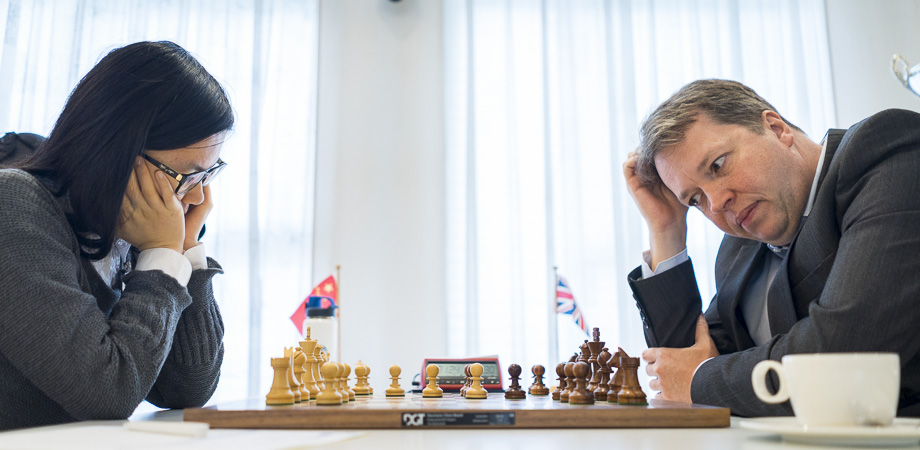



Auteur: Peter Boel

  • Werle houdt stand

    Werle houdt stand

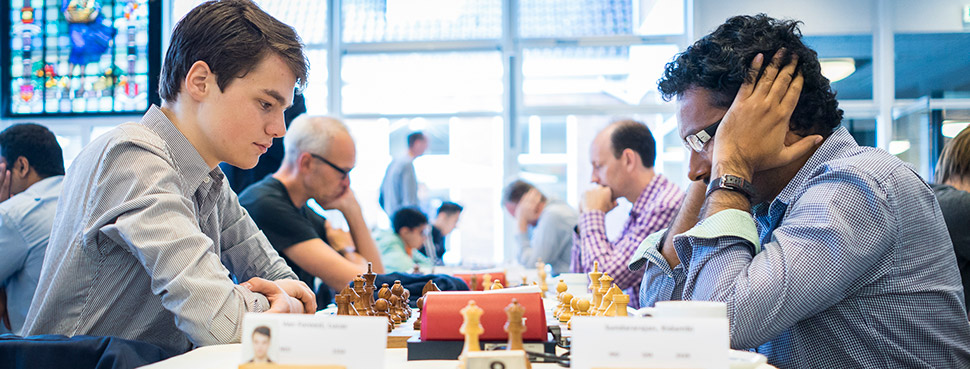
    Aan de vier topborden was het vandaag echt een match India-Nederland. India won met 2œ-1œ, maar we zouden kunnen aanvoeren dat Nederland nog niet in zijn sterkste bezetting was – India overigens ook niet.

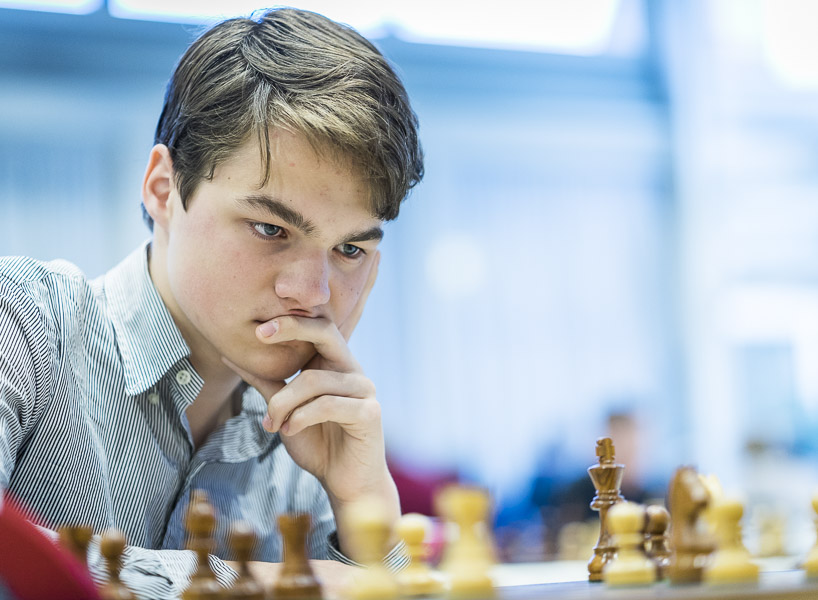
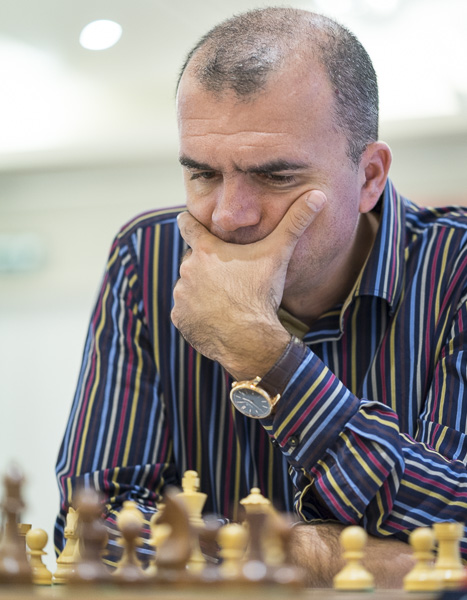
    Alleen Jan Werle en Liam Vrolijk hielden goed stand temidden van onze aanvalslustige gasten. Vrolijk, die voor de ronde de schoonheidsprijs ontving voor zijn zege op Debashis Das gisteren, maakte nu keurig remise tegen Sundar Shyam. Sterker nog, hij stond duidelijk beter toen hij op zetverwisseling inging. Werle speelde ook een goede drukpartij tegen Bharathakoti, die pardoes een stuk cadeau deed. Maar Abhijeet Gupta, Babu Lalith en internationaal meester K.Rathnakaran kwamen net als de Friese grootmeester op de volle 3 punten.

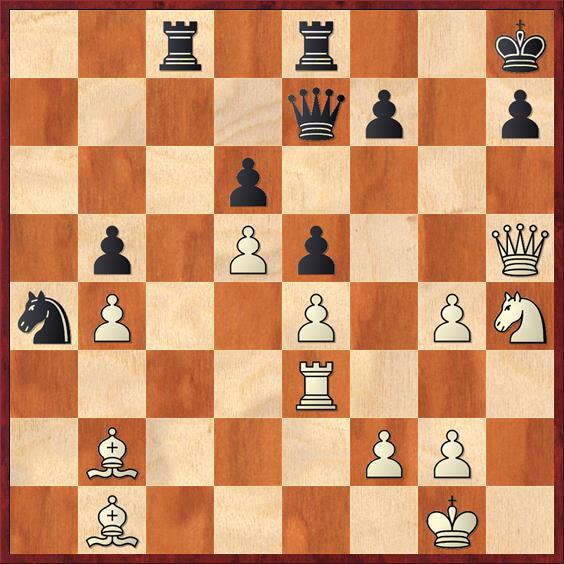
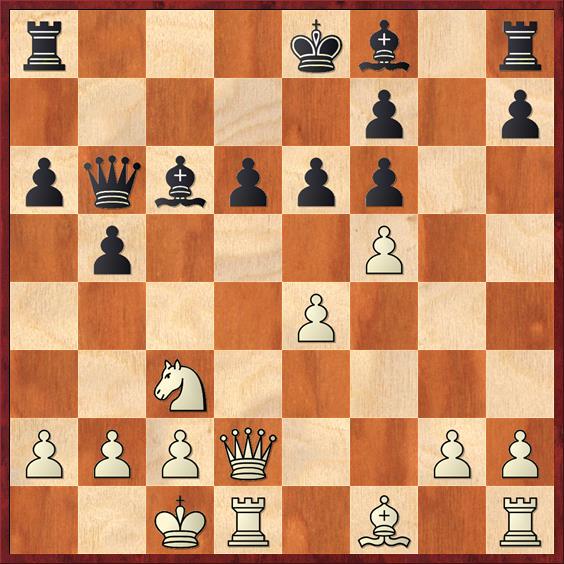
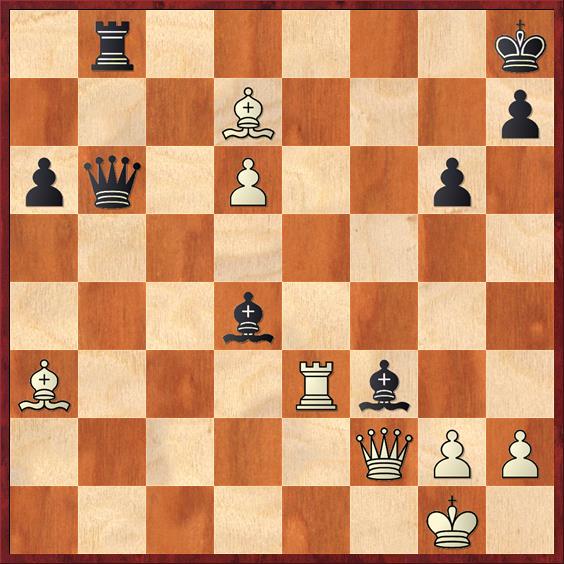
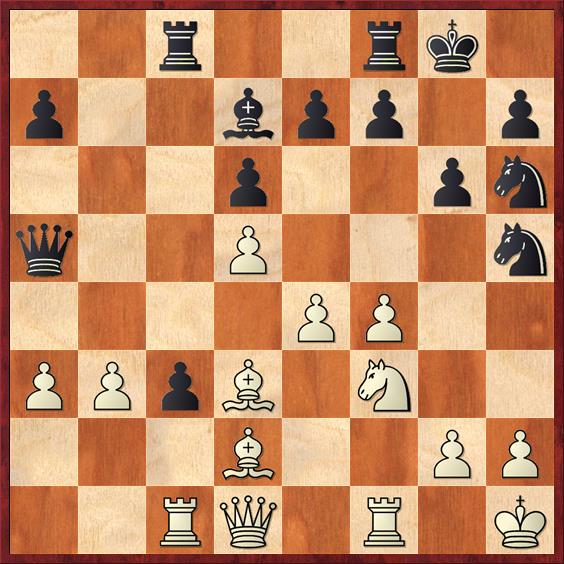
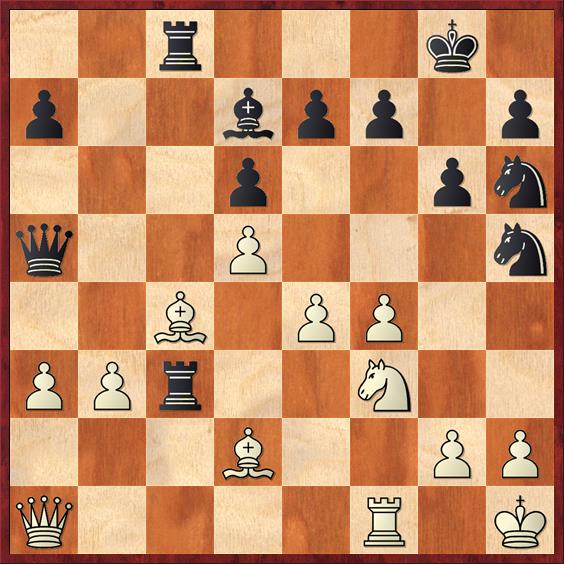
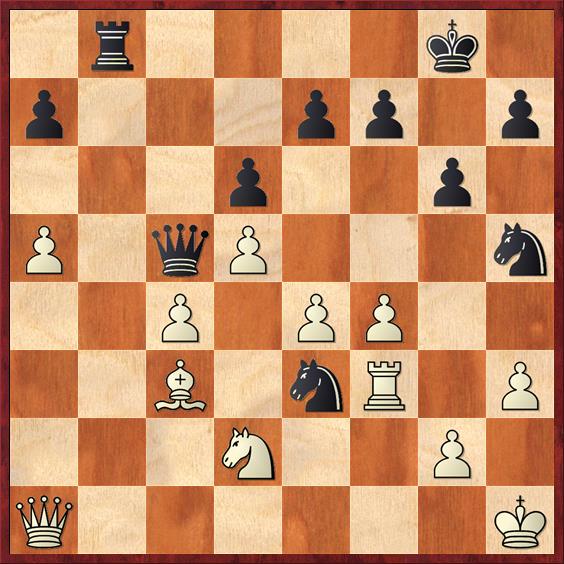
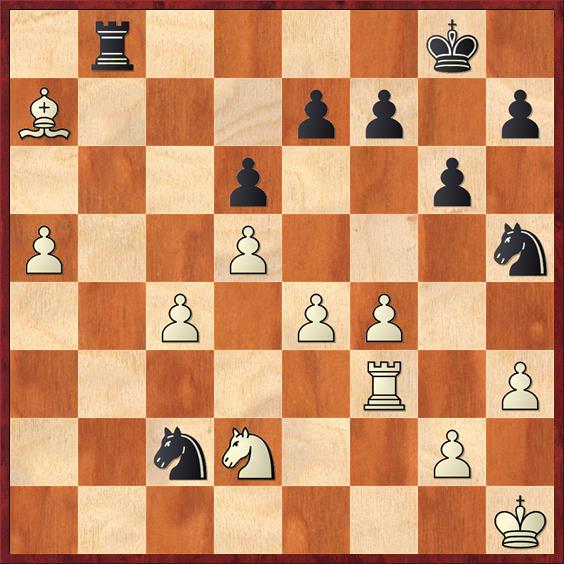
    Gupta rekende aan bord 1 af met één van onze meest getalenteerde jeugdspelers.

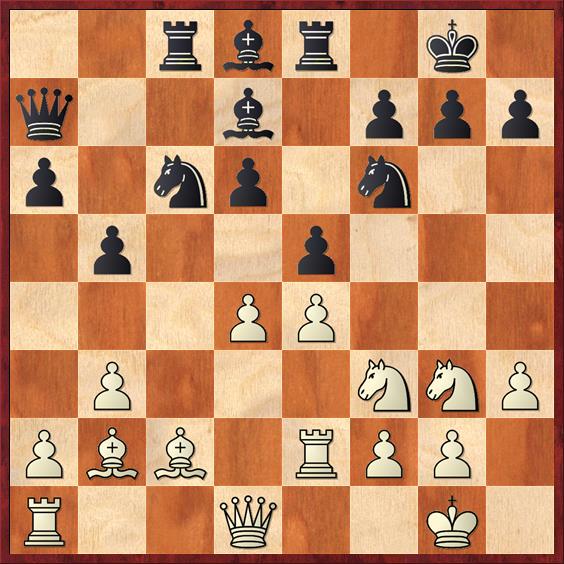
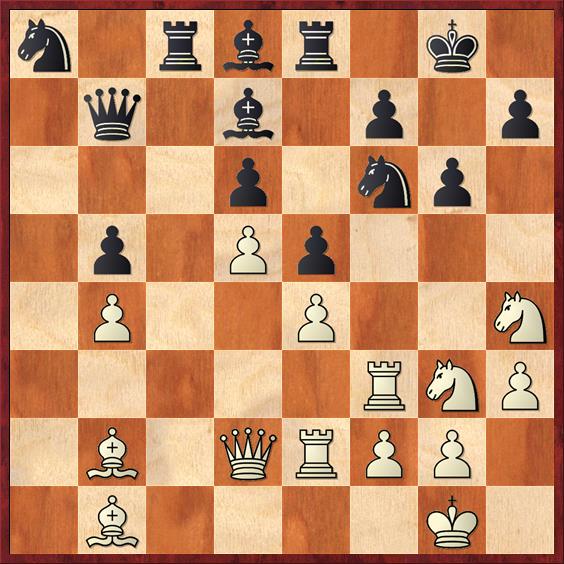
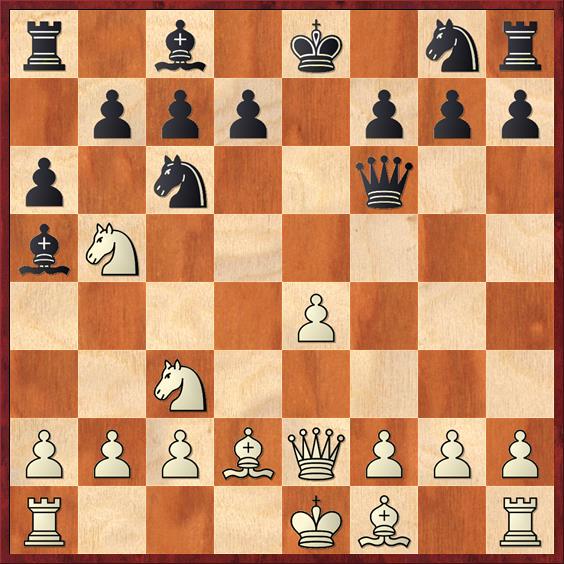
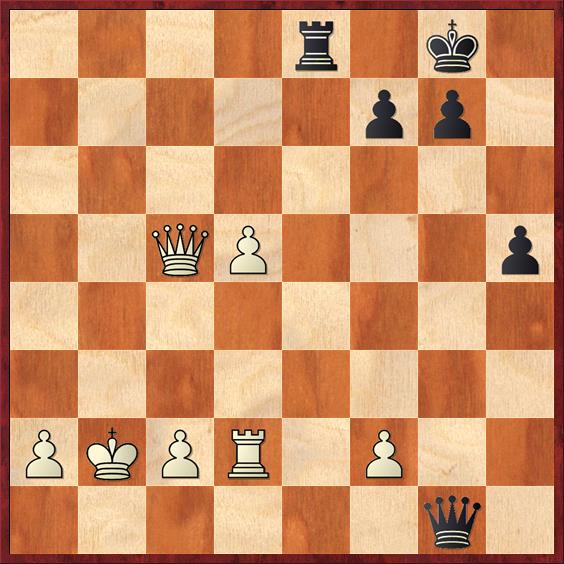
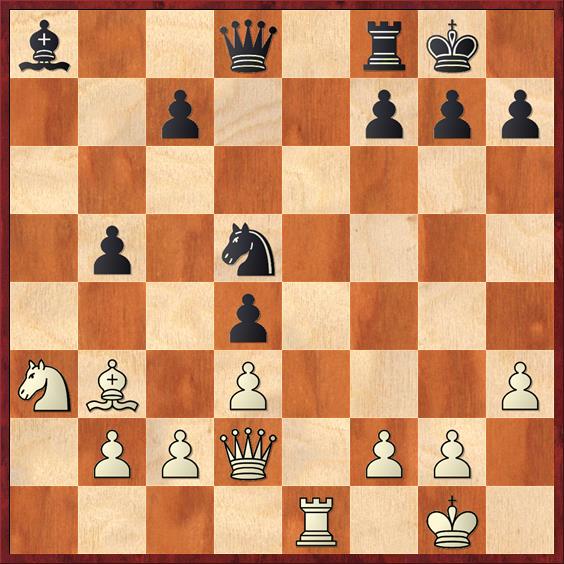
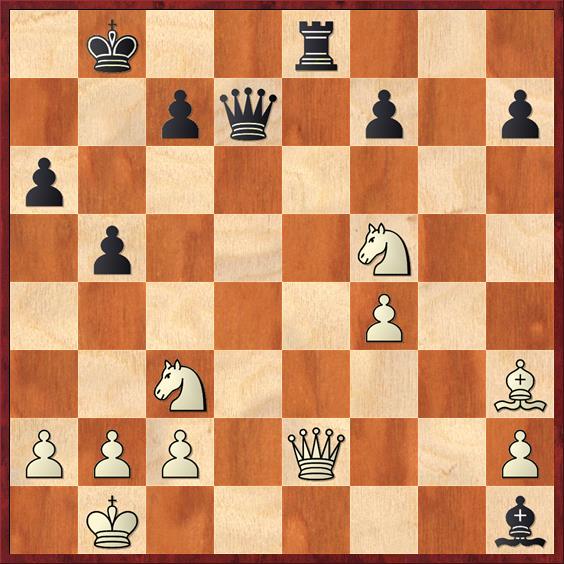
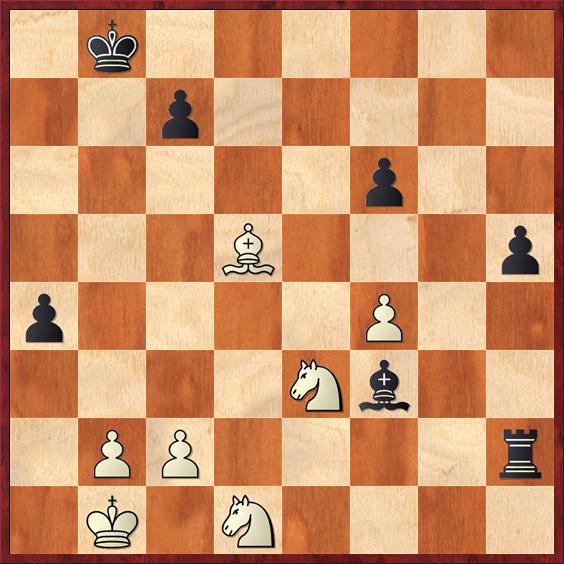
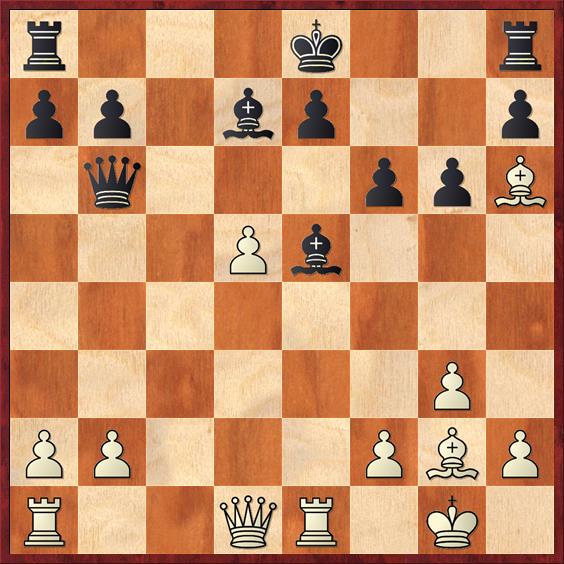
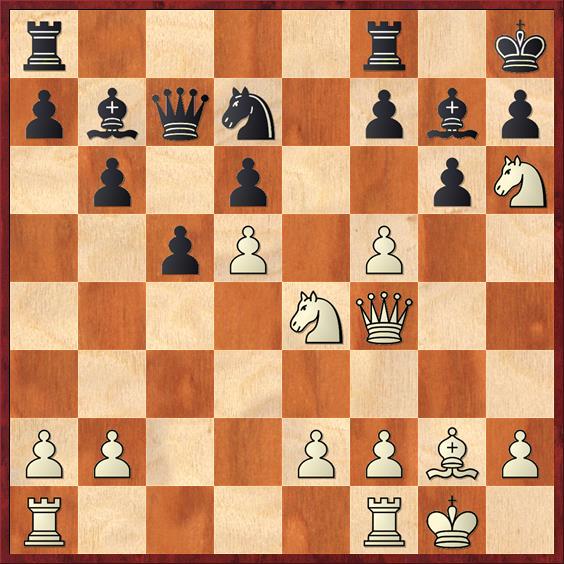
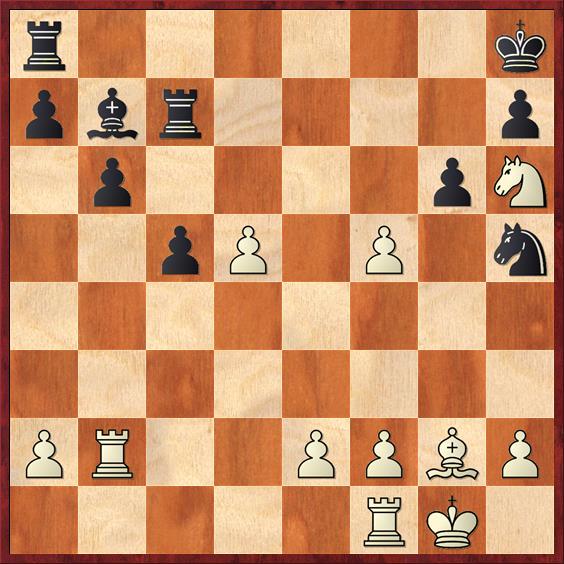
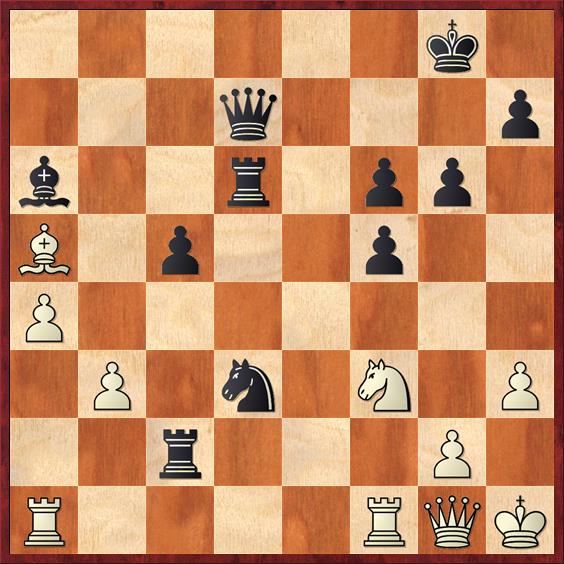
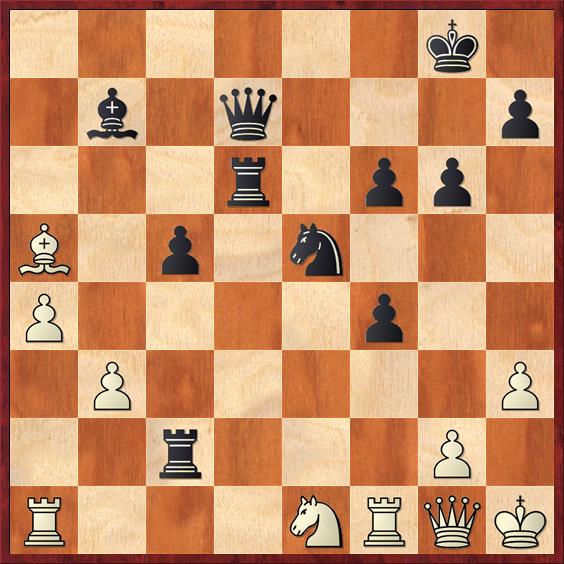
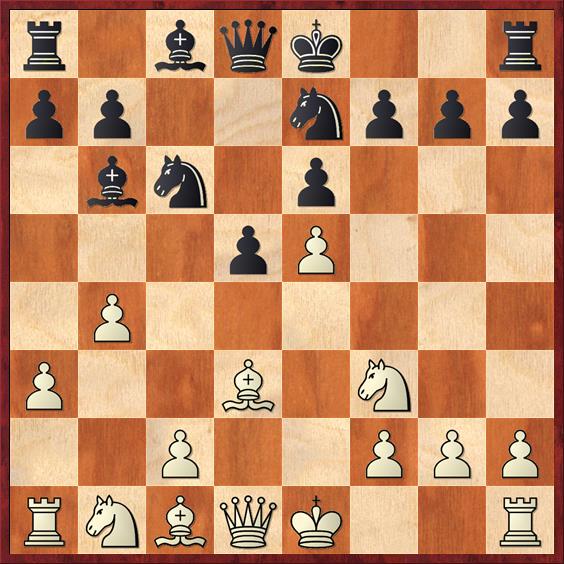
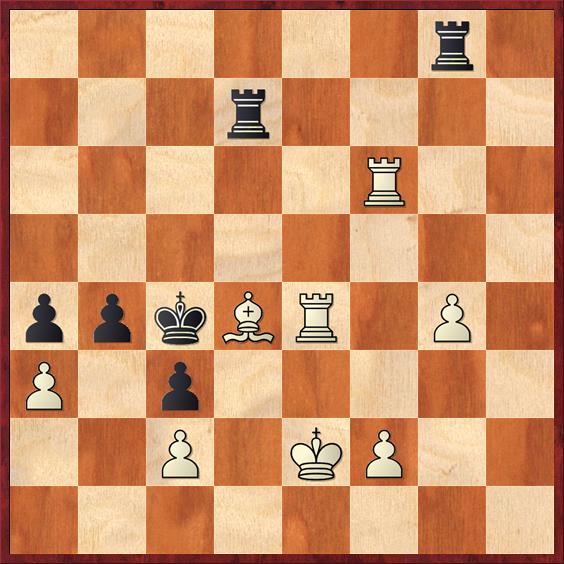
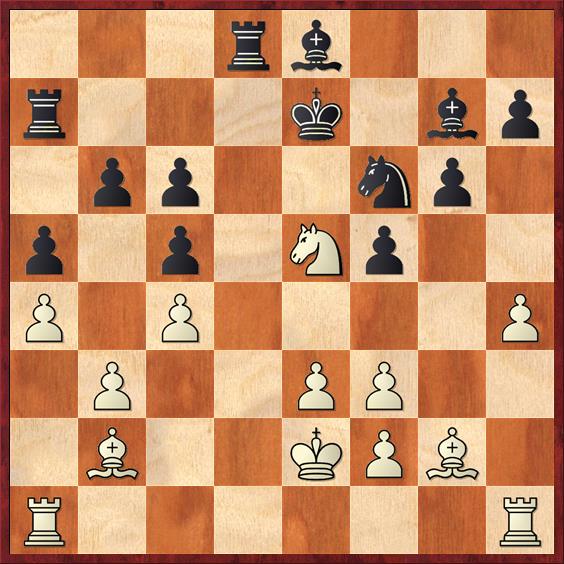
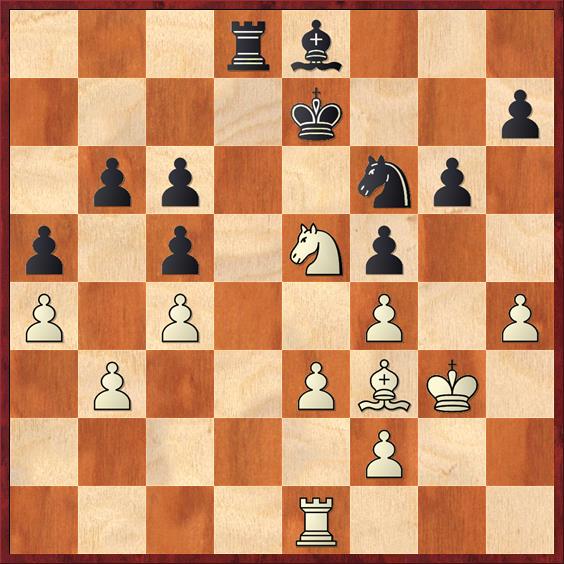
    Beerdsen – Gupta

    Wit is net met de toren van e3 uit de vork gestapt, maar blijkt nu in iets anders gestapt te zijn:

    27…Dxf3!

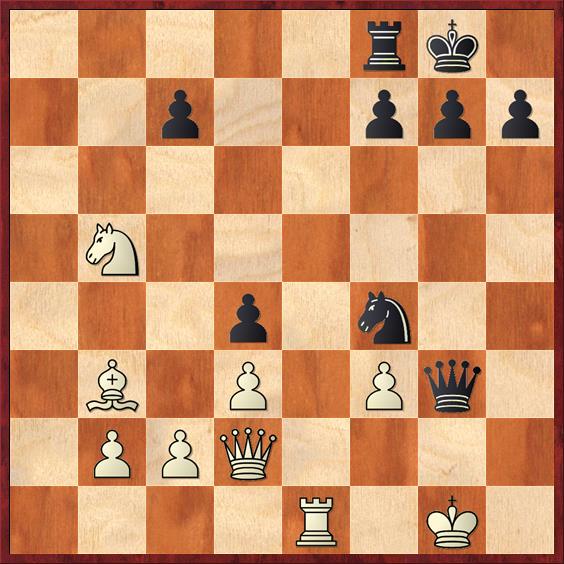
    Voor de dame levert dit uiteindelijk een toren en twee stukken op.

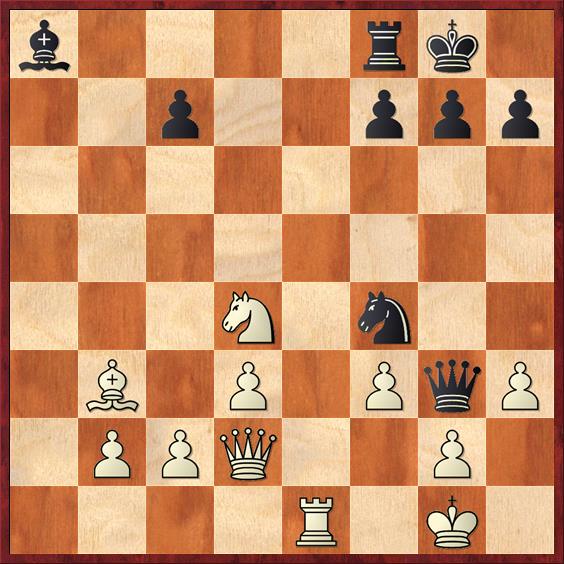
    28.Dxf3 dxc3 29.La3

    29.Lxc3 komt materieel gezien op hetzelfde neer, maar met de extra toren bood dat misschien nog wat meer praktische tegenkansen.

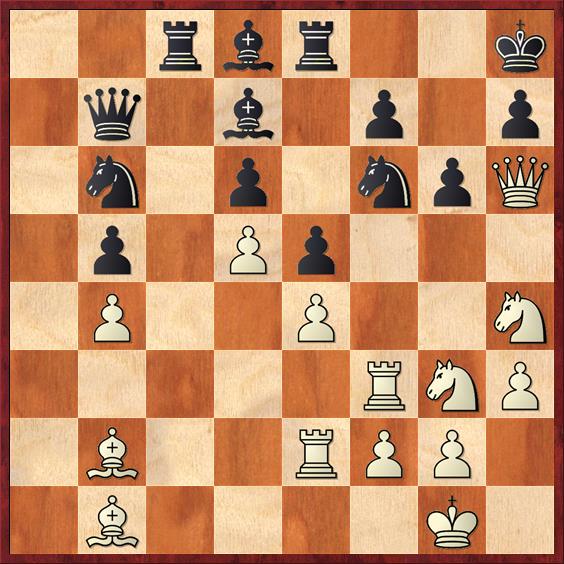
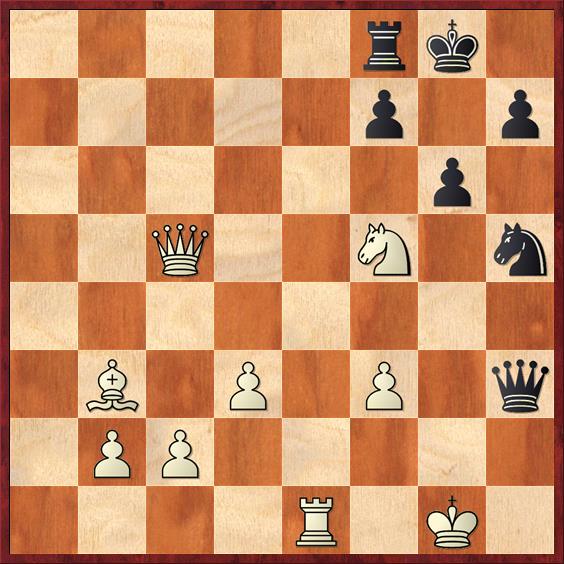
    29…c2 30.Te1 Pb3 31.Db7 c1D 32.Lxc1 Txc1 33.Txc1 Pxc1 34.Db1 Pe2+ 35.Kf1 Pf4 36.g3?


    36…Ta8

    Wint de dame, en nu is het echt uit. Beerdsen gaf op.


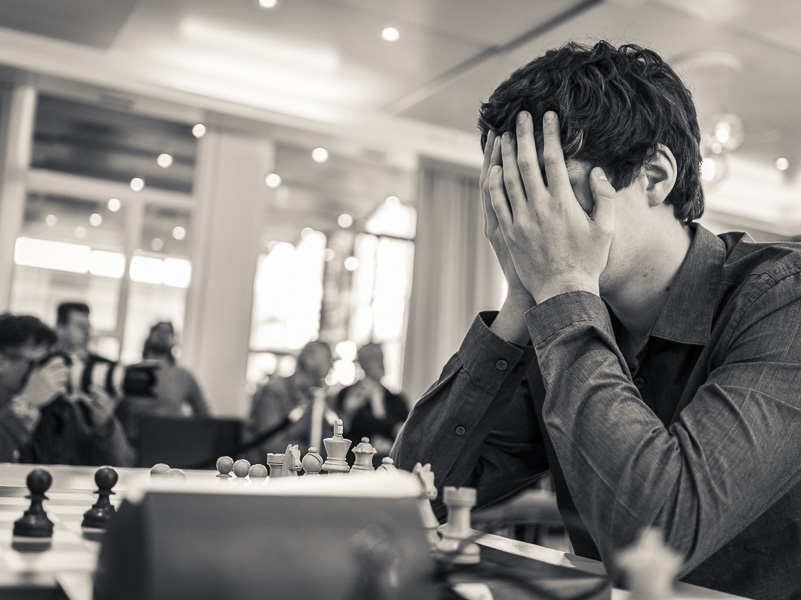
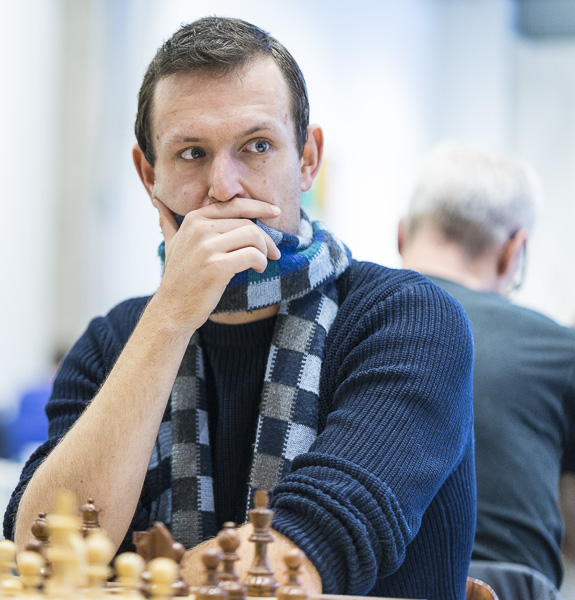
    Thomas Beerdsen. Foto: Lennart Ootes
     

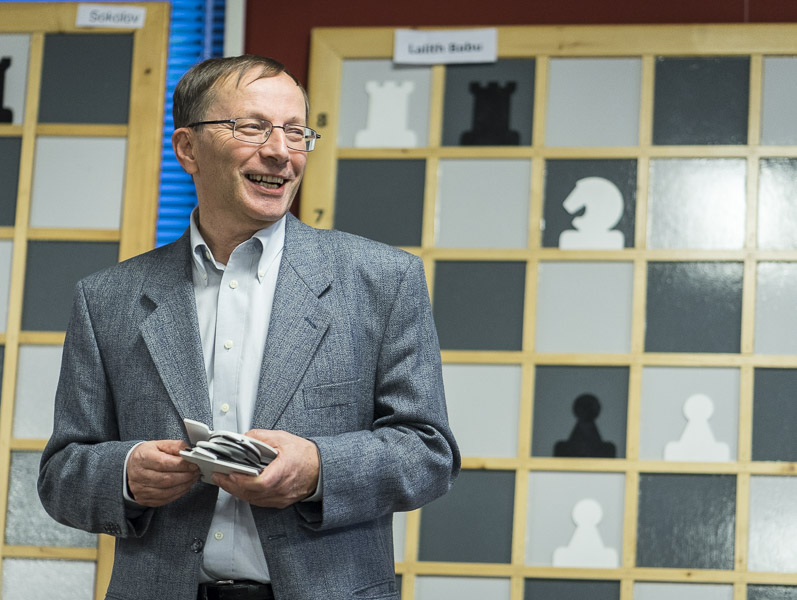
    Babu Lalith veroverde in een ingewikkelde partij met Lars Vereggen een kwaliteit, en dat verlies was niet meer goed te maken. Rathnakaran won in vlotte stijl van de Duitser Denis Mager.

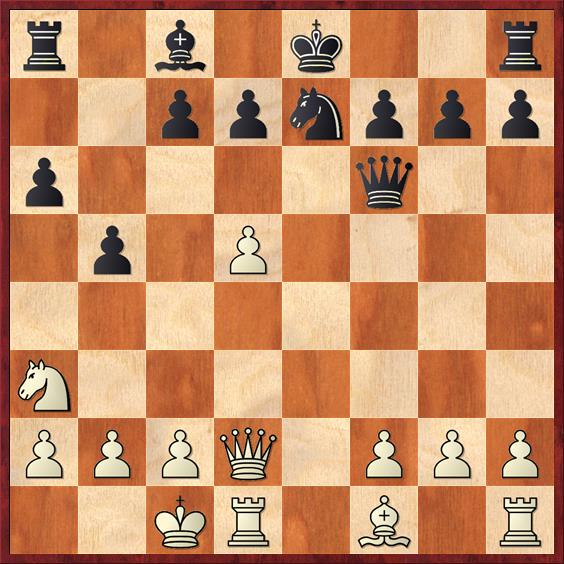
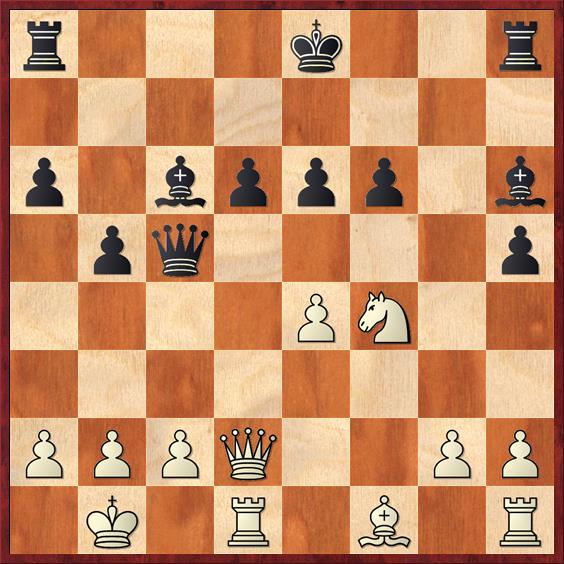
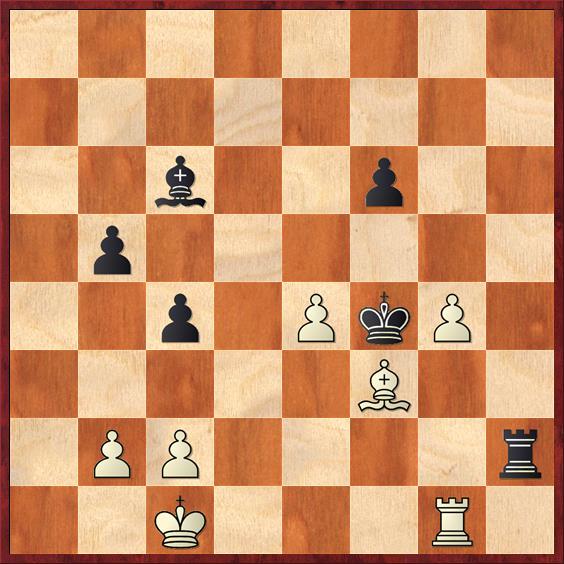
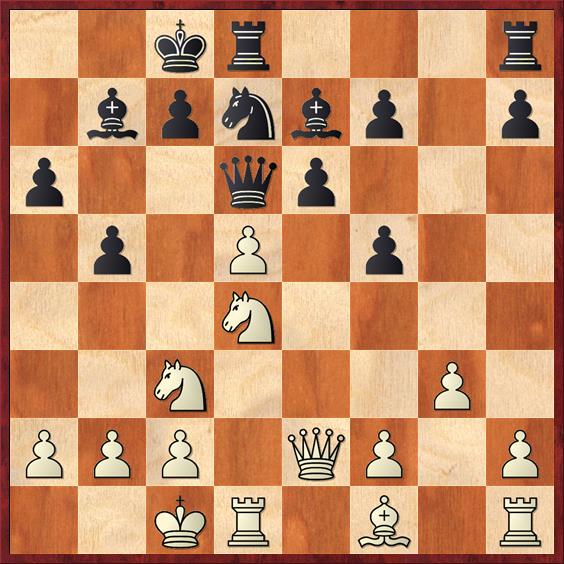
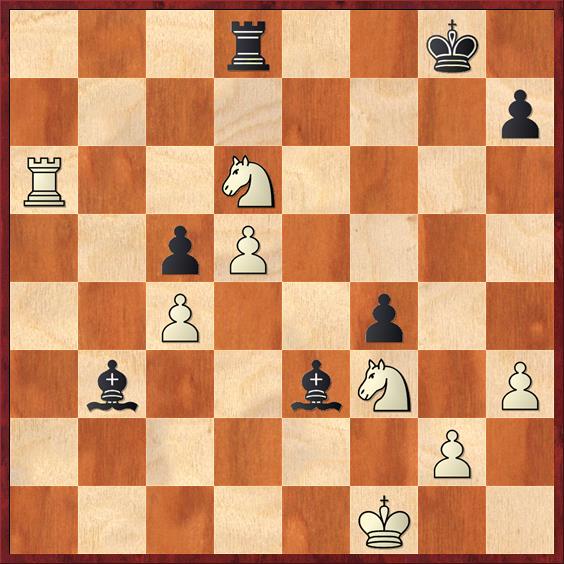
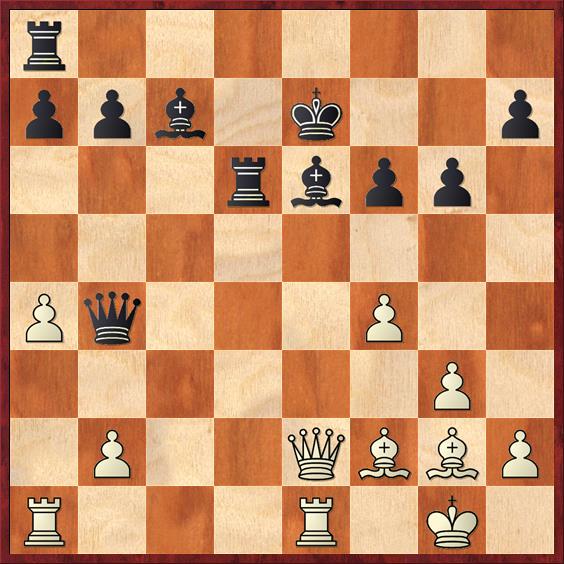
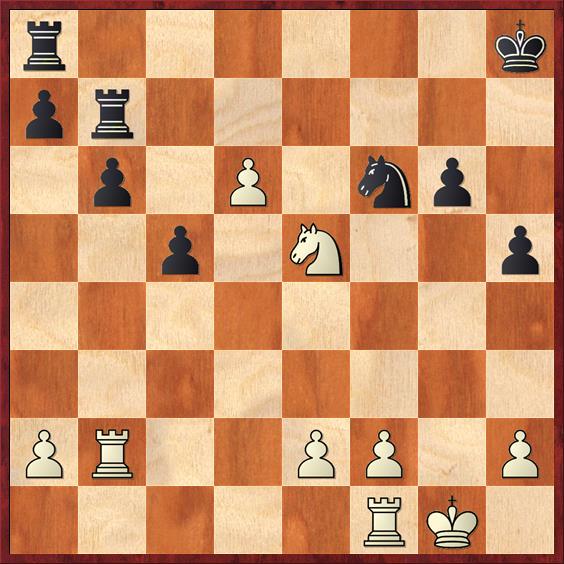
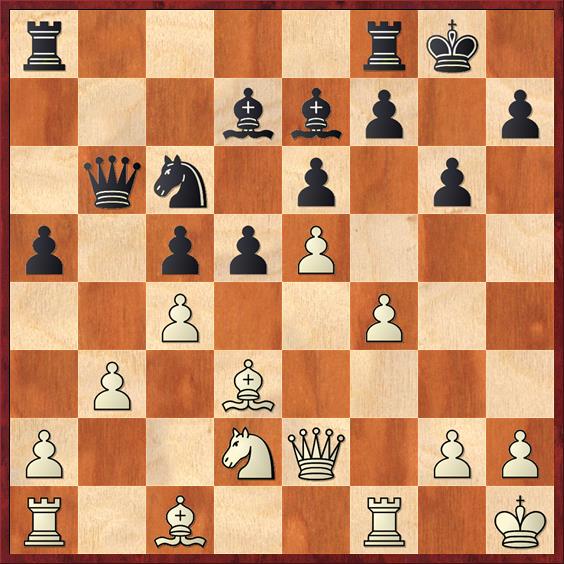
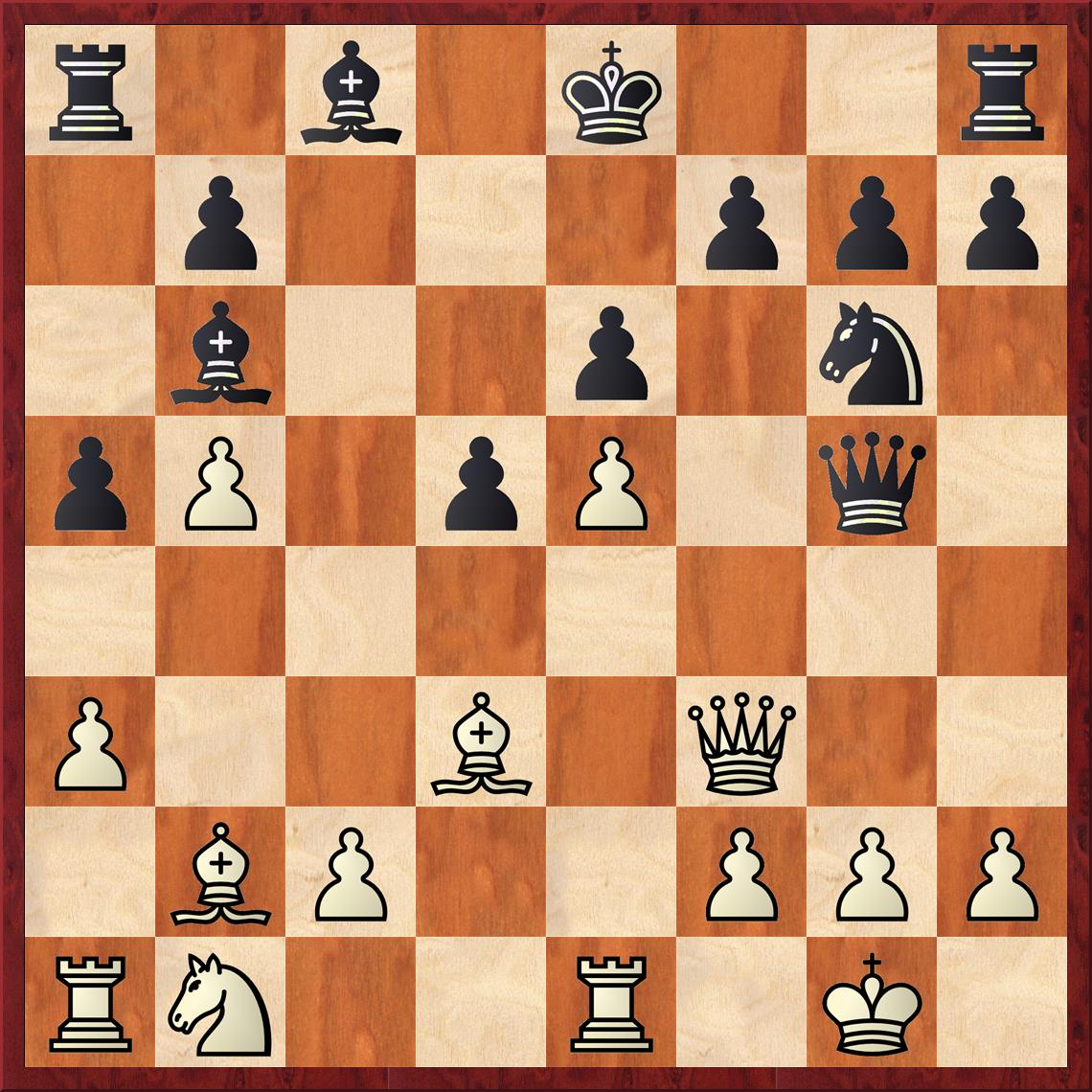
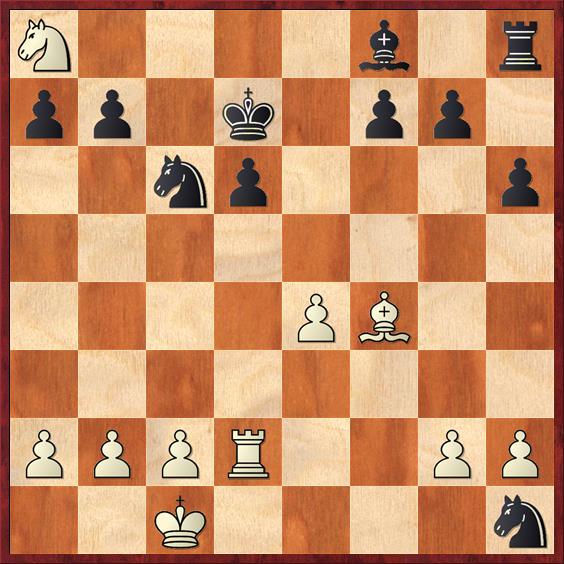
    Rathnakaran – Mager


    De zwarte koning op f7, het kwetsbare punt e7 en het kluitje stukken daarvoor – dat kan niet lang goed gaan. De Indiase meester vindt natuurlijk de gewelddadige oplossing van het stellingsprobleem:

    24.Pe5+! dxe5 25.fxe5 Ke6

    Wel een mooie vork, dit.

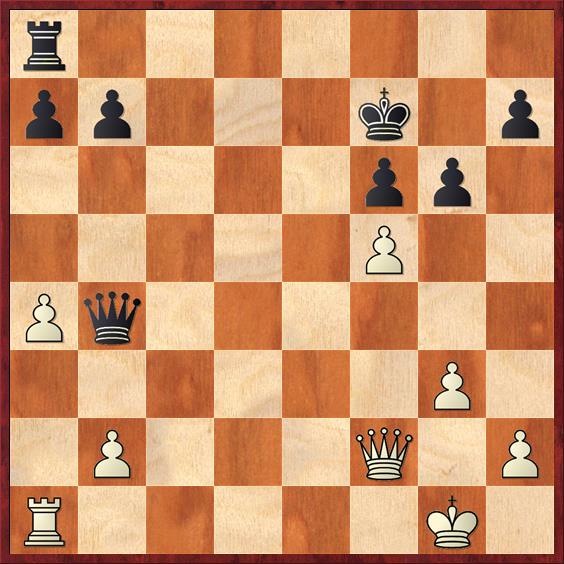
    26.Dxd4 Dxd5 27.Db6+ Kf7 28.Txf5+ Kg8 29.Dg6 Tf8 30.Tcf1 Txf5 31.Txf5 Tf8 32.Txf8+ Kxf8

    Nu won wit nog een pion met:

    33.Lxe7+ Kxe7 34.Dxg7+

    
 en na

    34…Kd8 35.Df6+ Ke8 36.Dg6+

    
 vond de Duitser het welletjes.


    Harmen Jonkman. Foto: Lennart Ootes
     

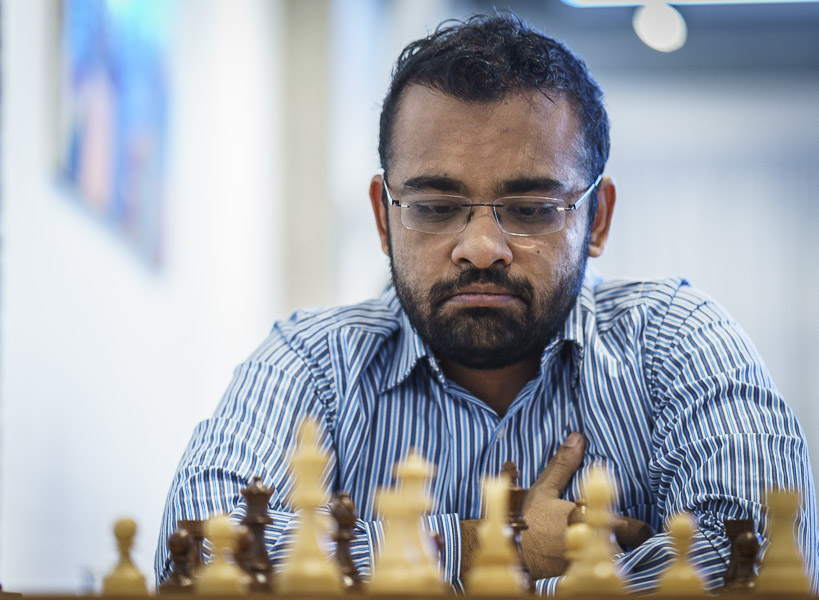
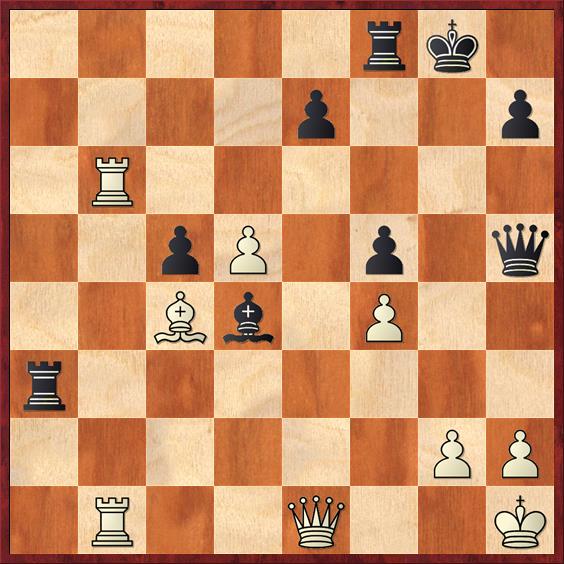
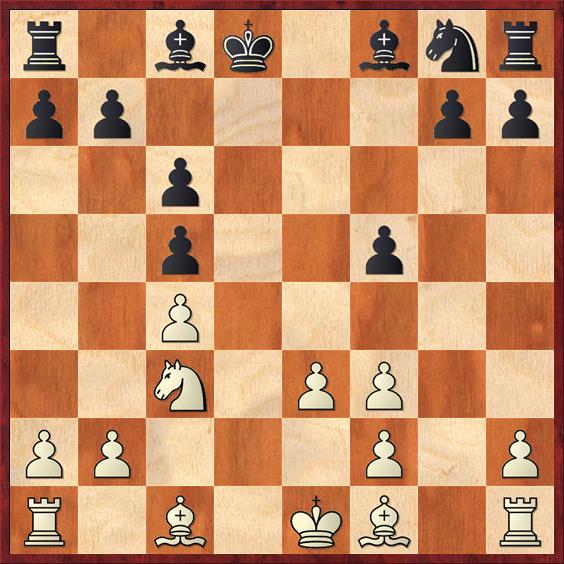
    Harmen Jonkman, die gisteren verrassend tegen een nul was aangelopen, verschalkte een van de meest ervaren spelers in het circuit met een hemeltergende truc.

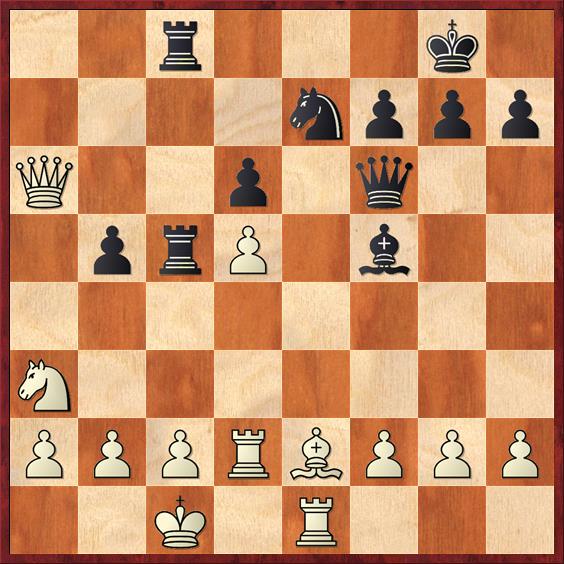
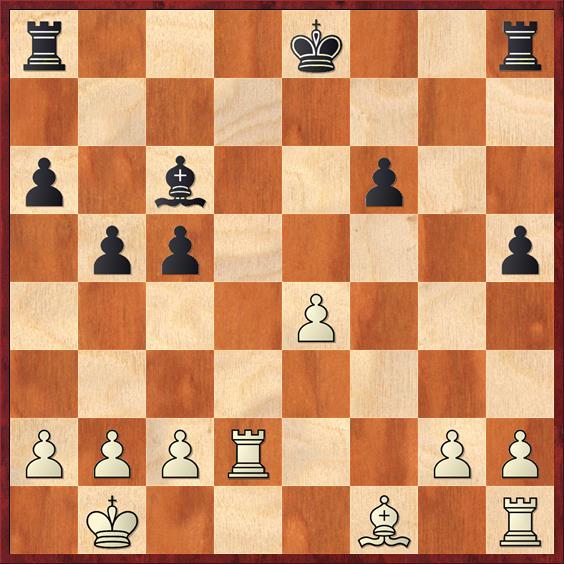
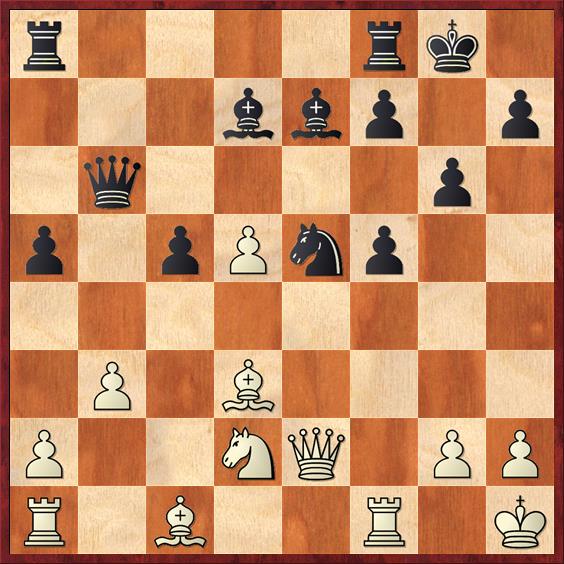
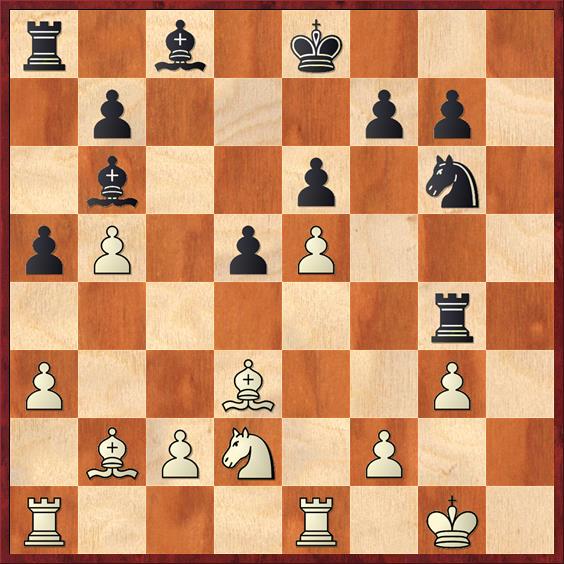
    Jonkman – Heemskerk


    31…Tb5?

    Dit vind ik een van de allerergste fouten die je kan overkomen, omdat de weerlegging als een ijskoude douche komt.

    32.T1d2

    Met 32.b4! gevolgd door 33.a4 kon wit de toren vangen.

    32…Pe4 33.Te2 Pf6

    Zag Heemskerk het nog niet, of hoopte hij nu dat Jonkman het nog een keer niet zou zien?

    34.b4! Tc4

    35.Pc2!?


    Hij neemt nu zelfs geen genoegen meer met kwaliteitswinst door 35.Pxc4 dxc4 36.Txc4. Nu wordt het een toren tegen een paar pionnen. Heemskerk gaf op.

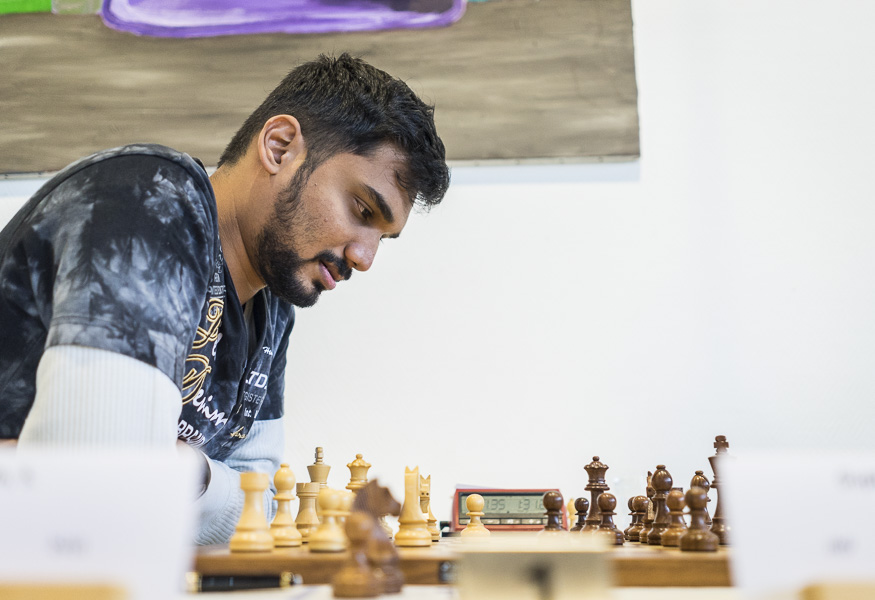
    De 13-jarige Dushyant Sharma liet zich niet overrompelen in een superscherpe partij met de 17-jarige Rustam Bunyatov.

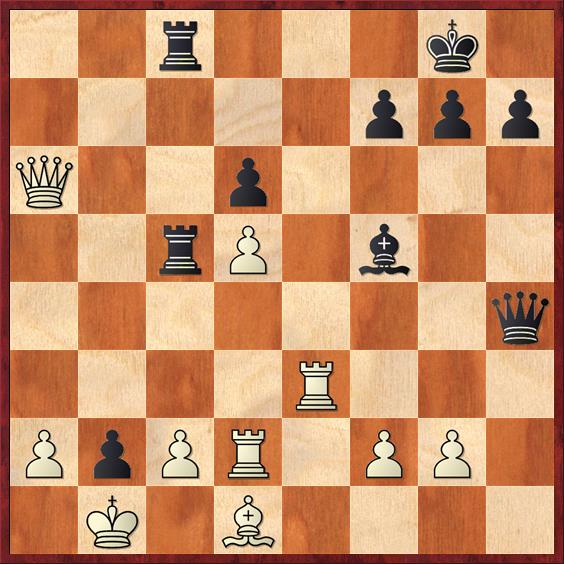
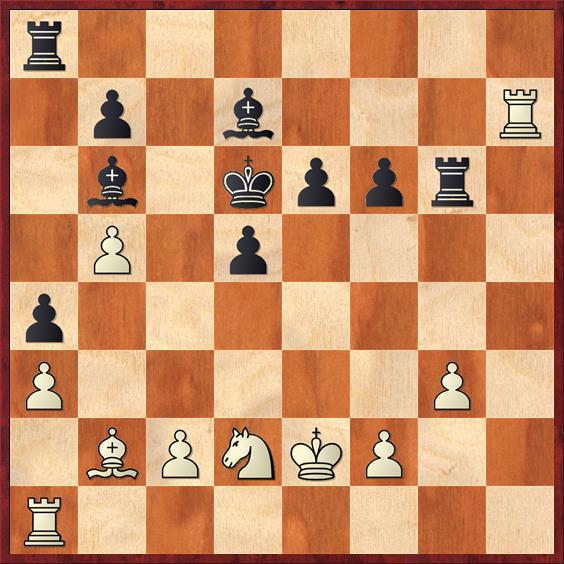
    Sharma – Bunyatov

    Beide kanten hebben hun troeven, maar op het eerste gezicht lijkt het dat zwart er meer heeft:

    33…Pg3+!? 34.hxg3 hxg3 35.Kg1 Dh5 36.e7!

    Houdt de toren van f8, en de loper op d4 is goud waard voor wit.

    36…Te8 37.De4


    37…Pf3+

    ‘A’ had hij al gezegd…

    38.gxf3 Dh2+ 39.Kf1 g2+ 40.Ke1 Lxd4 41.Dxd4+ Kh7 42.De4+ Kh8


    Heeft wit meer dan eeuwig schaak? Jawel, maar dan moet hij wel even wat wegslikken.

    43.Pe2! gxf3 44.Dxf3 g1D+ 45.Pxg1 Dxg1+ 46.Kd2 Dg5+ 47.Kd3 Dxc5

    Eind goed al goed voor zwart?

    48.Df6+ Kg8 49.Dg6+ 1-0

    Helaas… soms is het schaakspel onrechtvaardig.


    Rustam Bunyatov tijdens ronde 2. Foto: Lennart Ootes

    Dat ‘Mr. En Passant’ Dick de Graaf zelf ook een aardig potje kan schaken, bewees hij vandaag door op de volgende wijze op 2 punten te komen.

    Kouwenhoven – De Graaf


    Met ‘alles behalve het aanrecht’ (excuseer, maar dit vertaalt straks wat makkelijker naar het Engels) gericht op f6 lijkt wit hier eerst aan de beurt te zijn. Maar net als in de partij Van Foreest-Sokolov vandaag is er een merkwaardige symmetrie: het gaat niet om f6 maar om c3!

    25…Pxe4! 26.Lxg7 f6! 27.Lxf8 Pc3+ 28.Kc1 a3 29.Dd2 Dxf8

    De witte aanval is spoorloos verdwenen, terwijl zijn koning hulpeloos in de greep van de zwarte stukken zit. Niet gek voor een kwaliteitje.

    30.Tde1 f5 31.Pf2 Pc5 32.Dc2 Df6 33.Ld1 a2 34.Kb2


    De Graaf weerstaat de aandrang om mat te zetten met een aftrekschaak: die pion wil hij op a1 hebben.

    34…Ta8 35.Lf3 Pd1+ 0–1


    De vijver achter het Raadhuis. Foto: Lennart Ootes


    Jan Roebers. Foto: Lennart Ootes


    Jaap Vogel. Foto: Lennart Ootes
     

  • Jorden booms back

    Jorden booms back

    So far the match between Van Foreest and Sokolov offers us everything we had hoped for: unexpected turns, excitement, drama. Jorden (not to be confused with his younger brother Lucas, who is now almost leading the Open) was hardly taken aback by yesterday’s defeat. He came to the board with a new weapon and dealt a crushing blow with a knight sacrifice when Sokolov went wrong in a difficult position.

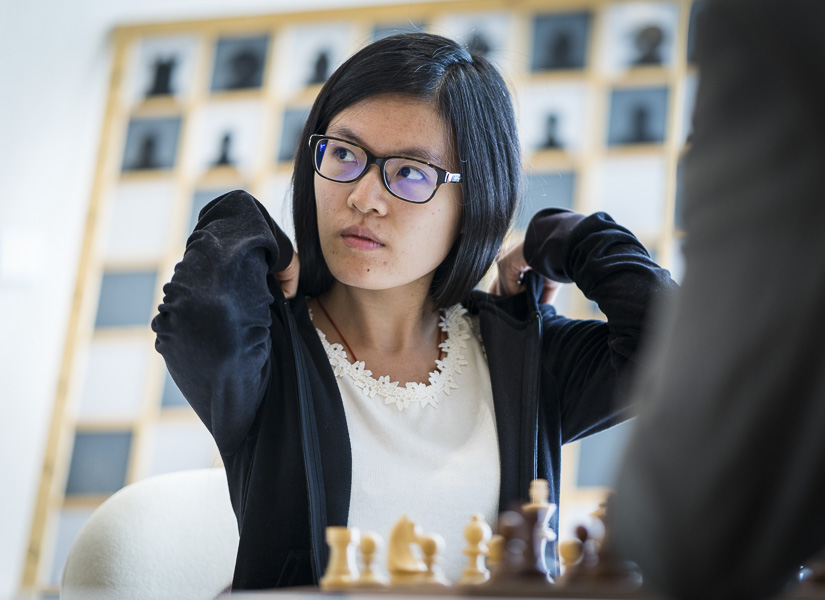
    The game Hou Yifan-Short was infinitely quieter: in a French game hardly anything happened, and after 42 moves the second draw was agreed.

    Van Foreest was not at all surprised by Sokolov’s Philidor, though the young champion knew only one game by his opponent with that opening. He came what you might call well prepared.

    Van Foreest – Sokolov

    1.e4 e5 2.Nf3 d6 3.d4 Nf6 4.Nc3 Nbd7 5.Bc4 exd4

    A slightly better version for Black, according to Van Foreest, is 5…Be7 6.a4 exd4, which he had played himself during this year’s Dutch Championship against Benjamin Bok.

    6.Qxd4 Nb6 7.Bf4!?


    A particularly venomous novelty. ‘I’d had the same idea on the board, with a different move order, in a tournament in France’, Van Foreest explained. ‘That game is not in the databases.’ White gives up the bishop pair for fast development, and as it will turn out the black bishops are not really coming into their own in this game.

    7…Be7 8.0–0–0 Nxc4 9.Qxc4 0–0 10.Rhe1

    10.e5 came into consideration even here; for example, 10…Be6 11.Qe2 Ne8 12.Nd4 is also unpleasant for Black. But this was all still preparation from the white player.

    10…Be6 11.Qf1!?


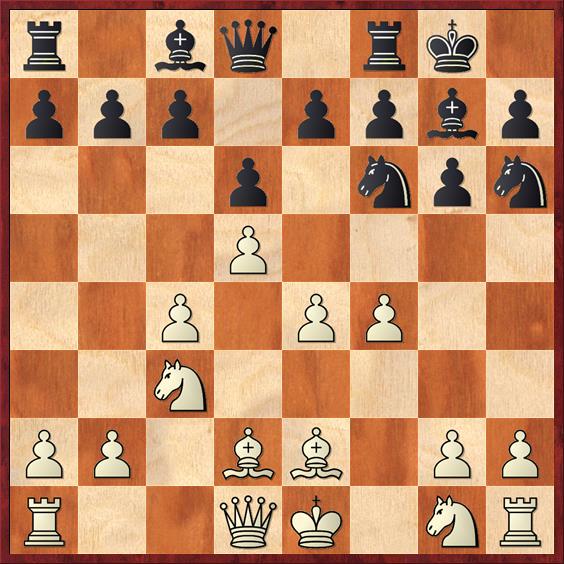
    Still coked up at home. ‘With this retreat I keep the two central lines open’, said the youngster from Groningen. White’s attacking plan is logical, and will become clear in the next three moves.

    11…Qc8 12.Nd4 Bd7!?

    Sokolov wants to keep his bishop pair, but this takes time. Van Foreest had expected Black to act earlier on the queenside. ‘From here on I had the feeling that my attack was faster.’

    13.f3 Rb8 14.g4 b5 15.Nf5! Bd8

    If Black takes on f5, 16.exf5 also looks good – Van Foreest had planned 16.gxf5.

    16.Qh3

    This is not the way to beat a world-class grandmaster – unless you are a young stargazer! After the game Van Foreest wasn’t very satisfied with this move, because ‘now the distance between my queen and king is rather large’. All the same, White is already threatening with sacrifices like Nxg7 or sometimes Bh6, and sometimes g4-g5 is strong, too. The computer gives 16.e5 dxe5 17.Rxe5 with a positional advantage of an entirely different sort.

    16…b4 17.Ne2 Qa6

    In the commentary room, Gert Ligterink pointed at a pretty symmetry in this game: White’s queen goes via f1 to h3, and Black’s goes via c8 to a6. Sokolov is searching for a counterattack. Perhaps, 17…Ne8 would have been wiser, but that is a move he probably didn’t consider seriously for a moment.

    18.Kb1 Be6 19.b3

    ‘I could also have played 19.Nc1 here’, Van Foreest said. ‘That would have been less weakening, but I didn’t see how Black could exploit this weakening. My plan was Bf4-c1-b2, and moreover I can now use the knight for the attack too.’

    19…Rb5

    Preventing 20.Bc1 as after 20…Ra5 the knight can no longer protect a2. White could have sacrificed a2, of course.

    20.Be3


    Now the bishop wants to go to d4.

    20…d5?

    ‘A blunder, a blackout’, said Sokolov. ‘I hadn’t seen White’s reply. And I’d just prevented this type of shot with 19…Rb5.’

    21.Nxg7! Kxg7 22.Bh6+!

    Ligterink and his audience also looked at 22.Qh6+, which looks more logical if you look at White’s previous move, but is in fact less clear: 22…Kg8 23.Qg5+ (23.g5 Ne8 24.Nf4 doesn’t work well on account of 24…Bc8!, Van Foreest explained) 23…Kh8 24.Bd4 Bc8 25.exd5 and this is just a highly favourable position for White.

    22…Kg8 23.Bxf8 Kxf8 24.Qh6+ Ke8

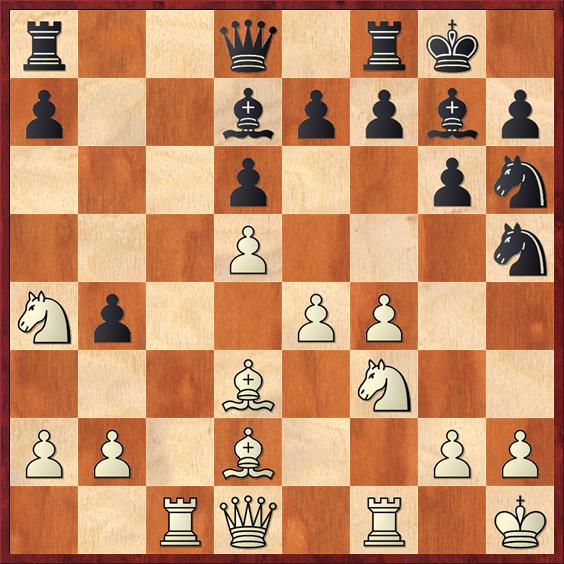
    After 24…Kg8 many roads lead to Rome, but the simplest is 25.Qg5+ followed by 26.e5, winning back the piece. But now we see why White’s 10th move was so useful.


    Photo: Lennart Ootes
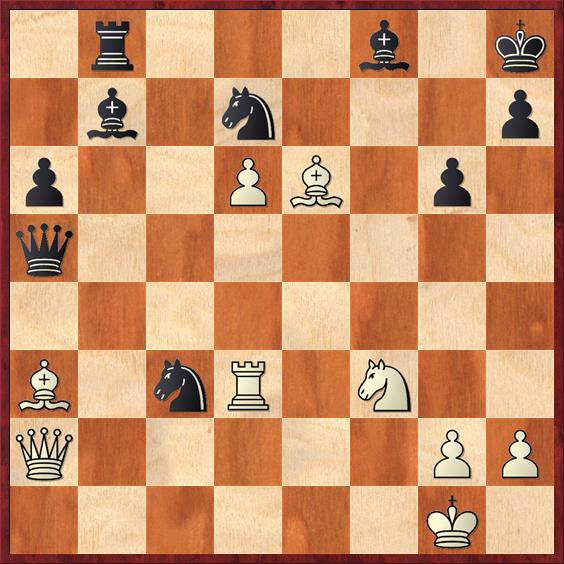
    25.Nd4 Ra5 26.Nxe6 fxe6 27.exd5

    With the e-file open there is no way Black can save himself.

    27…e5 28.Rxe5+ Kd7 29.Re6 1–0


    Jorden van Foreest. Photo: Lennart Ootes

    Ivan Sokolov before the game. Photo: Lennart Ootes
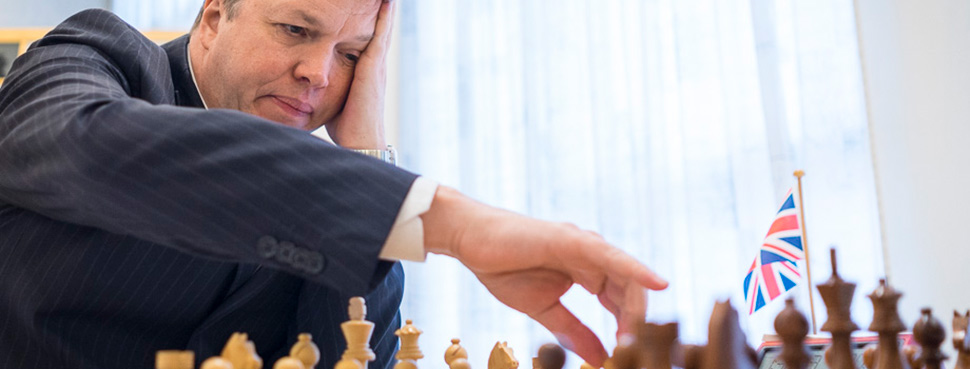
    ‘Caveman chess’ was what Nigel Short called what had happened on the contiguous board. As said, his own second clash with Hou Yifan took a quite different course.

    Hou Yifan – Short

    1.e4 e6 2.d4 d5 3.Nc3 Nf6 4.e5 Nfd7 5.f4 c5 6.Nf3 Nc6 7.Be3 a6 8.Qd2 b5 9.dxc5 Lxc5 10.Bd3 Qb6 11.Bf2


    The most popular move here. The endgame that now arises is considered pleasant for White, but Short isn’t afraid of it.

    11…Bxf2+ 12.Qxf2 Qxf2+ 13.Kxf2 Ke7 14.a3 Nb6 15.Rhe1 Bd7 16.Ne2 Rag8!


    By threatening …g7-g5, Short forces his opponent to close the king’s wing. ‘This is also known from the so-called Hoover Variation, where everything is exchanged’, said Short, who’d had this on the board with the white pieces, against Alexander Chernin in the Candidates tournament, Montpellier 1985.

    17.h4 h5

    Short-Chernin had continued 7…cxd4 (instead of 7…a6) 8.Nxd4 Bc5 9.Qd2 Bxd4 10.Bxd4 Nxd4 11.Qxd4 Qb6 12.Nb5 Qxd4 13.Nxd4 Ke7 14.g3 Nb8 15.Kd2 Bd7 16.Bd3 Nc6 17.Nf3 h6! 18.h4 h5, ‘and here I couldn’t really find anything with white.’ The game ended in a draw after 38 moves.

    18.Ned4 Nxd4 19.Nxd4 Na4 20.b3 Nc5 21.Ke3 Rb8

    Black places his pieces optimally to deal with possible actions with a3-a4. ‘I was constantly looking at these plans’, Hou Yifan said. ‘But he defended well, I found no way to get through. Actually it was the same story as yesterday, only the other way round.’


    Photo: Lennart Ootes
    Until move 42, when the draw was agreed, hardly anything happened. Both players were not dissatisfied with the course of their match so far. Hou Yifan thought both games had been logical. Although she seemed slightly disappointed by the fact that she hadn’t been able to show her aggressive style yet. And so Short’s strategy has been successful for the first two rounds. ‘First we had to warm up, and I had to survive the first two games’, the Englishman explained. ‘Anything can still happen, and I’m sure there will be more entertaining games.’


    Hou Yifan. Photo: Lennart Ootes

  • Jorden boemt terug

    Jorden boemt terug

    De match Van Foreest-Sokolov brengt tot nu toe alles wat we gehoopt hadden: onverwachte wendingen, spanning en sensatie. Jorden (niet te verwarren met zijn broer Lucas, die nu bijna bovenaan staat in het Open) was allerminst uit het veld geslagen door zijn nederlaag van gisteren, kwam met een nieuw wapen en sloeg keihard toe met een paardoffer toen Sokolov misgreep in een lastige stelling.

    Bij Hou Yifan-Short ging het er oneindig veel rustiger aan toe: in een Franse partij gebeurde weinig tot niets, en na 42 zetten werd de tweede remise overeengekomen.

    Van Foreest was allerminst verrast door de Philidor van Sokolov, van wie de jonge kampioen toch maar één partij kende met deze opening. Hij kwam wat je noemt beslagen ten ijs.

    Van Foreest – Sokolov

    1.e4 e5 2.Pf3 d6 3.d4 Pf6 4.Pc3 Pbd7 5.Lc4 exd4

    Een iets beter versie voor zwart was volgens Van Foreest 5…Le7 6.a4 exd4, wat hij zelf in het NK tegen Benjamin Bok op het bord bracht.

    6.Dxd4 Pb6 7.Lf4!?

    Een uiterst venijnig nieuwtje. “Ik had hetzelfde idee met verwisselde zetten al op het bord gehad in een Frans toernooi”, meldde Van Foreest. “Die partij staat niet in de databases.” Wit geeft zijn loperpaar op voor een snelle ontwikkeling, en de zwarte lopers komen niet echt uit de verf, zoals zal blijken.

    7…Le7 8.0–0–0 Pxc4 9.Dxc4 0–0 10.The1

    10.e5 kwam zelfs hier al in aanmerking, bijvoorbeeld 10…Le6 11.De2 Pe8 12.Pd4 is ook niet prettig voor zwart. Maar de witspeler zat nog in zijn voorbereiding.

    10…Le6 11.Df1!?

    Ook nog van tevoren bekokstoofd. “Zo houd ik de twee centrumlijnen open”, zei de jonge Groninger. Het witte aanvalsplan is logisch en wordt in de volgende drie zetten duidelijk.

    11…Dc8 12.Pd4 Ld7!?

    Sokolov wil zijn loperpaar behouden, maar dit kost tijd. Van Foreest had verwacht dat zwart eerder zou komen op de damevleugel. “Nu had ik het gevoel dat mijn aanval sneller was.”

    13.f3 Tb8 14.g4 b5 15.Pf5! Ld8

    Als zwart op f5 geslagen had ziet 16.exf5 er ook goed uit – Van Foreest was 16.gxf5 van plan.

    16.Dh3

    Zo win je niet van een grootmeester van wereldklasse – tenzij je een jonge hemelbestormer bent! Van Foreest vond deze zet achteraf niet zo goed, want “de dame staat een beetje ver van mijn koning af.” Evengoed dreigen er al offers als Pxg7 of soms Lh6, en soms is ook g4-g5 sterk. De computer geeft 16.e5 dxe5 17.Txe5 met een positioneel voordeeltje van een heel andere orde.

    16…b4 17.Pe2 Da6

    In de commentaarzaal wees Gert Ligterink op de mooie symmetrie in deze partij: wits dame gaat via f1 naar h3, die van zwart via c8 naar a6. Sokolov zoekt de tegenaanval. Misschien was 17…Pe8 verstandiger geweest, maar dat zal hij geen moment serieus hebben overwogen.

    18.Kb1 Le6 19.b3

    “Ik kon hier ook 19.Pc1 spelen”, zei Van Foreest. “Dat was wat minder verzwakkend, maar ik zag niet hoe zwart van deze verzwakking kon profiteren. Mijn plan was Lf4-c1-b2, en bovendien kan ik het paard nu nog voor de aanval gebruiken.”

    19…Tb5

    Verhindert 20.Lc1 omdat na 20…Ta5 het paard a2 niet meer kan dekken. Wit zou a2 wel kunnen offeren, natuurlijk.

    20.Le3


    Nu wil de loper naar d4.

    20…d5?

    “Een blunder, een blackout”, zei Sokolov. “Ik had wits antwoord niet gezien. En dat terwijl ik dat soort wendingen met 19…Tb5 juist had verhinderd.”

    21.Pxg7! Kxg7 22.Lh6+!

    In de commentaarzaal werd ook gekeken naar 22.Dh6+, wat er logischer uitziet gezien wits vorige zet, maar minder duidelijk is: 22…Kg8 23.Dg5+ (23.g5 Pe8 24.Pf4 werkt niet goed wegens 24…Lc8!, aldus Van Foreest) 23…Kh8 24.Ld4 Lc8 25.exd5 en dit is ‘gewoon’ heel goed voor wit.

    22…Kg8 23.Lxf8 Kxf8 24.Dh6+ Ke8

    Na 24…Kg8 zijn er vele wegen, maar de simpelste is 25.Dg5+ gevolgd door 26.e5 met stukterugwinst. Maar nu blijkt het nut van wits 10e zet.


    Foto: Lennart Ootes
    25.Pd4 Ta5 26.Pxe6 fxe6 27.exd5

    Met de e-lijn open is er geen redden meer aan.

    27…e5 28.Txe5+ Kd7 29.Te6 1–0


    Jorden van Foreest. Foto: Lennart Ootes

    Ivan Sokolov voorafgaand aan de partij. Foto: Lennart Ootes
    ‘Holbewonersschaak’, noemde Nigel Short datgene wat er aan het belendende bord was gebeurd. Zijn eigen tweede treffen met Hou Yifan verliep dus heel anders.

    Hou Yifan – Short

    1.e4 e6 2.d4 d5 3.Pc3 Pf6 4.e5 Pfd7 5.f4 c5 6.Pf3 Pc6 7.Le3 a6 8.Dd2 b5 9.dxc5 Lxc5 10.Ld3 Db6 11.Lf2


    De meest gespeelde zet hier. Het eindspel dat nu onstaat geldt als prettig voor wit, die wat meer ruimte heeft, maar Short is er niet bang voor.

    11…Lxf2+ 12.Dxf2 Dxf2+ 13.Kxf2 Ke7 14.a3 Pb6 15.The1 Ld7 16.Pe2 Tag8!


    Door te dreigen met …g7-g5 dwingt Short zijn tegenstandster de stelling te sluiten. “Deze wending is ook bekend uit de zogenaamde Hoover-variant, waarin alles afgeruild wordt”, zei Short, die het ook wel eens met wit op het bord had gehad. Dat was in zijn partij met Alexander Chernin, in het kandidatentoernooi in Montpellier 1985.

    17.h4 h5

    In Short-Chernin was gevolgd 7…cxd4 (in plaats van 7…a6) 8.Pxd4 Lc5 9.Dd2 Lxd4 10.Lxd4 Pxd4 11.Dxd4 Db6 12.Pb5 Dxd4 13.Pxd4 Ke7 14.g3 Pb8 15.Kd2 Ld7 16.Ld3 Pc6 17.Pf3 h6! 18.h4 h5, en hier kon ik toen niet echt iets vinden met wit.” Die partij eindigde na 38 zetten in remise.

    18.Ped4 Pxd4 19.Pxd4 Pa4 20.b3 Pc5 21.Ke3 Tb8

    Stelt zich optimaal op om eventuele acties met a3-a4 op te vangen. “Ik zat daar steeds naar te kijken”, zei Hou Yifan. “Maar hij verdedigde goed, ik vond geen manier om erdoor te komen. Ja, het was eigenlijk het omgekeerde verhaal als gisteren.”


    Foto: Lennart Ootes
    Tot zet 42, toen remise werd overeengekomen, gebeurde er verder nauwelijks iets. Beide spelers waren niet ontevreden met het matchverloop. Hou Yifan vond dat beide partijen logisch waren verlopen, hoewel ze wat teleurgesteld leek dat ze haar agressieve stijl nog niet heeft kunnen laten zien. Zo is althans in de eerste twee ronden de strategie van Short succesvol geweest: “Eerst even warmlopen en de eerste twee partijen overleven”, lichtte de Engelsman toe. “Alles kan nog gebeuren, en er komen vast nog wel boeiender partijen.”


    Hou Yifan. Foto: Lennart Ootes
  • Grandmasters have a tough job already

    Grandmasters have a tough job already

    The audience was lucky on this sunny Sunday afternoon. Not only did they get two match games that were rich in content, but at the top board of the Open there were fireworks as well. Demre Kerigan, a Turkish chess player who has been playing in the Netherlands for years, wasn’t afraid of the attacking prowess of the open champion of 2015, Abhijeet Gupta. He took up the gauntlet in a sharp SĂ€misch Variation of the King’s Indian.

    Gupta – Kerigan

    1.d4 Nf6 2.c4 g6 3.Nc3 Bg7 4.e4 d6 5.f3 c6 6.Be3 Nbd7 7.Qd2 a6 8.0–0–0 Qa5 9.Kb1 b5 10.g4 0–0


    Here Kerigan was reasonably optimistic, and Gupta wasn’t entirely confident either, because on h2-h4 Black always has …h7-h5. ‘So I decided to eliminate his attacking bishop.’

    11.Bh6 Bxh6 12.Qxh6 bxc4!

    Black strikes back in the centre.

    13.h4 Rb8 14.Nge2 c5 15.Qd2

    A telltale sign, as Jop Delemarre said in the commentary room. He was pleased with his former pupil’s play.

    15…cxd4 16.Nxd4 Ne5 17.Ka1 Bd7 18.h5

    18…Qb6?

    Losing a tempo. Better was, here or on the next move, …Qc5, also with the intention of playing …Nd3. Now White gets the upper hand again.

    19.g5

    But not this way! Stronger was 19.hxg6 fxg6 20.g5 Nd3 21.Bxd3 cxd3 22.gxf6 Qxd4 23.fxe7 Rxf3 with a sharp position, where Black is not without chances.

    19…Nxh5 20.Nd5 Qc5

    Black could still permit himself 20…Qd8! here, with the point 21.f4 e6!, a motif also seen in certain lines of the Dragon. After 22.Rxh5 exd5! 23.Rh1 Ng4 Black is doing fine.

    21.Nxe7+ Kh8 22.Nd5 Be6 23.Nf6


    23…Nd3?

    Babu Lalith had followed the game, and he thought that Black should have tried 23…c3! here, for example: 24.Qxc3 (24.bxc3? Bxa2!!) 24…Qxc3 25.bxc3 Nxf6 26.gxf6 h5 and Black is a tad better.

    24.Nxe6 fxe6 25.Bxd3

    The problem for Black is that White now quickly obtains an attack along the c- and h-file and the seventh rank.

    25…Nxf6 26.Bxc4 Qxc4 27.gxf6 Rxf6 28.Rc1 Qb5 29.Rc7 Rxf3 30.Rhxh7+ Kg8


    31.Rh8+! 1–0


    Abhijeet Gupta. Photo: Lennart Ootes
    On bord 2, Fred Slingerland did even better. In a Siciliaan he thwarted all Chanda Sandipan’s aspirations, and liquidated into a drawn rook ending, which he did not spoil.

    Babu Lalith went in for a (doubtlessly) theoretical line against Stefan Colijn. The latter won a pawn with black, but his pieces could not move a muscle, and the Indian had little trouble hauling in the point.

    Mees van Osch was doing well against Jan Werle. The grandmaster was pushed back to the first ranks, but of course he buckled up and then the first flaws of White’s concept started appearing.

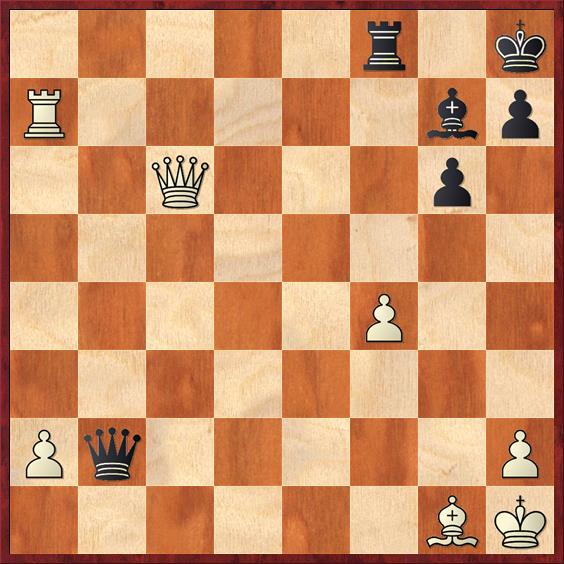
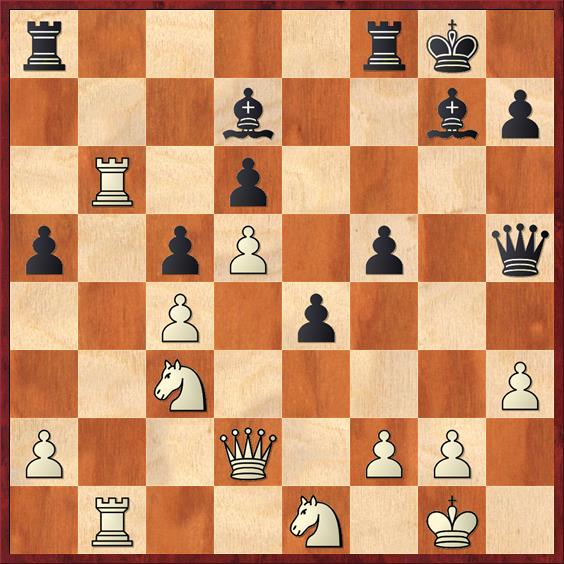
    Van Osch – Werle

    White is already on a slippery slope here, but with his next moves he opens the gates widely:

    34.Qxa5? Qe3+ 35.Kh1


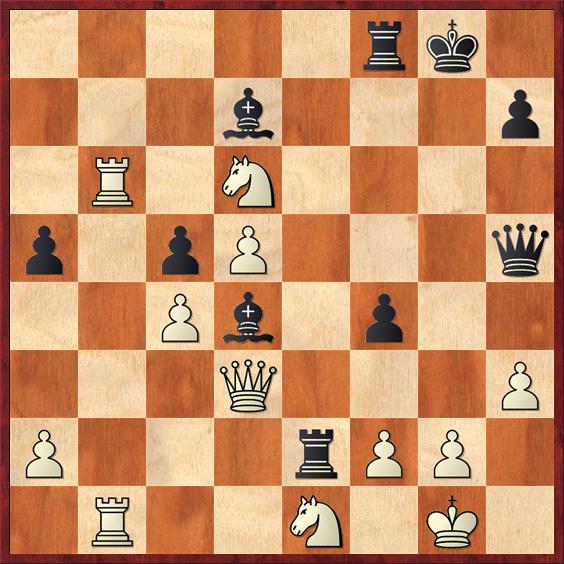
    35…Bc6+!!

    Quite elegant. On 36.Bxc6, 36…Qc1+ leads to mate.

    36.Rxc6 Qf3+ 37.Kg1 Qd1+ 38.Kf2 Re2#


    Jan Werle. Photo: Lennart Ootes
    There were a few more upsets today. Valentin Buckels held Sipke Ernst to a draw – okay, the young German has already made some miles in our tournaments. But that the young Liam Vrolijk overcame grandmaster Das Debashis tactically in a difficult game was a bigger surprise. There was also a Dutch grandmaster who bit the dust: Harmen Jonkman went down in a major-piece ending versus Denis Mager due to several weaknesses. Richard Vedder, on the other hand, fought back after a few disastrous chess months with a draw against IM Nitin.

    Migchiel de Jong recovered in characteristic style from yesterday’s half-disappointment: he went straight for Jorgen Henseler’s throat.

    De Jong – Henseler


    De Jong will never dodge such a challenge – sacrificing a piece for three pawns.

    14.Nxb4! dxc4 15.Nxc6 Qb6 16.Nxe7+ Kh8 17.Bg4!? f5

    Here Black could have tried 17…Bb7, the move De Jong may have hoped to have prevented: 18.Bxd7 Qd8 is better for Black than what happens in the game.

    18.Bf3 Bb7 19.a5 Qb5 20.a6 Lxf3 21.Qxf3 Nc7 22.e6!

    Now Black has to return the piece – also for three pawns. But his remaining pieces are wandering aimlessly around the board.

    22…Nxe6 23.Rxe6 Qxb2 24.Rae1 Qxd4 25.Rd6 Qc3 26.Qxc3 Bxc3


    The Te1 is hanging, but there is also something else hanging by a thread: on h8.

    27.Rxd7! 1–0

    We conclude with a nice final combination by the youngest of the thirteen participants from India (aged 13):

    Schoehuijs – Sharma


    17…Nxe2! 18.Nxe2

    18.Kxe2 Qd3+ is also over and out.

    18…Rxd2 19.Bf3 Qd3

    And White resigned, as he will lose more material.


    Photo: Lennart Ootes

    Lola den Dunnen. Photo: Lennart Ootes

    Kidambi Sundararajan. Photo: Lennart Ootes
  • Sokolov booming

    Sokolov booming

    In a six-game match, the first blow is worth a few euros. Ivan Sokolov thoroughly realized this today when he went for the kill with white, striving for a ‘V for Victory’ pawn formation (d5-e4-f3-g4-h5). He didn’t quite complete the V, but he did the victory. And the Bosnian Dutchman was clearly very happy with that.

    ‘Did you have a special plan for today?’ commentator Jop Delemarre asked Sokolov after his win. ‘Yes’, he replied. With a firm full stop after this sentence.

    Sokolov – Van Foreest

    1.c4 Nf6 2.Nc3 g6 3.e4 d6 4.d4 Bg7 5.Be2 0–0 6.Be3 e5 7.d5 a5 8.g4 Na6 9.g5 Ne8

    Here the game started for Sokolov. He had analysed 9…Nd7. As Jop Delemarre explained in the commentary room, White’s plan is not to build up an attack on the black king, but to paralyse the black initiative there and then eventually strike on the queenside, where White is superior in the King’s Indian.

    10.h4 Nc5 11.h5 Bd7 12.Nf3 c6 13.Nd2 a4

    14.b4!?

    Loek van Wely criticized this move. ‘You shouldn’t play on two wings’, the tournament director instructed. Russian specialists continue quietly here with 14.Qc2 and queenside castling. Sokolov was quite satisfied with his play here.

    14…axb3 15.axb3 Rxa1 16.Qxa1 Na6 17.Kf1 Nb4 18.Qb1 Nc7

    At this moment Sokolov said to himself: ‘Do I want to allow two black knights on b4 and c5?” The answer was ‘no’. But he regretted his next move afterwards.

    19.Na2 cxd5 20.cxd5


    20…Nxa2?

    The breaking point, according to both players. Black should have seized his chance here with 20…Nbxd5! 21.exd5 Nxd5. ‘Then he can play for three results, whereas after the text he can only play for two’, said Sokolov. Van Foreest had considered the move, of course, but he gave a characteristic explanation for his choice: ‘I thought my position was OK anyway.’


    Sokolov shows the game to the audience and commentator Jop Delemarre. Photo: Lennart Ootes
    21.Qxa2 Nb5 22.Bxb5 Bxb5+ 23.Nc4

    ‘Now Black is in trouble’, Sokolov claimed.

    23…Qc8

    With hindsight, Van Foreest didn’t approve of this move. ‘23…f5 immediately was better.’

    24.Qe2 f5 25.gxf6 Rxf6 26.Bg5

    Delemarre said: ‘From here on, Sokolov killed the position in five moves.’ g6 is a painful weakness.

    26…Rf7 27.hxg6 hxg6 28.Kg2 Rc7 29.Rc1

    This rook can move to g3 through c3.

    29…Bf8 30.Rc3 Ba6?!

    Missing his last chance to protect g6, but the bishop on e8 wasn’t a pleasant prospect either.

    31.Rg3


    31…b5

    And here he misses his last chance to defend. After 31…Bxc4! 32.bxc4 Rxc4 White seems to win in the attack, but it’s not clear:

    1. 33.Bd8 Bg7 (33…Rc2? 34.Qh5! Rxf2+ 35.Kxf2 Qc5+ 36.Kg2 and the king walks to h3) 34.Rxg6 Rc2 35.Qg4 Qxg4+ 36.Rxg4 Kf7 37.Be7 Bf8+= had been calculated by Sokolov; 38.Bxf8 Kxf8 39.Rg6 wins a pawn for White, but according to the experts (Delemarre and Lucas van Foreest) this endgame is a draw;

    2. 33.Be7 Rc7 34.Rxg6+ Kf7 35.Qh5 Kxe7 36.Re6+ Qxe6 37.dxe6 Kxe6 also seems to be unwinnable for White; he won’t manage to carry through both f2-f4 and e4-e5 in favourable circumstances.

    32.Ne3 b4? 33.Qf3

    Missed by the black player, especially White’s next move.

    33…Bg7 34.Bf6 Rf7 35.Rxg6 Qf8 36.Ng4 Qc8 37.Nh6+ Kh7 38.Qh5


    38…Bf1+ 39.Kxf1 Qc1+ 40.Kg2 Bxh6 41.Rxh6+ 1–0

    However, Van Foreest didn’t lose his sense of humour either. Shortly after the game he entered the pressroom with the book ‘Kotronias vs the King’s Indian’ in his hands, and even allowed us to make a picture.


    Jorden van Foreest with his new book. Photo: Lennart Ootes

    Ivan Sokolov. Photo: Lennart Ootes
    The first battle of the sexes was a grim struggle. Hou Yifan was given a hard time, but she stayed afloat.

    Short – Hou Yifan

    For the statisticians: in classical games the score between these two players is 3-3. Both had won 1 game – by the way, Hou Yifan won first, in Wijk aan Zee 2008, in 23 moves. In 2012, Hou Yifan and Short entered a playoff to determine the tournament victor at the Gibraltar Open, won by Short 1œ–œ.


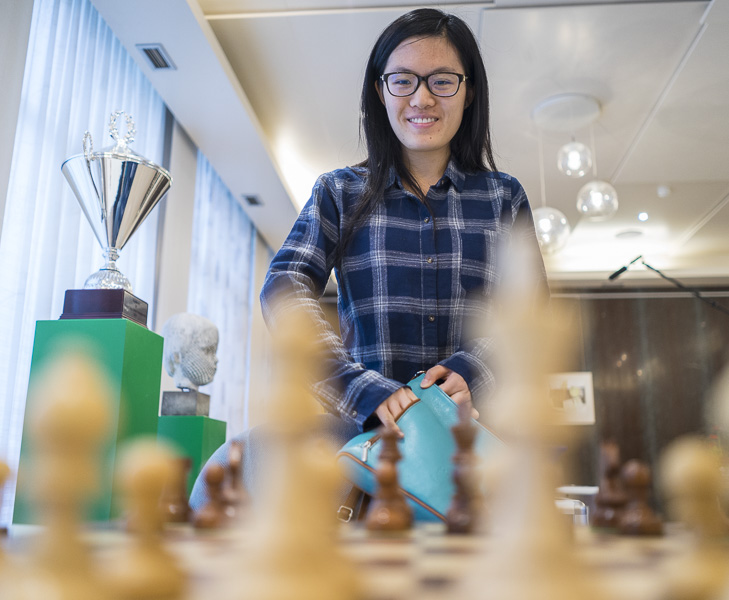
    Hou Yifan and Nigel Short at the opening ceremony. Photo: Lennart Ootes
    1.Nf3 Nf6 2.g3 d5 3.Bg2 b5!?

    Aimed against c2-c4 – running the risk however that with a little preparation this move may come with greater effect later on.

    4.0–0 Bb7 5.d3 e6 6.c4 a6 7.cxd5 Nxd5

    After 7…exd5 White has the strong 8.d4!.

    8.a4 Be7 9.Nc3 0–0 10.axb5 Nxc3 11.bxc3 axb5 12.Rxa8 Bxa8 13.Qb3!


    b5 remains a hot issue: after Black’s reply the c7-pawn remains backward.

    13…Bc6

    Objectively best was perhaps 13…Qd5, but exchanging queens at such an early stage is not Hou Yifan’s style.

    14.Be3 Nd7 15.Ra1 Qc8

    When asked what had gone wrong, the Chinese replied: ‘There’s not one single move, I made a few passive moves.’ Perhaps this one was not so accurate: on the next move the queen makes another step.

    16.Ra7 Qb8 17.Qa2 b4

    This does not work out very well either; the wait-and-see move 17…Bd6 was the alternative.

    18.cxb4 Bxb4 19.Nd4 Bxg2 20.Kxg2 Bc5?!

    20…Ne5 would have prevented White’s strong next.


    21.Nc6! Qb6 22.Ne7+! Kh8 23.Bxc5 Qxc5 24.Qa3 Qb6

    Afterwards, the players looked briefly at the ‘active’ 24…Qc2 – which goes horribly wrong after 25.Ra8! Qxe2?? (25…Rb8 26.Qa6! and there is no good remedy against the threat of 27.Rxb8+ and 28.Qc8+) 26.Rxf8+ Nxf8 27.Qa8 with dull misery.

    25.Qa5

    Now the queens go off anyway, as otherwise Black loses a pawn with 25…Qd6 26.Qxc7 Qxe7 27.Qxd7. ‘I was considering going into the 5 vs 4 rook ending’, Hou Yifan said. ‘That is incredibly unpleasant’, Short replied, ‘maybe even lost.’

    25…Qxa5 26.Rxa5 g6 27.Ra7 Re8 28.Nc6 Rc8


    This is also highly unpleasant for Black. But could White have won somewhere? Both players didn’t dare to say.

    29.f4 Kg7 30.Kf3 Kf8 31.g4 Ke8 32.g5 Nb6 33.e4 Kd7 34.Ne5+ Ke7 35.Ke3

    Hou Yifan suggested that White might have tried 35.Rb7 somewhere. This move indeed looks favourable at this moment – Black finds herself in a kind of zugzwang. For example: 35…f5 36.gxf6+ Kxf6 37.Nc6 h6 (37…Kf7? 38.Na7 is an important point of Nb7) 38.h4 g5 39.Kg4 h5+ 40.Kg3 gxf4+ 41.Kxf4 Kf7 (if the knight budges, for instance with 41…Nd7, White pushes through with 42.d4) 42.Na7 Rg8 43.Rxc7+ Kf6 and this looks tenable after all in view of 44…Rg4+.

    35…f6!

    Now this is an important defensive move – otherwise Black will succumb to a shortage of space.

    36.gxf6+ Kxf6 37.h4 Ke7 38.Ra2 Nd7 39.Nc6+ Kd6 40.Rc2 Nc5?!


    Allowing a little trick. After 40…Nf8 it’s hard to see how White can make progress.

    41.Ne5?!

    41.Na7! Ra8 42.Nb5+ Kc6 43.Nxc7 Kxc7 44.Rxc5+ and now (involuntarily!) there is a 4 vs 3 rook ending on the board. Is it a win? Hard to say. Agony for Black? Definitely. Especially since h4-h5 is coming.

    41…Nd7 42.Rc6+ Ke7 43.Kd4

    This looks like a tight spot for Black, but by manoeuvring the knight she manages to hold. The following phase doesn’t show any more clear attempts by White.

    43…Nf6 44.Rc5 Ne8 45.Ra5 Nf6 46.Ra7 Nh5 47.Ke3 Nf6 48.Nc6+ Kd7 49.Ra6 Rf8 50.Ne5+ Ke7 51.Rc6 Rc8 52.Nc4 Kd7 53.Ra6 Rf8 54.Ne5+ Ke7 55.Ra7 Rc8 56.Nc4 Ne8 57.Ne5 Nf6

    And Short ceded his attempts with the remark, ‘Come on, let’s eat.’ ‘Mm, he could have played on for a bit’, muttered Loek van Wely, who seems to become even more belligerent when he cannot play himself.

    œ–œ


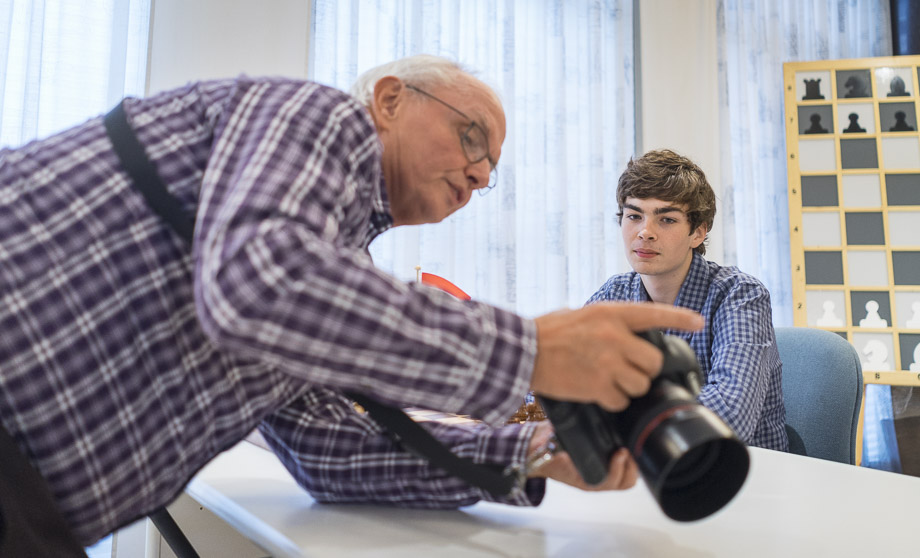
    Photographers at the start of the round. Photo: Lennart Ootes

    Hou Yifan. Photo: Lennart Ootes
  • Sokolov booming

    Sokolov booming

    In een match van zes partijen is de eerste klap heel wat euro’s waard. Dat besefte Ivan Sokolov vandaag terdege, toen hij met wit fel ten strijde trok en met zijn pionnenformatie streefde naar de ‘V for Victory’ (d5-e4-f3-g4-h5). Die V kwam er niet helemaal, maar de victorie wel. En daar was de Bosnische Nederlander overduidelijk heel happy mee.
    “Had je een speciaal plan voor vandaag?” vroeg Jop Delemarre aan Sokolov na zijn overwinning. “Ja”, antwoordde deze. Met een ferme punt achter deze volzin.

    Sokolov – Van Foreest

    1.c4 Pf6 2.Pc3 g6 3.e4 d6 4.d4 Lg7 5.Le2 0–0 6.Le3 e5 7.d5 a5 8.g4 Pa6 9.g5 Pe8

    Hier begon de partij voor Sokolov. 9…Pd7 had hij nog geanalyseerd. Het witte plan, zo legde Jop Delemarre uit in de commentaarzaal, is niet een koningsaanval op te zetten, maar het zwarte initiatief daar lam te leggen en uiteindelijk toe te slaan op de damevleugel, het terrein waar wit in de KoningsindiĂ«r het sterkst is.

    10.h4 Pc5 11.h5 Ld7 12.Pf3 c6 13.Pd2 a4


    14.b4!?

    Op deze zet had Loek van Wely kritiek. “Je moet niet op twee vleugels spelen”, doceerde de toernooidirecteur. Russische specialisten gaan hier rustiger verder met 14.Dc2 en lange rokade. Sokolov was hier nog best tevreden.

    14…axb3 15.axb3 Txa1 16.Dxa1 Pa6 17.Kf1 Pb4 18.Db1 Pc7


    Op dit moment vroeg Sokolov zich af: “Wil ik twee zwarte paarden op b4 en c5 toelaten?” Het antwoord was nee. Maar zijn volgende zet betreurde hij achteraf.

    19.Pa2 cxd5 20.cxd5


    20…Pxa2?

    Het breekpunt, volgens beide spelers. Zwart had hier zijn kans moeten wagen met 20…Pbxd5! 21.exd5 Pxd5. “Dan speelt hij voor drie resultaten, maar na de tekstzet alleen nog maar voor twee”, zei Sokolov. Van Foreest had natuurlijk over de zet nagedacht, maar hij gaf een karakteristiek argument: “Ik dacht dat ik sowieso wel OK stond.”


    Sokolov toont de partij aan het publiek en commentator Jop Delemarre. Foto: Lennart Ootes

    21.Dxa2 Pb5 22.Lxb5 Lxb5+ 23.Pc4

    “Nu heeft zwart het erg moeilijk”, aldus Sokolov.

    23…Dc8

    Deze zet vond Van Foreest achteraf niet goed. ” 23…f5 meteen was beter.”

    24.De2 f5 25.gxf6 Txf6 26.Lg5

    Delemarre zei: “Vanaf hier maakte Sokolov de stelling in vijf zetten dood.” g6 is een pijnlijke zwakte.

    26…Tf7 27.hxg6 hxg6 28.Kg2 Tc7 29.Tc1

    Die toren kan via c3 naar g3.

    29…Lf8 30.Tc3 La6?!

    Mist de laatste kans om g6 te dekken, maar de loper op e8 was ook geen prettig vooruitzicht.

    31.Tg3


    31…b5

    Mist een laatste verdedigingskans. Na 31…Lxc4! 32.bxc4 Txc4 lijkt wit in de aanval te winnen, maar het is niet duidelijk: 33.Le7 (33.Ld8 Lg7 (33…Tc2? 34.Dh5! Txf2+ 35.Kxf2 Dc5+ 36.Kg2 en de koning loopt naar h3) 34.Txg6 Tc2 35.Dg4 Dxg4+ 36.Txg4 Kf7 37.Le7 Lf8+= had Sokolov nog berekend; 38.Lxf8 Kxf8 39.Tg6 wint een pion voor wit, maar volgens de kenners (Delemarre en Lucas van Foreest) is dit eindspel remise) 33…Tc7 34.Txg6+ Kf7 35.Dh5 Kxe7 36.Te6+ Dxe6 37.dxe6 Kxe6 schijnt ook niet te winnen te zijn voor wit; het zal niet lukken om zowel f2–f4 als e4–e5 onder gunstige omstandigheden door te drukken.

    32.Pe3 b4? 33.Df3

    Gemist door de zwartspeler, met name de volgende zet van wit.

    33…Lg7 34.Lf6 Tf7 35.Txg6 Df8 36.Pg4 Dc8 37.Ph6+ Kh7 38.Dh5


    38…Lf1+ 39.Kxf1 Dc1+ 40.Kg2 Lxh6 41.Txh6+ 1–0

    Van Foreest verloor ook zijn goede humeur niet. Kort na de partij kwam hij in de perskamer aanzetten met het boek ‘Kotronias vs the King’s Indian’ en poseerde daarmee zelfs voor de foto.


    Jorden van Foreest met zijn nieuwe aankoop. Foto: Lennart Ootes


    Ivan Sokolov. Foto: Lennart Ootes

    Het eerste duel der geslachten werd een grimmige strijd. Hou Yifan had het moeilijk, maar ze bleef overeind.

    Short – Hou Yifan

    Voor de statistici: in klassieke partijen staat het tussen deze twee spelers 3-3. Beiden wonnen 1 partij – de eerste winst was overigens voor Hou Yifan, in Wijk aan Zee 2008, in 23 zetten. In 2012 speelden Hou Yifan en Short een barrage voor de toernooizege bij het Gibraltar Open, die Short met 1œ–œ won.


    Hou Yifan en Nigel Short bij de openingceremonie. Foto: Lennart Ootes

    1.Pf3 Pf6 2.g3 d5 3.Lg2 b5!?

    Tegen c2-c4 gericht, met het gevaar dat die zet met wat voorbereiding straks nog wat harder aankomt.

    4.0–0 Lb7 5.d3 e6 6.c4 a6 7.cxd5 Pxd5

    Na 7…exd5 heeft wit sterk 8.d4!.

    8.a4 Le7 9.Pc3 0–0 10.axb5 Pxc3 11.bxc3 axb5 12.Txa8 Lxa8 13.Db3!


    b5 blijft een omstreden punt: na het antwoord blijft de c7–pion achter.

    13…Lc6

    Objectief het beste was misschien 13…Dd5, maar dames ruilen in zo’n vroeg stadium is niet Hou Yifan’s stijl.

    14.Le3 Pd7 15.Ta1 Dc8

    Op de vraag waar het fout was gegaan antwoordde de Chinese: “Niet op één bepaald moment, ik denk een paar kleinere onnauwkeurigheden.” Dit was er wellicht zo één: de dame doet op de volgende zet een stapje verder.

    16.Ta7 Db8 17.Da2 b4

    Ook dit pakt niet helemaal lekker uit; blijven staan met 17…Ld6 was het alternatief.

    18.cxb4 Lxb4 19.Pd4 Lxg2 20.Kxg2 Lc5?!

    20…Pe5 verhindert wits sterke volgende zet.


    21.Pc6! Db6 22.Pe7+! Kh8 23.Lxc5 Dxc5 24.Da3 Db6

    De spelers keken na afloop nog even naar het ‘actieve’ 24…Dc2 – dat loopt faliekant mis na 25.Ta8! Dxe2?? (25…Tb8 26.Da6! en er is geen goede remedie tegen de dreiging 27.Txb8+ en 28.Dc8+) 26.Txf8+ Pxf8 27.Da8 met doffe ellende.

    25.Da5

    Nu moeten de dames er toch af, anders verliest zwart een pion met 25…Dd6 26.Dxc7 Dxe7 27.Dxd7. “Ik dacht er nog even over om op het 5 tegen 4–toreneindspel in te gaan”, zei Hou Yifan. “Dat is ongelooflijk onprettig voor zwart”, reageerde Short, “misschien wel verloren.”

    25…Dxa5 26.Txa5 g6 27.Ta7 Te8 28.Pc6 Tc8


    Ook dit is uiterst onprettig voor zwart. Maar kon wit ergens winnen? Beide spelers durfden het niet te zeggen.

    29.f4 Kg7 30.Kf3 Kf8 31.g4 Ke8 32.g5 Pb6 33.e4 Kd7 34.Pe5+ Ke7 35.Ke3

    Hou Yifan opperde dat wit ergens misschien 35.Tb7 had kunnen proberen. Op dit moment lijkt dat inderdaad gunstig – zwart verkeert in een soort zetdwang. Bijvoorbeeld: 35…f5 36.gxf6+ Kxf6 37.Pc6 h6 (37…Kf7? 38.Pa7 is een belangrijke pointe van Tb7) 38.h4 g5 39.Kg4 h5+ 40.Kg3 gxf4+ 41.Kxf4 Kf7 (als het paard wijkt, bijvoorbeeld met 41…Pd7, stoomt wit op met 42.d4) 42.Pa7 Tg8 43.Txc7+ Kf6 en nu lijkt het toch houdbaar met 44…Tg4+.

    35…f6!

    Nu wel een belangrijke verdedigingszet, anders gaat zwart te gronde aan een tekort aan ruimte.

    36.gxf6+ Kxf6 37.h4 Ke7 38.Ta2 Pd7 39.Pc6+ Kd6 40.Tc2 Pc5?!


    Laat een trucje toe. Na 40…Pf8 is niet goed te zien hoe wit verder kan komen.

    41.Pe5?!

    41.Pa7! Ta8 42.Pb5+ Kc6 43.Pxc7 Kxc7 44.Txc5+ en nu staat er (onvrijwillig) een 4 tegen 3 toreneindspel op het bord. Gewonnen? Moeilijk te zeggen. Een lijdensweg voor zwart? Zeker. Vooral omdat h4–h5 eraan komt.

    41…Pd7 42.Tc6+ Ke7 43.Kd4

    Dit ziet er benauwd uit, maar door het paard om te spelen houdt zwart stand. In de volgende fase zijn er geen duidelijke witte pogingen meer te zien.

    43…Pf6 44.Tc5 Pe8 45.Ta5 Pf6 46.Ta7 Ph5 47.Ke3 Pf6 48.Pc6+ Kd7 49.Ta6 Tf8 50.Pe5+ Ke7 51.Tc6 Tc8 52.Pc4 Kd7 53.Ta6 Tf8 54.Pe5+ Ke7 55.Ta7 Tc8 56.Pc4 Pe8 57.Pe5 Pf6

    En Short hield het voor gezien met de opmerking, “Kom, laten we gaan eten.” “Hm, hij had nog best even door kunnen melken”, bromde Loek van Wely, die alleen nog maar strijdlustiger lijkt te worden als hij zelf niet mee mag spelen.

    œ–œ


    Fotografen bij de start van de ronde. Foto: Lennart Ootes


    Hou Yifan. Foto: Lennart Ootes


  • Grootmeesters moeten al flink aan de bak

    Grootmeesters moeten al flink aan de bak

    Grootmeesters moeten al flink aan de bak

    Het publiek bofte op deze stralende zondagmiddag. Niet alleen waren er twee inhoudsrijke matchpartijen, aan het topbord van het open toernooi vlogen de vonken er ook af. Demre Kerigan, een Turk die al jaren in Nederland speelt, was niet bang voor de aanvalskracht van de open kampioen van 2015, Abhijeet Gupta, en ging de uitdaging aan in een scherpe SĂ€misch-variant van het Koningsindisch.

    Gupta – Kerigan

    1.d4 Pf6 2.c4 g6 3.Pc3 Lg7 4.e4 d6 5.f3 c6 6.Le3 Pbd7 7.Dd2 a6 8.0–0–0 Da5 9.Kb1 b5 10.g4 0–0


    Hier was Kerigan redelijk optimistisch, en Gupta was ook niet helemaal zeker van zijn zaak omdat zwart op h4 altijd …h5 heeft. “Daarom besloot ik maar zijn aanvalsloper onschadelijk te maken.”

    11.Lh6 Lxh6 12.Dxh6 bxc4!

    Zwart slaat terug in het centrum.

    13.h4 Tb8 14.Pge2 c5 15.Dd2

    Een veeg teken, zoals Jop Delemarre zei in de commentaarzaal. Hij was tevreden over het spel van zijn voormalig pupil.

    15…cxd4 16.Pxd4 Pe5 17.Ka1 Ld7 18.h5


    18…Db6?

    Verliest een tempo. Beter was, nu of op de vorige zet, …Dc5, ook met de bedoeling …Pd3. Nu krijgt wit weer de overhand.

    19.g5

    Maar niet zo! Sterker was 19.hxg6 fxg6 20.g5 Pd3 21.Lxd3 cxd3 22.gxf6 Dxd4 23.fxe7 Txf3 met een scherpe stelling, waarin zwart niet zonder kansen is.

    19…Pxh5 20.Pd5 Dc5

    Zwart kon zich hier nog 20…Dd8! permitteren, met de pointe 21.f4 e6!, een motief dat je ook wel eens in bepaalde varianten van de Draak ziet. Na 22.Txh5 exd5! 23.Th1 Pg4 staat zwart prima.

    21.Pxe7+ Kh8 22.Pd5 Le6 23.Pf6


    23…Pd3?

    Babu Lalith had de partij gevolgd en meende dat zwart hier 23…c3! had moeten proberen, bijvoorbeeld 24.Dxc3 (24.bxc3? Lxa2!!) 24…Dxc3 25.bxc3 Pxf6 26.gxf6 h5 en zwart staat een tikje beter.

    24.Pxe6 fxe6 25.Lxd3

    Het probleem voor zwart is dat wit nu heel snel tot aanval komt via de c- en de h-lijn en de zevende rij.

    25…Pxf6 26.Lxc4 Dxc4 27.gxf6 Txf6 28.Tc1 Db5 29.Tc7 Txf3 30.Thxh7+ Kg8


    31.Th8+! 1–0


    Abhijeet Gupta. Foto: Lennart Ootes
     

    Aan bord 2 deed Fred Slingerland het nog beter. In een Siciliaan hield hij alle aspiraties van Chanda Sandipan in bedwang en wikkelde af naar een remise-toreneindspel, dat hij ook niet verprutste.

    Babu Lalith ging in op een (ongetwijfeld!) theoretisch variantje tegen Stefan Colijn. Deze won met zwart een pion, maar zijn stukken werden volledig vastgezet, en de Indiër had weinig moeite het punt binnen te halen.

    Mees van Osch was goed bezig tegen Jan Werle. De grootmeester werd teruggedrongen op de achterste rijen, maar kromde natuurlijk de rug en toen kwamen er langzaam scheurtjes in het witte concept.

    Van Osch – Werle


    Wit bevindt zich al op een hellend vlak, maar met zijn volgende zet zet hij de sluizen wijd open:

    34.Dxa5? De3+ 35.Kh1


    35…Lc6+!!

    Heel elegant. Op 36.Lxc6 gaat 36…Dc1+ mat.

    36.Txc6 Df3+ 37.Kg1 Dd1+ 38.Kf2 Te2#


    Jan Werle. Foto: Lennart Ootes

    Er waren weer een paar ‘upsets’ vandaag. Dat Valentin Buckels Sipke Ernst op remise hield – alla, de jonge Duitser heeft in onze toernooien al wat meters liggen. Maar dat de jonge Liam Vrolijk grootmeester Das Debashis tactisch de baas was in een moeilijke partij was een stuk opvallender. En ook een Nederlandse grootmeester moest eraan geloven: Harmen Jonkman ging in een eindspel met zware stukken ten onder aan een paar zwakten tegen Denis Mager. Daarentegen vocht Richard Vedder zich terug na een paar bereslechte schaakmaanden met een remise tegen IM Nitin.

    Migchiel de Jong herstelde zich op karakteristieke wijze van zijn halve misser van gisteren: de beuk ging erin.

    De Jong – Henseler


    Zo’n uitdaging gaat De Jong altijd aan – een stukoffer voor drie pionnen.

    14.Pxb4! dxc4 15.Pxc6 Db6 16.Pxe7+ Kh8 17.Lg4!? f5

    Hier had zwart 17…Lb7 kunnen proberen, de zet die De Jong mogelijk hoopte verhinderd te hebben: 18.Lxd7 Dd8 is beter voor zwart dan wat in de partij gebeurt.

    18.Lf3 Lb7 19.a5 Db5 20.a6 Lxf3 21.Dxf3 Pc7 22.e6!

    Nu moet zwart het stuk teruggeven – ook voor drie pionnen. Maar zijn resterende stukken dwalen over het bord.

    22…Pxe6 23.Txe6 Dxb2 24.Tae1 Dxd4 25.Td6 Dc3 26.Dxc3 Lxc3


    Te1 hangt, maar er hangt ook iets aan een zijden draaje: op h8.

    27.Txd7! 1–0

    We sluiten af met een aardige slotcombinatie van de jongste van de dertien deelnemers uit India (13):

    Schoehuijs – Sharma


    17…Pxe2! 18.Pxe2

    18.Kxe2 Dd3+ is ook afgelopen.

    18…Txd2 19.Lf3 Dd3

    En wit gaf op, want er zit nog meer in het vat.


    Foto: Lennart Ootes


    Lola den Dunnen. Foto: Lennart Ootes


    Kidambi Sundararajan. Foto: Lennart Ootes

  • Ambitious plans

    Ambitious plans

    The chairman of the tournament board, Bert van der Haar, welcomed everybody to this 20th edition of the Hoogeveen Chess Tournament. He recalled that the event had led a ‘reluctant life’ after UnivĂ© had stopped as the main sponsor, and CEO Alle Peereboom of McDonald’s Hoogeveen had filled a large part of this gap. The board has now started a new sponsor project, named ‘Corps 32’. They strive to gather a collection of 32 ‘friends’, who will ‘help this tournament to lead a new life, preferably for 20 more years.’ 23 out of these 32 have already been found. ‘Corps 32 will be an elite corps that will join us in our struggle’, Van der Haar said. And he continued: ‘Loek van Wely has once again put together a fantastic tournament.’


    Bert van der Haar. Photo: Lennart Ootes

    The mayor of Hoogeveen, Karel Loohuis, said he was glad and proud that the tournament has been kept alive. He stressed that it is important to involve chess more strongly in society: ‘in companies, in schools, on the streets’. A good example was the simultaneous exhibition Loek van Wely gave on Thursday, 4 October, at the nearby refugee centre, with boards and pieces presented to the refugees by Secretary of State Jetta Klijnsma two years ago. ‘This event has to become more alive in Hoogeveen’, the mayor said. ‘Internationally it’s already very well known, as we can see from the many visitors to our website. After the Tata Steel Tournament, we are the number two in the Netherlands.’ He concluded by singing the praises of the many-sidedness of chess, illustrating this with the famous story about the inventor of the game and the grains on the 64 squares.


    Karel Loohuis. Photo: Lennart Ootes

    Eric Smaling, member of the Dutch House of Commons for the Socialist Party, told the audience that he has been playing chess since he was 10 or 11. ‘I’ve carried the game of chess with me for a long time. It gives me much pleasure, and it also influences the way you lead your life, the way you make the decision to go left or right at certain moments. There is a link with politics: you can make an incorrect double knight sacrifice. You will lose, but everybody will be talking about you. It’s the same in politics.’
     
    Smaling didn’t make any bold pronouncements on the differences between chess-playing men and women. He did recall that he once lost not only to Loek van Wely, but also to his wife Lorena. He said he hoped that the Hoogeveen Chess Tournament will grow, and that it will be reflected better in the province of Drenthe. “There is a lot of culture here and, therefore, a lot of creativity.’ He wished the organizers and the players success, and with this the tournament was declared opened.


    Eric Smaling. Photo: Lennart Ootes

    Now it was time for the tournament director, Loek van Wely, to do the drawing of lots. He said he was glad that the tournament is firmly on its feet again – ‘it wouldn’t have been possible without the help of the municipality and the province.’ On the rest day, Wednesday 19 October, there will also be chess, demonstrated by Van Wely and Hans Böhm, in the province house in Assen. And during a simul by Van Wely this morning, for young players at McDonald’s, various parents had been very enthusiastic.
     
    About the two matches, Van Wely said he was very glad to have been able to attract Women’s World Champion Hou Yifan, as well as former vice World Champion Nigel Short, his old ‘buddy of war’ Ivan Sokolov and the new Dutch champion Jorden van Foreest, who had kept the title from Van Wely’s claws earlier this year: ‘These two matches will be wonderful.’
     
    Van Wely asked Hou Yifan for a comment on several remarks her opponent Nigel Short had made about women being less good at chess than men. ‘Actually I didn’t know this’, the World Champion said. ‘I did know Nigel, we have played a few times and we were even partners at an event, two years ago.’ To the question whether she would be willing to wear a hijab at a chess tournament, as will be required at the coming World Championship tournament in Iran, Hou Yifan replied diplomatically: ‘I dropped out of the cycle, so I don’t pay attention to such matters.’
     
    Nigel Short clarified that he had written in New In Chess that ‘men on average play better than women. Hou Yifan is not average. I can also say that younger players are better on average than older players. I am the only player above 50 in the top-100. In any case – no doubt there will be jubilation if I lose this match, but I’ll do my best.’
     
    Hou Yifan drew Black for the first game.


    Hou Yifan and Nigel Short. Photo: Lennart Ootes

    Van Wely asked Ivan Sokolov: ‘Jorden is a dangerous player, and so are you. Who will be the first one to bite?’ The two like to take stabs at each other. Sokolov said: ‘Jorden plays more dynamically than other Dutch players – more dynamically than you, for instance.’ ‘That’s why I’m hoping for positional games’, Van Wely replied. ‘Then I will sit down and watch them like a specialist. But still I think this match will be a spectacle.’
     
    When asked if he was ready to take the next step in chess, the young Dutch champion Jorden van Foreest said: ‘Against strong players I have increasingly been playing my own game recently, I’m no longer afraid of them. I hope I’m ready.’
    Van Wely advised him to take it one step at a time: ‘First you will have to pass Ivan, then you have to pass me. That is one level higher.’
     
    Jorden van Foreest also drew Black for the first game.


    Jorden van Foreest. Photo: Lennart Ootes

    In conclusion, Jan Feenstra presented his new chess short story. He said: ‘A famous predecessor like Stefan Zweig received criticism from professionals that the games in his Schachnovelle had not been correctly depicted, so I didn’t want to give that a try.’ He had chosen a famous figure from Dutch chess as the protagonist for his story: Uncle Jan, from the book ‘
 teaches his nephew to play chess’. Feenstra read a fragment of his book to the audience, and then thanked the board for the assignment, and his publishing house Passage for all their help. Then he handed over the first copies of the book, called The Second, to Eric Smaling and Karel Loohuis.

    Pairings matches, first round:

    Short-Hou Yifan

    Sokolov-Van Foreest


    Nigel Short and Hou Yifan in front of a Mao portrait by Andy Warhol. Photo: Lennart Ootes

  • Ambitieuze plannen

    Ambitieuze plannen

    Voorzitter Bert van der Haar van het toernooibestuur sprak het welkomstwoord bij de 20e editie van het Hoogeveen Schaaktoernooi. Hij memoreerde dat het evenement een paar jaar een “schoorvoetend leven” had geleid nadat UnivĂ© was gestopt als hoofdsponsor, en dat Alle Peereboom van McDonald’s een groot deel van dit gat had gedicht. Het bestuur is nu begonnen met een nieuw sponsorproject, genaamd ‘Corps 32’. Gestreefd wordt naar een verzameling van 32 ‘vrienden’ die “zorgen dat het toernooi nog meer gaat leven, en liefst nog eens 20 jaar.” 23 van deze 32 sponsors zijn reeds gevonden. “Corps 32 wordt een elitekorps, dat samen met ons de strijd aangaat”, zei Van der Haar. En verder: “Loek van Wely heeft dit jaar weer een fantastisch toernooi bij elkaar gespijkerd.”


    Bert van der Haar. Foto: Lennart Ootes

    Burgemeester Karel Loohuis zei blij en trots te zijn dat dit toernooi in leven is gebleven. Hij benadrukte dat het belangrijk is om het schaken meer in de samenleving te brengen: “in bedrijven, in scholen, op straat”. Een goed voorbeeld was de simultaan die Loek van Wely op dinsdag 4 oktober gaf op het nabijgelegen AZC, met borden en stukken die staatssecretaris Jetta Klijnsma twee jaar geleden aan het centrum had aangeboden. “Dit evenement moet meer gaan leven in Hoogeveen”, zei de burgervader. “Internationaal leeft het al sterk, zoals te zien is aan de vele bezoekers op Internet. Na het Tata Steel toernooi zijn wij de nummer twee in Nederland.” Hij sloot af met een lofzang op de veelzijdigheid van het schaakspel, en illustreerde dat met het bekende verhaal over de uitvinder van het schaakspel en de graankorrels.


    Karel Loohuis. Foto: Lennart Ootes

    Tweede Kamerlid Eric Smaling van de SP vertelde dat hij al vanaf zijn 10e-11e schaakt. “Ik draag het schaakspel al heel lang met me mee, het geeft me veel plezier, en het heeft een werking op hoe je in het leven staat, op je beslissingen om op bepaalde momenten links- dan wel rechtsaf te gaan. Er is een link met de politiek: je kunt een dubbel paardoffer brengen dat incorrect is. Dan verlies je, maar iedereen heeft het over je. In de politiek is het ook zo.”

    Over het verschil tussen schakende mannen en vrouwen hield Smaling zich op de vlakte. Hij vertelde wel dat hij ooit had verloren van Loek van Wely, maar ook van zijn echtgenote Lorena. Hij sprak de hoop uit dat het Hoogeveen Schaaktoernooi groeit en dat het een meer Drents gezicht krijgt. “Er is veel cultuur hier en dus veel creativiteit.” Met zijn succeswens was het toernooi geopend.


    Eric Smaling. Foto: Lennart Ootes

    Daarmee was het tijd voor toernooidirecteur Loek van Wely om de loting te verrichten. Hij zei blij te zijn dat het toernooi weer stevig op de benen staat, “dat had ook nooit gekund zonder de hulp van de gemeente en de provincie.” Op de rustdag, woensdag 19 oktober, zal er ook worden geschaakt door Van Wely en door Hans Böhm in het provinciehuis in Assen. En bij een simultaan door Van Wely, vanochtend voor de jeugd bij McDonald’s, waren diverse ouders zeer enthousiast.

    Over de twee matches zei Van Wely heel blij te zijn wereldkampioene Hou Yifan aan te hebben kunnen trekken, alsmede voormalig vice-wereldkampioen Nigel Short, zijn oude ‘buddy of war’ Ivan Sokolov en de nieuwe Nederlands kampioen Jorden van Foreest, die Van Wely zelf van de titel had afhield eerder dit jaar: “Het worden twee geweldige matches.”

    Aan Hou Yifan vroeg Van Wely commentaar op opmerkingen die haar tegenstander Nigel Short had gemaakt over vrouwen die niet zo goed konden schaken als mannen. “Dat had ik eigenlijk nog nooit gelezen”, antwoordde de wereldkampioene. “Ik ken Nigel al wel, we hebben een paar keer gespeeld en waren zelfs een keer teamgenoten tijdens een evenement.” Op de beladen vraag of ze een hijab zou willen dragen bij een schaaktoernooi, zoals dat bij het komende WK in Iran zou moeten, antwoordde Hou Yifan diplomatiek: “Ik ben al uit de WK-cyclus gestapt, dus ik houd me met zulke zaken niet bezig.”

    Nigel Short verduidelijkte nog even dat “ik heb in New In Chess geschreven mannen gemiddeld beter schaken dan vrouwen. Hou Yifan is niet gemiddeld. Ik kan ook zeggen dat jonge spelers gemiddeld beter schaken dan oudere, en ik ben de enige vijftiger in de top-100. In ieder geval – jullie zullen misschien blij zijn als ik verlies, maar ik zal mijn best doen om te winnen.”

    Hou Yifan lootte voor de eerste partij zwart.


    Hou Yifan en Nigel Short. Foto: Lennart Ootes

    Aan Ivan Sokolov vroeg Van Wely: “Jorden is een gevaarlijke speler, jij ook. Wie gaat het eerst bijten?” De twee houden ervan om steken aan elkaar uit te delen. Sokolov zei: “Jorden speelt dynamischer dan andere Nederlandse spelers – dynamischer dan jij, bijvoorbeeld.” “Daarom hoop ik op positionele partijen”, repliceerde Van Wely. “Dan ga ik daar als specialist bij zitten kijken. Maar ik denk toch dat deze match gegarandeerd een spektakel wordt.”

    Op de vraag aan Jorden van Foreest of hij klaar was voor een volgende stap zei de jonge Nederlands kampioen: “Tegen sterke spelers ben ik meer mijn eigen spel gaan spelen, ik ben niet meer bang voor hen. Ik hoop dat ik er klaar voor ben.”

    Van Wely raadde hem aan het stap voor stap te doen: “Eerst moet je Ivan voorbij, en daarna moet je mij voorbij. Dat is nog een niveautje hoger.”

    Jorden van Foreest trok ook de zwartkleur voor de eerste partij.


    Jorden van Foreest. Foto: Lennart Ootes

    Als laatste presenteerde Jan Feenstra zijn nieuwe schaaknovelle. Hij zei: “Een beroemde voorganger als Stefan Zweig kreeg kritiek van professionals dat de partijen in zijn Schachnovelle niet correct waren weergegeven, dus daar zal ik me niet aan wagen.” Hij had dus een beroemde figuur uit de Nederlandse schaakwereld als personage genomen: Oom Jan van het boek ‘
 leert zijn neefje schaken’. Feenstra las een fragment voor uit het boek, en dankte het bestuur voor de opdracht en uitgever Passage voor de hulp. Daarna overhandigde hij de eerste exemplaren van De Secondant aan Eric Smaling en Karel Loohuis.

    Indeling matches, eerste ronde:

    Short-Hou Yifan

    Sokolov-Van Foreest


    Nigel Short en Hou Yifan voor een portret van Mao van Andy Warhol. Foto: Lennart Ootes

  • India-Rest of the World 10-3

    India-Rest of the World 10-3

    The big India-Netherlands match started today in the Open group in the town hall, while the four match players were still busy merrily drawing lots. Thirteen Indians we counted in this group – we may have missed one or two. Today we will present four. Three of them defeated their Dutch opponents – one lost, but it took a German opponent. Hence the title of this piece: Rest of the World.
     
    Of the four we will show you here, three were Indian grandmasters, paired with three talented young players from the Netherlands, who haven’t reached that level yet. So the real struggle between the enormous delegation from India and the other nationalities is still ahead. 
    Abhijeet Gupta defeated Ron Hoffman on first board in a tough game. That other surge of open tournaments, Chanda Sandipan (who was victorious in Dieren this summer), played a little more frivolously.

    Chandipan – Nguyen

    White is enjoying his pawns, and he increases the pleasure with a strong exchange sacrifice:

    19.Rxa4 bxa4 20.Bxa6

    20.c6 was possibly even stronger – this could also have been played on the previous move.

    20…Rc7 21.b5 dxc5 22.dxc5 a3 23.c6 Nb6 24.Qb3 Bb2 25.Rd1 Ra7 26.Bc5 Rd8 27.Rxd8+ Qxd8 28.Bxa3 Bxa3 29.Qxa3 Qd1+ 30.Kh2 Qe2 31.Qc5


    The black queen may be actively placed, but the rest of Black’s pieces are in abominable positions, pressed together by the aggressive white pawns.

    31…Rxa6 32.bxa6 Qxa6 33.Qxe7!

    A decisive piece sacrifice.

    33…Qxa5 34.Ne5 Qa2 35.Qd8+

    Good enough, of course, but 35.Nd7! would have decided the issue right away. As it was, Black resigned on move 43.
     
    One of our greatest female talents, Maaike Keetman, initially put up some good resistance against Babu Lalith. But when tactical tricks started to appear in the position, things went wrong.

    Keetman – Lalith


    Black is already doing very well here.

    22…Qb6!

    With a particularly nasty threat. The only remedy to it turns out to be 23.Nb1 – well


    23.Kf1 Qxf2+!

    And White resigned, as she will lose a piece on d2.

    Debashis Das entertained us with a couple of sharp games last year. The trick he put on the board was the nicest we are able to show you today.

    Bas de Boer – Debashis


    After his previous move, 28.Rg1-g4, De Boer offered a draw. That is always a reason to take another good look at the position.

    28…Qxg4! 29.fxg4 Rf1+ 30.Kg2

    Unfortunately, 30.Rxf1 Rxf1+ 31.Kg2 fails to 31…Ne3+ – everything fits like clockwork, and Black ends up being an exchange ahead.

    30…Rxe1 31.Bxd5 cxd5

    This looks tenable for White, but it is typically an endgame in which two cooperating rooks have many more possibilities than the lone queen, and Debashis proved this convincingly.
     
    Doktor Axel Fehr had a little more luck than these Dutch youngsters.

    Fehr – Karavade


    Fehr has made a pawn sacrifice that wasn’t quite a success. Karavade now tries to liberate herself violently – which is understandable, but probably not the best option:

    16…e5?! 17.f5! Bxf5 18.e4 Be6?

    Black should have carried on with 18…Bxh3! 19.exd5 (19.Bxh3 Nf4 is even more difficult for White, as Black can take on g5 with the queen, and will then keep his dark-squared bishop for the attack) 19…Nxg2 20.Kxg2 Rad8 and now White cannot very well take on c6 in view of 21…Rd4, when Black also threatens to play 21…cxd5 22.Nxd5 Bc5! 23.Qxc5 Qe4+ with a strong attack.

    19.exd5 cxd5 20.Nxd5

    And with the white bishop still on g2, Black’s attack was insufficient. On move 36 the first surprising result (1–0) was realized.
     
    There were five more results ranging from mildly to quite surprising in the first round. Derk Kouwenhoven defeated the Scotsman Jonathan Grant, and Sander Taams made a good debut with a victory over Enrico Vroombout. Oleg Romanishin could do no better than draw against Peter Mijnheer. Lucas van Foreest, whose elder brother Jorden will start his match with Ivan Sokolov tomorrow, only managed to draw with Simon Elgersma, and Tyro Bekedam nicely held the draw against IM Migchiel de Jong.