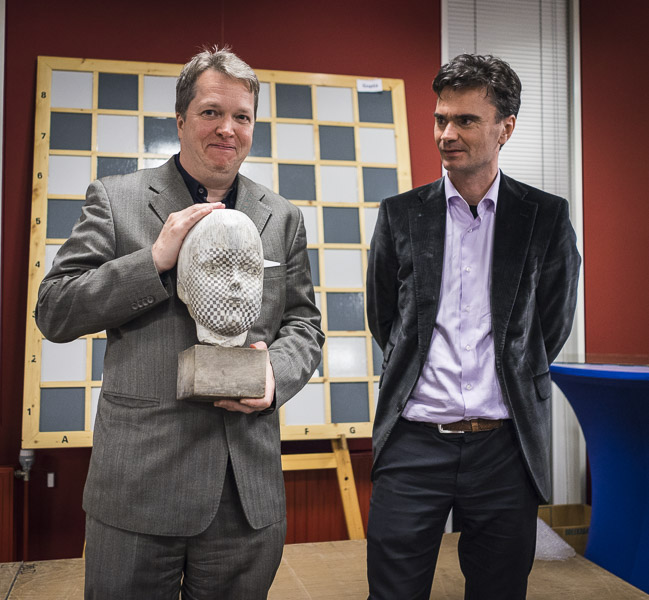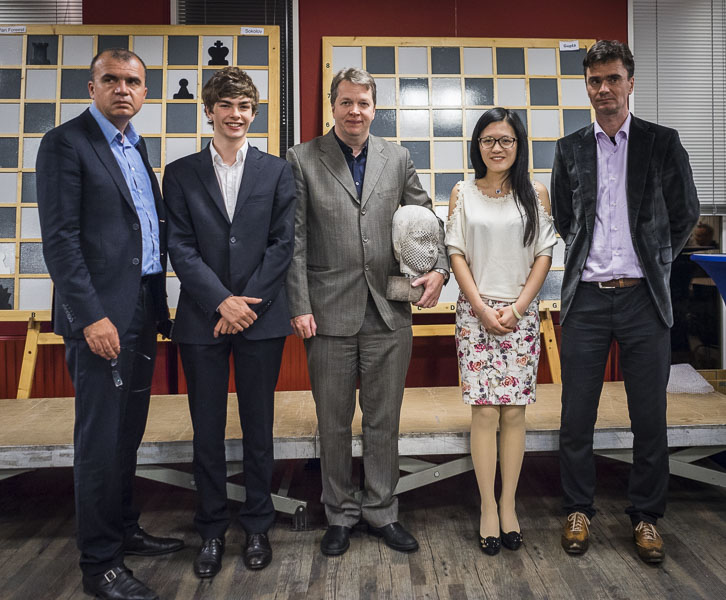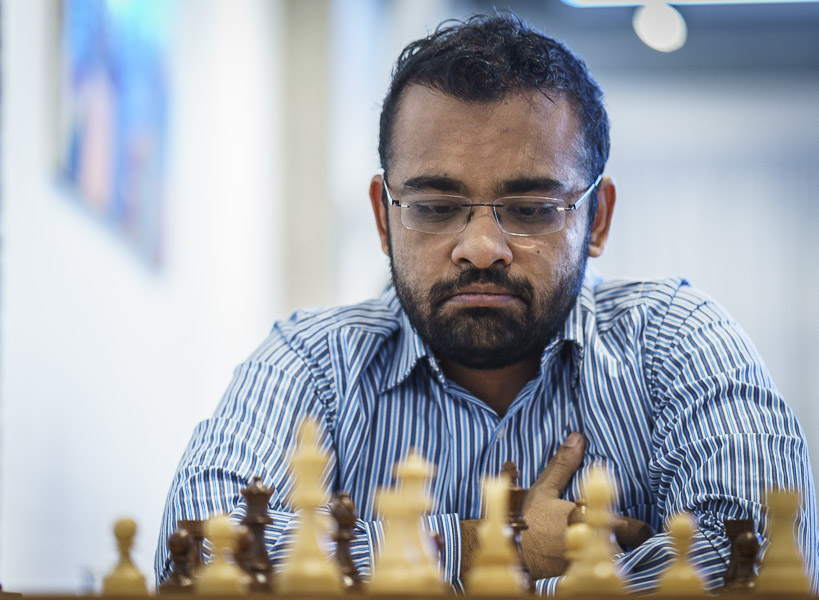


Auteur: Peter Boel

  • Beestachtig en messcherp

    Beestachtig en messcherp

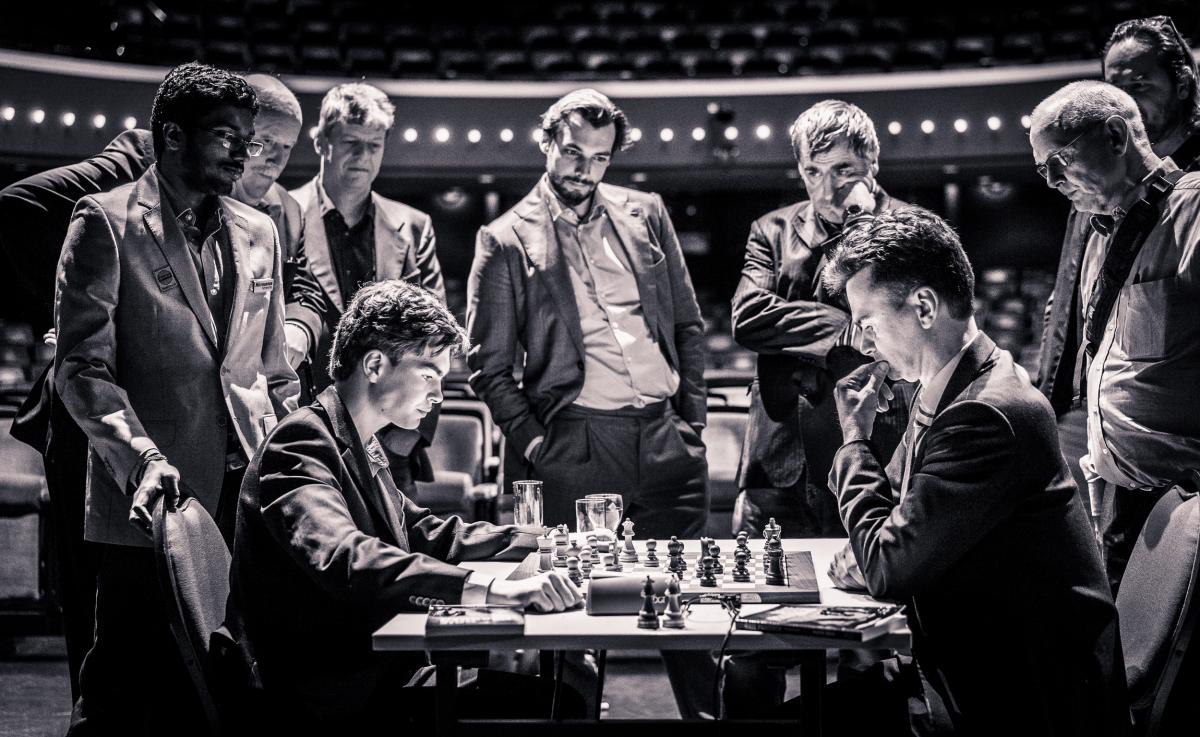
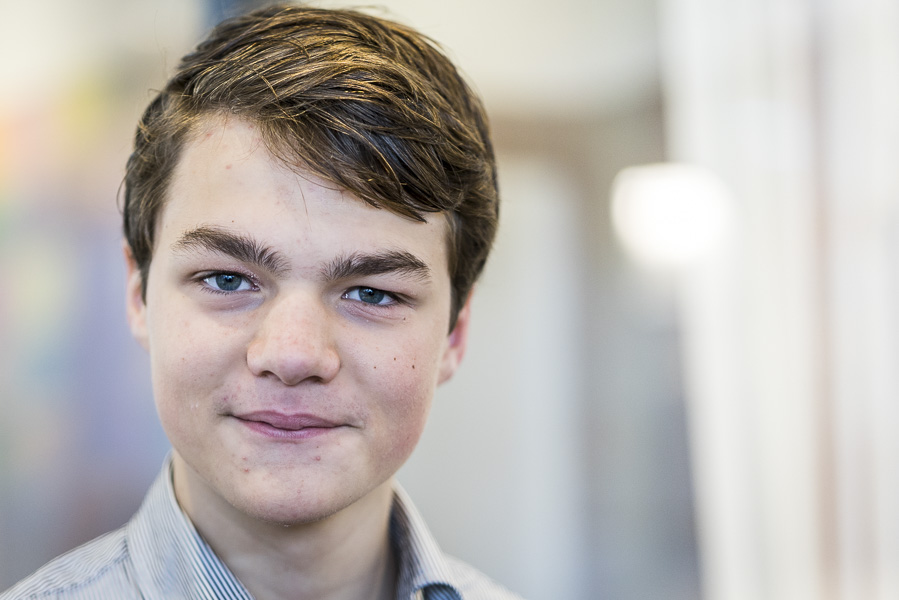
    De voorspelling van Loek van Wely kan nog steeds uitkomen: zes besliste partijen in de match Van Foreest-Sokolov. Vandaag trok de 17-jarige Nederlands kampioen de stand weer gelijk, ditmaal in een relatief strategische partij. “Die jongens zijn beesten”, zei Nigel Short over deze match. “Als er eentje het initiatief heeft, is het afgelopen.” Hou Yifan speelt tot dusver ongelukkig; zij probeerde aan te vallen maar liep in een messcherpe counter van Short en staat nu met 1-3 achter.

    We beginnen nu eens met de match Hou Yifan-Short – vandaag was hun partij ook minstens zo interessant als die andere.


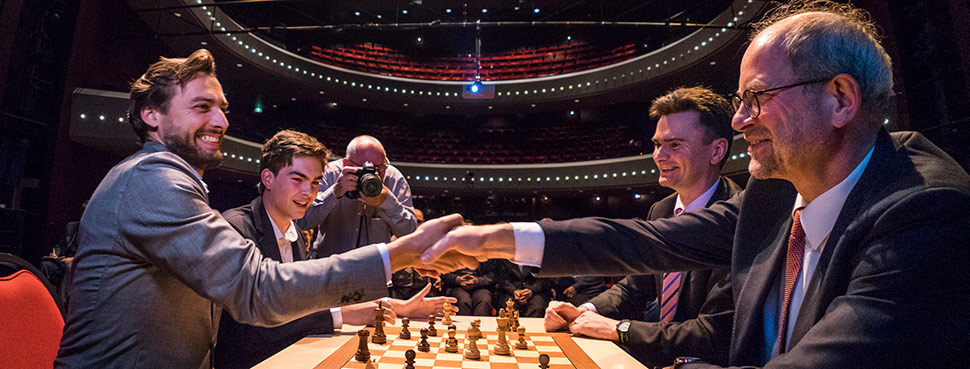
    Foto: Lennart Ootes

    Hou Yifan – Short

    1.e4 e6 2.d4 d5 3.e5 c5 4.c3 Ld7 5.Pf3 Db6 6.Ld3 cxd4 7.Pxd4!?

    Een opmerkelijke zet, waarmee wit de standaard Franse structuren, waarin Short natuurlijk zeer goed thuis is, ontwijkt.

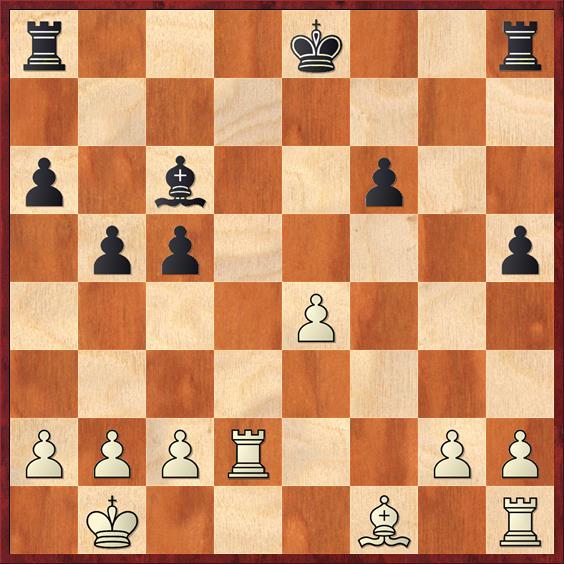
    7…Pc6 8.Pxc6 bxc6 9.0–0 Pe7

    Op dit moment stond in Van Foreest-Sokolov een zet eerder dezelfde centrumstructuur op het bord, en speelde zwart ook …Pe7.

    10.De2 a5 11.Pd2 c5

    Zwart gaat toch weer op e5 drukken.

    12.c4 Pc6 13.f4 g6 14.Kh1

    Op dit moment vroeg Loek van Wely zich in de commentaarzaal hardop af waar zwart zijn koning wilde zetten. Korte rokade lijkt riskant, toch kiest Short er nu voor.

    14…Le7 15.b3 0–0


    Het lijkt wel wat voor wit, maar Short was tevreden hier: “De stelling is interessant en ongebalanceerd.”

    16.f5!

    Toch de beste zet! Wat moet wit anders? Over deze situatie vertelde Short: “In 1988 speelde ik een match met Speelman. Na twee remises verloor ik en toen ik in de volgende partij wit had, voelde ik de psychologische druk: ik heb nog maar weinig tijd, ik moet nu iets doen. Toen ging ik pushen, en hij sloeg hard terug.” Hou Yifan had nog nooit eerder in zo’n situatie gezeten, maar “ik begrijp het heel goed”, zei ze.

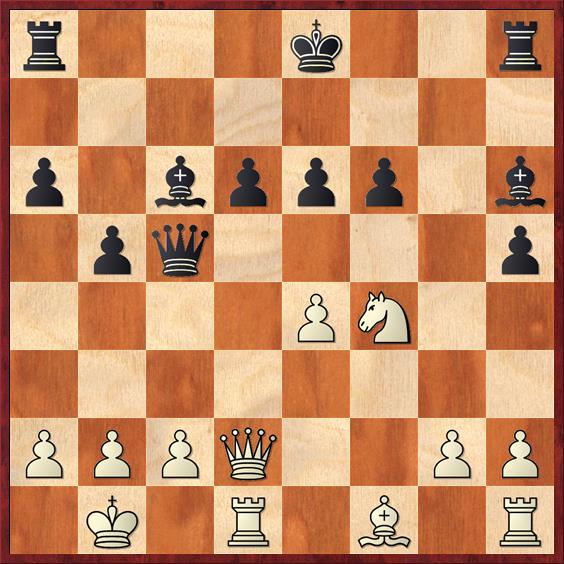
    16…exf5!

    Van Wijgerden en zijn publiek verwachtten de natuurlijke zet 16…Pd4 en daarna 17…gxf5, waarna wit wel veelbelovende aanvalsplannen ontwikkelt met bijvoorbeeld Pf3. Maar Short ging er eens goed voor zitten en kwam met iets heel anders.

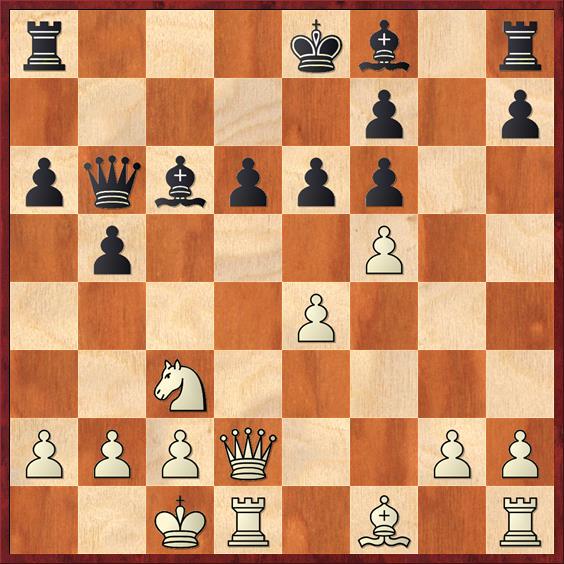
    17.cxd5 Pxe5!


    18.Pf3?

    Dit is de echte fout. Nog steeds OK was 18.Pc4! Pxc4 19.Dxe7 Dd6 20.Dxd6 Pxd6 21.Le3 en nu kan zwart 21…Pe4 spelen, maar ook 21…Tfe8 (21…Pb7 is ook mogelijk, maar wat passief) 22.Lxc5 Te5! 23.Tad1 Txd5 24.Lxf5! Txc5! 25.Lxd7 Pe4 . “Misschien sta ik hier nog niet zo slecht”, zei Hou Yifan. “In ieder geval was dit de beste manier om te spelen”, zei Short.

    18…Pxd3! 19.Dxe7

    19.Dxd3 verliest een kwaliteit na 19…Lb5, maar nu krijgt zwart op d3 een ‘gigantische spartelende kreeft’, zoals Short zei. De term ‘octopus’ werd na de beroemde partij Karpov-Kasparov een keer op die manier verkeerd vertaald door Helmut Pfleger, vertelde de Engelsman, met wie vandaag ook een geruchtmakend interview in de Volkskrant stond.

    19…Lb5 20.Dh4 f6 21.Ld2 Tad8 22.Lc3 Txd5 23.Dh6 Dc7 24.a4 La6 25.De3 Dd7 26.Lxa5 Te8 27.Dg1 Te2 28.Lc3 Td6 29.h3 Tc2 30.La5


    30…Lb7

    De kreeft op d3 heeft zijn werk gedaan, en nu gaat de witte constructie Pf3-g2-h3 slopen.

    31.Dh2 f4 32.Dg1 Pe5 33.Pe1


    33…Txg2

    Deze voor een grootmeester simpele combinatie werd Ă  tempo uitgevoerd.

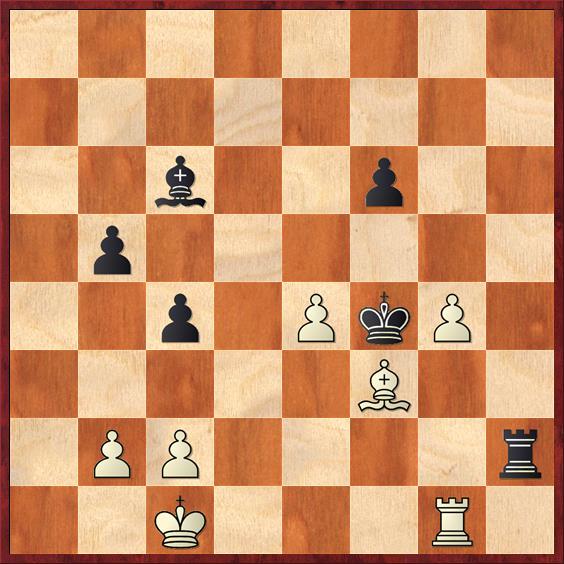
    34.Pxg2 Dxh3+ 35.Dh2 Lxg2+ 36.Kg1 Lxf1

    En opgegeven. Na 37.Txf1 Pf3+ 38.Txf3 Td1+ loopt het mat.

    Short was natuurlijk zeer content met zijn tweede volle punt, en Hou Yifan uitte zich zeer sportief: “Hij heeft het heel sterk gespeeld”, zei ze.


    Foto: Lennart Ootes


    Foto: Lennart Ootes


    Foto: Lennart Ootes


    Jorden van Foreest beende (net als zijn tegenstander overigens) met een resoluut gezicht de trouwzaal in. Immers: hij had wit. “Met zwart is het tot nu toe niks”, zei hij, “dus vandaag moest het weer gebeuren.” En hij stelde ons niet teleur.


    Foto: Lennart Ootes

    Van Foreest – Sokolov

    1.e4 c6

    Dat moet toch een verrassing geweest zijn? “Ach, tegenwoordig speelt iedereen dit tegen mij”, zei Van Foreest.

    2.d4 d5 3.e5 c5 4.Pf3 Pc6 5.dxc5 e6

    Hierna was de witspeler ‘uit zijn boek’. De meest gespeelde zetten zijn nu 6.Le3 en 6.Ld3.

    6.a3 Lxc5 7.b4 Lb6 8.Ld3 Pge7

    9.0–0

    Van Foreest was hier minder tevreden over en meende achteraf dat hij eerst 9.Lb2 had moeten spelen. Zijn bezoekende collega-GM Eric Hansen meldde dat 9…Pg6 10.0–0 Pf4 11.Te1 Pxd3 12.Dxd3, met het plan Pbd2 en c2-c4, gangbaar is, en goed voor wit.

    9…a5!? 10.b5 Pd4 11.Te1 Pxf3+ 12.Dxf3 Pg6 13.Lb2

    Hier werd in de commentaarzaal gekeken naar 13.a4, maar zoals Jeroen Bosch meldde kan zwart hier 13…Pxe5 spelen. 14.Txe5 Ld4 ziet er best gevaarlijk uit, maar het kan.

    13…Dg5


    Stelt wit voor een lastig probleem. Jorden had zitten ‘dromen’ over g2–g3 en h2–h4, maar was hier na 14.g3 bang voor 14…h5 Met Short, Seirawan en Hansen erbij vlogen er vanaf deze stelling allerlei offervarianten over het bord. Van Foreest kiest een kalmere voortzetting, maar was niet happy met zijn stelling.

    14.Dg3 Dxg3 15.hxg3 h5 16.Pd2

    Lettend op de structuur zou je aan 16.Lxg6 denken, maar dat geeft zwart ook meer ruimte.

    16…h4!? 17.gxh4 Txh4 18.g3 Tg4


    19.Kf1!

    Hier leefde Van Foreest al weer wat op. Het minder subtiele 19.Kg2!? Pf4+ 20.Kf3 Pxd3 21.cxd3 was ook goed mogelijk. Wit krijgt in ieder geval kansen over de c-lijn en vooral de h-lijn.

    19…Ld7 20.Ke2 a4?!

    Een thematische zet, maar nu moet zwart wel uitkijken dat zijn toren op g4 niet wordt ingesloten. Bovendien heeft zwart later, in het verre eindspel, veld a4 niet meer tot zijn beschikking, zoals Seirawan opmerkte. 20…Tc8 was een tikje beter.

    21.Th1 Ke7 22.Th5 f5?

    Het bekende euvel: zwart kan niet goed niks doen. Wit komt nu geforceerd in het voordeel. Beter was weer 22…Tc8.

    23.exf6+ gxf6 24.Th7+ Kd6 25.Lxg6 Txg6


    26.Pc4+!

    Leuke combinatie. De uitvoerder dacht achteraf overigens dat 26.Pe4+ nog beter was geweest, omdat dan na Txe6 ook de pion op e4 hangt. Om onduidelijke redenen is de computer het niet met hem eens.

    26…dxc4 27.Td1+ Kc5 28.Thxd7

    Mogelijk was 28.Ld4+ Kxb5 29.Tb1+ Kc6 30.Txb6+ Kc7 31.Txe6 nog nauwkeuriger. De loper op d7 is wel van de andere kleur, maar ook zwak. En er dreigt al 32.Lb6+, bijvoorbeeld 31…Ta6 32.Lb6+ Txb6 33.Txd7+ Kxd7 34.Txb6 gevolgd door 35.Tb4 met pionwinst.

    28…Kxb5 29.T1d6 Tc8 30.Txe6 c3 31.Lc1 Tc7?!

    Wat beter was misschien 31…Tc6 32.Te4, maar ook hier zit de zwarte monarch in de problemen.

    32.Td5+ Kc4

    Zeker niet 32…Tc5?? 33.Txb6+ Kxb6 34.Le3; 32…Lc5 33.Le3 b6 34.Lxc5 Kc4 (34…bxc5 35.Kd3) 35.Tf5 bxc5 36.Te4+! Kb5 37.Kd3. Na de tekstzet komt zwart in een vervelende penning te staan.

    33.Tf5 Ld4 34.Te4 Tg8 35.Le3 Td7 36.Txf6 b5 37.g4 b4 38.Lxd4

    38.Tff4 Tgd8 39.Lxd4 Txd4 40.Ke3! Txe4+ 41.Txe4+ Kc5 42.Txb4 Td2 43.g5 won wat sneller.


    Sokolov gaf hier echter op – “een beetje vroeg, leek me”, zei Van Foreest. Er kan volgen: 38…Txd4 39.Txd4+ Kxd4 40.Tf4+ Kc5 41.Txb4 Td8 42.g5 of 42.Txa4, en ondanks het feit dat zwart de c-pion krijgt, is het toreneindspel gewonnen.


    Foto: Lennart Ootes


    Foto: Lennart Ootes

  • Hegemony

    Hegemony

    After this sixth round, six Indians are leading in the Open, with only Sipke Ernst in between. He and Jan Werle, who might have been able to break this spell, took a bye for this second game of the day. Migchiel de Jong and Thomas Beerdsen lost. Bungalowpark Westerbergen, where the Indian delegation is staying, has become a true chess stronghold.


    Abhijeet Gupta. Photo: Lennart Ootes

    Abhijeet Gupta led De Jong almost noiselessly to a lost endgame, although the Frisian master mumbled afterwards that he thought his position had been OK. In order to keep track, Lalith had to beat his fellow countryman Sundar Shyam. He was helped by the fact that the white player attacked with reckless abandon.

    Shyam – Lalith


    White has gone too far with his pawn march on the kingside. Behind the pawns there are several holes, and the white centre looks neglected.

    25…f5! 26.Raf1

    After 26.g6 Black crashes through with 26…fxe4! 27.Bxe4 Nxe4 28.gxh7? (28.Rad1 Rxd1 29.Rxd1 Nxc3 is over as well) 28…Rxf3! 29.Qxf3 Qh4+ 30.Qh3 Rd2+ 31.Rg2 Rxg2+ 32.Kxg2 Qf2+ 33.Kh1 Ng3+.

    26…fxe4 27.Nh4 Rxf1 28.Rxf1 Nf7!?

    A funny follow-up. After 28…Qxg5 29.Qxg5 hxg5 30.Ng6+ Bxg6 31.hxg6 Kg8 32.b4 White might have been able to hold.


    29.Bxe4 Nxg5 30.Bxh7 Kxh7

    And after some more wrangling, Black converted his plus pawn.


    Eesha Karavade. Photo: Lennart Ootes

    The female IM Eesha Karavade also overcame Thomas Beerdsen in a technical game. The winner of this summer’s Dutch Open took a quite different approach.

    Van Osch – Sandipan

    1.e4 d5 2.exd5 Qxd5 3.Nf3 Bg4 4.Be2 Nc6 5.d4 0–0–0 6.c4 Qf5 7.Be3 Bxf3 8.Bxf3 Nxd4 9.Bg4 Nc2+

    This looks fierce, but it has been played several times before.

    10.Qxc2 Qxg4 11.0–0


    11…e6

    However, funnily enough this natural-looking move is new. It’s not that the a7-pawn is hanging, as apart from 11…a6, 11…Nf6/h6 and 11…Qg6 have also been tried here.

    12.Nd2 Nf6 13.Qa4 Qh5!?

    Rather provocative.

    14.Qxa7 Ng4

    15.Nf3

    Surely Sandipan wouldn’t have been satisfied with 15.Qa8+ Kd7 16.Qa4+ Kc8 and a draw? For 16…c6 17.Bf4 looks very unattractive for Black.

    15…Nxe3 16.fxe3

    Now Black has a target as well: the weakling on e3.

    16…c6 17.Rad1 Be7 18.Nd4 Qc5

    Black is perfectly safe.

    19.Qa8+

    Giving Black an unnecessary tempo – better was 19.Qa4. White was probably still hoping for an attack, with b2-b4, for example.

    19…Kc7 20.Qa4 e5 21.Nf5 Bf6 22.Kh1?!

    This introduces some back-rank tricks in the position (22.Qb3!?).

    22…Rxd1 23.Rxd1 e4


    24.Nd6?

    24.Nd4 Rd8 25.b4 Qh5 26.Qc2 was the lesser evil. The text move fails to a sequence that is a faint reminder of the famous game (analysis??) Adams-Torre, New Orleans 1920.

    24…Rd8 25.Nxe4?

    25.b4 Qxe3 26.c5 was the only feasible attempt.

    25…Qb4! 26.Qc2 Qxb2! 27.Qb1 Qxa2

    And Black was a pawn up. And that was not all, as the black pieces are more active here. Sandipan won on the 43th move.


    Mees van Osch. Photo: Lennart Ootes

    The legendary grandmaster Oleg Romanishin is in terrible shape in this tournament. Today he rose to 4 points with a very lucky break.

    Bunyatov – Romanishin


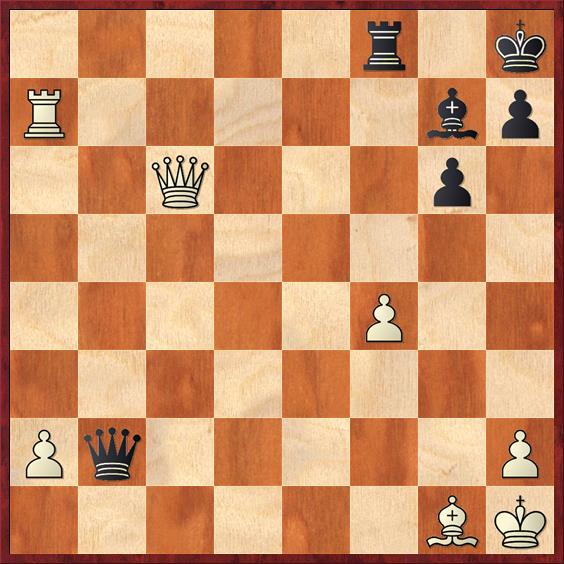
    In this position, Bunyatov exceeded the time limit, doubtlessly considering whether to play his queen to f1, e2 or d3. In either case, the threat is 37.b4, winning a rook, and Black can only prevent this by giving a second pawn by 36…b5. Bunyatov thought he remembered from two years ago, when he also played here, that he would get an extra half hour after 35 instead of 40 moves…


    Maaike Keetman. Photo: Lennart Ootes

    Maaike Keetman reached 50% after a game that was full of tricks and funny positions.

    Van Dael – Keetman

    1.e4 c5 2.Nf3 e6 3.d4 cxd4 4.Nxd4 Nc6 5.Nc3 Qc7 6.Be3 a6 7.Qd2 Nf6 8.f3 Be7 9.0–0–0 b5 10.g4 Nxd4 11.Bxd4 Bb7 12.g5 Nh5 13.Be5 Qxe5 14.Qxd7+ Kf8 15.Qxb7 Qb8 16.Qxb8+ Rxb8 17.Rg1 h6 18.h4


    18…Nf4

    The entire tactical sequence is known, and this position also occurred in the game Hentrich-Jorden van Foreest from the Staufer Open early this year. Keetman deviates here. Van Foreest played 18…Bc5 19.Rg4 Nf4 and the game ended in a draw. Keetman immediately applies pressure on the white kingside pawns.

    19.Ne2 Ng6 20.Rg4?!

    20…Nxh4! 21.gxh6 Rxh6 22.Nd4 Bc5 23.Nc6?

    This only helps the black pieces.

    23…Rc8 24.Ne5 Bf2?!

    24…Be3+ 25.Kb1 g5.

    25.Rd7 Rf6 26.Rd6?

    After the protecting move 26.Be2 White would have been a tad better.

    26…Nxf3! 27.Nd7+ Ke7 28.Rd3 Ne1! 29.Rd2?

    White should have gone for 29.Nxf6 Nxd3+ 30.Bxd3 Be3+ 31.Kb1 gxf6, with good drawing chances. Now his position suddenly is a disaster.

    29…Be3

    One more picture.


    30.Nxf6 Rxc2+ 31.Kd1 Rxd2+ 32.Kxe1 Kxf6

    And now White was two pawns behind. He resigned after:

    33.Rg3 Bh6 34.Rf3+ Ke5 35.Rxf7 Rxb2 0–1

  • Hegemonie

    Hegemonie

    Na deze zesde ronde staan er zes Indiërs bovenaan in het Open, met alleen Sipke Ernst ertussen. Hij en Jan Werle, die misschien potten hadden kunnen breken, namen een bye op deze tweede partij van de dag. Migchiel de Jong en Thomas Beerdsen verloren. Bungalowpark Westerbergen, waar de delegatie uit India verblijft, is een heus schaakbolwerk geworden.


    Abhijeet Gupta. Foto: Lennart Ootes

    Abhijeet Gupta loodste De Jong bijna geruisloos naar een verloren eindspel, hoewel de Fries naderhand mompelde dat hij meende toch wel OK te hebben gestaan. Lalith moest, om bij te blijven, zijn landgenoot Sundar Shyam verslaan. Daarbij werd hij geholpen door het feit dat wit wel erg roekeloos te werk ging.

    Shyam – Lalith


    Wit is te ver gegaan met zijn pionnenmars op de koningsvleugel. Erachter liggen wat gaten en zijn centrum ziet er verwaarloosd uit.

    25…f5! 26.Taf1

    Na 26.g6 gaat zwart er dwars doorheen met 26…fxe4! 27.Lxe4 Pxe4 28.gxh7? (28.Tad1 Txd1 29.Txd1 Pxc3 is ook uit) 28…Txf3! 29.Dxf3 Dh4+ 30.Dh3 Td2+ 31.Tg2 Txg2+ 32.Kxg2 Df2+ 33.Kh1 Pg3+.

    26…fxe4 27.Ph4 Txf1 28.Txf1 Pf7!?

    Een grappige zet tot vervolg. Na 28…Dxg5 29.Dxg5 hxg5 30.Pg6+ Lxg6 31.hxg6 Kg8 32.b4 kan wit misschien nog keepen.


    29.Lxe4 Pxg5 30.Lxh7 Kxh7

    En na nog wat geharrewar bracht zwart zijn pluspion tot gelding.


    Eesha Karavade. Foto: Lennart Ootes

    De vrouwelijke IM Eesha Karavade overtroefde Thomas Beerdsen ook in een technische partij. De winnaar van het Open NK in Dieren van deze zomer deed het heel anders.

    Van Osch – Sandipan

    1.e4 d5 2.exd5 Dxd5 3.Pf3 Lg4 4.Le2 Pc6 5.d4 0–0–0 6.c4 Df5 7.Le3 Lxf3 8.Lxf3 Pxd4 9.Lg4 Pc2+

    Dit ziet er heftig uit, maar is al diverse malen eerder gespeeld.

    10.Dxc2 Dxg4 11.0–0


    11…e6

    Maar gek genoeg is deze natuurlijk aandoende zet nieuw. Aan het instaan van pion a7 ligt het niet, want naast 11…a6 zijn hier ook 11…Pf6/h6 en 11…Dg6 geprobeerd.

    12.Pd2 Pf6 13.Da4 Dh5!?

    Behoorlijk provocerend.

    14.Dxa7 Pg4


    15.Pf3

    Sandipan zal toch niet tevreden zijn geweest met 15.Da8+ Kd7 16.Da4+ Kc8 en remise? 16…c6 17.Lf4 ziet er erg onaantrekkelijk uit voor zwart.

    15…Pxe3 16.fxe3

    Nu heeft ook zwart iets om op te spelen: de zwakke broeder op e3.

    16…c6 17.Tad1 Le7 18.Pd4 Dc5

    Nu staat zwart volkomen veilig.

    19.Da8+

    Geeft zwart onnodig een tempo – beter 19.Da4. Wit zal nog steeds hebben gehoopt op een aanval, via b2-b4 bijvoorbeeld.

    19…Kc7 20.Da4 e5 21.Pf5 Lf6 22.Kh1?!

    Dit brengt achterste rij-trucjes in de stelling (22.Db3!?).

    22…Txd1 23.Txd1 e4


    24.Pd6?

    24.Pd4 Td8 25.b4 Dh5 26.Dc2 was het kleinere euvel. De tekstzet faalt op een zettenreeks die in de verte doet denken aan de beroemde partij(-analyse??) Adams-Torre, New Orleans 1920.

    24…Td8 25.Pxe4?

    25.b4 Dxe3 26.c5 was nog de enige poging.

    25…Db4! 26.Dc2 Dxb2! 27.Db1 Dxa2

    En zwart stond een pion voor. Daar bleef het niet bij, omdat de zwarte stukken actiever staan. Sandipan won op de 43e zet.


    Mees van Osch. Foto: Lennart Ootes

    De legendarische grootmeester Oleg Romanishin is vreselijk uit vorm in dit toernooi. Vandaag kwam hij met veel geluk op 4 punten.

    Bunyatov – Romanishin


    In deze stelling ging Bunyatov door zijn vlag, ongetwijfeld nadenkend of hij zijn dame naar f1, e2 of d3 zou spelen. Dan dreigt 37.b4 met torenwinst, en zwart kan dat alleen verhinderen door een tweede pion te offeren met 36…b5. Bunyatov meende zich van twee jaar geleden, toen hij hier ook al speelde, te herinneren dat hij er na 35 zetten een half uur bedenktijd bij zou krijgen in plaats van na 40 zetten…


    Maaike Keetman. Foto: Lennart Ootes

    Maaike Keetman kwam op 50% na een partij die vol zat met tactische grappen en grollen.

    Van Dael – Keetman

    1.e4 c5 2.Pf3 e6 3.d4 cxd4 4.Pxd4 Pc6 5.Pc3 Dc7 6.Le3 a6 7.Dd2 Pf6 8.f3 Le7 9.0–0–0 b5 10.g4 Pxd4 11.Lxd4 Lb7 12.g5 Ph5 13.Le5 Dxe5 14.Dxd7+ Kf8 15.Dxb7 Db8 16.Dxb8+ Txb8 17.Tg1 h6 18.h4


    18…Pf4

    De hele tactische zettenreeks is bekend, en deze stelling kwam nog voor in de partij Hentrich-Jorden van Foreest uit de Staufer Open van begin dit jaar. Keetman wijkt nu af; Van Foreest speelde hier 18…Lc5 19.Tg4 Pf4 en het werd remise. Keetman gaat onmiddellijk drukken op de witte koningsvleugelpionnen.

    19.Pe2 Pg6 20.Tg4?!


    20…Pxh4! 21.gxh6 Txh6 22.Pd4 Lc5 23.Pc6?

    Dit helpt alleen de zwarte stukken maar.

    23…Tc8 24.Pe5 Lf2?!

    24…Le3+ 25.Kb1 g5.

    25.Td7 Tf6 26.Td6?

    Na de dekzet 26.Le2 had wit een tikje beter gestaan.

    26…Pxf3! 27.Pd7+ Ke7 28.Td3 Pe1! 29.Td2?

    Wit had moeten ingaan op 29.Pxf6 Pxd3+ 30.Lxd3 Le3+ 31.Kb1 gxf6 met goede remisekansen. Nu is het ineens helemaal mis met zijn stelling.

    29…Le3

    Nog een plaatje.


    30.Pxf6 Txc2+ 31.Kd1 Txd2+ 32.Kxe1 Kxf6

    En nu stond wit twee pionnen achter. Hij gaf op na:

    33.Tg3 Lh6 34.Tf3+ Ke5 35.Txf7 Txb2 0–1

  • Frisia in pursuit

    Frisia in pursuit

    After round 5, this morning, three Indians are leading the Open. This round, the two Frisians Sipke Ernst and Migchiel de Jong upheld the Dutch honour, as well as Thomas Beerdsen – they all won their games. Jan Werle didn’t manage to get past Lucas van Foreest.

    On the top board, the expected draw was realized within half an hour. 29 moves were made by Babu Lalith and Abhijeet Gupta in those 30 minutes. A well-known version of the once so notorious Botwinnik Variation ended in perpetual check.

    On board 2, an Indian had to bite the dust. With black, Sundar Shyam beat S. Nitin in a technical game, and joined the leaders on 4œ point.

    Jan Werle also seemed to be heading for a technical victory over Lucas van Foreest, but something went wrong.

    Werle – L van Foreest


    40.h4?

    ‘Here I should have shouldered off his king with 40.Ke5!’, said Werle during lunch. Of course, 40.Ke6 is less good in view of 40…h4. After the shouldering of the black king White does play h3-h4, and then the bishop is no game for the king, knight and pawn.

    40…Kf6 41.c6 Ke7

    Otherwise 42.c7!.

    42.Pxf5+ Kf6 43.Pd6 Ke7 44.Pe4 Lc7 45.a4 g6 46.Kc4 Ke6 47.Kb5 Kd5 48.Pc3+ Kd6 49.Pe4+ Kd5 50.Pf6+ Ke6


    51.Ph7

    Another crucial moment. Couldn’t White play 51.Pe8 here? Werle feared that in that case a quick …g6-g5 could become dangerous. And so it does, but still there seems to be a win for White thanks to a couple of bizarre knight jumps: 51…Lxg3 52.Ka6 and now:

    A) 52…g5? 53.hxg5 h4 54.Pg7+! Kd5 55.Pf5 Kxc6 (or 55…Le5 56.Pxh4 Kxc6 57.g6) 56.g6 Le5 57.Pxh4;

    B) 52…Kf5 53.Pg7+! (53.Kxa7 g5 54.Pg7+ Kg6 55.Pxh5! gxh4 56.Pxg3 hxg3 is a drawn queen ending) 53…Kg4 54.Pe6! Kxh4 55.Pc5! g5 56.Kxa7 g4 57.Kb7 Ld6 58.Pe4 g3 (otherwise the white a-pawn is faster) 59.Pxd6! g2 60.c7 g1D 61.c8D and with the extra knight, this should win.

    51…Kd6

    Now White does not manage to get the favourable constellation on the board any more.

    52.Pg5 Kd5 53.Ph7 Lxg3 54.Pf6+ Ke6 55.Pe4 Le5 56.a5 Kd5 57.Pf6+ Ke6 58.Pd7 Lc7 59.Pf8+ Kd6 60.Pxg6


    60…a6+! 61.Kxa6 Kxc6 62.Pe7+ Kc5 63.Pf5 Kb4 64.Pd4

    And of course Lucas now opts for the most humoristic way to draw:

    64…Lxa5 65.Pc6+ Kc5 66.Pxa5 Kd5 67.Kb5 Ke4 68.Pc6 Kf5 69.Kc4 Kg4 70.Kd3 œ–œ


    Lucas van Foreest. Photo: Lennart Ootes

    Sipke Ernst was shaking his head after his victory over Harsha Bharathakoti. ‘It was quite dubious’, he said. ‘I sacrificed two pawns, but I’d missed 18…Pc5, and after that I didn’t have enough compensation. But you know how it is – there will always be another chance.’ And Ernst didn’t have to wait long.

    Ernst – Bharathakoti


    25…Lc7?

    Too passive! It would have been better to give back some material for an initiative: 25…Th4! 26.Lxb6+ Pxb6 27.fxe5 Lxe5 28.Lxb7 Ta7 29.Pb4 (29.Lxa6 Ld6! 30.Le2 Ta5 and Black obtains a strong attack) 29…Tf4+ 30.Kg2 Txb7 31.Pc6+ Kd7 32.Pxe5+ Kd6 33.Pd3 Tf5 34.h4 Pd5 with a clear advantage.

    26.Pb4! exf4 27.Txc7!?


    A beautiful little move. Objectively, possibly 27.Lxb7 was strongest, for example: 27…Pe5+ 28.Ke4 Te8 (after 28…Ta7 29.Lxb6 White captures everything, and at the end the knight on e5 is hanging) 29.Lxa8 Pxa8 30.Lxc7+ Pxc7 31.Kxf4 and White remains an exchange up after 31…a5 32.Pc6+.

    27…Pe5+?

    Things are getting too complicated for Bharathakoti. Better was 27…Kxc7 28.Pd5+ Kd6 29.Pxb6 and now 29…Pe5+ 30.Kxf4 Th4+ 31.Kg3 Txe4 32.Pxa8 Te3+ 33.Kg2 Te2+ 34.Kg3 Txb2, and with three pawns for the piece, Black has good chances to draw.

    28.Kxf4

    His own zwischenschach now costs Black material – in most cases it is the other way around.

    28…Kxc7 29.Kxe5 Tae8+ 30.Kxd4 Th4 31.Te1 f5 32.gxf6 gxf6

    Black is just too late with this. The finish of the game nicely shows the power of the minor pieces:

    33.Pd5+ Kb8 34.Lxb6 f5 35.Lc7+ Ka7 36.Lb6+ Kb8 37.Lc7+ Ka7 38.Pf6 Tc8


    39.Lg3! Txh3 40.Te3 Td8+ 41.Ld5 Ka8 42.Ta3

    And Black resigned. The threat is 43.Txa6 mate, and 42…Ka7 fails to 43.Lb8+.


    Sipke Ernst. Photo: Lennart Ootes

    Ernst and Migchiel de Jong, who beat K. Rathnakaran with black in a good game, are now on 4 points – half a point behind the leading threesome. Thomas Beerdsen also reached 4 by beating Sander Taams.

    In this round, Liam Vrolijk made a good impression again. With a strong exchange sacrifice he posed problems for Leonardo Valdes Romero, but the latter defended tenaciously and an epic fight ensued where Black barely managed to hold the draw. Andries Mellema achieved the same result against grandmaster Sundararajan Kidambi.


    Liam Vrolijk. Photos: Lennart Ootes

    In the meantime we had already seen many shorter draws, and also a quick and quite unexpected win of a piece.

    Colijn – Cornelisse


    Black has just captured on d4, which proves unwise for a highly surprising reason.

    16.e5! Pxe5

    So as not to lose a piece, he would have had to play something like 16…Lxf3 17.exf6 Le2 here, but then Black is not to be envied after 18.fxg7 Kxg7 19.Df5 and 20.Le4. But who would expect

    17.Pxe5 Lxg2


    18.Pef3!

    Winning a piece!

    Not much later, Black resigned.


    Eesha Karavade. Foto: Lennart Ootes


    Simon Bensaid. Foto: Lennart Ootes

  • Friesland in de achtervolging

    Friesland in de achtervolging

    Na ronde 5, vanochtend, staan er drie Indiërs bovenaan. De Nederlandse eer werd in deze ronde hoogehouden door de twee Friezen Sipke Ernst en Migchiel de Jong, die beiden hun partij wonnen, en Thomas Beerdsen. Jan Werle kwam net niet door Lucas van Foreest heen.

    Aan het topbord was de verwachte remise binnen een half uur een feit. 29 zetten deden Babu Lalith en Abhijeet Gupta in dat halfuur. Een bekende versie van de eens zo beruchte Botwinnik-variant eindigde in eeuwig schaak.

    Aan bord 2 moest er wel een IndiĂ«r sneuvelen. Sundar Shyam versloeg met zwart S. Nitin in een technische partij en voegde zich bij de leiders met 4œ punt.

    Jan Werle leek ook op weg naar een technische zege tegen Lucas van Foreest, maar er haperde iets.

    Werle – L van Foreest


    40.h4?

    “Hier had ik zijn koning moeten afhouden met 40.Ke5!”, zei Werle bij de lunch. Natuurlijk is 40.Ke6 minder goed wegens 40…h4. Na het afhouden van de koning speelt wit wel h3-h4, en daarna is de loper geen partij voor koning, paard en pion.

    40…Kf6 41.c6 Ke7

    Anders 42.c7!.

    42.Pxf5+ Kf6 43.Pd6 Ke7 44.Pe4 Lc7 45.a4 g6 46.Kc4 Ke6 47.Kb5 Kd5 48.Pc3+ Kd6 49.Pe4+ Kd5 50.Pf6+ Ke6

    51.Ph7

    Weer een cruciaal moment. Kon wit hier niet 51.Pe8 spelen? Werle vreesde dat het dan na een snel …g6-g5 gevaarlijk kon worden. Dat wordt het ook, maar er lijkt toch winst in te zitten voor wit met een paar bizarre paardsprongen: 51…Lxg3 52.Ka6 en nu:

    A) 52…g5? 53.hxg5 h4 54.Pg7+! Kd5 55.Pf5 Kxc6 (of 55…Le5 56.Pxh4 Kxc6 57.g6) 56.g6 Le5 57.Pxh4;

    B) 52…Kf5 53.Pg7+! (53.Kxa7 g5 54.Pg7+ Kg6 55.Pxh5! gxh4 56.Pxg3 hxg3 is een remise dame-eindspel) 53…Kg4 54.Pe6! Kxh4 55.Pc5! g5 56.Kxa7 g4 57.Kb7 Ld6 58.Pe4 g3 (anders loopt de witte a-pion harder) 59.Pxd6! g2 60.c7 g1D 61.c8D en met het extra paard zou dit moeten winnen.

    51…Kd6

    Nu krijgt wit de gunstige constellatie niet meer voor elkaar.

    52.Pg5 Kd5 53.Ph7 Lxg3 54.Pf6+ Ke6 55.Pe4 Le5 56.a5 Kd5 57.Pf6+ Ke6 58.Pd7 Lc7 59.Pf8+ Kd6 60.Pxg6

    60…a6+! 61.Kxa6 Kxc6 62.Pe7+ Kc5 63.Pf5 Kb4 64.Pd4

    En natuurlijk kiest Lucas nu de meest humoristische manier om remise te maken:

    64…Lxa5 65.Pc6+ Kc5 66.Pxa5 Kd5 67.Kb5 Ke4 68.Pc6 Kf5 69.Kc4 Kg4 70.Kd3 œ–œ


    Lucas van Foreest. Foto: Lennart Ootes

    Sipke Ernst liep na zijn overwinning op Harsha Bharathakoti met het hoofd te schudden. “Het was behoorlijk dubieus”, zei hij. “Ik offerde twee pionnen, maar ik had 18…Pc5 overzien, en daarna had ik te weinig compensatie. Maar je weet het – er komt altijd weer een kans.” En die liet niet al te lang op zich wachten.

    Ernst – Bharathakoti


    25…Lc7?

    Te passief! Hij had beter wat materiaal terug kunnen geven voor een initiatief: 25…Th4! 26.Lxb6+ Pxb6 27.fxe5 Lxe5 28.Lxb7 Ta7 29.Pb4 (29.Lxa6 Ld6! 30.Le2 Ta5 en zwart krijgt een sterke aanval) 29…Tf4+ 30.Kg2 Txb7 31.Pc6+ Kd7 32.Pxe5+ Kd6 33.Pd3 Tf5 34.h4 Pd5 met duidelijk voordeel.

    26.Pb4! exf4 27.Txc7!?

    Mooi zetje. Objectief was mogelijk 27.Lxb7 het sterkst, bijvoorbeeld 27…Pe5+ 28.Ke4 Te8 (na 28…Ta7 29.Lxb6 slaat wit alles en blijft aan het eind het paard op e5 hangen) 29.Lxa8 Pxa8 30.Lxc7+ Pxc7 31.Kxf4 en wit blijft een kwaliteit voor na 31…a5 32.Pc6+.

    27…Pe5+?

    De complicaties stijgen Bharathakoti boven het hoofd. Beter was 27…Kxc7 28.Pd5+ Kd6 29.Pxb6 en nu 29…Pe5+ 30.Kxf4 Th4+ 31.Kg3 Txe4 32.Pxa8 Te3+ 33.Kg2 Te2+ 34.Kg3 Txb2 en met drie pionnen voor het stuk heeft zwart goede remisekansen.

    28.Kxf4

    Zijn eigen tussenschaakje kost zwart materiaal – meestal is het andersom.

    28…Kxc7 29.Kxe5 Tae8+ 30.Kxd4 Th4 31.Te1 f5 32.gxf6 gxf6

    Hiermee is zwart net te laat. Het einde laat mooi de kracht van de lichte stukken zien:

    33.Pd5+ Kb8 34.Lxb6 f5 35.Lc7+ Ka7 36.Lb6+ Kb8 37.Lc7+ Ka7 38.Pf6 Tc8


    39.Lg3! Txh3 40.Te3 Td8+ 41.Ld5 Ka8 42.Ta3

    En opgegeven. Er dreigt 43.Txa6 mat, en 42…Ka7 strandt op 43.Lb8+.


    Sipke Ernst. Foto: Lennart Ootes
     

    Ernst en Migchiel de Jong, die in een knappe partij K. Rathnakaran versloeg met zwart, staan nu met 4 punten een half punt achter het leidende drietal. Thomas Beerdsen kwam ook op 4 door Sander Taams te verslaan.

    In deze ronde maakte Liam Vrolijk opnieuw een goede indruk. Met een sterk kwaliteitsoffer bracht hij Leonardo Valdes Romero in de problemen, maar deze verdedigde taai en er ontstond een episch gevecht dat zwart net remise wist te houden. Dat lukte ook Andries Mellema tegen grootmeester Sundararajan Kidambi.


    Liam Vrolijk. Foto: Lennart Ootes

    In de tussentijd waren er al vele kortere remises genoteerd, en ook een snelle stukwinst die erg verrassend was.

    Colijn – Cornelisse


    Zwart heeft net op d4 geslagen, en dat blijkt om een verrassende reden onverstandig te zijn.

    16.e5! Pxe5

    Om geen stuk te verliezen zou hij hier iets als 16…Lxf3 17.exf6 Le2 moeten spelen, maar dan is zwart niet te benijden na 18.fxg7 Kxg7 19.Df5 en 20.Le4. Maar wie verwacht er nu…

    17.Pxe5 Lxg2


    18.Pef3!

    Met stukwinst!

    Niet veel later gaf zwart op.


    Eesha Karavade. Foto: Lennart Ootes


    Simon Bensaid. Foto: Lennart Ootes 

  • India Express thunders on

    India Express thunders on

    It’s starting to look like a TTT in the Open: the Indian titled players keep alternating and are thundering on. Most of the leading work is done by Babu Lalith an Abhijeet Gupta. They are still on 100%, but their fellow countrymen S.Nitin and Sundar Shyam are trailing by only half a point. The first Dutch players are in the next group with three points. Among them are, quite surprisingly, Dick de Graaf and Sander Taams – the player with the lowest rating!

    Gupta faced a furiously attacking Jan Werle today.

    Gupta – Werle


    Werle has spent two pawns, and now goes over to the attack.

    20…Ba3!? 21.Qb3 Bxb2+?!

    Unfortunately this is one step too far. It comes down to a sacrifice of the ‘small exchange’, and Werle is hoping that the permanent vulnerability of the white king will offer him enough attacking chances.

    Strangely enough, 21…Bd6! was still fine for Black here. After 22.Qc2 he can play 22…f6, followed by either 23…Qc6 or 23…Bc4, with great compensation.

    22.Qxb2 Ba4 23.Qa3 Bxd1 24.Rxd1 Rfc8 25.Kd2 f6 26.Nd3 Qc4 27.Rc1 Qd5 28.Nf4 Qf5 29.Qd6! Kh8 30.g3


    And the white position proved unassailable. On move 39 Werle ceased his attempts: 1-0.


    Lalith. Foto: Lennart Ootes

    Lalith overcame his fellow countryman and co-leader Rathnakaran in a King’s Indian.

    Lalith – Rathnakaran

    1.Nf3 Pf6 2.c4 g6 3.Nc3 Bg7 4.d4 0–0 5.e4 d6 6.h3 Na6 7.Bg5 c6 8.Be2 e5 9.d5 h6 10.Be3 cxd5 11.cxd5 Nh5 12.Qd2 Kh7


    13.0–0

    A quiet move. In this position, 13.g4 Nf4 14.Bxf4 exf4 15.Qxf4 was played three times, after which Black can actively search for compensation for the pawn.

    13…f5?! 14.exf5 gxf5 15.Ne1

    Again, quite cool play. 15.Nxe5 dxe5 16.Bxh5 f4 wouldn’t have been clever, but White could prepare this by 15.Qc2!.

    15…Nf6 16.f4 Bd7

    The hyper-active 16…Ne4!? 17.Nxe4 fxe4 18.fxe5 Rxf1+ 19.Bxf1 Bxe5 was interesting.

    17.Nd3 Qe8

    Black will lose this struggle on the e-file. 17…e4! looks like a better chance.

    18.fxe5 dxe5 19.Rae1 Rg8


    20.Nxe5! Ne4

    The elegant point was 20…Qxe5 21.Bxa6 bxa6? 22.Bf4! and the queen has no squares! After 22…Ne4 23.Rxe4! White gets the piece back.

    21.Nxe4 Bxe5 22.Nc3

    And thus White had gained a pawn. He fended off the counterattack with a steady hand: 1–0 (35).


    Sundar Shyam won a piece very early in the game against his fellow countryman Rakesh Kumar Jena. Casper Schoppen held his second grandmaster to a draw after good preparation: the strong Chanda Sandipan. With his trainer Dimitri Reinderman he came to the commentary room with Hans Böhm to explain the game.

    We were eagerly awaiting the duel between the pupil, Lucas van Foreest, and his master, Sipke Ernst. They already played a match once in Groningen, which was convincingly won by Ernst, but Van Foreest has also beaten his trainer on another occasion. This time the game was quite lively.

    L. van Foreest – Ernst

    Van Foreest appeared to be slowly losing his grip on the game, but he stayed afloat with a smart trick:

    31.Rfc1! Bxd2?!

    31…Bd4+=.

    32.Rxc7+ Kg8 33.Rb2

    Bishop trapped!

    33…Be1+ 34.Kxe1 Rxf3 35.Rf2

    With 35.Rd2! he could have posed Black a few problems.

    35…Re3+ 36.Kf1 Rxe4 37.Rc8+ Kg7 38.Rc7+ Kg8 39.Rc8+ œ–œ


    Sipke Ernst. Foto: Lennart Ootes

    Han Schut, who had started well with 2 out of 3, started today by totally outplaying Thomas Beerdsen and winning an exchange. Then, however, he became careless and allowed a couple of beastly passed pawns, after which the expected result entered the books after all.

    Dick de Graaf was also enjoying a nice tournament so far, and in this fourth round he even managed to catch a grandmaster unawares: Harmen Jonkman, who hasn’t played a lot recently, and is not performing very smoothly. And how did De Graaf win? He is mainly known as a tactician, but this time he got the better of his renowned opponent in an endgame.

    De Graaf – Jonkman


    Somewhere in this endgame, De Graaf offered a draw, but of course Jonkman declined. ‘When I got a beautiful knight on e3 I wasn’t prepared to accept a draw anymore’, said De Graaf.

    30…Rb6?! 31.f5! gxf5?!

    Splitting the white pawn structure, but, more importantly, the h6-pawn becomes irreparably weak.

    32.gxf5 Bc8 33.Rh4 Kf6 34.Rxh6+ Ke5 35.Rh8 Rb2+

    Not 35…Bxf5?? 36.Rh5.

    36.Kf3 Bb7

    37.c5!

    Even stronger was 37.Re8+ Kd4 (37…Kf6 38.c5) 38.Re4+ Kd3 39.Re7 c5+ 40.Kg4 and then running with the h-pawn, but that was almost impossible to visualize. It’s the idea that counts.

    37…Kd4 38.h4

    Without counterplay with the bishop, the h-pawn is running even faster now.

    38…Kxc5 39.h5 Rh2 40.Ng4 Rh3+ 41.Kg2 Rh4 42.Kg3 Rh1 43.h6 Ba6 44.h7 Ld3 45.Nf2 Rg1+ 46.Kh2 1–0

    It was not such a good day for De Graaf’s teammate with En Passant.

    Bharathakoti – Vedder

    White to play and win!

    49.Be5!! 1–0


    We conclude with an interesting game by youth player Siem van Dael.


    Van der Raaf – Van Dael


    The white player went all out with:

    15.Bxh6?! gxh6 16.Qh5 Rxe5

    The computer gives 16…Be6 17.Ng4 Ra5 18.Nxh6+ Kg7, but this looks pretty risky. Black’s preference for the text move is quite understandable.

    17.dxe5 Bg6 18.Qxh6 Nxe5 19.Rad1 Nd3

    20.Re3?!

    Again, quite ingenious (20…Nxe3?? 21.Qxg6+), but 20.f3! was the move that probably offered sufficient counterchances.

    20…c6 21.Rg3 Qf6 22.Rf1

    22.f3! would have kept White’s disadvantage within bounds.

    22…N5f4 23.Rg4 Ra5!

    Attack and defence at the same time. By the way, 23…e3 wasn’t to be sneezed at either.

    24.g3 Ne2+ 25.Kg2 Qf3+ 26.Kh3


    26…Ndf4+ 27.Rxf4 Nxf4+

    And White resigned on account of mate in two.


    Siem van Dael. Foto: Lennart Ootes

  • India Express dendert voort

    India Express dendert voort

    Het lijkt wel een ploegentijdrit in het Open: de titelhouders uit India blijven elkaar afwisselen en denderen voort. Het meeste kopwerk wordt gedaan door Babu Lalith en Abhijeet Gupta. Zij staan nog op de volle honderd procent, maar hun landgenoten S.Nitin en Sundar Shyam volgen op slechts een half punt afstand. De eerste Nederlanders bevinden zich in het groepje driepunters. Onder hen ook zeer verrassend Dick de Graaf en Sander Taams, de speler met de laagste rating!

    Gupta kreeg vandaag te maken met een furieus aanvallende Jan Werle.

    Gupta – Werle


    Werle heeft er twee pionnen ingestoken en gaat nu over tot de aanval.

    20…La3!? 21.Db3 Lxb2+?!

    Dit gaat helaas te ver. Het komt neer op het offer van een kleine kwaliteit, waarbij Werle hoopt dat de permanente kwetsbaarheid van de witte koning hem genoeg aanval zal bieden.

    Gek genoeg was 21…Ld6! hier nog prima voor zwart. Na 22.Dc2 kan hij 22…f6 spelen, gevolgd door 23…Dc6 of 23…Lc4, met prima compensatie.

    22.Dxb2 La4 23.Da3 Lxd1 24.Txd1 Tfc8 25.Kd2 f6 26.Pd3 Dc4 27.Tc1 Dd5 28.Pf4 Df5 29.Dd6! Kh8 30.g3


    En de witte stelling bleek niet te kraken. Op zet 39 staakte Werle zijn pogingen: 1-0.


    Lalith. Foto: Lennart Ootes

    Lalith bleef zijn landgenoot en medekoploper Rathnakaran de baas in een Koningsindiër.

    Lalith – Rathnakaran

    1.Pf3 Pf6 2.c4 g6 3.Pc3 Lg7 4.d4 0–0 5.e4 d6 6.h3 Pa6 7.Lg5 c6 8.Le2 e5 9.d5 h6 10.Le3 cxd5 11.cxd5 Ph5 12.Dd2 Kh7


    13.0–0

    Een rustige zet. In deze stelling is driemaal 13.g4 Pf4 14.Lxf4 exf4 15.Dxf4 gespeeld, waarna zwart actief op zoek kan gaan naar compensatie voor de pion.

    13…f5?! 14.exf5 gxf5 15.Pe1

    Weer heel cool gespeeld, Niet zo handig was 15.Pxe5 dxe5 16.Lxh5 f4 maar wit kon dit wel laten voorafgaan door 15.Dc2!.

    15…Pf6 16.f4 Ld7

    Het hyperactieve 16…Pe4!? 17.Pxe4 fxe4 18.fxe5 Txf1+ 19.Lxf1 Lxe5 was interessant.

    17.Pd3 De8

    Deze strijd op de e-lijn gaat zwart verliezen. 17…e4! lijkt een betere kans.

    18.fxe5 dxe5 19.Tae1 Tg8


    20.Pxe5! Pe4

    De elegante pointe was 20…Dxe5 21.Lxa6 bxa6? 22.Lf4! en de dame heeft geen velden! Na 22…Pe4 23.Txe4! heeft wit het stuk terug.

    21.Pxe4 Lxe5 22.Pc3

    Zo had wit een pion gewonnen, en de tegenaanval werd vakkundig opgevangen: 1–0 (35).


    Rathnakaran. Foto: Lennart Ootes

    Sundar Shyam won heel snel een stuk tegen landgenoot Rakesh Kumar Jena. Casper Schoppen hield na een goede voorbereiding zijn tweede grootmeester op remise: de sterke Chanda Sandipan. Hij kwam met zijn trainer Dimitri Reinderman nog even uitleg geven in de commentaarzaal bij Hans Böhm.

    Reikhalzend werd uitgekeken naar het duel tussen leerling Lucas van Foreest en zijn meester Sipke Ernst. In Groningen speelde ze al eens een match, die door Ernst dik werd gewonnen, maar Van Foreest won ook al eens van zijn trainer. Ditmaal werd het een levendige partij.

    L. van Foreest – Ernst

    Van Foreest leek langzaam de grip op de partij te verliezen, maar bleef overend met een behendige truc:

    31.Tfc1! Lxd2?!

    31…Ld4+=.

    32.Txc7+ Kg8 33.Tb2


    Loper gevangen!

    33…Le1+ 34.Kxe1 Txf3 35.Tf2

    Met 35.Td2! had hij zwart nog voor problemen kunnen stellen.

    35…Te3+ 36.Kf1 Txe4 37.Tc8+ Kg7 38.Tc7+ Kg8 39.Tc8+ œ–œ


    Sipke Ernst. Foto: Lennart Ootes

    Han Schut, die met 2 uit 3 goed was begonnen, speelde aanvankelijk Thomas Beerdsen volledig van het bord en won een kwaliteit. Daarna werd hij echter onvoorzichtig en liet een paar beestachtige vrijpionnen toe, waarna de verwachte uitslag toch nog in de boeke kwam.

    Dick de Graaf was ook al lekker bezig, en in deze vierde ronde bond hij zelfs een grootmeester aan zijn zegekar: Harmen Jonkman, die de laatste tijd te weinig heeft gespeeld en stroef draait. En hoe won De Graaf! Vooral bekend als tacticus, tikte hij vandaag zijn gerenommeerde tegenstander weg in een eindspelletje.

    De Graaf – Jonkman


    De Graaf bood ergens in dit eindspel remise aan, maar dat wilde Jonkman natuurlijk niet. “Toen ik een mooi paard kreeg op e3 had ik al geen remise meer aangenomen”, zei De Graaf.

    30…Tb6?! 31.f5! gxf5?!

    Splijt de witte pionnenstructuur, maar belangrijker is hier dat de h6–pion onherstelbaar zwak wordt.

    32.gxf5 Lc8 33.Th4 Kf6 34.Txh6+ Ke5 35.Th8 Tb2+

    Niet 35…Lxf5?? 36.Th5.

    36.Kf3 Lb7


    37.c5!

    Nog ietsje sterker was 37.Te8+ Kd4 (37…Kf6 38.c5) 38.Te4+ Kd3 39.Te7 c5+ 40.Kg4 en lopen met de h-pion, maar dat is bijna niet vooruit te zien. Het gaat om het idee.

    37…Kd4 38.h4

    Zonder tegenspel met de loper gaat het nu nog harder met de h-pion.

    38…Kxc5 39.h5 Th2 40.Pg4 Th3+ 41.Kg2 Th4 42.Kg3 Th1 43.h6 La6 44.h7 Ld3 45.Pf2 Tg1+ 46.Kh2 1–0

    Minder goed verging het De Graafs ploeggenoot bij En Passant.

    Bharathakoti – Vedder


    Wit speelt en wint!

    49.Le5!! 1–0

    Tot slot nog een boeiende partij van jeugdspeler Siem van Dael.

    Van der Raaf – Van Dael


    De witspeler ging hier vol voor de aanval met:

    15.Lxh6?! gxh6 16.Dh5 Txe5

    De computer geeft 16…Le6 17.Pg4 Ta5 18.Pxh6+ Kg7 maar dat ziet er best link uit. De tekstzet is heel begrijpelijk.

    17.dxe5 Lg6 18.Dxh6 Pxe5 19.Tad1 Pd3


    20.Te3?!

    Weer heel ingenieus (20…Pxe3?? 21.Dxg6+), maar 20.f3! bood waarschijnlijk genoeg tegenkansen.

    20…c6 21.Tg3 Df6 22.Tf1

    22.f3! hield het nadeel weer binnen de perken.

    22…P5f4 23.Tg4 Ta5!

    Verdediging en aanval tegelijk. Ook 23…e3 was trouwens niet mis.

    24.g3 Pe2+ 25.Kg2 Df3+ 26.Kh3


    26…Pdf4+ 27.Txf4 Pxf4+

    En opgegeven wegens mat in twee.


    Siem van Dael. Foto: Lennart Ootes

  • Sokolov throws the third stone, Short breaks away

    Sokolov throws the third stone, Short breaks away

    In the sensational match between Jorden van Foreest and Ivan Sokolov we are constantly reminded of Jan Hein Donner, who once spoke of ‘two giants throwing rocks at each other’ when describing a chess match. Today it was Sokolov who was holding a big stone in his hand. Van Foreest didn’t run for cover – of course not –, he picked up a stone himself and threw it. But he missed, and then it was Sokolov’s turn. The same went for Nigel Short, who broke open the match with Hou Yifan with a White win.

    The Dutch encounter saw another King’s Indian. As is known, Van Foreest had bought Greek specialist Vassilios Kotronias’ book on this opening after his first defeat. So we were all curious.

    Sokolov – Van Foreest

    1.c4 Pf6 2.Nc3 g6 3.e4 d6 4.d4 Bg7 5.Be2 0–0 6.Be3 e5 7.d5


    7…Na6

    Deviating from the first game, where Black played 7…a5. Sokolov sticks to his plan.

    8.g4 c6

    8…Nc5 is the main line, on which Sokolov had focused his analyses. Jorden had analysed it for a while, but decided on something different. The text move is a slightly less well known plan, by transposition.

    9.g5 Ne8 10.h4 f5 11.gxf6

    White wants to keep the pressure, instead of going for typical King’s Indian play with, for instance, 11.Nf3.

    11…Nxf6 12.h5


    12…Qa5

    Quickly played – probably a little too quickly. The serious alternative was 12…gxh5, after which Sokolov had planned 13.Bxh5 and Bf3. ‘With hindsight, I should have played that’, Van Foreest said. ‘I had seen …Qa5 in another line and thought it could be played here as well.’ Sokolov’s comment was: ‘In both his losses, Jorden put his pieces too far away from his king.’ Right after the game, he had already whispered ‘Attack and Defence’ in our ear. In his book Sacrifice and Initiative, Sokolov explains that no attack can be successful unless the attacker has more pieces at hand than the defender.

    13.hxg6 Nxe4 14.gxh7+

    Today’s commentator, Hans Böhm, preferred 14.Rxh7, but here Sokolov already saw mate patterns with Nf3-h4-g6 looming up. A concrete line: after 14.Rxh7 Black can play 14…Bf5 15.Bd3 Rf6, and g6 will fall. That wouldn’t mean the end of the game, but it would have offered Black better chances than the actual game.

    14…Kh8 15.Nf3 Nxc3 16.bxc3

    After 16.Qd2 Sokolov didn’t fancy the line 16…Nc5, after which White has to recapture with 17.Qxc3 (17.bxc3? Nb3). ‘I wanted to keep the queens on the board.’

    16…cxd5

    What should Black do here? After 16…Qxc3+ White moves away with 17.Kf1! and then 17…Bf5 18.Nh4. Now perhaps 18…Be4 (the trick 18…Qxe3 19.fxe3 Bc2+ doesn’t work in view of 20.Kg1 Bxd1 21.Ng6#) 19.Kg1 Rf6 still puts up some kind of defence.

    16…Rxf3 17.Bxf3 Qxc3+ is a more drastic method, but after 18.Bd2 Black doesn’t have enough.

    17.Kf1 Bf5 18.Nh4


    Again, putting up the mate threat on g6.

    18…dxc4?

    Van Foreest called this his decisive mistake. But already good advice didn’t come cheap for Black, for example: 18…Nc7 19.Rb1 or 18…Rf6!? 19.Bg5.

    19.Bxc4

    With many terrible threats. Sokolov also contemplated 19.Bg4 Be4 20.Bf3 Bf5 ‘and White is better, but I thought there was more in it for me.’ 20…Rxf3 21.Qxf3 Bd3+ 22.Kg2 Rf8 23.Qxb7 Nc5 does not give Black enough for the exchange.

    19…Rac8 20.Be6!


    And it’s over. The rest is agony for Van Foreest.

    20…Be4 21.Qg4 Bd3+ 22.Kg1 Rce8 23.Bf5!


    Here we have the unique circumstance that for the second time in this tournament the Novotny motif appeared on the board. The first time was 35…Bc6! by Jan Werle two days ago, as Dolf Wissmann wrote to us. g6 is the square White wants to cut off for Black. Werle’s Novotny was ‘cleaner’, by the way.

    23…Bxf5 24.Qxf5 Rf6 25.Bg5 Rfe6 26.Ng6+ Rxg6 27.Qxg6 Rf8 28.Be7 Rxf2 1–0


    Ivan Sokolov with commentator Hans Bohm. Foto: Lennart Ootes


    Jorden van Foreest. Foto: Lennart Ootes


    After the game. Short-Hou. Photo: Lennart Ootes
     

    Yesterday Nigel Short promised some more entertainment for the last four games of his match with Hou Yifan, but also today his approach was solid-strategic. He opted for a typical Catalan grind. Here it’s best for Black to sit on your hands for as long as possible, but Hou Yifan just had to do something at move 17.

    Short – Hou Yifan

    1.Nf3 d5 2.d4 Nf6 3.c4 e6 4.g3 Be7 5.Bg2 0–0 6.0–0 dxc4 7.Qc2 a6 8.Qxc4 b5 9.Qc2 Bb7 10.Bf4 Nc6 11.Nc3 Nb4 12.Qc1 Qc8 13.a3 Nbd5 14.Nxd5 Nxd5 15.Bg5 f6 16.Bd2 c5 17.Ba5


    17…f5!?

    Rather double-edged. Short thought that 17…c4 18.e4 Pc7 19.Df4 Pe8 was still quite playable for Black. ‘Some position like this is what I expected. By the way, I was going to play 19.De3, keeping the tension. But it’s not that clear. After 19
Ne8 20.Nd2 you can consider 20
e5, for instance.’

    18.dxc5 Qxc5?!

    After the queen swap, the bishop on b7 is unprotected, and the pin on the Pd5 will become a nuisance for Black. 18…Lxc5 was still quite playable.

    19.Qxc5 Bxc5 20.Ng5!

    Now it becomes clear how vulnerable Black’s centre is.

    20…Rfe8

    The move with the other rook, 20…Tae8, seemed to offer some more counterchances, but White doesn’t have to bite right away: after 21.Tad1 La7 he can not only play 22.Tfe1, after which Black can try to muddy the waters by 22…f4, but much more annoying is 22.e3!.

    21.Rad1 Ba7

    There’s nothing Black can do about the pawn loss.

    22.Nxe6 Rxe6 23.Rxd5! Rxe2 24.Bc3 Bc6 25.Rxf5 Bxg2 26.Kxg2 Rf8 27.Rxf8+ Kxf8 28.Kf3 Rc2

    Remembering an old game against Jan Timman, Short found a simple and effective king march:

    29.Ke4 Te2+ 30.Kd5 Kf7 31.Kc6 Te6+ 32.Kb7

    After that, the game was essentially decided.

    ‘My technique was terrible’, Short sighed. ‘I just got nervous.’ ‘Well, you did play quite straightforwardly’, Hou Yifan said encouragingly. And this was true:

    32
Lc5 33.Td1 g5 34.Td5 Le7 35.f4 gxf4 36.gxf4 Th6 37.f5 Txh2 38.Kxa6 Tc2

    ‘After this move I thought “Oh my God!” for a moment’, said Short. ‘I was getting confused.’ But the bishop ending is clearly winning.

    39.Td7 Ke8 40.Td2 Txd2

    Or 40
Tc1 41.Te2 Kd7 42.Th2.

    41.Lxd2 h5 42.Kxb5 h4 43.Kc6 Lf6 44.b4 Le5 45.Le3 h3 46.Lg1 Kf7 47.a4 Kf6 48.a5 Kxf5 49.a6 Ld4 50.Lh2 1–0


    Hou Yifan. Photo: Lennart Ootes


    Nigel Short. Photo: Lennart Ootes

  • Sokolov gooit derde steen, Short demarreert

    Sokolov gooit derde steen, Short demarreert

    In de spektakelmatch tussen Jorden van Foreest en Ivan Sokolov moeten wij steeds denken aan een beschrijving van Jan Hein Donner, die sprak over “twee reuzen die elkaar rotsblokken toesmijten”. Vandaag was het Sokolov die weer een flink stuk steen in de hand hield. Van Foreest zocht geen dekking – natuurlijk niet – maar pakte zelf een steen en begon terug te gooien. Maar hij miste, en toen was de beurt aan Sokolov. En dat gold ook voor Nigel Short, die met een witzege de match met Hou Yifan openbrak.

    Bij het Nederlandse treffen kwam opnieuw het Koningsindisch op het bord. Zoals bekend had Van Foreest na de eerste verliespartij het boek van de Griekse specialist Vassilios Kotronias over deze opening gekocht. Dus iedereen was benieuwd.

    Sokolov – Van Foreest

    1.c4 Pf6 2.Pc3 g6 3.e4 d6 4.d4 Lg7 5.Le2 0–0 6.Le3 e5 7.d5


    7…Pa6

    In afwijking van de eerste partij, waar zwart 7…a5 speelde. Sokolov houdt vast aan zijn plan.

    8.g4 c6

    8…Pc5 is de hoofdvariant, en hierop had Sokolov zijn analyses gericht. Jorden had het bekeken, maar na een tijdje analyseren koos hij voor iets anders. De tekstzet is een wat minder bekend plan, met verwisseling van zetten.

    9.g5 Pe8 10.h4 f5 11.gxf6

    Wit wil de druk erop houden, in plaats van op het typisch Konings-Indische spel in te gaan met bijvoorbeeld 11.Pf3.

    11…Pxf6 12.h5


    12…Da5

    Snel, waarschijnlijk te snel gespeeld. Het serieuze alternatief was 12…gxh5 waarna Sokolov 13.Lxh5 en Lf3 van plan was. “Achteraf had ik dat moeten doen”, zei Van Foreest. “Ik had in een andere variant …Da5 gezien en dacht dat het hier ook kon.” Sokolov verwoordde het als volgt: “Jorden heeft in beide verliespartijen zijn stukken te ver van de koning af gezet.” Direct na de partij had hij al de woorden ‘Attack and Defence’ in ons oor gefluisterd. In zijn boek Sacrifice and Initiative gaat hij hier uitvoerig op in: een aanval heeft pas kans van slagen als er meer aanvallende stukken zijn dan verdedigende.

    13.hxg6 Pxe4 14.gxh7+

    Commentator Böhm voelde meer voor 14.Txh7, maar Sokolov zag hier de matmotieven met Pf3-h4-g6 al opdoemen. Concreet: na 14.Txh7 kan zwart 14…Lf5 15.Ld3 Tf6 doen, en g6 valt. Daarmee is niet alles gezegd, maar het biedt zwart betere kansen dan in de partij.

    14…Kh8 15.Pf3 Pxc3 16.bxc3

    Na 16.Dd2 wilde Sokolov niet aan de variant 16…Pc5, waarna wit met 17.Dxc3 moet terugslaan (17.bxc3? Pb3). “Ik wilde de dames op het bord houden.”

    16…cxd5

    Wat moet zwart hier doen? Na 16…Dxc3+ wijkt wit uit met 17.Kf1! en dan 17…Lf5 18.Ph4. Nu is misschien 18…Le4 (het trucje 18…Dxe3 19.fxe3 Lc2+ gaat niet op wegens 20.Kg1 Lxd1 21.Pg6#) 19.Kg1 Tf6 nog een soort van verdediging.

    16…Txf3 17.Lxf3 Dxc3+ is een drastischere methode, maar na 18.Ld2 heeft zwart te weinig.

    17.Kf1 Lf5 18.Ph4


    Brengt weer de matdreiging op g6 in de stelling.

    18…dxc4?

    Dit bestempelde Van Foreest als zijn beslissende fout. Maar goede raad is al duur voor zwart, bijvoorbeeld 18…Pc7 19.Tb1 of 18…Tf6!? 19.Lg5.

    19.Lxc4

    Met allerlei vreselijke dreigingen. Sokolov overwoog ook 19.Lg4 Le4 20.Lf3 Lf5 “en wit staat wel beter, maar ik dacht dat er meer te halen was.” 20…Txf3 21.Dxf3 Ld3+ 22.Kg2 Tf8 23.Dxb7 Pc5 geeft zwart onvoldoende voor de kwaliteit.

    19…Tac8 20.Le6!


    En het is afgelopen. De rest is een lijdensweg voor Van Foreest.

    20…Le4 21.Dg4 Ld3+ 22.Kg1 Tce8 23.Lf5!


    Het unieke feit doet zich hier voor dat voor de tweede keer in dit toernooi het Novotny-motief op het bord komt. De eerste keer was 35…Lc6! van Jan Werle twee dagen geleden, zoals Dolf Wissmann ons berichtte. Het veld waarvan wit zwart met de tekstzet wil afhouden is g6. Die van Werle was overigens zuiverder.

    23…Lxf5 24.Dxf5 Tf6 25.Lg5 Tfe6 26.Pg6+ Txg6 27.Dxg6 Tf8 28.Le7 Txf2 1–0


    Ivan Sokolov met commentator Hans Bohm. Foto: Lennart Ootes


    Jorden van Foreest. Foto: Lennart Ootes


    Na afloop van de partij Short-Hou. Foto: Lennart Ootes

    Nigel Short beloofde dan gisteren voor de laatste vier partijen wat meer entertainment, maar zijn benadering bleef ook vandaag solide-strategisch. Hij koos voor een typische Catalaanse aanschroefopstelling. De kunst is dan voor zwart om zo lang mogelijk op je handen te blijven zitten, maar op zet 17 hield Hou Yifan het niet meer uit.

    Short – Hou Yifan

    1.Pf3 d5 2.d4 Pf6 3.c4 e6 4.g3 Le7 5.Lg2 0–0 6.0–0 dxc4 7.Dc2 a6 8.Dxc4 b5 9.Dc2 Lb7 10.Lf4 Pc6 11.Pc3 Pb4 12.Dc1 Dc8 13.a3 Pbd5 14.Pxd5 Pxd5 15.Lg5 f6 16.Ld2 c5 17.La5


    17…f5!?

    Nogal tweesnijdend. Short meende dat 17…c4 18.e4 Pc7 19.Df4 Pe8 nog goed speelbaar was voor zwart. “Dat was ongeveer wat ik verwachtte. Ik wilde trouwens 19.De3 spelen om de spanning vast te houden, maar erg duidelijk is het niet. Na bijvoorbeeld 19
Pe8 20.Pd2 kan zwart 20…e5 overwegen.”

    18.dxc5 Dxc5?!

    Na de dameruil staat de loper op b7 ongedekt en gaat de penning van Pd5 zwart parten spelen. 18…Lxc5 was nog steeds goed speelbaar voor zwart.

    19.Dxc5 Lxc5 20.Pg5!


    Nu blijkt hoe kwetsbaar het zwarte centrum is.

    20…Tfe8

    De zet met de andere toren, 20…Tae8, leek nog wat meer tegenkansen te bieden, maar wit hoeft dan niet meteen toe te happen: na 21.Tad1 La7 kan hij niet alleen 22.Tfe1 spelen, waarna zwart nog in troebel water kan vissen met 22…f4, maar veel vervelender is 22.e3!.

    21.Tad1 La7

    Zwart kan niets doen tegen het pionverlies.

    22.Pxe6 Txe6 23.Txd5! Txe2 24.Lc3 Lc6 25.Txf5 Lxg2 26.Kxg2 Tf8 27.Txf8+ Kxf8 28.Kf3 Tc2


    Hier dacht Short misschien aan een oude partij tegen Timman, en vond de even simpele als effectieve koningsmars

    29.Ke4 Te2+ 30.Kd5 Kf7 31.Kc6 Te6+ 32.Kb7.

    Hierna was het in hogere zin gebeurd.

    “Mijn techniek was vreselijk”, zuchtte Short nog. “Ik werd nerveus.” “Nou ja, je speelde het wel straightforward”, zei Hou Yifan bemoedigend. En dat klopte:

    32
Lc5 33.Td1 g5 34.Td5 Le7 35.f4 gxf4 36.gxf4 Th6 37.f5 Txh2 38.Kxa6 Tc2

    “Na deze zet dacht ik even ‘Oh my God!’”, zei Short. “Ik raakte in verwarring.” Maar het lopereindspel is duidelijk gewonnen.

    39.Td7 Ke8 40.Td2 Txd2

    Of 40
Tc1 41.Te2 Kd7 42.Th2.

    41.Lxd2 h5 42.Kxb5 h4 43.Kc6 Lf6 44.b4 Le5 45.Le3 h3 46.Lg1 Kf7 47.a4 Kf6 48.a5 Kxf5 49.a6 Ld4 50.Lh2 1–0


    Hou Yifan. Foto: Lennart Ootes


    Nigel Short. Foto: Lennart Ootes

  • Werle holds on

    Werle holds on

    On the four top boards of the Open, it was a real India-Netherlands match today. India won 2œ-1œ, but we might argue that the Netherlands hadn’t brought the strongest line-up – which, by the way, also goes for India.

    Only Jan Werle and Liam Vrolijk held their own against our attack-loving guests. Vrolijk, who received the brilliancy prize before the round for his victory against Debashis Das in yesterday’s round, now made an admirable draw against Sundar Shyam. He was even clearly better when he went for the move repetition. Werle played a good pressing game against Bharathakoti, who suddenly blundered a piece. But Abhijeet Gupta, Babu Lalith and International Master K.Rathnakaran ended up on 3 points just like the Frisian grandmaster.

    On board 1, Gupta disposed of one of our most talented youth players.

    Beerdsen – Gupta


    White has just jumped out of the fork from e3 – out of the frying pan into the fire:

    27…Qxf3!

    For the queen Black eventually gets a rook and two pieces.

    28.Qxf3 dxc3 29.Ba3

    Materially speaking, 29.Bxc3 would come down to the same, but with the extra rook White might have had some more practical counterchances.

    29…c2 30.Re1 Nb3 31.Qb7 c1Q 32.Bxc1 Rxc1 33.Rxc1 Nxc1 34.Qb1 Ne2+ 35.Kf1 Nf4 36.g3?


    36…Ra8

    Winning the queen, and now it’s really over. Beerdsen resigned.


    Thomas Beerdsen. Photo: Lennart Ootes

    Babu Lalith gained an exchange in a complicated game with Lars Vereggen, and the latter couldn’t compensate that loss. Rathnakaran beat the German Denis Mager in attractive style.

    Rathnakaran – Mager


    The black king on f7, the vulnerable e7-point, and the bundle of pieces in front of them – this spells trouble. Of course the Indian master found the violent solution to the problem of this position:

    24.Ne5+! dxe5 25.fxe5 Ke6

    A nice fork, though.

    26.Qxd4 Qxd5 27.Qb6+ Kf7 28.Rxf5+ Kg8 29.Qg6 Rf8 30.Rcf1 Rxf5 31.Rxf5 Rf8 32.Rxf8+ Kxf8

    Now White won another pawn with

    33.Bxe7+ Kxe7 34.Qxg7+

    
 and after

    34…Kd8 35.Qf6+ Ke8 36.Qg6+

    
 the German had had enough.


    Harmen Jonkman. Photo: Lennart Ootes

    Harmen Jonkman, who suffered a surprising loss yesterday, trapped one of the most experienced players in the circuit with a ghastly trick.

    Jonkman – Heemskerk

    31…Rb5?

    I think this is one of the worst disasters that can happen to you on the chessboard, because the refutation is always an ice-cold shower.

    32.R1d2

    He doesn’t see it! With 32.b4! followed by 33.a4 White could have caught the rook.

    32…Ne4 33.Re2 Nf6

    Didn’t Heemskerk see it yet, or did he hope that Jonkman wouldn’t see it a second time?

    34.b4! Rc4

    35.Nc2!?

    Now he doesn’t even content himself with the win of an exchange by 35.Nxc4 dxc4 36.Rxc4. Now it will be a rook against a few pawns. Heemskerk resigned.

    The 13-jarige Dushyant Sharma wasn’t overwhelmed in a super-sharp game with the 17-year-old Rustam Bunyatov.

    Sharma – Bunyatov

    Both sides have their trump cards, but at first sight it looks as if Black has more:

    33…Ng3+!? 34.hxg3 hxg3 35.Kg1 Qh5 36.e7!

    Keeping the rook from f8, and the bishop on d4 is worth its weight in gold.

    36…Re8 37.Qe4


    37…Nf3+

    He had already said ‘A’…

    38.gxf3 Qh2+ 39.Kf1 g2+ 40.Ke1 Bxd4 41.Qxd4+ Kh7 42.Qe4+ Kh8


    Does White have more than perpetual check? Yes, but he will have to swallow a thing or to.

    43.Ne2! gxf3 44.Qxf3 g1Q+ 45.Nxg1 Qxg1+ 46.Kd2 Qg5+ 47.Kd3 Qxc5

    All’s well that ends well for Black?

    48.Qf6+ Kg8 49.Qg6+ 1-0

    Alas… sometimes chess is unjust.


    Rustam Bunyatov tijdens ronde 2. Foto: Lennart Ootes

    That ‘Mr. En Passant’ (the Dutch chess club champion) Dick de Graaf can play a nice game himself, was proved today by the following fragment, which brought him his second point.

    Kouwenhoven – De Graaf


    With everything but the kitchen sink aimed at f6, it seems as if White will come first here. But just like in today’s Van Foreest-Sokolov game there is a curious symmetry here: it’s not about f6, but about c3!

    25…Nxe4! 26.Bxg7 f6! 27.Bxf8 Nc3+ 28.Kc1 a3 29.Qd2 Qxf8

    The white attack has vanished into thin air, while his king is helpless in a vise grip of the black pieces. Not bad for just an exchange.

    30.Rde1 f5 31.Nf2 Nc5 32.Qc2 Qf6 33.Bd1 a2 34.Kb2

    De Graaf resists the urge of giving mate with a discovered check: he wants that pawn on a1.

    34…Ra8 35.Bf3 Nd1+ 0–1


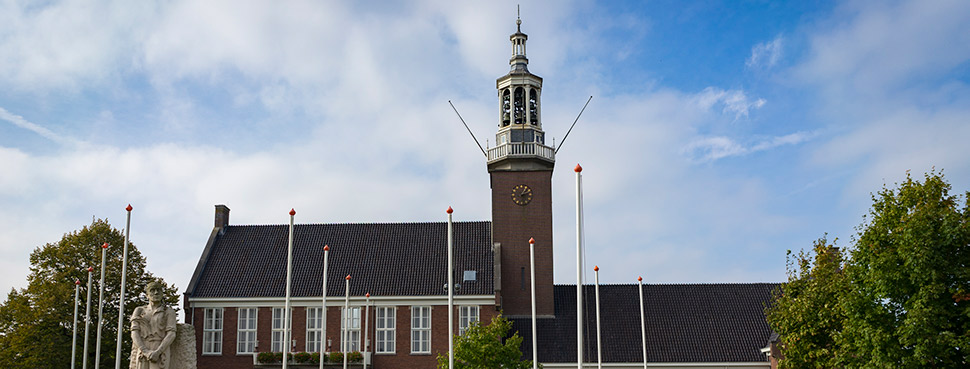
    The pond behind the cty hall. Photo: Lennart Ootes


    Jan Roebers. Photos: Lennart Ootes


    Jaap Vogel. Photo: Lennart Ootes