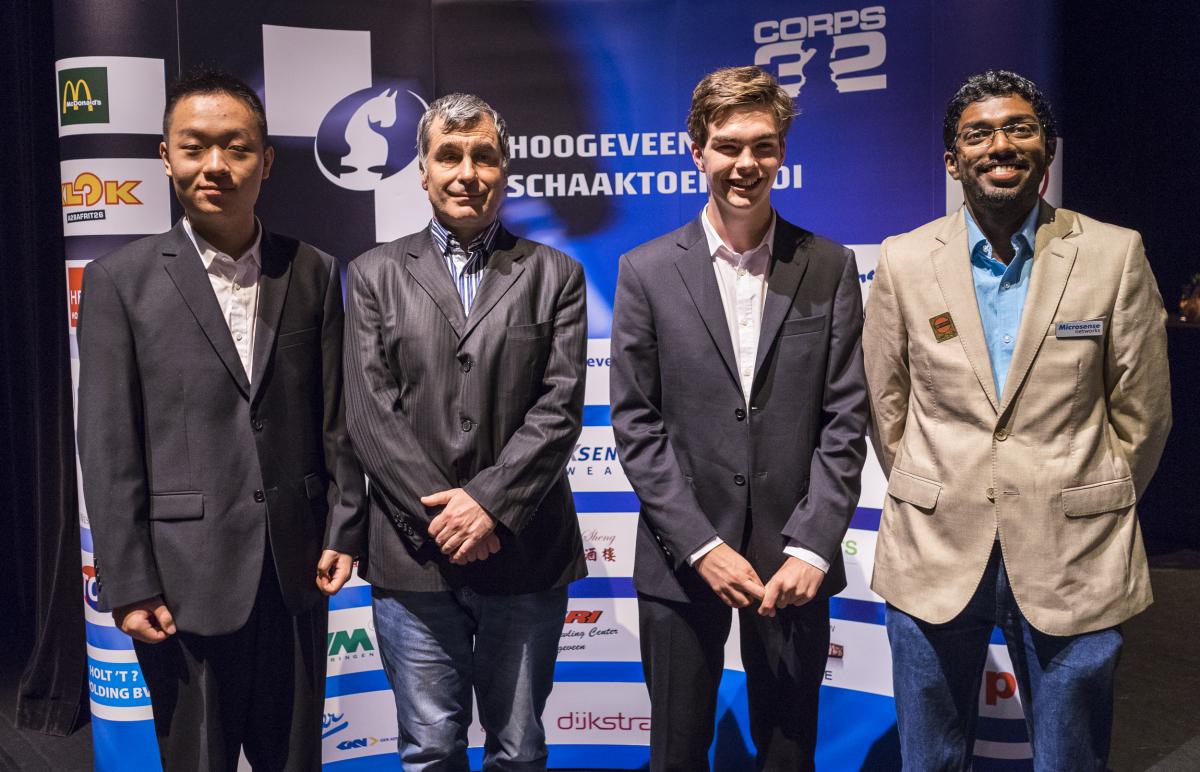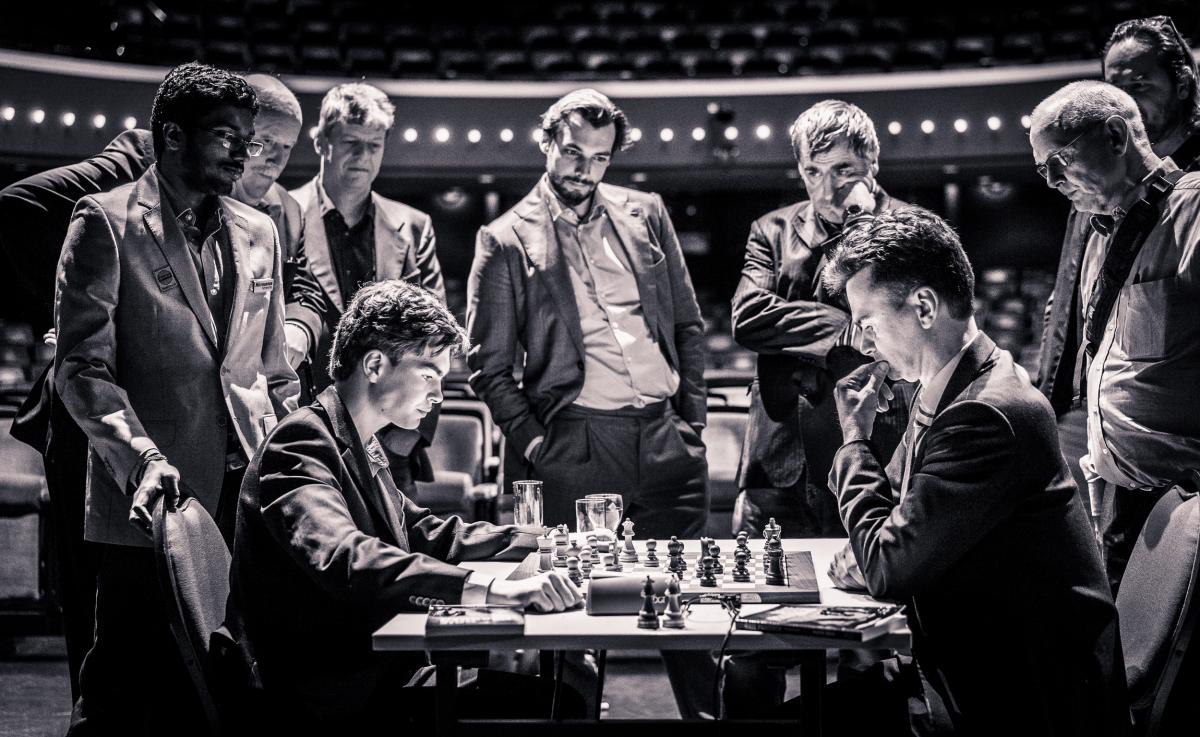



Auteur: Peter Boel

  • Hou Yifan finishes with a flash

    Hou Yifan finishes with a flash

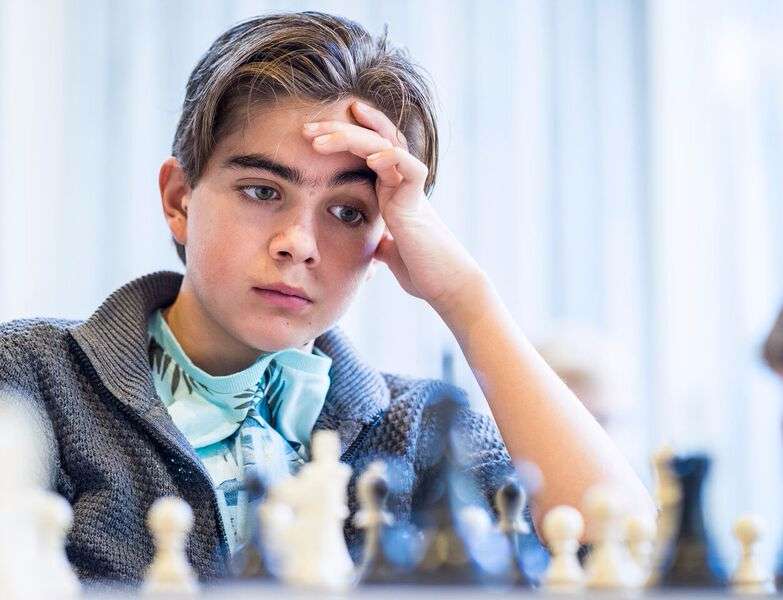
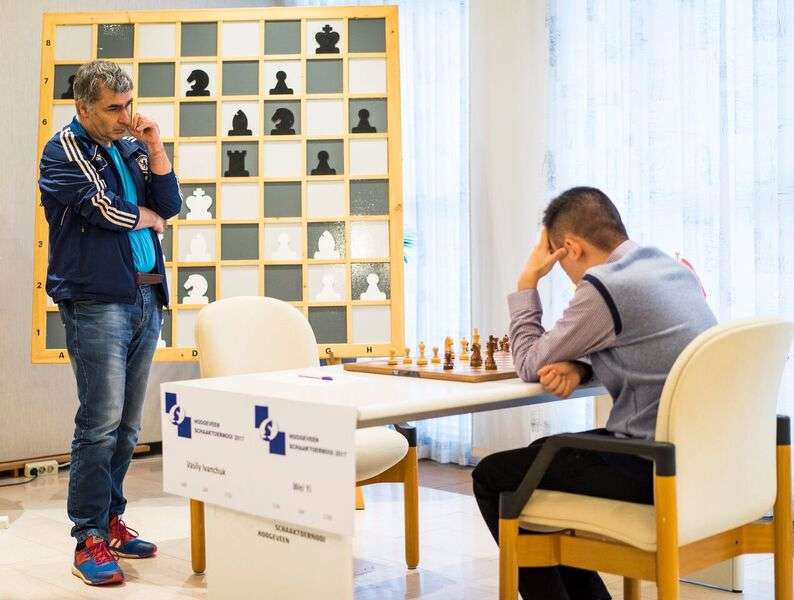
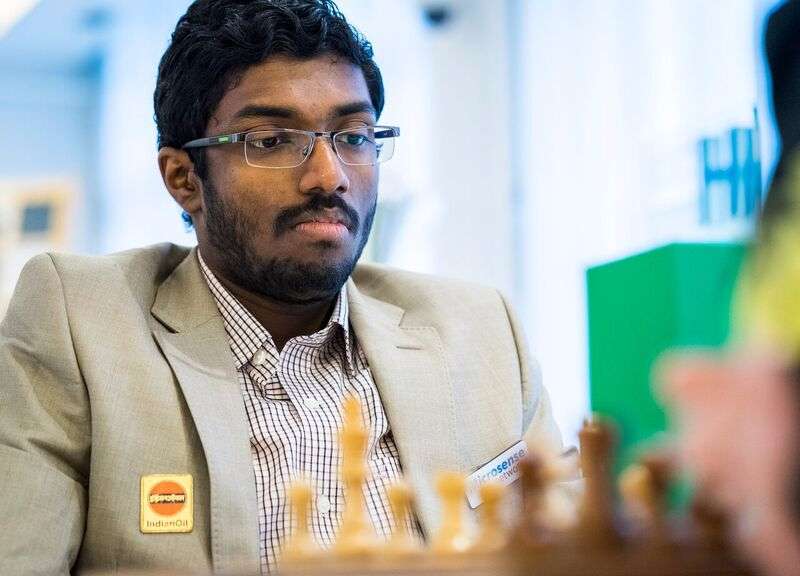
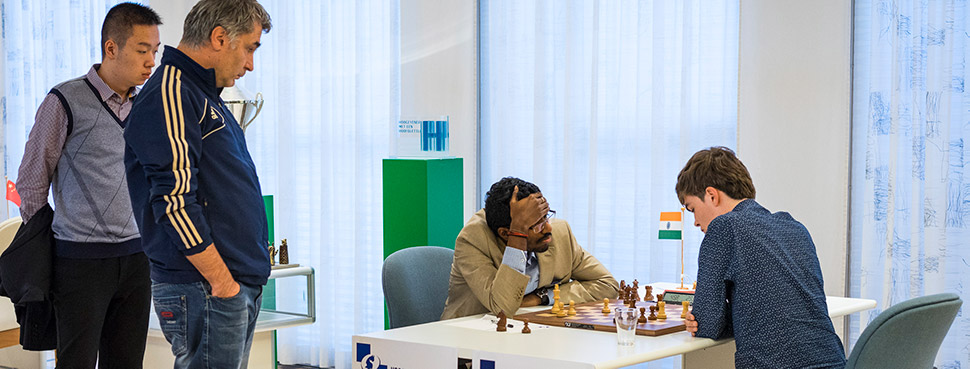
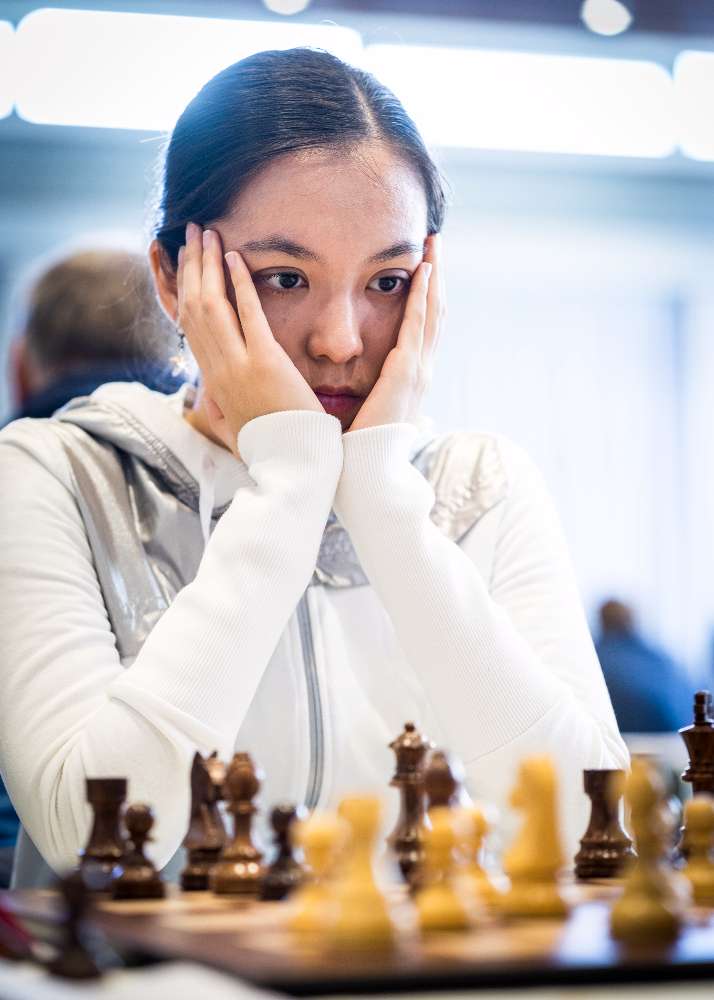
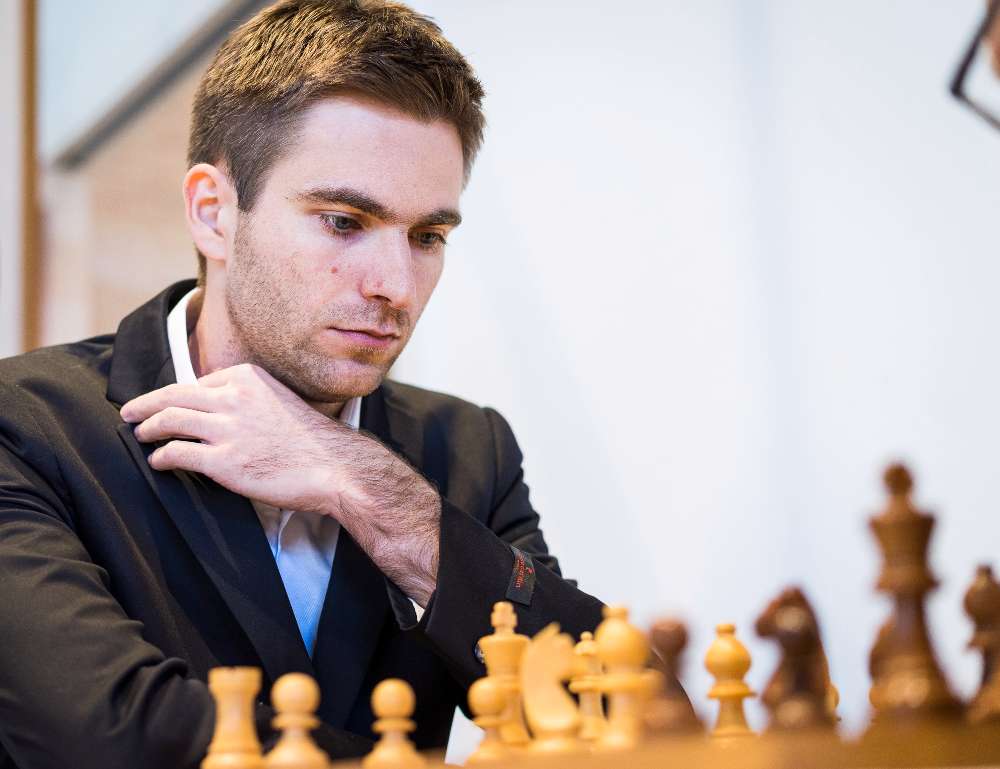
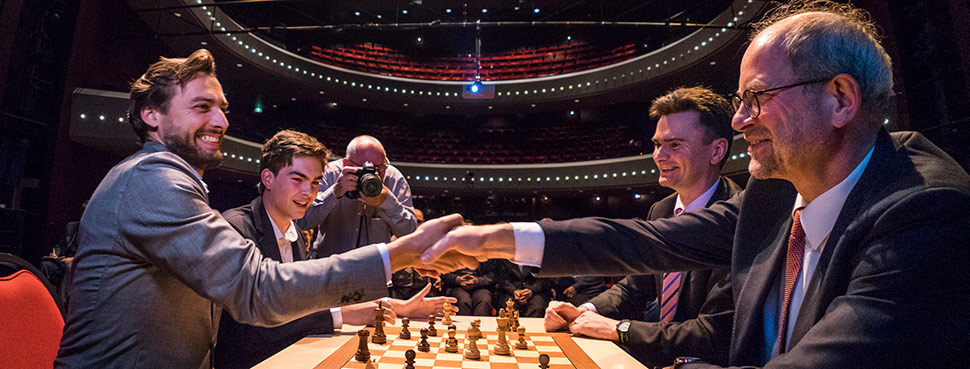
    It happens sometimes: if a player wins a match before time, his attention fades. It happened to Short today, and Hou Yifan struck immediately with an elegant attack. She wasn’t really proud of it, as with accurate play Short wouldn’t have got into trouble. Ivan Sokolov won the other match with a draw. It was hard-fought, but Jorden van Foreest was the one who had been in danger.


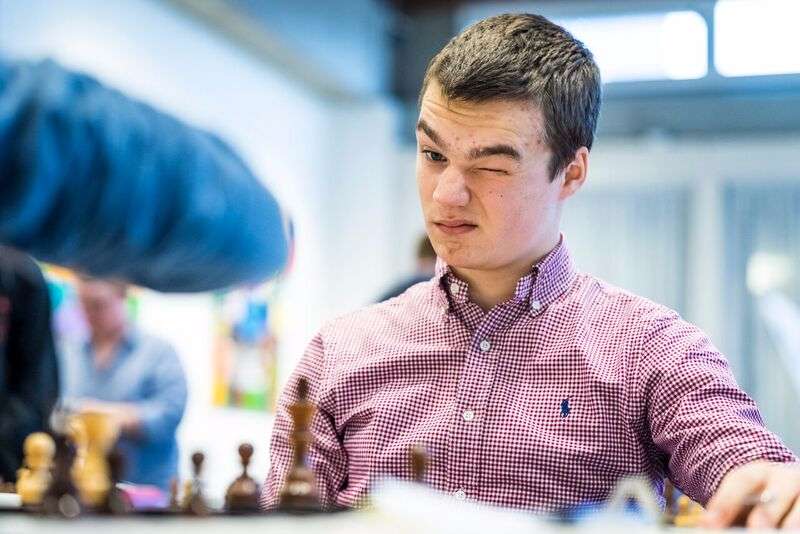
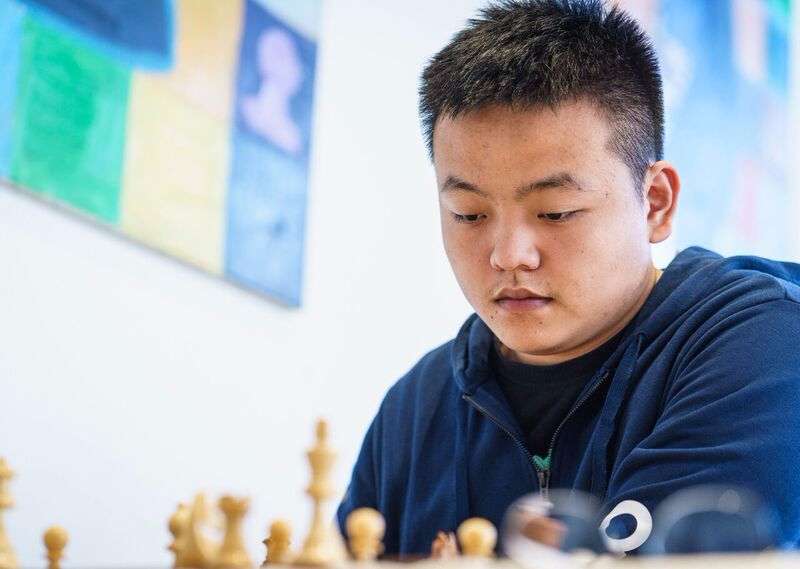
    Photo: Lennart Ootes

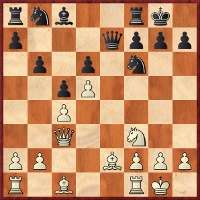
    Today it’s ‘ladies first’ again. After an oversight by Short, Hou Yifan won in the type of attack every white player dreams of in the Ruy Lopez.

    Hou Yifan – Short

    1.e4 e5 2.Nf3 Nc6 3.Bb5 a6 4.Ba4 Nf6 5.0–0 Be7 6.Re1 b5 7.Bb3 d6 8.c3 0–0 9.h3 Na5 10.Bc2 c5 11.d4 Qc7 12.Nbd2 cxd4 13.cxd4 Bd7 14.Nf1 Rac8 15.Re2 Rfe8 16.Ng3 Bd8 17.b3 Nc6 18.Bb2 Qa7


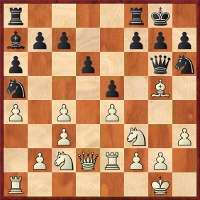
    19.d5

    A novelty. 20.a3 had been played three times here, and 20.dxe5 once.

    19…Nb4 20.Bb1 a5 21.a3 Na6

    The start of a long journey for this knight.

    22.b4 Qb7 23.Qd2 axb4 24.axb4 Nc7 25.Nh4 g6 26.Ra3

    The centre and queenside have been fixed, now Hou Yifan sets up her pieces for an attack on the king.

    26…Na8 27.Rf3


    27…Nb6

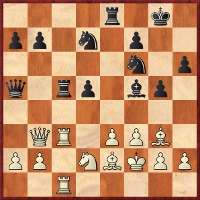
    Missing a tempo for the defence – and every tempo counts here. ‘This was a blunder’, Short said. ‘I should have played 27…Kh8.’ Hou Yifan agreed that in that case she wouldn’t have had any attacking chances. ‘So then I would have had to play 28.Rc3.’ It had been a bit of a gamble, because: ‘If I don’t have anything here, then it would have been better not to play Nh4 either. In some way I hoped I could play f2-f4 somewhere, but it didn’t really work.’

    28.Qh6?? is not possible after the king move in view of 28…Ng8 29.Qf4 Bf6, and Black wins the knight on h4.

    28.Qh6 Kh8?!


    28…Be7 was a better defence. White then has a different continuation of the attack: 29.Nhf5! Bxf5 (29…gxf5? 30.Rxf5!) 30.Nxf5 Bf8 31.Qh4 Nfd7 (31…Nh5 32.g4 Nf4 33.Rxf4 exf4 34.Qf6 Re5 35.Nxd6 Bxd6 36.Qxd6 Nc4 with crazy complications, most of which, as usual, end in 0.00) 32.Nh6+ Bxh6 33.Qxh6 f6 34.h4 and White has the initiative.

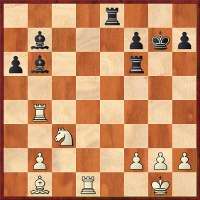
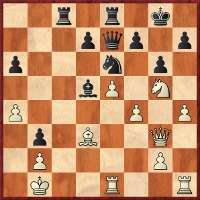
    After the text move Black is a tempo short for the defence, and Hou Yifan now finishes the game with a flash.

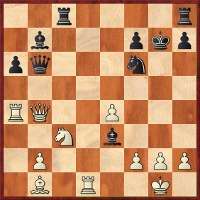
    29.Rxf6! Bxf6 30.Nh5! gxh5 31.Qxf6+ Kg8 32.Re3 Bg4 33.Qg5+ Kh8 34.hxg4 Qe7 35.Qxh5 Na4


    36.Rh3!

    Of course – never look back.

    36…Qf6 37.Rf3 Qg7 38.Rxf7 Qg8 39.Qf5 1–0


    Photo: Lennart Ootes


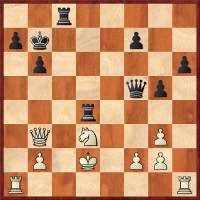
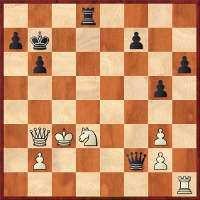
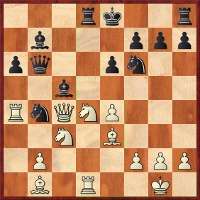
    Photo: Lennart Ootes

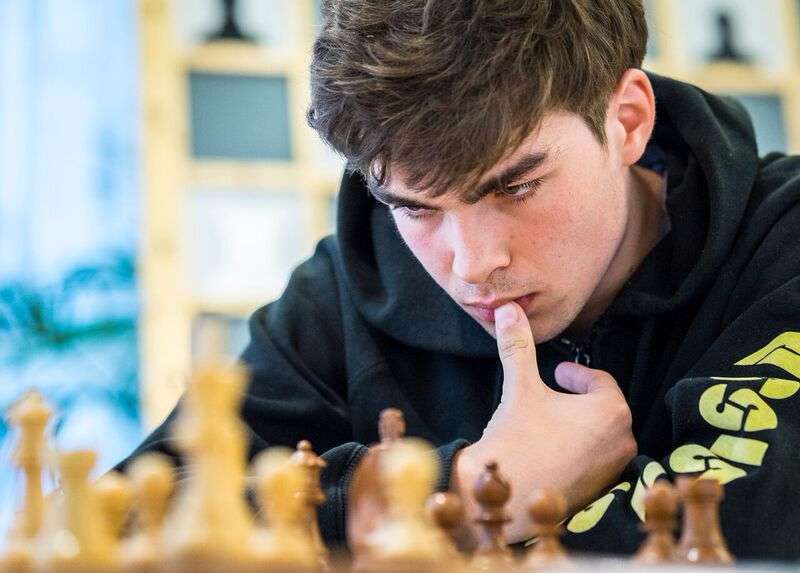
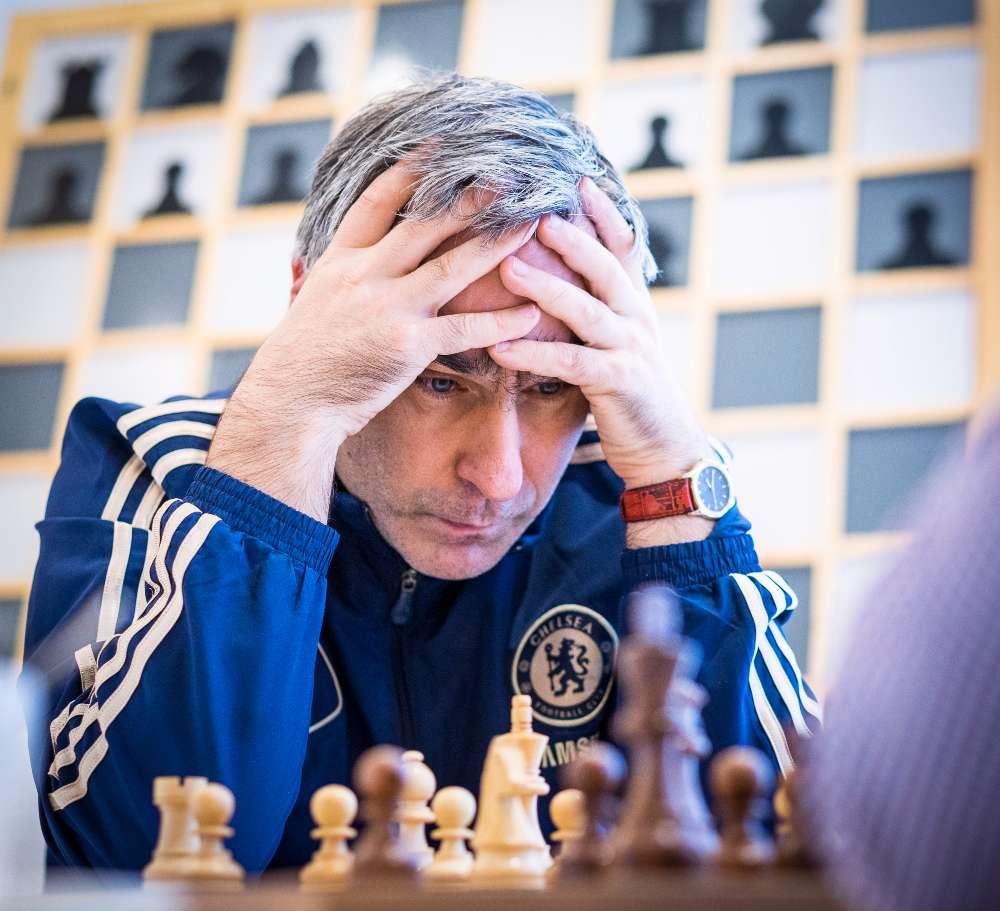
    Jorden van Foreest and Ivan Sokolov concluded their match in style today.


    Photo: Lennart Ootes

    Van Foreest – Sokolov

    1.e4 e5

    Another surprise in this match!

    2.Nf3 Nc6 3.d4

    Of course Van Foreest doesn’t go for the Ruy Lopez, as it’s Sokolov’s specialty.

    3…exd4 4.Nxd4 Qf6 5.Nb5 Bc5 6.Qe2 Bb6 7.N1c3 Ba5

    A way to avoid 8.Nd5, a move White can also play after 7…Nge7.

    8.Bd2 a6


    9.Na3

    The alternative is 9.Nd5!? Qxb2 10.Nbxc7+ Bxc7 (10…Kd8 11.Bxa5 Qxa1+ 12.Kd2 Qd4+ 13.Qd3 Qxd3+ 14.Bxd3 Nxa5 15.Nxa8) 11.Bxc7+ Kd8 12.Nxa8 Qxa1+ 13.Qd1, and in this endgame may have something with his bishop pair, but you can’t scare Sokolov with such lines.

    9…b5 10.0–0–0 Nge7 11.Nd5

    After 11.Kb1, 11…b4 is not yet a threat on account of 12.Nd5, but Van Foreest opts for clarity.

    11…Bxd2+ 12.Qxd2 Pxd5 13.exd5 Ne7


    14.Be2

    Van Foreest also contemplated 14.d6 cxd6 15.Qxd6 Qxd6 16.Rxd6, ‘but this is about equal. Ivan had looked at it this morning.’

    14…d6 15.Qa5!?

    The queen jumps into the lion’s den. ‘I decided to try and take some pawns and then hopefully survive the attack’, said Van Foreest.

    15…0–0! 16.Rhe1

    Certainly not 16.Nxb5?? axb5 17.Qxa8 Bg4 18.Qxf8+ Kxf8 19.Bxg4 and Black emerges a piece up by 19…Qg5+.

    16…Bf5 17.Qxc7 Rfc8

    Black could have gone all out with 17…Rac8, to also give the a-pawn. Now White could have slightly slowed down the attack by 18.Qb7.

    18.Qb6 Rc5 19.Rd2 Rac8

    19…Qe5! would have been very unpleasant for White, for example: 20.Red1 Rac8 21.Qxa6 Nxd5!.

    20.Qxa6


    20…Qg5?!

    This move seemed a bit more forcing to Sokolov than 20…Nxd5, but a little later he realized this was not the case. After the capture on d5 there can follow: 21.Nxb5 Nc7! and all the back-rank mates are neatly covered: 22.Qb6 Nxb5 23.Bxb5 Rxc2+ 24.Rxc2 Rxc2+ 25.Kd1 h6, and Black wins in the attack.

    21.Bd1 b4 22.h4!

    When I played 20…Qg5, I thought, I have so many moves here… but after the text I realized things were not so clear anymore’, Sokolov admitted.

    22…Qh6!

    Less good was 22…Qxh4 23.Nb5! (after 23.Qxd6 bxa3 24.b3, suggested by Van Foreest, Black has 24…Bg6; Sokolov thought 23.Qa4!? was very unclear) 23…b3 24.axb3 Qg5 25.Nd4 Nxd5 26.Nxf5 Qxf5 27.Kb1 followed by 28.Qd3, and White consolidates.

    23.Rxe7 bxa3 24.Re3 axb2+ 25.Kb1 Qxh4


    26.g4!

    Another crucial moment: 26.Qxd6 Qa4 27.Rb3 h6 gives Black a very dangerous attack for two pawns, especially after a move like …Qa5!. ‘This is a kind of long-term Sicilian attack’, Sokolov said. Van Foreest seizes his best chance.

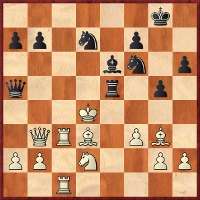
    26…Bxg4 27.Qxd6 h5 28.Bxg4 Qxg4 29.Re8+ Rxe8 30.Qxc5 Qg1+ 31.Kxb2


    White remains a pawn up, but Black’s passed h-pawn and the exposed white king give him plenty of compensation.

    31…Rb8+ 32.Kc3 Qa1+ 33.Kd3 Qf1+ 34.Kd4 Qe1 35.Kc3 Qa1+ 36.Kd3 Qf1+ 37.Kd4 Qe1 38.Kc3

    Here Sokolov didn’t try any further: draw. ‘Especially after Loek van Wely told me this morning that at 3-3 we would have to blitz as well, I thought it was enough.’


    Photo: Lennart Ootes


    Photo: Lennart Ootes

  • Gupta flikt het weer

    Gupta flikt het weer

    Het leek nog even spannend te worden, maar hij had tot het laatste moment alles onder controle. De beste speler van het Open won opnieuw het toernooi, net als vorig jaar: grootmeester Abhijeet Gupta uit India.


    Foto: Lennart Ootes
     

    Een half punt tegen Lucas van Foreest was voor Gupta genoeg om de rest van het veld voor te blijven.

    Van Foreest – Gupta

    1.e4 c5 2.Pf3 d6 3.d4 cxd4 4.Pxd4 Pf6 5.Pc3 Pc6 6.Lg5 e6 7.Dd2 a6 8.0–0–0 Ld7 9.f4 b5 10.Lxf6 gxf6 11.Pxc6 Lxc6 12.f5 Db6


    13.Pe2

    Meestal ging wit hier verder met 13.fxe6 fxe6 14.Df4. Van Foreest had hier 13.Kb1 willen spelen, maar verwisselde de zetten.

    13…Dc5

    Het is duidelijk dat wit af wil gaan op de zwakke e6-pion, maar zwart kon gewoon 13…Lxe4 spelen. Gupta was echter eventjes van zijn à propos gebracht.

    14.Kb1

    14.fxe6 fxe6 15.Pd4 Ld7 16.Kb1 en 17.Le2 ziet er wel gunstig uit voor wit.

    14…h5 15.fxe6 fxe6 16.Pf4!?

    16.Pd4 Ld7 17.Le2 verhindert het zwarte antwoord en geeft wit nog wel wat aanknopingspunten.

    16…Lh6!


    17.Pxe6!?

    Het eindspel dat nu ontstaat belooft niet veel voor wit. De andere poging was 17.Dxd6 Dxd6 18.Txd6 Lxf4 19.Txc6 Kd7 en wit heeft een gezonde pluspion. Ook hier heeft zwart wat druk, maar het lijkt minder dan in de partij. “Deze stelling is remise”, meende Lucas.

    17…Lxd2 18.Pxc5 dxc5 19.Txd2


    19…Td8!

    Deze uitstekende zet had Van Foreest gemist. Het enige actieve witte stuk wordt geruild (vanwege de matdreiging) en zwart kan het moment kiezen waarop hij zijn pion terugpakt. Van Foreest had gerekend op 19…Lxe4 20.Ld3 “en dan heb ik nog wel iets, maar niet veel.”

    20.Txd8+ Kxd8 21.Tg1 h4 22.a4 c4 23.axb5 axb5 24.g3 Ke7 25.Lg2 Ke6 26.Kc1 hxg3 27.hxg3 Th2 28.g4 Ke5 29.Lf3 Kf4


    30.Tf1! Ke3 31.Ld1 Tf2 32.Tg1 Lxe4 33.g5

    Het ziet er heel dreigend uit voor wit, maar zo werkt hij zich los.

    33…f5 34.Tg3+ Kf4 35.Tg1 Ke3 36.Tg3+ Kf4 37.Tg1 Tg2 38.Txg2 Lxg2 39.Kd2

    Dit doet wat masochistisch aan, maar ook na 39.g6 Kg5 40.g7 Ld5 raakt wit de g-pion kwijt. Remise is het toch.

    39…Kxg5 40.Ke3 f4+ 41.Kf2 Lc6 42.c3 Kf5 43.Lh5 Ke5 44.Lf7 Kf6 45.Lh5 Ke6 46.Lg6 Kd6 47.Lh5 Kc5 48.Lf3 Ld5 49.Ke2 Kd6 50.Lh5 Lc6 51.Kf2 Le4 52.Ld1 Kc5 53.Lf3 Lc2 54.La8 Ld1 55.Lf3 Lc2 56.La8 Ld1 57.Lf3 ½-½

    En daarmee was Gupta opnieuw de verdiende toernooiwinnaar – voor de tweede keer in successie. Nog nooit eerder vertoond in Hoogeveen!

    Voor Lucas van Foreest restte een tweede meesternorm. Hij was al blij dat hij niet verloren had: “Dat was niet best geweest.”


    Lucas van Foreest, Foto: Lennart Ootes

    Bij Babu Lalith was het débacle van gisteren tegen Lucas blijkbaar hard aangekomen, want ook vandaag ging het mis tegen Chanda Sandipan, die met zijn zege de ongedeeld tweede plaats opeiste. En oudgediende Oleg Romanishin reikte na een stroeve start toch nog tot een gedeeld derde plaats via een hardbevochten zege op Jan Werle.


    Babu Lalith. Foto: Lennart Ootes

    Romanishin – Werle


    Een zeer verraderlijke stelling voor zwart. Het beste is iets als 35…Db1, maar dan blijft wit een pion voor. Op f4 slaan mag niet…

    35…Txf4

    Maar waarom niet?

    36.Dd6!

    Een dodelijk klein zetje. Het is meteen uit.

    36…Db5

    Na 36…Tf8 wint 37.Txg7! fraai.

    37.Ta8+ Lf8 38.Txf8+ Kg7 39.Dxf4 1–0

    Er waren ook nog twee blije jeugdspelers. De net als Lucas van Foreest pas 15-jarige Rakesh Kumar Jena haalde ruim zijn meesternorm en had vandaag bijna Sipke Ernst nog gepakt. Deze ontsnapte in een eindspel van toren tegen toren plus f- en h-pion. Winst had Jena waarschijnlijk zelfs een GM-norm opgeleverd.

    De 14-jarige Casper Schoppen behaalde ook een IM-norm. Hij stond lang onder druk tegen Hugo van Hengel en had de stelling net bijna gelijkgetrokken toen zijn tegenstander door zijn digitale vlag ging. Ook Maaike Keetman maakte vandaag weer een uitstekende indruk door een lastig eindspelletje tegen grootmeester Debashis Das op remise te houden en in dit sterke veld op plus-2 te eindigen.

    Alle winnaars gefeliciteerd!!


    Prijswinnaars Amateur II. Foto: Lennart Ootes


    Lola den Dunnen. Foto: Lennart Ootes

  • Hou Yifan redt de eer

    Hou Yifan redt de eer

    Het komt vaker voor: als een speler een match voortijdig wint verslapt de aandacht. Dat gebeurde Short vandaag, en Hou Yifan sloeg onmiddellijk toe met een elegante aanval. Zelf was ze er niet onverdeeld tevreden over, omdat Short met nauwkeurig spel niet in de problemen zou zijn gekomen. Ivan Sokolov won de andere match met een remise. Die was weliswaar zwaarbevochten, maar het was vooral Jorden van Foreest die in gevaar was geweest.


    Foto: Lennart Ootes

    Het is weer ‘ladies first’ vandaag. Na een onoplettendheid van Short won Hou Yifan in een type aanval waar elke witspeler van droomt in het Spaans.

    Hou Yifan – Short

    1.e4 e5 2.Pf3 Pc6 3.Lb5 a6 4.La4 Pf6 5.0–0 Le7 6.Te1 b5 7.Lb3 d6 8.c3 0–0 9.h3 Pa5 10.Lc2 c5 11.d4 Dc7 12.Pbd2 cxd4 13.cxd4 Ld7 14.Pf1 Tac8 15.Te2 Tfe8 16.Pg3 Ld8 17.b3 Pc6 18.Lb2 Da7


    19.d5

    Een nieuwtje. 20.a3 is hier nog drie keer gespeeld, 20.dxe5 nog één keer.

    19…Pb4 20.Lb1 a5 21.a3 Pa6

    Het begin van een lange reis voor dit paard.

    22.b4 Db7 23.Dd2 axb4 24.axb4 Pc7 25.Ph4 g6 26.Ta3

    Het centrum en de damevleugel zijn dichtgeschoven, Hou Yifan zet nu alles klaar voor een koningsaanval.

    26…Pa8 27.Tf3


    27…Pb6

    Mist een tempo voor de verdediging – het luistert heel nauw nu. “Dit was een blunder”, zei Short. “Ik had 27…Kh8 moeten spelen.” Hou Yifan was het ermee eens dat ze in dat geval geen aanvalskansen zou hebben gehad: “Dan had ik 28.Tc3 moeten doen.” Het was wel een soort gok van haar, want: “Als ik hier niets heb had ik ook beter niet Ph4 kunnen spelen. Op de een of andere manier hoopte ik ergens f2-f4 te kunnen doen, maar dat zat er nooit echt in.” 28.Dh6?? is in dit geval niet mogelijk wegens 28…Pg8 29.Df4 Lf6 en zwart wint een stuk op h4.

    28.Dh6 Kh8?!


    28…Le7 was een betere verdediging. Dan heeft wit een andere voortzetting van de aanval: 29.Phf5! Lxf5 (29…gxf5? 30.Txf5!) 30.Pxf5 Lf8 31.Dh4 Pfd7 (31…Ph5 32.g4 Pf4 33.Txf4 exf4 34.Df6 Te5 35.Pxd6 Lxd6 36.Dxd6 Pc4 met waanzinnige complicaties, die voornamelijk, zoals gebruikelijk, eindigen in 0.00) 32.Ph6+ Lxh6 33.Dxh6 f6 34.h4 en wit heeft het initiatief.

    Na de tekstzet komt zwart een tempo tekort in de verdediging, en Hou Yifan maakt het keihard en elegant af.

    29.Txf6! Lxf6 30.Ph5! gxh5 31.Dxf6+ Kg8 32.Te3 Lg4 33.Dg5+ Kh8 34.hxg4 De7 35.Dxh5 Pa4


    36.Th3!

    Natuurlijk – never look back.

    36…Df6 37.Tf3 Dg7 38.Txf7 Dg8 39.Df5 1–0


    Foto: Lennart Ootes


    Foto: Lennart Ootes

    Jorden van Foreest en Ivan Sokolov sloten vandaag helemaal in stijl af.


    Foto: Lennart Ootes

    Van Foreest – Sokolov

    1.e4 e5

    Weer een verrassing in deze match!

    2.Pf3 Pc6 3.d4

    Van Foreest gaat natuurlijk niet in op het Spaans, waarvan Sokolov een groot kenner is.

    3…exd4 4.Pxd4 Df6 5.Pb5 Lc5 6.De2 Lb6 7.P1c3 La5

    Een manier om 8.Pd5 te ontwijken, wat wit ook kan spelen na 7…Pge7.

    8.Ld2 a6


    9.Pa3

    Het alternatief is 9.Pd5!? Dxb2 10.Pbxc7+ Lxc7 (10…Kd8 11.Lxa5 Dxa1+ 12.Kd2 Dd4+ 13.Dd3 Dxd3+ 14.Lxd3 Pxa5 15.Pxa8) 11.Pxc7+ Kd8 12.Pxa8 Dxa1+ 13.Dd1 en in dit eindspel heeft wit misschien wel iets met zijn loperpaar, maar hiermee maak je Sokolov niet bang.

    9…b5 10.0–0–0 Pge7 11.Pd5

    Na 11.Kb1 dreigt 11…b4 nog niet wegens 12.Pd5, maar Van Foreest kiest voor duidelijkheid.

    11…Lxd2+ 12.Dxd2 Pxd5 13.exd5 Pe7


    14.Le2

    Van Foreest overwoog nog 14.d6 cxd6 15.Dxd6 Dxd6 16.Txd6, “maar dit is ongeveer gelijk. Ivan had dit vanmorgen nog bekeken.”

    14…d6 15.Da5!?

    De dame springt het hol van de leeuw binnen. “Ik besloot te proberen wat pionnen te pakken en dan hopelijk de tegenaanval te overleven”, zei Van Foreest.

    15…0–0! 16.The1

    Vooral niet 16.Pxb5?? axb5 17.Dxa8 Lg4 18.Dxf8+ Kxf8 19.Lxg4 en zwart komt een stuk voor met 19…Dg5+.

    16…Lf5 17.Dxc7 Tfc8

    Zwart had all-out kunnen gaan met 17…Tac8 om de a-pion ook nog te geven. Nu had wit de aanval enigszins kunnen ophouden met 18.Db7.

    18.Db6 Tc5 19.Td2 Tac8

    19…De5! was uiterst vervelend geweest voor wit, bijvoorbeeld 20.Ted1 Tac8 21.Dxa6 Pxd5!.

    20.Dxa6


    20…Dg5?!

    Deze zet leek Sokolov nog iets forcerender dan 20…Pxd5, maar daar kwam hij even later van terug. Na slaan op d5 kan volgen: 21.Lxb5 Pc7! en alle onderste rij-matjes zijn precies afgedekt: 22.Db6 Pxb5 23.Pxb5 Txc2+ 24.Txc2 Txc2+ 25.Kd1 h6 en zwart wint in de aanval.

    21.Ld1 b4 22.h4!

    “Toen ik 20…Dg5 speelde dacht ik, ik heb hier zo veel zetten… maar na deze zet zag ik het niet meer zo helder”, bekende Sokolov.

    22…Dh6!

    Minder goed was 22…Dxh4 23.Pb5! (na 23.Dxd6 bxa3 24.b3, wat Van Foreest opperde, heeft zwart 24…Pg6; 23.Da4!? vond Sokolov heel onduidelijk) 23…b3 24.axb3 Dg5 25.Pd4 Pxd5 26.Pxf5 Dxf5 27.Kb1 gevolgd door 28.Dd3 en wit consolideert.

    23.Txe7 bxa3 24.Te3 axb2+ 25.Kb1 Dxh4


    26.g4!

    Opnieuw een cruciaal moment: 26.Dxd6 Da4 27.Tb3 h6 geeft zwart een zeer gevaarlijke aanval voor twee pionnen, vooral na een zet als …Da5!. “Dit is een soort langetermijn Siciliaanse aanval”, zei Sokolov. Van Foreest pakt zijn beste kans.

    26…Lxg4 27.Dxd6 h5 28.Lxg4 Dxg4 29.Te8+ Txe8 30.Dxc5 Dg1+ 31.Kxb2


    Wit is een pion voorgebleven, maar de vrije zwarte h-pion en de open witte koning geven hem ruim voldoende compensatie.

    31…Tb8+ 32.Kc3 Da1+ 33.Kd3 Df1+ 34.Kd4 De1 35.Kc3 Da1+ 36.Kd3 Df1+ 37.Kd4 De1 38.Kc3

    Hier probeerde Sokolov het niet verder: remise. “Het is mooi geweest”, zei hij. “Zeker nadat Loek vanmorgen tegen me zei dat we bij 3–3 ook nog zouden moeten snelschaken, vond ik het wel genoeg.”


    Foto: Lennart Ootes


    Foto: Lennart Ootes

  • Again, a Van Foreest

    Again, a Van Foreest

    For days we have been desperately asking ourselves who could break the supremacy of the Great Moghuls of Hoogeveen. It took a Van Foreest to do it. Lucas stole a point from Babu Lalith in this penultimate round. The Indian finally lost his self-control and went too far. Abhijeet Gupta saw this, and not much later agreed a draw with Chanda Sandipan. The winner of last year is leading again – but in the final round he will face Lucas van Foreest with Black. And the latter can play for tournament victory as well as his second GM norm. If he doesn’t manage, he will have his second IM norm in any case.


    Lucas van Foreest. Foto: Lennart Ootes

    Van Foreest – Lalith


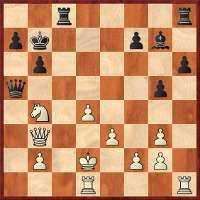
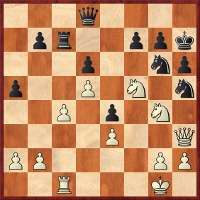
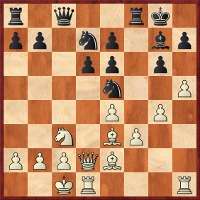
    17…Qf6!?

    Lalith is ambitious and goes on the attack. The younger Van Foreest (15) thought that 17…Qd7 was better, but then White has a little something after 18.Qg5.

    18.Nxb5 Nf4 19.f3 Qh4!?

    19…Bxf3 20.gxf3 Qh4 is already a draw, for example: 21.Nxd4 c5!.

    19…Qh6! was the most dangerous move. After the reply 20.Kf1 (20.Kh1 or 20.Kh2 comes down to the same) 20…Bxf3 21.gxf3 Qxh3+ 22.Kg1 Qg3+

    analysis diagram


    A) 23.Kf1? Qxf3+ 24.Kg1 (24.Qf2 Qh1+ 25.Qg1 Qh3+ 26.Kf2 Qf5 27.Nxd4 Nxd3+ 28.Ke3 Qh3+ 29.Kd2 Nxe1) 24…Nh3+ 25.Kh2 Nf2 (threatening 26…Qh1+ 27.Kxf2 Qh2+) 26.Re7 Ng4+ 27.Kg1 Ne3 28.Re4 Qf1+ 29.Kh2 Qf5! and due to the threat of a fork Black wins back the knight on b5;

    B) 23.Kh1! Qxf3+ 24.Kh2 Qh5+ 25.Kg1 (25.Kg3 Qh3+ 26.Kxf4 Qh6+) 25…Qg4+ 26.Kh1 Qh4+ 27.Kg1.

    There will come a time when grandmasters like Babu Lalith will be glad to take such a draw against Lucas van Foreest.

    20.Nxd4

    There was nothing else’, Lucas said. 20.Qf2 fails to 20…Qg5! and again the knight on b5 falls.

    20…Qg3?


    Lalith misses a devious little move. Here, necessary was 20…Nxh3+ 21.gxh3 Qxd4+ 22.Kg2, and now 22…Qf6! equalizes. ‘I am a pawn ahead, but Black has good drawing chances due to my weakened king’s position’, Van Foreest said.

    21.Kf1! c5

    21…Qh2 22.Qf2 Nh5 23.Nf5 amounts to the same.

    22.Nf5 Qh2 23.Qf2 Nh5 24.Qxc5

    It’s over.

    24…Bxf3 25.gxf3 Qxh3+ 26.Kg1

    No more checks.

    26…g6


    27.Bxf7+! 1–0

    Grandmasters Werle and Romanishin pushed back Jonkman and De Jong respectively, and will face each other tomorrow on board 3. Apart from this, the norm chances are important. Except for Lucas van Foreest, Rakesh Kumar Jena (who is also 15!) has already made an IM-norm too. Casper Schoppen (14!) can score an IM norm by beating Hugo ten Hertog tomorrow, and Mees van Osch has to beat K. Rathnakaran with Black for the same result. And let’s not forget Maaike Keetman! She has already collected 5 points, and tomorrow we will see how far she gets against grandmaster Debashis Das.

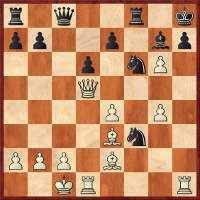
    Let’s close the day with some light stuff. The following game had an entertaining finish.

    Hendriks – Hoffman


    28.Rxc3 Bg7

    28…Qxc3? 29.Bb2.

    29.Re3 Bxf3!

    Opening many lines and diagonals. 30.Rxf3 is not allowed due to 30…Qe1+.

    30.Bxd7 Qb6 31.Qf2 Bd4


    32.Bb2

    Obstruction, pin and half cross-pin? Perhaps Dolf Wissmann knows…

    32…Qxb2 33.Re8+ Rxe8 0–1

    Van Dael – Boersma


    Never allow a black bishop on the a7-g1 diagonal if your king is on h1…

    29…Rh3! 30.d6+ e6 31.Qxe6+ Kh8 0–1

    And then there was this.

    Bos – Bensaid


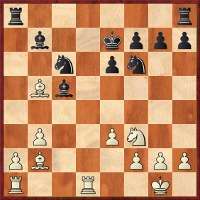
    This position with two cornered knights occurred after 18 moves – another record? Of course the game was drawn later on.

    We will leave it at this for today – we will spare you the way Jan van der Veen mated Andries Mellema in 26 moves with knight and bishop.


    Demre Kerigan. Foto: Lennart Ootes


    Gupta. Foto: Lennart Ootes


    Stefan Colijn. Foto: Lennart Ootes


  • Weer een Van Foreest

    Weer een Van Foreest

    Al dagenlang vragen we ons wanhopig af wie de heerschappij zou kunnen onderbreken van de Grootmoguls van Hoogeveen. Het bleek een Van Foreest te zijn. Lucas snoepte in deze voorlaatste ronde Babu Lalith een punt af. De Indiër verloor dan eindelijk zijn zelfbeheersing en vergaloppeerde zich. Abhijeet Gupta zag het en kwam even later remise overeen met Chanda Sandipan. De winnaar van vorig jaar leidt nu opnieuw – maar in de laatste ronde treft hij met zwart Lucas van Foreest. Die kan gaan voor de toernooiwinst én voor zijn tweede grootmeesternorm. Als dat niet lukt heeft hij de (eveneens tweede) meesternorm al op zak.


    Lucas van Foreest. Foto: Lennart Ootes

    Van Foreest – Lalith


    17…Df6!?

    Lalith is ambitieus en gaat voor de aanval. De jonge Van Foreest (15) meende dat 17…Dd7 beter was, maar dan heeft wit wel iets na 18.Dg5.

    18.Pxb5 Pf4 19.f3 Dh4!?

    19…Lxf3 20.gxf3 Dh4 is al remise, bijvoorbeeld 21.Pxd4 c5!; 19…Dh6! was het gevaarlijkst. Na het antwoord 20.Kf1 (20.Kh1 of 20.Kh2 komt op hetzelfde neer) 20…Lxf3 21.gxf3 Dxh3+ 22.Kg1 Dg3+

    analysediagram


    A) 23.Kf1? Dxf3+ 24.Kg1 (24.Df2 Dh1+ 25.Dg1 Dh3+ 26.Kf2 Df5 27.Pxd4 Pxd3+ 28.Ke3 Dh3+ 29.Kd2 Pxe1) 24…Ph3+ 25.Kh2 Pf2 (dreigt 26…Dh1+ 27.Kxf2 Dh2+) 26.Te7 Pg4+ 27.Kg1 Pe3 28.Te4 Df1+ 29.Kh2 Df5! en zwart wint het paard op b5 terug door de vorkdreiging 
    B) 23. Kh1! Dxf3+ 24.Kh2 Dh5+ 25.Kg1 (25.Kg3 Dh3+ 26.Kxf4 Dh6+) 25…Dg4+ 26.Kh1 Dh4+ 27.Kg1.

    Er komt een tijd dat grootmeesters als Babu Lalith maar wat graag zo’n remise zullen pakken tegen Lucas van Foreest.

    20.Pxd4

    “Er was niks anders”, zei Lucas. 20.Df2 faalt op 20…Dg5! en het paard op b5 valt weer.

    20…Dg3?


    Lalith overziet een slinks zetje. Nodig was nu 20…Pxh3+ 21.gxh3 Dxd4+ 22.Kg2 en nu maakt 22…Df6! gelijk. “Ik sta een pion voor maar zwart heeft goede remisekansen door mijn verzwakte koningsstelling.”

    21.Kf1! c5

    21…Dh2 22.Df2 Ph5 23.Pf5 komt op hetzelfde neer.

    22.Pf5 Dh2 23.Df2 Ph5 24.Dxc5

    Het is uit.

    24…Lxf3 25.gxf3 Dxh3+ 26.Kg1

    Geen schaakje meer.

    26…g6

    27.Lxf7+! 1–0

    Grootmeesters Werle en Romanishin wierpen respectievelijk Jonkman en De Jong terug en ontmoeten elkaar morgen aan bord 3. Verder zijn de normkansen belangrijk. Behalve Lucas van Foreest is ook Rakesh Kumar Jena (ook 15!) al zeker van een IM-norm. Casper Schoppen (14!) kan een meesternorm scoren door morgen van Hugo ten Hertog te winnen, en Mees van Osch moet daarvoor met zwart winnen van K. Rathnakaran. Let ook op Maaike Keetman! Zij heeft al 5 punten verzameld en mag morgen kijken hoe ver ze komt tegen grootmeester Debashis Das

    We sluiten de dag af met wat luchtige kost. De volgende partij kende een vrolijk slot.

    Hendriks – Hoffman

    28.Txc3 Lg7

    28…Dxc3? 29.Lb2.

    29.Te3 Lxf3!

    Opent allemaal lijnen en diagonalen. 30.Txf3 mag niet wegens 30…De1+.

    30.Lxd7 Db6 31.Df2 Ld4


    32.Lb2

    Obstructie, penning en halve kruispenning? Misschien weet Dolf Wissmann het…

    32…Dxb2 33.Te8+ Txe8 0–1

    Van Dael – Boersma


    Laat nooit een zwarte loper toe op de a7-g1 diagonaal als je koning op h1 staat…

    29…Th3! 30.d6+ e6 31.Dxe6+ Kh8 0–1

    En dan nog het volgende.

    Bos – Bensaid


    Deze stelling met twee gehoekte paarden ontstond na 18 zetten – een record? Natuurlijk werd de partij remise.

    Hier laten we het bij voor vandaag – we zullen u besparen hoe Jan van der Veen in 26 zetten Andries Mellema matzette met paard en loper.


    Demre Kerigan. Foto: Lennart Ootes


    Gupta. Foto: Lennart Ootes


    Stefan Colijn. Foto: Lennart Ootes

  • Short wins match, Sokolov takes lead again

    Short wins match, Sokolov takes lead again

    The match between Hou Yifan and Nigel Short was decided today. After two successive victories, a solid draw was enough for Short to win the match. Tomorrow Hou Yifan can try to conclude the event on a high note by a win with White.


    Jorden met fotograaf Harry Gielen. Foto: Lennart Ootes

    In the match Sokolov-Van Foreest, the throwing of rocks merrily continued. Jorden did not deviate from his King’s Indian, but he had cooked up something special. Something very special – something provocative.

    Sokolov – Van Foreest

    1.c4 Nf6 2.Nc3 g6 3.e4 d6 4.d4 Bg7 5.Be2 0–0 6.Be3 Nc6

    New in this match. Earlier Van Foreest played 6…e5 and 7…a5 resp. 7…Na6.

    7.d5 Ne5 8.f4 Neg4 9.Bd2 Nh6!?

    A novelty prepared at home, and a rather bizarre-looking positioning for the knight. In this position, the more logical 9…h5 was tried twice. Sokolov’s verdict was more or less clear: ‘Nakamura also played 1.e4 e5 2.Qh5 once… but that was Nakamura. There are also other moves.’

    10.Nf3 c6 11.0–0 cxd5 12.cxd5 b5

    Now Black’s play does begin to take shape. Sokolov consolidates his centre.

    13.Bd3 b4 14.Na4 Bd7 15.Kh1 Nh5 16.Rc1


    16…Qa5?!

    This doesn’t turn out well. Alternatives were 16…Ng4 or, if necessary, first 16…f5 17.e5 and then 17…Ng4. But 16…Rc8 looks the most logical.

    17.b3 Rac8

    And here, 17…Bb5 18.Bxb5 Qxb5 was interesting, so as after 19.Rc4 Rac8 20.Rxb4 to play 20…Qd3, with active play as compensation for the pawn.

    18.a3 Bc3 19.Nxc3 bxc3


    20.Rxc3!

    A wonderful combination.

    20…Rxc3 21.Qa1

    21.Qe1 Qxa3 22.Bxc3 Qxb3 was less clear.

    21…Rfc8

    Led by Robert Ris, the audience in the commentary room enthusiastically analysed the queen sacrifice 21…Qxd5!, which looks like best chance under the circumstances. White has a choice: he can either accept with 22.exd5 Rxd3, after which Black has some activity for the material at least, or White can play it safe with 22.Qxc3, for example: 22…Qb7 23.Qb4 or 22…Qa8 23.Qd4.

    22.Bc4!


    But this spells big trouble for Black.

    22…Bb5

    Also here Van Foreest could have tried a queen sacrifice: 22…R3xc4! 23.Bxa5 Rxe4 and this too would have offered some practical chances. ‘This seemed to me to be his only chance’, Sokolov said. ‘It has to be good for White, but it’s certainly not easy.’ The best reaction seems to be 24.Rc1 or 24.Re1.

    23.Bxc3 Qa6 24.Nd2 Bxc4 25.bxc4

    Now White is simply a healthy pawn up, and the black knights still don’t have much to do.

    25…Rb8 26.a4 Ng4 27.Rf3

    Preventing all counterplay.

    27…Qb6 28.h3 Ne3 29.a5 Qc5

    30.Bd4 Nc2 31.Bxc5 Nxa1 32.Bd4

    A small subtlety: after the immediate 32.Bxa7 Rb2, the white knight is under attack. It doesn’t matter much: after 33.Rf2 Nxf4? 34.Bd4 White wins a piece, while 34.Nf1 also wins easily due to the passed a-pawn.

    32…Nc2 33.Bxa7


    The black player could have saved himself the rest.

    33…Rb2 34. g4
    Nf6 35. e5 dxe5 36. fxe5 Nd7 37. Rb3 Ra2 38. Rb7 Nxe5 39. Rxe7 Rxa5 40. Nb3 Kf8
    41. Rxf7+ Kxf7 42. Nxa5 Na3 43. c5 Nb5 44. Bb6 Nc3 45. d6 Ke6 46. c6 Nxc6 47.
    Nxc6 Kxd6 48. Nb4 Ke5 49. Kg2 h5 50. Nd3+ Ke4 51. Nf2+ Kf4 52. Bc7+ Ke3 53. g5
    Nd5 54. Bg3 Ke2 55. h4 Ne3+ 56. Kh3 Nf1 57. Nh1 Kf3 58. Be5 Ne3 59. Ng3 Nc4 60.
    Bc7 Ne3 61. Bb8 Nc4 62. Nxh5 Ke4 1-0


    Photo: Lennart Ootes


    Photo: Lennart Ootes


    Photo: Lennart Ootes

    The game from the other match had roughly the same course as the first two: quiet, positional – White presses but doesn’t really achieve anything.

    Short – Hou Yifan

    1.c4 c5 2.Nf3 Nc6 3.Nc3 e5 4.e3 f5

    Hou Yifan tries to liven up the game – unfortunately for her, White can virtually force a queenless middlegame on the board here where he doesn’t run any risk.

    5.d4 e4 6.d5 exf3 7.dxc6 dxc6

    7…fxg2 8.cxd7+ Qxd7 9.Qxd7+ Bxd7 10.Bxg2 would produce a somewhat ‘tidier’ pawn structure; after 10…0–0–0 White is a tad better.

    8.Qxd8+ Kxd8 9.gxf3

    A kind of Berlin Wall with for White a bishop pair and a doubled pawn as well.

    9…Nf6 10.b3 g6 11.Bb2 Bg7 12.Ne2

    First White secures the long diagonal.

    12…Ke7 13.Nf4 a5 14.Nd3 b6 15.Bg2 Bd7

    Black could have ventured 15…a4!? here. Whether 16.b4 a3 17.Bc3 Ra4!? was any good, is unclear. In any case, Short now definitively prevents it.

    16.a4 Rhd8 17.h4 Be8 18.Ke2 Ra7 19.Ne5


    19…Ke6

    So as not to run into a check on g6 after a knight move. Here, today’s commentator Robert Ris came up with the interesting idea 19…f4!?, which mainly serves to keep the long diagonal closed. Short thought he could then play 20.Bh3 Nh5 and Lg4 – which cannot be played right away in view of 21…fxe3 22.fxe3?? Ng3+ – therefore first, let’s say, 21.Rhd1. On the h3-c8 diagonal the bishop is also good, but this looks playable for Black.

    20.Rad1 Raa8 21.Nd3 Nh5 22.Bxg7 Nxg7 23.f4 Nh5 24.Ne5 Rxd1 25.Rxd1 Rc8 26.Bf3 Nf6 27.Kf1 Ke7 28.Kg2 Ke6 29.Kg3 Ke7 30.Re1

    For a long time, Short was contemplating the idea of 30.h5 gxh5 31.Kh4. The problem is here that Black first prevents the passage of the king by 31…h6 and then has …Ng4.

    30…Rd8

    31.e4 fxe4 32.Bxe4 Nxe4+ 33.Rxe4 Kf6 34.Re3

    This doesn’t yield White anything either. While the black bishop is certainly bad, there are no targets in her position.

    34…Rd1 35.Ng4+ Kf7 36.Ne5+ Kg7 37.f3 Bd7 38.Nxd7 Rxd7 39.h5 Kf7 40.hxg6+ hxg6 41.Kg4 Kf6 42.Re8 Rd1 43.Rf8+ Ke6 44.Rb8 Rg1+ 45.Kh3 Kf5 46.Rf8+

    Both players keep the door shut.

    46…Ke6 47.Rb8 Kf5 48.Rf8+ ½–½

    This draw put Short on 3½-1½, and so Hou Yifan can no longer draw level in the match.


    Foto: Lennart Ootes


    Foto: Lennart Ootes

  • Short wint match, Sokolov pakt weer de leiding

    Short wint match, Sokolov pakt weer de leiding

    De match tussen Hou Yifan en Nigel Short werd vandaag beslist. Na twee overwinningen had Nigel Short aan een solide remise genoeg voor de totaalzege. Hou Yifan kan morgen met wit proberen om via een overwinning toch nog met een goed gevoel af te sluiten.


    Jorden met fotograaf Harry Gielen. Foto: Lennart Ootes

    Bij Sokolov-Van Foreest ging het smijten met rotsblokken vrolijk door. Jorden week niet af van zijn Koningsindiër, maar had wel iets speciaals voorgekookt. Iets heel speciaals – iets provocerends.

    Sokolov – Van Foreest

    1.c4 Pf6 2.Pc3 g6 3.e4 d6 4.d4 Lg7 5.Le2 0–0 6.Le3 Pc6

    Nieuw in deze match. Eerder speelde Van Foreest 6…e5 en 7…a5 c.q. 7…Pa6.

    7.d5 Pe5 8.f4 Peg4 9.Ld2 Ph6!?


    Een thuis uitgedokterd nieuwtje en een nogal bizar ogende opstelling voor het paard. In deze stelling is nog twee keer het logischere 9…h5 gespeeld. Sokolov’s oordeel was min of meer duidelijk: “Nakamura heeft ook weleens 1.e4 e5 2.Dh5 gespeeld… maar dat was Nakamura. Er zijn ook andere zetten.”

    10.Pf3 c6 11.0–0 cxd5 12.cxd5 b5

    Het spel van zwart begint toch vorm te krijgen. Sokolov consolideert zijn centrum.

    13.Ld3 b4 14.Pa4 Ld7 15.Kh1 Ph5 16.Tc1

    16…Da5?!

    Dit blijkt net niet goed te gaan. Alternatieven waren 16…Pg4 of desnoods 16…f5 17.e5 Pg4. Maar het meest logisch ziet 16…Tc8 er uit.

    17.b3 Tac8

    En hier was 17…Lb5 18.Lxb5 Dxb5 interessant, om na 19.Tc4 Tac8 20.Txb4 Dd3 te spelen, met actief spel in compensatie voor de pion.

    18.a3 Lc3 19.Pxc3 bxc3


    20.Txc3!

    Een schitterende combinatie.

    20…Txc3 21.Da1

    21.De1 Dxa3 22.Lxc3 Dxb3 was minder duidelijk.

    21…Tfc8

    Onder leiding van Robert Ris werd in de commentaarzaal enthousiast geanalyseerd op het dameoffer 21…Dxd5!, wat in de omstandigheden zwarts beste kans lijkt. Wit heeft de keus: hij kan het aannemen met 22.exd5 Txd3, waarna zwart in ieder geval wat activiteit heeft voor het materiaal, of hij kan op safe spelen met 22.Dxc3, bijvoorbeeld 22…Db7 23.Db4 of 22…Da8 23.Dd4.

    22.Lc4!


    Maar dit is een kwalijke zaak voor zwart.

    22…Lb5

    Ook hier had Van Foreest een dameoffer kunnen proberen: 22…T3xc4! 23.Lxa5 Txe4 en ook dit had praktische kansen geboden. “Dit leek me zijn enige kans”, zei Sokolov. “Het moet goed zijn voor wit, maar het is zeker niet makkelijk.” De beste reactie lijkt 24.Tc1 of 24.Te1.

    23.Lxc3 Da6 24.Pd2 Lxc4 25.bxc4

    Nu staat wit gewoon een gezonde pion voor, en de zwarte paarden hebben nog steeds niet veel emplooi.

    25…Tb8 26.a4 Pg4 27.Tf3

    Haalt alle tegenspel eruit.

    27…Db6 28.h3 Pe3 29.a5 Dc5


    30.Ld4 Pc2 31.Lxc5 Pxa1 32.Ld4

    Een klein subtiliteitje: na direct 32.Lxa7 Tb2 staat het witte paard aangevallen. Veel maakt het niet uit: na 33.Tf2 Pxf4? 34.Ld4 wint wit een stuk, terwijl ook 34.Pf1 eenvoudig wint met de vrije a-pion.

    32…Pc2 33.Lxa7


    De rest had de zwartspeler zich kunnen besparen.

    33…Tb2 34.g4 Pf6 35.e5 dxe5 36.fxe5 Pd7 37.Tb3 Ta2 38.Tb7 Pxe5 39.Txe7 Txa5 40.Pb3 Kf8 41.Txf7+ Kxf7 42.Pxa5 Pa3 43.c5 Pb5 44.Lb6 Pc3 45.d6 Ke6 46.c6 Pxc6 47.Pxc6 Kxd6 48.Pb4 Ke5 49.Kg2 h5 50.Pd3+ Ke4 51.Pf2+ Kf4 52.Lc7+ Ke3 53.g5 Pd5 54.Lg3 Ke2 55.h4 Pe3+ 56.Kh3 Pf1 57.Ph1 Kf3 58.Le5 Pe3 59.Pg3 Pc4 60.Lc7 Pe3 61.Lb8 Pc4 62.Pxh5 Ke4 1–0


    Foto: Lennart Ootes


    Foto: Lennart Ootes


    Foto: Lennart Ootes
     

    De partij uit de andere match had een zelfde soort verloop als de eerste twee: rustig, positioneel, wit drukt wat maar krijgt niet echt een poot aan de grond.

    Short – Hou Yifan

    1.c4 c5 2.Pf3 Pc6 3.Pc3 e5 4.e3 f5

    Hou Yifan probeert er iets van te maken – helaas voor haar kan wit hier vrijwel geforceerd een dameloos middenspel op het bord brengen waarin wit weinig risico loopt.

    5.d4 e4 6.d5 exf3 7.dxc6 dxc6

    7…fxg2 8.cxd7+ Dxd7 9.Dxd7+ Lxd7 10.Lxg2 levert een wat ‘nettere’ pionnenstructuur op; na 10…0–0–0 staat wit een tikje beter.

    8.Dxd8+ Kxd8 9.gxf3


    Een soort Berlijner met voor wit een loperpaar en ook een dubbelpion.

    9…Pf6 10.b3 g6 11.Lb2 Lg7 12.Pe2

    Eerst de lange diagonaal bezetten.

    12…Ke7 13.Pf4 a5 14.Pd3 b6 15.Lg2 Ld7

    Zwart kon zich hier wagen aan 15…a4!?. Of 16.b4 a3 17.Lc3 Ta4!? goed was, is onduidelijk. In ieder geval verhindert Short het nu definitief.

    16.a4 Thd8 17.h4 Le8 18.Ke2 Ta7 19.Pe5


    19…Ke6

    Om na een paardzet het schaak op g6 eruit te halen. Commentator Robert Ris kwam hier met het interessante idee 19…f4!?, met name om de lange diagonaal gesloten te houden. Short meende dat hij dan 20.Lh3 Ph5 en dan Lg4 kon spelen – direct gaat dat nog niet wegens 21…fxe3 22.fxe3?? Pg3+, dus eerst 21.Thd1. Op de diagonaal h3-c8 staat de loper ook goed, maar het lijkt speelbaar voor zwart.

    20.Tad1 Taa8 21.Pd3 Ph5 22.Lxg7 Pxg7 23.f4 Ph5 24.Pe5 Txd1 25.Txd1 Tc8 26.Lf3 Pf6 27.Kf1 Ke7 28.Kg2 Ke6 29.Kg3 Ke7 30.Te1

    Short broedde lang op de actie 30.h5 gxh5 31.Kh4. Het probleem is hier dat zwart eerst de doortocht van de koning verhindert met 31…h6 en daarna …Pg4 heeft.

    30…Td8


    31.e4 fxe4 32.Lxe4 Pxe4+ 33.Txe4 Kf6 34.Te3

    Dit levert wit ook niets op. De zwarte loper is weliswaar slecht, maar er zijn geen aanknopingspunten in de zwarte stelling.

    34…Td1 35.Pg4+ Kf7 36.Pe5+ Kg7 37.f3 Ld7 38.Pxd7 Txd7 39.h5 Kf7 40.hxg6+ hxg6 41.Kg4 Kf6 42.Te8 Td1 43.Tf8+ Ke6 44.Tb8 Tg1+ 45.Kh3 Kf5 46.Tf8+

    Beide spelers houden de deur dicht.

    46…Ke6 47.Tb8 Kf5 48.Tf8+ ½–½

    Daarmee kwam Short op 3½-1½ en kan Hou Yifan de match niet meer gelijk trekken.


    Foto: Lennart Ootes


    Foto: Lennart Ootes

  • Gupta and Lalith unapproachable

    Gupta and Lalith unapproachable

    In the Open tournament, the battle-hardenedness and the dexterity of the two leaders Gupta and Lalith are uncanny. Today they vanquished respectively S. Nitin and Sipke Ernst, and remained a point ahead of their fellow countryman who is now unshared third: Chanda Sandipan.


    S. Nitin Photo: Lennart Ootes

    Nitin – Gupta


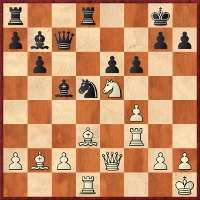
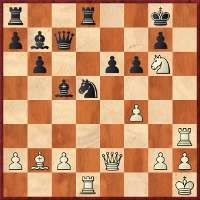
    In this interesting position, Nitin made a promising exchange sacrifice:

    14.dxe6! Bxh1 15.exd7+ Rxd7 16.Nxf5 Bg5+

    16…Qe6 17.Qxe6 fxe6 18.Nxe7+ Rxe7 19.Bxb5 axb5 20.Rxh1 probably yields White enough for the exchange; or 16…Qc5 17.Bh3! Rxd1+ 18.Qxd1 and White emerges with two pieces versus rook.

    17.f4 Bxf4+ 18.Kb1! Qe6 19.Rxd7?!

    19.Nd4! Qxe2 20.Bxe2 Rxd4! 21.Rxd4 Be5 and, as tends to happen in such situations, miraculously material is exactly equal again. White is a little more active.

    19…Qxd7 20.Bh3 Kb8 21.gxf4 Re8


    22.Qd1

    In the endgame, the rook rules supreme. More chances to hold were offered by 22.Qf2, even if the white pieces look a little clumsy here. He does threaten 23.Ng7 though.

    22…Qxd1+ 23.Nxd1 Re2 24.Nfe3 Rxh2

    White manages to organize his troops, but now the well-supported passed h-pawn prevails against White’s minor pieces.

    25.Bf1 Bf3 26.a4 bxa4 27.Bxa6 h5 28.Bc4 f6 29.Bd5


    29…Bxd1 30.Nxd1 Rd2 31.Bf3 h4 32.Kc1 Rd4 33.f5 Rf4 34.Bc6 Rxf5 35.Ne3 Rg5 36.Bd7 h3 37.Bxa4 Kb7

    Keeping the bishop from the diagonal, after which the pawn marches on unhindered: 0–1


    Lalith – Ernst


    Ernst had carried out a rather circuitous manoeuvre with his knight on the queenside, but because Lalith was playing his light-squared bishop up and down a little irresolutely, Black is doing fine here. However, with his next move Ernst goes a little too far:

    24…f4!? 25.Nxe4 Rae8?

    25…Bf5 26.f3 Bd4+ 27.Kh2 Rae8 would have given just enough compensation: 28.Nxd6!? Be3 29.Qb2 Bd4 with repetition, since as soon as the queen leaves the second rank, for instance with 30.Qa3, then 30…Bxh3! is the signal for the mate attack.

    26.Nxd6 Re2 27.Qd3 Bd4


    This too looks great for Black, but White has a brilliant parry:

    28.Qf3!! Bxf2+ 29.Kf1!

    And now Black has to enter an unfavourable endgame:

    29…Qxf3 30.Nxf3 Rxa2 31.Rb7 Ba4

    Now he loses the a-pawn in the end, but 31…Be8 32.Nxe8 Rxe8 33.d6 would go badly wrong.

    32.R7b2! Rxb2 33.Rxb2 Be3 34.Ra2 Bb3 35.Rxa5 Rd8 36.Ra6

    Very frustrating: nothing works for Black here. White converted the endgame on move 67.


    Shyam had to bite the dust today against the ruling Open Dutch champion Chanda Sandipan. Black suffered from lack of space in this game, and his problems mounted after White’s breakthrough with 21.e5.


    Oleg Romanishin .Photo: Lennart Ootes

    In spite of the fact that the tournament is not going well for him, Romanishin played on board four today. Eesha Karavade made her moves quickly, and the Ukrainian feared deep preparation. But still Romanishin obtained a winning position.

    Romanishin – Karavade


    16.d6

    Also interesting was 16.Bg7 Rg8 17.Rxe5!.

    16…Be6?

    She had to try 16…Bxd6. Then after 17.Qd5 Bb4 18.Rec1 White has nice compensation.

    17.dxe7 Kxe7

    This position is untenable after the best move, 18.Qf3!.

    18.Be3!? Qb5 19.a4 Qb4 20.f4 Rhd8 21.Qe2 Bc7 22.Bf2 Rd6


    23.Bd5?!

    Brilliant – Romanishin thinks that e6 can’t be protected a third time. But it can!

    23…Bb6! 24.Bxe6

    Also interesting is 24.f5!? Bxf2+ 25.Qxf2 Rxd5 26.Rxe6+ Kf7 27.Rae1 Rxf5 28.Qe3 Qxb2!? and White’s attack is not decisive; also here chances are equal.

    24…Bxf2+

    Also possible was 24…Rd2 25.Qe4 (25.Qxd2!?) 25…Bxf2+ 26.Kf1 Qxe4.

    25.Qxf2

    Not 25.Kxf2?? Rd2.

    25…Rxe6 26.Rxe6+ Kxe6 27.f5+ Kf7


    This also looks dangerous for Black, but White’s king is just as vulnerable as Black’s, and Karavade defends accurately.

    28.Rd1 Re8 29.Rd4 Re1+ 30.Kg2 Qe7 31.Kh3 Re4 32.fxg6+ ½–½


    Lucas van Foreest. Foto: Lennart Ootes

    After all this violence, the best Dutchman on the ranking list is suddenly Lucas van Foreest. He defeated grandmaster Sundararajan Kidambi in a precarious but admirable game.

    Kidambi – Van Foreest


    18…Bxb2?!!?

    That takes guts.

    19.Nxd6 Nf6

    This offers better defensive chances for Black than 19…Be5 20.Nhxf7+ Kg8 21.Nxe5 Qxd6 22.Nxg6 Qxf4 (22…Qxg6?! 23.Qc7) 23.Nxf4 Rxf5 24.Ne6.

    20.Rab1

    Better was 20.fxg6 fxg6 21.Rab1, as now Black has a nasty defensive move:

    20…Nh5! 21.Ndxf7+ Rxf7 22.Qxc7 Rxc7 23.Rxb2

    23…Nf4

    Giving White another chance to obtain an advantage. Black could consolidate (does Lucas even know the term?) with 23…Kg7 24.Ng4 gxf5, for example: 25.d6 Bxg2!.

    24.d6! Rg7

    Now on 24…Bxg2 White has 25.dxc7 followed by 26.Rd1 (or, after 25…Bxf1, 26.Rd2).

    25.Bxb7 Rxb7 26.f6 Nd5 27.Ng4 h5 28.Ne5 Nxf6


    29.Nxg6+?!

    The opening of the g-file works in favour of Black’s counterplay. White could have kept some hopes for a win after, for instance, 29.f4.

    29…Kh7 30.Ne5 Rg7+ 31.Kh1 Rd8

    If White now protects the pawn, there always follows 32…Ne4.

    32.d7 Ng4!

    Salvation.

    33.Nxg4 hxg4

    In this rook ending Black is even better because his c-pawn is further advanced, and Van Foreest did a fine job converting.


    Lucas van Foreest. Photo: Lennart Ootes


    Commentator Cor van Wijgerden. Photo: Lennart Ootes


    Participant of the amateur event. Photo: Lennart Ootes

  • Gupta en Lalith ongenaakbaar

    Gupta en Lalith ongenaakbaar

    De handigheid en slagvaardigheid van Gupta en Lalith zijn bijna buitenaards. Vandaag bleven ze respectievelijk S. Nitin en Sipke Ernst de baas en bleven ze een punt voor op een landgenoot die nu alleen op plek 3 staat: Chanda Sandipan.


    S. Nitin. Foto: Lennart Ootes

    Nitin – Gupta


    In deze boeiende stelling plaatste Nitin een kansrijk kwaliteitsoffer:

    14.dxe6! Lxh1 15.exd7+ Txd7 16.Pxf5 Lg5+

    16…De6 17.Dxe6 fxe6 18.Pxe7+ Txe7 19.Lxb5 axb5 20.Txh1 geeft wit waarschijnlijk genoeg voor de kwaliteit;; of 16…Dc5 17.Lh3! Txd1+ 18.Dxd1 en wit komt een kleine kwaliteit voor.

    17.f4 Lxf4+ 18.Kb1! De6 19.Txd7?!

    19.Pd4! Dxe2 20.Lxe2 Txd4! 21.Txd4 Le5 en zoals wel vaker gebeurt – als door een wonder staat het materieel weer gelijk. Wit staat dan nog iets actiever.

    19…Dxd7 20.Lh3 Kb8 21.gxf4 Te8


    22.Dd1

    In het eindspel is de toren oppermachtig. Meer kansen op behoud bood 22.Df2, ook al staan ook dan de witte stukken wat onhandig. Hij dreigt wel 23.Pg7.

    22…Dxd1+ 23.Pxd1 Te2 24.Pfe3 Txh2

    Wit weet nu alles te organiseren, maar de goed ondersteunde vrije h-pion tegen de witte lichte stukken gaat nu de doorslag geven.

    25.Lf1 Lf3 26.a4 bxa4 27.Lxa6 h5 28.Lc4 f6 29.Ld5


    29…Lxd1 30.Pxd1 Td2 31.Lf3 h4 32.Kc1 Td4 33.f5 Tf4 34.Lc6 Txf5 35.Pe3 Tg5 36.Ld7 h3 37.Lxa4 Kb7

    Houdt de loper van de diagonaal af, waarna de pion definitief doorloopt: 0–1


    Lalith – Ernst


    Ernst had een nogal omslachtig ogende manoeuvre uitgevoerd met zijn paard op de damevleugel, maar doordat Lalith zijn witveldige loper wat besluiteloos op en neer speelde, staat zwart hier toch weer prima. Met zijn volgende zet wil Ernst echter teveel:

    24…f4!? 25.Pxe4 Tae8?

    25…Lf5 26.f3 Ld4+ 27.Kh2 Tae8 geeft nog net genoeg compensatie: 28.Pxd6!? Le3 29.Db2 Ld4 met zetherhaling, want als de dame de tweede rij verlaat met bijvoorbeeld 30.Da3 luidt 30…Lxh3! een mataanval in.

    26.Pxd6 Te2 27.Dd3 Ld4


    Ook dit ziet er geweldig uit voor zwart, maar wit heeft een briljante parade:

    28.Df3!! Lxf2+ 29.Kf1!

    En nu moet zwart een ongunstig eindspel in:

    29…Dxf3 30.Pxf3 Txa2 31.Tb7 La4

    Verliest uiteindelijk de a-pion, maar 31…Le8 32.Pxe8 Txe8 33.d6 gaat hard fout.

    32.T7b2! Txb2 33.Txb2 Le3 34.Ta2 Lb3 35.Txa5 Td8 36.Ta6


    Heel frustrerend: niets werkt hier voor zwart. Wit verzilverde het eindspel op zet 67.

    Shyam moest vandaag onder het juk door bij de regerend Open Nederlands kampioen Chanda Sandipan. Zwart had weinig ruimte in deze partij, en zijn problemen groeiden na de witte doorbraak met 21.e5.


    Oleg Romanishin. Foto: Lennart Ootes

    Ondanks het feit dat hij niet lekker draait, speelde Romanishin vandaag toch aan het vierde bord. Eesha Karavade speelde snel tegen hem en de Oekraïener vreesde diepgaande voorbereiding. Maar daarvan was geen sprake, en Romanishin kwam gewonnen te staan.

    Romanishin – Karavade


    16.d6

    Ook interessant was 16.Lg7 Tg8 17.Txe5!.

    16…Le6?

    Ze moest 16…Lxd6 proberen. Dan heeft wit na 17.Dd5 Lb4 18.Tec1 mooie compensatie.

    17.dxe7 Kxe7

    Dit is onhoudbaar na de beste zet, 18.Df3!.

    18.Le3!? Db5 19.a4 Db4 20.f4 Thd8 21.De2 Lc7 22.Lf2 Td6


    23.Ld5?!

    Geniaal – Romanishin meent dat e6 niet een derde keer te dekken is. Maar dat is het wel!

    23…Lb6! 24.Lxe6

    Eveneens boeiend is 24.f5!? Lxf2+ 25.Dxf2 Txd5 26.Txe6+ Kf7 27.Tae1 Txf5 28.De3 Dxb2!? en de witte aanval slaat niet door: ook hier staat het gelijk.

    24…Lxf2+

    Ook 24…Td2 25.De4 (25.Dxd2!?) 25…Lxf2+ 26.Kf1 Dxe4 was mogelijk.

    25.Dxf2

    Niet 25.Kxf2?? Td2.

    25…Txe6 26.Txe6+ Kxe6 27.f5+ Kf7


    Ook dit lijkt nog gevaarlijk, maar de witte koning is net zo kwetsbaar als de zwarte, en Karavade verdedigt nauwkeurig.

    28.Td1 Te8 29.Td4 Te1+ 30.Kg2 De7 31.Kh3 Te4 32.fxg6+ ½–½


    Lucas van Foreest. Foto: Lennart Ootes

    De beste Nederlander na al dit geweld is ineens Lucas van Foreest. Hij versloeg grootmeester Sundararajan Kidambi in een wisselvallige, maar zeker bewonderenswaardige partij.

    Kidambi – Van Foreest


    18…Lxb2?!!?

    Daar moet je wel lef voor hebben.

    19.Pxd6 Pf6

    Dit biedt zwart betere verdedigingskansen dan 19…Le5 20.Phxf7+ Kg8 21.Pxe5 Dxd6 22.Pxg6 Dxf4 (22…Dxg6?! 23.Dc7) 23.Pxf4 Txf5 24.Pe6.

    20.Tab1

    Beter was 20.fxg6 fxg6 21.Tab1, want nu heeft zwart een venijnige verdediging:

    20…Ph5! 21.Pdxf7+ Txf7 22.Dxc7 Txc7 23.Txb2


    23…Pf4

    Geeft wit weer een kans op voordeel. Zwart kon consolideren (kent Lucas die term?) met 23…Kg7 24.Pg4 gxf5 , bijvoorbeeld 25.d6 Lxg2!.

    24.d6! Tg7

    Nu heeft wit op 24…Lxg2 25.dxc7 gevolgd door 26.Td1 (of, na 25…Lxf1, 26.Td2).

    25.Lxb7 Txb7 26.f6 Pd5 27.Pg4 h5 28.Pe5 Pxf6

    29.Pxg6+?!

    De opening van de g-lijn komt het zwarte tegenspel ten goede. Wit had nog op winst mogen hopen na bijvoorbeeld 29.f4.

    29…Kh7 30.Pe5 Tg7+ 31.Kh1 Td8

    Als wit de pion nu dekt volgt steeds 32…Pe4.

    32.d7 Pg4!

    De redding.

    33.Pxg4 hxg4

    In dit toreneindspel staat zwart zelfs beter omdat zijn c-pion verder is, en Van Foreest speelde het keurig uit.


    Lucas van Foreest. Foto: Lennart Ootes


    Commentator Cor van Wijgerden. Foto: Lennart Ootes


    Een deelnemer aan de Amateur I groep. Foto: Lennart Ootes

  • Beastly and razor-sharp

    Beastly and razor-sharp

    Loek van Wely’s prediction of six decided games in the match Van Foreest-Sokolov can still come true. Today the 17-year-old Dutch champion drew even again; in a relatively strategic game this time. ‘Those guys are animals’, said Nigel Short. ‘If either one of them has the initiative, it’s over.’ Hou Yifan has an unfortunate event so far; today she tried to attack but she walked right into a razor-sharp counter by Short and is now trailing 1-3.

    We will start with the Hou Yifan-Short match this time – today their game was at least as interesting as the other one.


    Photo: Lennart Ootes

    Hou Yifan – Short

    1.e4 e6 2.d4 d5 3.e5 c5 4.c3 Bd7 5.Nf3 Qb6 6.Bd3 cxd4 7.Nxd4!?

    A curious move, avoiding the standard French structures in which Short is so well at home.

    7…Nc6 8.Nxc6 bxc6 9.0–0 Ne7

    At this moment, on move 8 in Van Foreest-Sokolov the same central structure was on the board, and Black played …Ne7 too.

    10.Qe2 a5 11.Nd2 c5

    Black is going to put pressure on e5 after all.

    12.c4 Nc6 13.f4 g6 14.Kh1

    At this moment Loek van Wely was wondering aloud in the commentary room where Black was going to put his king. Kingside castling looks risky, but still this is Short’s choice.

    14…Be7 15.b3 0–0


    It looks as if White has something, but Short was content here: ‘The position is interesting and unbalanced.’

    16.f5!

    And yet, this was the best move! What else should White do? About this situation Short told a little story: ‘In 1988 I played a Candidates match with Speelman. After two draws I lost a game, and with White in the next game I felt the psychological pressure: time was running out, I had to do something. I pushed, and then he broke out.’ Hou Yifan had never been in such a situation before, but ‘I understand this very well’, she said.

    16…exf5!

    Commentator Cor van Wijgerden and his audience were expecting the natural move 16…Nd4 followed by 17…gxf5, when White can develop some promising attacking plans with, for instance, Nf3. But Short had a good think and came up with something completely different.

    17.cxd5 Nxe5!


    18.Nf3?

    This is the actual mistake. 18.Nc4! was still OK: 18…Nxc4 19.Qxe7 Qd6 20.Qxd6 Nxd6 21.Be3, and now Black can play 21…Ne4, but also 21…Rfe8 (21…Nb7 is possible too, but a little passive) 22.Bxc5 Re5! 23.Rad1 Rxd5 24.Bxf5! Rxc5! 25.Bxd7 Ne4 . ‘Perhaps this isn’t even bad for me’, Hou Yifan said. ‘In any case, this was the way to play’, agreed Short.

    18…Nxd3! 19.Qxe7

    19.Qxd3 loses an exchange after 19…Bb5, but now Black gets a ‘giant sprawling lobster’ on d3, as Short put it. The term ‘octopus’ was once wrongly translated by Helmut Pfleger after the famous Karpov-Kasparov game, the Englishman told us. By the way, the Dutch newspaper de Volkskrant published a quite sensational interview with him today.

    19…Bb5 20.Qh4 f6 21.Bd2 Rad8 22.Bc3 Rxd5 23.Qh6 Qc7 24.a4 Ba6 25.Qe3 Qd7 26.Bxa5 Re8 27.Qg1 Re2 28.Bc3 Rd6 29.h3 Tc2 30.Ba5


    30…Bb7

    The lobster on d3 has done its job, and now Black is going to crush the white constellation Nf3-g2-h3.

    31.Qh2 f4 32.Qg1 Ne5 33.Ne1


    33…Rxg2

    This combination, simple for a grandmaster, was played a tempo.

    34.Nxg2 Qxh3+ 35.Qh2 Bxg2+ 36.Kg1 Bxf1

    And White resigned. After 37.Rxf1 Nf3+ 38.Rxf3 Rd1+ it is mate.

    Obviously, Short was quite content with his second full point, and Hou Yifan was very sporting: ‘He played very well’, she said.


    Photo: Lennart Ootes


    Photo: Lennart Ootes


    Photo: Lennart Ootes

    Jorden van Foreest entered the playing room with a highly resolute look on his face (as his opponent is also wont to do). After all, he was White today. ‘With Black it was very bad up to now’, he said, ‘so I have to do it today.’ And he didn’t disappoint us.


    Photo: Lennart Ootes

    Van Foreest – Sokolov

    1.e4 c6

    Surely this was a surprise? ‘Ah well, everybody plays this against me nowadays’, Van Foreest said.

    2.d4 d5 3.e5 c5 4.Nf3 Nc6 5.dxc5 e6

    After this the white player was ‘out of book’. The most popular moves now are 6.Be3 and 6.Bd3.

    6.a3 Bxc5 7.b4 Bb6 8.Bd3 Nge7


    9.0–0

    Van Foreest was not very satisfied with this move, and with hindsight he thought that he should have played 9.Bb2 first. His visiting colleague GM Eric Hansen told him that 9…Ng6 10.0–0 Nf4 11.Re1 Nxd3 12.Qxd3, with the plan Nbd2 and c2-c4, is commonly played here, and is good for White.

    9…a5!? 10.b5 Nd4 11.Re1 Nxf3+ 12.Qxf3 Ng6 13.Bb2

    13.a4 was considered in the commentary room, but as Jeroen Bosch said, Black can play 13…Nxe5 here. 14.Rxe5 Bd4 looks quite dangerous, but it is possible.

    13…Qg5

    Posing White a difficult problem. Jorden had been ‘dreaming’ of g2-g3 and h2-h4, but here after 14.g3 he feared 14…h5. In a short analysis with Short, Seirawan and Hansen all kinds of wild sacrificial lines appeared on the board. Van Foreest opts for a quieter continuation, but he wasn’t happy with his position.

    14.Qg3 Dxg3 15.hxg3 h5 16.Nd2

    Looking at the structure, you might consider 16.Bxg6, but this would also give Black some more elbow room.

    16…h4!? 17.gxh4 Rxh4 18.g3 Rg4


    19.Kf1!

    Here Van Foreest became more optimistic again. The less subtle 19.Kg2!? Nf4+ 20.Kf3 Nxd3 21.cxd3 was in fact possible. Either way, White gets chances on the c-file and, especially, the h-file.

    19…Bd7 20.Ke2 a4?!

    A thematic move, but now Black has to watch out that his rook on g4 won’t be trapped. Moreover, later, deep in the endgame, Black doesn’t have the a4-square at his disposal, as Seirawan remarked. 20…Rc8 was slightly better.

    21.Rh1 Ke7 22.Rh5 f5?

    The well-known evil: the black player is not good at doing nothing. Now White obtains an advantage by force. Better was, again, 22…Rc8.

    23.exf6+ gxf6 24.Rh7+ Kd6 25.Bxg6 Rxg6


    26.Nc4+!

    A nice combination. After the game Van Foreest thought that 26.Ne4+ would have been even better, as then after Rxe6 the pawn on e4 is also hanging. For some dark reason the computer disagrees.

    26…dxc4 27.Rd1+ Kc5 28.Rhxd7

    Possibly, 28.Bd4+ Kxb5 29.Rb1+ Kc6 30.Rxb6+ Kc7 31.Rxe6 was even more accurate. True, the bishop on d7 is of the opposite colour, but it is also weak. And White is already threatening 32.Bb6+, for instance: 31…Ra6 32.Bb6+ Rxb6 33.Rxd7+ Kxd7 34.Rxb6 followed by 35.Rb4, netting a pawn.

    28…Kxb5 29.R1d6 Rc8 30.Rxe6 c3 31.Bc1 Rc7?!

    Perhaps a little better was 31…Rc6 32.Re4, but here also the black monarch is in trouble.

    32.Rd5+ Kc4

    Certainly not 32…Rc5?? 33.Rxb6+ Kxb6 34.Be3; 32…Bc5 33.Be3 b6 34.Bxc5 Kc4 (34…bxc5 35.Kd3) 35.Rf5 bxc5 36.Re4+! Kb5 37.Kd3. After the text move Black lands in an annoying pin.

    33.Rf5 Bd4 34.Re4 Rg8 35.Be3 Rd7 36.Rxf6 b5 37.g4 b4 38.Bxd4

    38.Rff4 Rgd8 39.Bxd4 Rxd4 40.Ke3! Rxe4+ 41.Rxe4+ Kc5 42.Rxb4 Rd2 43.g5 would have won a little more quickly.

    However, Sokolov resigned here – ‘a little early, I think’, Van Foreest said. There can follow: 38…Rxd4 39.Rxd4+ Kxd4 40.Rf4+ Kc5 41.Rxb4 Rd8 42.g5 or 42.Rxa4, and in spite of the fact that Black gets the c-pawn, the rook ending should win for White.


    Photo: Lennart Ootes


    Photo: Lennart Ootes