

Categorie: Uncategorized

  • Beliavsky misses his chance

    Beliavsky misses his chance

    After a highly bizarre game, Victor Mikhalevski defeated Alexander Beliavsky on the top board this morning. The former elite player deserved more in this game, but after move 20 things got completely out of hand. The Israeli grandmaster thankfully accepted the present and now shares the lead with Andrey Vovk, who overcame Eric Hansen.
     
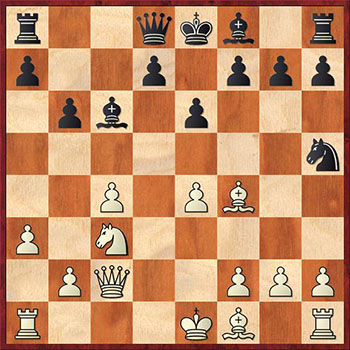
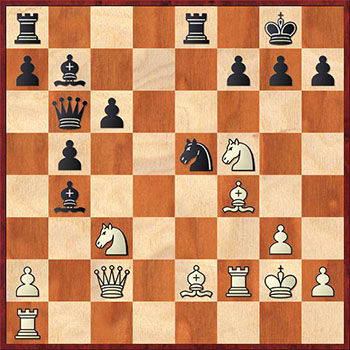
    Mikhalevski – Beliavsky

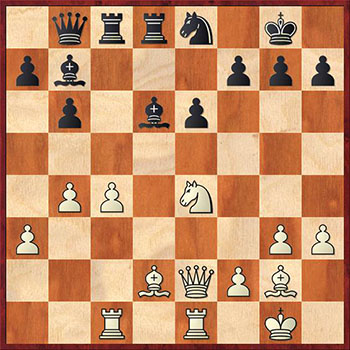
    Here Beliavsky comes up with an interesting attempt to make his way to the white king via the centre:
    18…b5!? 19.cxb5 Bd5!
    The point. White is stuck with a chronic weakness on d4.
    20.Bxd5 Qxd5 21.Rxe7
    21.b6!? Nd7 is nothing special either.
    21…cxb5 
     

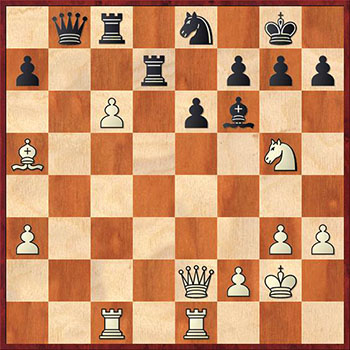
    22.Qf3??
    A stunning move. Mikhalevski said he had simply missed that the pawn on d4 was hanging!
    22…Bxd4+ 23.Bxd4 Qxd4+ 24.Kg2 
     

    24…Qxa1?!
    24…Nc6! 25.Ree1 Nxb4 wins on the spot, for example 26.Rad1 Nc2 or 26.Red1 Qb2+.
    25.Qxa8 Qxa2+ 26.Kh3
     

    26…Qc4!?
    Black could have decided the struggle here with the brilliant computer moves 26…Qa1!! 27.Ra7 Na6!! 28.Qf3 Qc1! and here we have the point. White cannot take on a6 in view of 29…Qc8+, with …a3-a2 to follow. Behind the board no human player would be able to find this, of course.
    27.Qxa3 Nc6 28.Rc7 Qe6+ 29.f5 Qd6 30.Rb7 
     

    30…Nd4
    Here Black could take profit from the exposed white king with 30…g5!, for example 31.Nf3 Qh6+ 32.Kg2 g4 and if the knight budges, checkmate follows with queen and rook.
    31.Qa7!?
    A tricky little move. Not only 32.Rd7 is threatened, but also taking twice on g6.
    31…Qf6
    Black could keep a minimal advantage with 31…Qe5 32.Qc5 Qxc5 33.bxc5 Rc8 34.f6 h5.
    32.Qc5 Nxf5 33.Nxf5 gxf5 34.Qe3!?
    Preventing the check on h6.
    34…Qg6
    34…Qc6 35.Rb6 f4! (35…Qd5 36.Qg5+ Kh8 37.Rf6) 36.gxf4 Qd7+ and Black maintains his b-pawn, with equality.
    35.Rxb5 Qg4+ 36.Kg2 Rd8 37.Re5 Kg7 38.b5 Rc8 39.Qd3 Kf6 40.Re2
    And Black didn’t get any attack; the b-pawn decided.
     
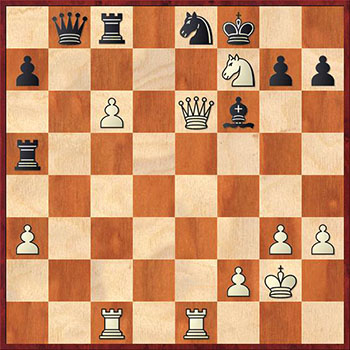
    After a laborious start, Sipke Ernst is back in the picture. In this fifth round he won comfortably after an attack on Sopiko Guramishvili’s king.
     
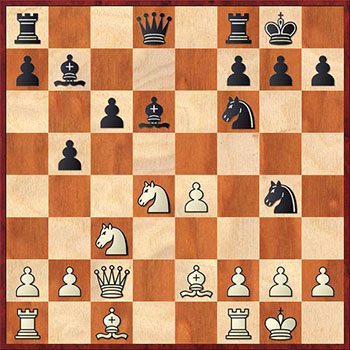
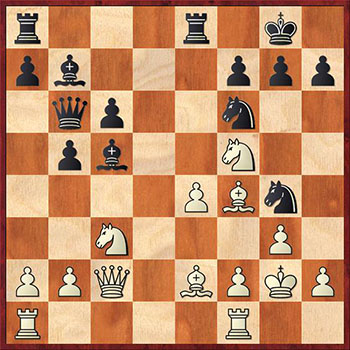
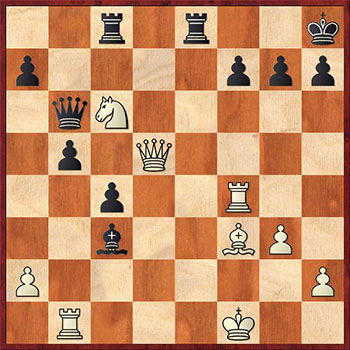
    Guramishvili – Ernst
     

    15.Bh3?!
    That bishop shouldn’t have left the diagonal. Better was 15.e3.
    15…d4! 16.Nb5 g5! 17.Bxc8
    Now Black quickly gets a devastating attack. The lesser evil was 17.Bd6 Bxd6 18.Bxc8 Bxc8 19.Nxc5.
    17…Qxc8 18.f3
    Not possible is 18.Bxg5 Qh3 19.f3 Ng4!.
    18…gxf4 19.Nxc5 Qh3
    19…fxg3! was more forceful.
    20.Rf2 
     

    A more tenacious way to defend was 20.e4! dxe3 21.Nxb7 fxg3 22.Qc2, but Black will play …Qd7 at the right moment and wins back a knight.
    20…Ng4! 21.Nxb7
    21.fxg4 fxg3 22.Nxb7 gxf2+ is over and out.
    21…Nxf2 22.Qxd4 fxg3 23.hxg3 Qxg3+ 24.Kf1 Bh4
    Black was a piece up, and duly won.

  • Beliavsky tast mis

    Beliavsky tast mis

    Na een uiterst bizar verloop won Victor Mikhalevski vanochtend het topduel van Alexander Beliavsky. De voormalige wereldtopper had meer verdiend in deze partij, maar na zet 20 liep het volledig uit de hand. De Israëlische grootmeester nam het cadeautje dankbaar aan en deelt nu de kop met Andrey Vovk, die Eric Hansen versloeg.
     
    Mikhalevski – Beliavsky

    Beliavsky doet nu een interessante poging om zich via het centrum een weg naar de witte koning te banen:
    18…b5!? 19.cxb5 Ld5!
    De pointe. Wit houdt een chronische zwakte op d4 over.
    20.Lxd5 Dxd5 21.Txe7
    21.b6!? Pd7 is ook niet bijzonder.
    21…cxb5
     

    22.Df3??
    Een krankzinnige zet. Mikhalevski vertelde dat hij simpelweg had gemist dat de pion op d4 instond!
    22…Lxd4+ 23.Lxd4 Dxd4+ 24.Kg2
     

    24…Dxa1?!
    24…Pc6! 25.Tee1 Pxb4 wint op slag, bijvoorbeeld 26.Tad1 (26.Ted1 Db2+) 26…Pc2!.
    25.Dxa8 Dxa2+ 26.Kh3
     

    26…Dc4!?
    Zwart kon hier de strijd beslissen met de geniale computerzet 26…Da1!! 27.Ta7 Pa6!! 28.Df3 Dc1! en dat is de pointe. Wit kan niet op a6 slaan vanwege 29…Dc8+, en er volgt …a3-a2. Achter het bord is dit door niemand te vinden, natuurlijk.
    27.Dxa3 Pc6 28.Tc7 De6+ 29.f5 Dd6 30.Tb7
     

    30…Pd4
    Zwart kon hier nog profijt trekken van de geĂ«xponeerde witte koning met 30…g5!, bijvoorbeeld 31.Pf3 Dh6+ 32.Kg2 g4 en als het paard wijkt volgt mat met dame en toren.
    31.Da7!?
    Link zetje. Er dreigt niet alleen 32.Td7, maar ook twee keer nemen op g6.
    31…Df6
    Zwart houdt nog een miniem voordeeltje met 31…De5 32.Dc5 Dxc5 33.bxc5 Tc8 34.f6 h5.
    32.Dc5 Pxf5 33.Pxf5 gxf5 34.De3!?
    Verhindert het schaak op h6.
    34…Dg6
    34…Dc6 35.Tb6 f4! (35…Dd5 36.Dg5+ Kh8 37.Tf6) 36.gxf4 Dd7+ en zwart handhaaft zijn b-pion, met gelijk spel.
    35.Txb5 Dg4+ 36.Kg2 Td8 37.Te5 Kg7 38.b5 Tc8 39.Dd3 Kf6 40.Te2
    En zwart kreeg geen aanval; de b-pion besliste.
     
    Sipke Ernst is na een wat moeizaam begin ook weer in beeld. In deze vijfde ronde won hij soepel in de aanval van Sopiko Guramishvili.
     
    Guramishvili – Ernst
     

    15.Lh3?!
    Die loper had beter niet van de diagonaal af kunnen gaan. Beter was 15.e3.
    15…d4! 16.Pb5 g5! 17.Lxc8
    Nu krijgt zwart snel een vernietigende aanval. Het kleinere euvel was 17.Ld6 Lxd6 18.Lxc8 Lxc8 19.Pxc5.
    17…Dxc8 18.f3
    Reeds niet mogelijk is 18.Lxg5 Dh3 19.f3 Pg4!.
    18…gxf4 19.Pxc5 Dh3
    19…fxg3! was dwingender.
    20.Tf2
     

    Een taaiere verdedigingsmogelijkheid was nog 20.e4! dxe3 21.Pxb7 fxg3 22.Dc2 maar zwart speelt op het juiste moment …Dd7 en wint een paard terug.
    20…Pg4! 21.Pxb7
    21.fxg4 fxg3 22.Pxb7 gxf2+ is uit.
    21…Pxf2 22.Dxd4 fxg3 23.hxg3 Dxg3+ 24.Kf1 Lh4
    En zwart had een stuk meer en won.

  • An uphill struggle

    An uphill struggle

    It’s starting to get a little frustrating for both Jan Timman and Alexey Shirov. To every problem they create, their opponents find a solution. Today both had White and both obtained an advantage, but it turned out to be not enough. Two endgames came on the board that had a few similarities, and both were quite interesting for the connoisseurs. In both cases White won a pawn, but Black had a pawn that was flying around in the white position like an annoying gadfly. The resulting half point was not much help for either the Dutchman or the Latvian.
     
    ‘No, I can hardly feel satisfied’, Timman muttered, ‘because I think I missed a good chance today, on the 32nd move. I was tired, I hadn’t slept well after yesterday’s terrible loss.’
     
    Timman – Jobava
     
    1.d4 Nf6 2.c4 g6 3.Nc3 Bg7 4.e4 0–0 5.Bd3
    The move that is also often played by Sokolov and Seirawan. Jobava now improvises:


    5…Nc6
    The idea is known, and it has been played by, among others, King’s Indian expert Eduard Gufeld and also Luke McShane. On 6.Nge2 Black wants to play 6…e5 and then after 7.d5 Nd4 8.Nxd4 exd4 9.Ne2 it becomes clear why Black has postponed …d7-d6: here he has 9…c5! 10.dxc6 dxc6 with a good position, as commentator John van der Wiel explained. Timman of course knew this and played:
    6.Nf3 d6 7.d5 Nb4 8.Be2 a5 9.0–0 Bg4!?
    Slightly strange with the bishop on e2, as Timman doesn’t mind exchanging it:
    10.Ng5!? 
    Van der Wiel thought that 10.Nd4 Bxe2 11.Ndxe2 was more natural.
    10…Bxe2 11.Qxe2 c6 12.Be3 Qd7!? 
    Taking away a square from his knight, and sometimes Na4 is possible now. But it turns out that Black can afford to play like this.
    13.h3 cxd5 14.exd5! 
    The pressure on e7 is worth more to Timman than the possible break with e4-e5.
    14…a4 15.Rac1 Rfc8 16.Rfd1 Na6 17.Re1 Nc5 
    The consequence of putting the knight here is that the pawn on e7 may be lost in some lines. Black hopes to get active counterplay for it.
    18.Rcd1 b6


    19.Bxc5 bxc5
    Jobava opts for counterchances along the b-file instead of holding onto the pawn with 19…Rxc5 20.b3 axb3 21.axb3.
    20.Qxe7 h6 21.Qxd7 Nxd7 22.Nge4 a3 
     

    23.bxa3
    Interesting is 23.b3!? f5 24.Nxd6 Bxc3 25.Nxc8 Rxc8 26.Re7 and the d-pawn may just give Black a hard time.
    23…Bxc3 24.Nxc3 Ne5 25.Nb5 Nxc4 26.Re4!
    26.Rc1 looks better, but after 26…Rcb8 27.Rxc4 Rxb5 28.Re7 Rb1+ 29.Kh2 Rd1 30.Rf4 f5 Black has solved most of his problems.
    26…Rcb8 27.a4! 
     

    The point. White cannot very well take this pawn in view of 28.Nxd6.
    27…Nb2 28.Rd2 Rxa4 29.Rxa4 Nxa4 30.Nxd6 Rb1+ 31.Kh2 Rb4
     

    32.Nc8?
    Timman called this the decisive mistake. Better was 32.a3! Rb8 33.Nc4 f6 34.Re2 Rd8 35.d6 and the white rook will have a field day.
    32…Kf8 33.d6 Ke8 34.d7+ Kd8 35.Nd6!
    Still his best chance. Possibly in his calculations Timman had hoped to win here with 35.Ne7, but then 35…Rb6 holds.
    35…Kxd7 36.Nxf7+ Rd4 
     

    37.Rc2
    With hindsight, Timman said that perhaps he should have tried the knight ending after 37.Rxd4+ cxd4 38.Kg3 Kc6 39.Kf3. This indeed looks good for White. In the pressroom, Oleg Romanishin produced the following line off-hand: 39…Kd5 40.Nxh6 Kc4 41.Ng4 Kc3 42.Ne5 Nc5 43.h4 Kc2 44.Kg4 (or 44.g4) 44…Nd7 and now 45.Nc6! wins.
    37…Kc6 38.Nxh6 c4 39.Ng4 c3
    Still it looks pretty dangerous with that c-pawn, but Timman was convinced: ‘White is always better here.’ It looks like there is no win anymore, though.
    40.Ne3 Kc5 41.g4 Kb4 42.h4 Nb6 43.Rc1 Rd2 44.Kg3 Nc4 45.Nc2+ Kc5 46.Ne1
    46.h5 gxh5 47.gxh5 might have given better winning chances.
    46…Kb4 47.h5 gxh5 48.gxh5 Nd6 49.Nc2+ Kc4 50.Ne3+ Kd3 
     

    Now Timman had had enough of the gadfly on c3, and he steered towards the draw with…
    51.f3 Kxe3 52.Rxc3+ Kd4 53.Ra3 œ–œ
     
    For Anish Giri, today was quite unlike the first two rounds. ‘Well, you don’t live in paradise everyday’, the youngster said.
     
    Shirov – Giri
     
    1.d4
    After the failure in the opening game Shirov changes tack.
    1…Nf6 2.c4 e6 3.Nf3 d5 4.Nc3 Bb4 5.Bg5 h6 6.Bxf6 Qxf6 7.e3 0–0 8.Qb3 c5 9.cxd5 exd5 10.a3
    10.Qxd5 Nc6 followed by 11…Rd8 is not exactly Shirov’s style.
    10…Bxc3+ 11.Qxc3 Nd7 
     

    12.Be2
    Here Van der Wiel proposed the plan 12.Rc1 and if 12
b6 13.Bb5. Now Black is pretty much obliged to play 13…c4, but that doesn’t seem such a bad thing: after 14.b3 a6 15.Bxd7 Bxd7 it wouldn’t be wise to win a pawn on c4.
    12…b6 13.0–0 Bb7 14.Rac1 c4 15.Nd2 b5 16.Bf3
    16.f3 would be too slow now on account of 16…Rfe8.
    16…Qe7
    Keeping an eye on a3 and keeping the positional threat of …a7-a5 in the position. But with hindsight, Giri wasn’t happy about this move.
    17.Qa5 Bc6 18.b3 Qd6 19.bxc4 bxc4 20.Nb1
    A Karpovian manoeuvre with which White increases the pressure on d5.
    20…Rab8 21.Nc3 Rb3
    There doesn’t seem to be anything wrong with 21…Nf6, because taking on a7 remains unattractive. Giri opts for more activity.
    22.Nxd5

    22…Rxa3
    Even after the game Giri wasn’t sure about 22…Rb5!? 23.Qa4 (after 23.Qa6 Black can take on d5 with the rook as well, but he also has the alternative 23…Nb8!?) 23…Rxd5 24.Qxc4 Ba8 25.Bxd5 Bxd5. ‘For the “small exchange” White has two strong centre pawns, this is hard to assess. On the other hand, the endgame was also very dangerous for me.’
    23.Qc7
    23.Qb4 Qxb4 24.Nxb4 Bxf3 25.gxf3 and perhaps the white knight is a little better positioned than in the game.
    23…Qxc7 24.Nxc7 Bxf3 25.gxf3 Nb6 26.Nb5
    26.Ra1 Rxa1 27.Rxa1 Rc8 is risky, but White still has 28.Na6.
    26…Rb3 
     

    27.Nxa7
    The computer gives the extremely hard-to-find 27.Nd6!? c3 28.Rb1 Rxb1 29.Rxb1, holding off the black rook, whereas on …Td8 White can go after the c-pawn immediately with Nb5. But here White still has to deal with the a-pawn as well.
    27…c3
    27…Ra8! 28.Nc6 c3 29.e4 (29.Rb1? Rb2!) 29…Ra2 and Black doubles on the second rank, with enough counterplay for the draw. ‘During the game I thought this didn’t work’, said Giri.
    28.Rb1! Rxb1 29.Rxb1 Nd5 30.Kf1 c2
    A little subtler may have been first 30…Ra8 31.Nb5 Ra5.
    31.Rc1 Nb4 32.Ke2 Rb8 33.d5! Nxd5
    Certainly not 33…Rd8? 34.Nc6!.
    34.Rxc2 Ne7 35.f4 Rb7
    Giri: ‘His knight is bad over there, and the rook ending is completely drawn.’
    36.Nc6 Nxc6 37.Rxc6 g6 38.f5 gxf5 39.Rxh6 Rb4 
     

    The doubled f-pawn defends everything, so Black only has to keep the h-pawn in control. Shirov kept trying until move 61, but the draw was inevitable.

  • Vechten tegen de bierkaai

    Vechten tegen de bierkaai

    Het begint een beetje frustrerend te worden voor zowel Jan Timman als Alexey Shirov. Op elk probleem dat ze opwerpen, hebben hun tegenstanders een oplossing. Vandaag hadden beiden wit en kregen beiden voordeel, maar het bleek niet genoeg. Er kwamen ook twee eindspelen op het bord die wel wat op elkaar leken, en beide waren heel boeiend voor de fijnproevers. Wit kreeg een pluspion maar zwart had een pion die als een lastige horzel in de witte stelling rondvloog. Met het resulterende halfje was zowel de Nederlander als de Let allerminst geholpen.
     
    “Nee, ik kan moeilijk tevreden zijn”, bromde Timman, “want ik denk dat ik vandaag een goede kans heb gemist, op de 32e zet denk ik. Ik was moe, ik had niet goed geslapen na de vreselijke nederlaag van gisteren.”
     
    Timman – Jobava
     
    1.d4 Pf6 2.c4 g6 3.Pc3 Lg7 4.e4 0–0 5.Ld3
    De zet die vaak door Sokolov en Seirawan wordt gebezigd. Jobava improviseert:
    5…Pc6

    Het idee is bekend en onder andere gespeeld door Koningsindisch-expert Eduard Gufeld en ook Luke McShane. Op 6.Pge2 wil zwart 6…e5 spelen en dan na 7.d5 Pd4 8.Pxd4 exd4 9.Pe2 wordt het duidelijk waarom zwart niet …d7–d6 heeft gespeeld: hier heeft hij 9…c5! 10.dxc6 dxc6 met goede stelling, zo legde commentator John van der Wiel uit. Timman wist dat en speelde dus:
    6.Pf3 d6 7.d5 Pb4 8.Le2 a5 9.0–0 Lg4!?
    Opvallend nu de loper op e2 staat, want die wil Timman wel afruilen:
    10.Pg5!?
    10.Pd4 Lxe2 11.Pdxe2 vond Van der Wiel natuurlijker.
    10…Lxe2 11.Dxe2 c6 12.Le3 Dd7!?
    Neemt een veld weg voor zijn paard, en soms komt Pa4 in de stelling. Maar zwart blijkt het zich te kunnen veroorloven.
    13.h3 cxd5 14.exd5!
    De druk op e7 is Timman meer waard dan de eventuele breekzet e4–e5.
    14…a4 15.Tac1 Tfc8 16.Tfd1 Pa6 17.Te1 Pc5
    Het paard hier neerzetten heeft als consequentie dat de pion op e7 verloren kan gaan. Zwart hoopt daar actief tegenspel voor te krijgen.
    18.Tcd1 b6
     

    19.Lxc5 bxc5
    Jobava gaat voor tegenkansen over de b-lijn in plaats van aan de pion vast te houden met 19…Txc5 20.b3 axb3 21.axb3.
    20.Dxe7 h6 21.Dxd7 Pxd7 22.Pge4 a3
     

    23.bxa3
    Interessant is 23.b3!? f5 24.Pxd6 Lxc3 25.Pxc8 Txc8 26.Te7 en zwart kon wel eens een harde dobber krijgen aan de d-pion.
    23…Lxc3 24.Pxc3 Pe5 25.Pb5 Pxc4 26.Te4!
    26.Tc1 lijkt beter, maar na 26…Tcb8 27.Txc4 Txb5 28.Te7 Tb1+ 29.Kh2 Td1 30.Tf4 f5 heeft zwart de problemen overwonnen.
    26…Tcb8 27.a4!
     

    De pointe. Deze pion kan wit niet goed nemen vanwege 28.Pxd6.
    27…Pb2 28.Td2 Txa4 29.Txa4 Pxa4 30.Pxd6 Tb1+ 31.Kh2 Tb4
     

    32.Pc8?
    Dit bestempelde Timman als de beslissende fout. Beter was 32.a3! Tb8 33.Pc4 f6 34.Te2 Td8 35.d6 en de witte toren heeft vrij spel.
    32…Kf8 33.d6 Ke8 34.d7+ Kd8 35.Pd6!
    Nog de beste kans. Mogelijk had Timman eerder gehoopt hier te winnen met 35.Pe7 maar dan keept 35…Tb6.
    35…Kxd7 36.Pxf7+ Td4
     

    37.Tc2
    Timman zei achteraf dat hij misschien het paardeindspel had moeten proberen met 37.Txd4+ cxd4 38.Kg3 Kc6 39.Kf3 Dat ziet er inderdaad nog goed uit voor wit. De in de perskamer aanwezige Oleg Romanishin analyseerde uit de losse pols 39…Kd5 40.Pxh6 Kc4 41.Pg4 Kc3 42.Pe5 Pc5 43.h4 Kc2 44.Kg4 (of 44.g4) 44…Pd7 en nu wint 45.Pc6!.
    37…Kc6 38.Pxh6 c4 39.Pg4 c3
    Het ziet er best gevaarlijk uit met die c-pion, maar Timman was beslist: “Wit staat altijd beter hier.” De winst lijkt wel verkeken.
    40.Pe3 Kc5 41.g4 Kb4 42.h4 Pb6 43.Tc1 Td2 44.Kg3 Pc4 45.Pc2+ Kc5 46.Pe1
    Misschien gaf 46.h5 gxh5 47.gxh5 nog wat meer kansen.
    46…Kb4 47.h5 gxh5 48.gxh5 Pd6 49.Pc2+ Kc4 50.Pe3+ Kd3
     

    Nu had Timman het wel gezien met die horzel op c3 en stuurde hij aan op remise met…
    51.f3 Kxe3 52.Txc3+ Kd4 53.Ta3 œ–œ
     
    Voor Anish Giri zag het er vandaag heel anders uit dan in de eerste twee ronden. “Ach, je leeft niet elke dag in het paradijs”, zei de jongeling.
     
    Shirov – Giri
     
    1.d4
    Na de mislukte openingspartij gooit Shirov het over een andere boeg.
    1…Pf6 2.c4 e6 3.Pf3 d5 4.Pc3 Lb4 5.Lg5 h6 6.Lxf6 Dxf6 7.e3 0–0 8.Db3 c5 9.cxd5 exd5 10.a3
    10.Dxd5 Pc6 gevolgd door 11…Td8 is niet bepaald Shirov’s stijl.
    10…Lxc3+ 11.Dxc3 Pd7
     

    12.Le2
    Van der Wiel opperde hier het plan 12.Tc1 b6 13.Lb5. Nu moet zwart haast wel 13…c4 spelen, maar dat lijkt niet zo erg: na 14.b3 a6 15.Lxd7 Lxd7 is het niet verstandig om een pion te winnen op c4.
    12…b6 13.0–0 Lb7 14.Tac1 c4 15.Pd2 b5 16.Lf3
    16.f3 zou nu te langzaam zijn vanwege 16…Tfe8.
    16…De7
    Houdt a3 in het snotje en houdt de positionele dreiging …a7-a5 in de stelling. Maar achteraf was Giri niet blij met deze zet.
    17.Da5 Lc6 18.b3 Dd6 19.bxc4 bxc4 20.Pb1
    Een Karpoviaanse manoeuvre waarmee wit de druk op d5 opvoert.
    20…Tab8 21.Pc3 Tb3
    Er lijkt weinig mis met 21…Pf6 omdat nemen op a7 onaantrekkelijk blijft. Giri kiest voor meer activiteit.
    22.Pxd5

    22…Txa3
    Giri twijfelde ook achteraf nog over 22…Tb5!? 23.Da4 (na 23.Da6 kan zwart ook met de toren op d5 slaan, maar hij heeft ook het alternatief 23…Pb8!?) 23…Txd5 24.Dxc4 La8 25.Lxd5 Lxd5. “Voor de kleine kwaliteit heeft wit een paar sterke centrumpionnen, dit is moeilijk te beoordelen. Aan de andere kant was het eindspel ook heel gevaarlijk voor mij.”
    23.Dc7
    23.Db4 Dxb4 24.Pxb4 Lxf3 25.gxf3 en het witte paard staat mogelijk een tikje beter dan in de partij.
    23…Dxc7 24.Pxc7 Lxf3 25.gxf3 Pb6 26.Pb5
    26.Ta1 Txa1 27.Txa1 Tc8 is link, maar wit heeft nog 28.Pa6.
    26…Tb3
     

    27.Pxa7
    De computer geeft het zeer moeilijk te vinden 27.Pd6!? c3 28.Tb1 Txb1 29.Txb1 en de zwarte toren blijft afgehouden, en op …Td8 kan wit snel met Pb5 achter de c-pion aangaan. Maar wit heeft de zwarte a-pion nog niet.
    27…c3
    27…Ta8! 28.Pc6 c3 29.e4 (29.Tb1? Tb2!) 29…Ta2 en zwart verdubbelt op de tweede rij, met genoeg tegenspel voor remise. “Tijdens de partij dacht ik dat het niet werkte”, zei Giri.
    28.Tb1! Txb1 29.Txb1 Pd5 30.Kf1 c2
    Iets fijner was eerst 30…Ta8 31.Pb5 Ta5.
    31.Tc1 Pb4 32.Ke2 Tb8 33.d5! Pxd5
    Vooral niet 33…Td8? 34.Pc6!.
    34.Txc2 Pe7 35.f4 Tb7
    Giri: “Zijn paard staat daar slecht, en het toreneindspel is potremise.”
    36.Pc6 Pxc6 37.Txc6 g6 38.f5 gxf5 39.Txh6 Tb4
     

    De dubbele f-pion houdt alles tegen, dus alleen de h-pion hoeft nog maar in bedwang gehouden te worden. Shirov probeerde het nog tot zet 61, maar het was en bleef remise.

  • Grootmeestergeweld

    Grootmeestergeweld

    De grootmeesters maken nog steeds de dienst uit in de open groep. Vrijwel allemaal zijn ze in de top te vinden. Het is mooi om te zien dat de veteraan Beliavsky het zo goed doet. Hij speelde vandaag zijn jonge collega Bartlomiej Heberla volledig zoek. Er wordt wel een patroon herkenbaar: wie de dagprijs voor de mooiste partij wint, krijgt het de volgende ronde moeilijk. Dat was al het geval met Lucas van Foreest, Andrey Vovk (remise), Danny de Ruiter (aanmoedigingsprijs) en in de vierde ronde dus de Pool.
     
    Beliavsky – Heberla

    Beliavsky won met powerplay:
    34.c6! Lxd6 35.Lxd6 Tbc8
    Het is duidelijk dat zwart niets mag nemen.
    36.c7 Te8 37.Tb8 Df5 5.Teb1
    En uit deze ijzeren greep kon zwart zich niet meer loswerken.
    1–0 (42)


    Alexander Beliavsky | Foto: Peter Doggers

    Vovk blijft het mooiste vuurwerk laten zien. “Geen gepolijste speler, wel een rekenbeest”, zo typeerde commentator John van der Wiel hem. Zoals hij de Fianchettovariant van het Koningsindisch met zwart behandelde was een lust voor het oog. Maar dan denk je met zwart je tegenstander compleet overspeeld te hebben, en dan zit er altijd een addertje onder het gras.
     
    Ris – Vovk
     
    1.d4 Pf6 2.c4 g6 3.g3 Lg7 4.Lg2 0–0 5.Pc3 d6 6.Pf3 Pbd7 7.0–0 e5 8.e4 c6 9.h3 exd4 10.Pxd4 Db6 11.Te1 Te8 12.Te2!?
    Een interessante zet, wit dekt pion f2 en b2 maar zijn stukken staan wel wat krom.
    12…Db4! 13.Tc2!?
    Consequent, maar nu kan zwart mooie tactische wendingen in de stelling weven.
    13…Pc5! 14.f3
     

    14…d5! 15.a3
    Na driemaal slaan op d5 hangt d4, maar zwart kan ook 17…Te1+ overwegen.
    15…Db6 16.b4
     

    16…Pfxe4!?
    Helemaal in stijl. Zwart kon ook prima 16…Pe6 17.c5 Dd8 spelen, wit houdt een probleem op d4.
    17.fxe4 Pb3! 18.c5 Lxd4+
     

    De pointe. Maar nu komt Ris met een fraaie riposte:
    19.Tf2! Dd8
    Na 19…Lxf2+ 20.Kxf2 Pxc5 heeft wit 21.Le3!. Dan is het nog niet gedaan, want zwart komt met 21…dxe4 22.Lxc5 e3+! 23.Kg1 Dc7 met mooie aanvalskansen.
    20.Dxb3 Lxf2+ 21.Kxf2 Df6+?!
    Beter was volgens Ris 21…dxe4 22.Le3 Le6 23.Db2 f5: “Het was me niet helemaal duidelijk hoe dit stond. Mijn loper en paard doen niet echt mee.”
    22.Kg1 Lxh3
    Snel gespeeld, mogelijk een blufzet. Het pakt in ieder geval goed uit.
    23.Lxh3 Df3 24.Lf4! d4
     

    25.Dd1?
    Hier had Ris kunnen winnen met 25.Tc1 dxc3 26.Lg2 Dd3 27.Txc3 “en ik zet mijn loper op d6 en doe e4-e5. Er zijn geen open lijnen voor zijn torens.”
    25…Dxc3 26.Tc1 Dxa3 27.Dxd4 Tad8 28.Df6 Dxb4
     

    29.e5?!
    De witspeler had 29.Le5 Txe5 30.Dxe5 gezien. “Maar ik dacht dat ik daarmee niet kon winnen. Het is een heel interessante stelling, waarschijnlijk hoeft wit hier niet te verliezen.”
    29…Td5 30.Lg2?
    Nu is het mis. Remise was nog 30.e6 Dd4+ 31.Dxd4 Txd4.
    30…Dd4+ 31.Kh2 Tdxe5 32.Lxe5 Txe5
    Dit is hopeloos. Na…
    33.Tf1 Th5+ 34.Lh3 Dxf6 35.Txf6 Txc5
    
 was de witte loper geen partij voor de vijf zwarte pionnen. Wit gaf na nog enkele zetten op.

  • Grandmasterly violence

    Grandmasterly violence

    The grandmasters still rule in the Open. Almost all of them can be found in the top end of the list. It’s nice to see veteran grandmaster Beliavsky doing so well. Today he completely overplayed his young colleague Bartlomiej Heberla. We can recognize a pattern: he who wins the daily prize for the most beautiful game will have trouble in the following round. This happened to Lucas van Foreest, Andrey Vovk (draw), Danny de Ruiter (incentive prize), and, in the fourth round, the grandmaster from Poland.
     
    Beliavsky – Heberla

    Beliavsky won with powerplay:
    34.c6! Bxd6 35.Bxd6 Rbc8
    It’s clear that Black cannot take anything.
    36.c7 Re8 37.Rb8 Qf5 5.Reb1
    And Black wasn’t able to get out of this iron grip.
    1–0 (42)


    Alexander Beliavsky | Photo: Peter Doggers

    The best fireworks keep coming from Vovk. ‘Not a polished player, but a calculating animal’, was how commentator John van der Wiel typified him. The way he treated the Fianchetto Variation of the King’s Indian with black was a feast for the eye. But then you think you’ve overplayed your opponent with black, and he will always throw a spanner in the works.
     
    Ris – Vovk
     
    1.d4 Nf6 2.c4 g6 3.g3 Lg7 4.Bg2 0–0 5.Nc3 d6 6.Nf3 Nbd7 7.0–0 e5 8.e4 c6 9.h3 exd4 10.Nxd4 Qb6 11.Re1 Re8 12.Re2!?
    An interesting move, White protects both the f2- and b2-pawns, but his pieces are a little awkward.
    12…Qb4! 13.Rc2!?
    Consistent, but now Black is able to weave a few pretty tactical tricks into the position.
    13…Nc5! 14.f3
     

    14…d5! 15.a3
    After taking three times on d5, d4 is hanging, but Black can also consider 17…Re1+.
    15…Qb6 16.b4
     

    16…Nxe4!?
    Entirely in style. Black had a good alternative in 16…Ne6 17.c5 Qd8, as White will still have a problem on d4.
    17.fxe4 Nb3! 18.c5 Bxd4+ 
     

    The point. But now Ris comes up with an attractive rejoinder:
    19.Rf2! Qd8
    After 19…Bxf2+ 20.Kxf2 Nxc5 White has 21.Be3!. Then it isn’t over yet, for Black replies with 21…dxe4 22.Bxc5 e3+! 23.Kg1 Qc7 with nice attacking chances.
    20.Qxb3 Bxf2+ 21.Kxf2 Qf6+?!
    According to Ris, better was 21…dxe4 22.Be3 Be6 23.Qb2 f5: ‘It wasn’t entirely clear to me who’s better here. My bishop on g2 and my knight are not really doing much.’
    22.Kg1 Bxh3
    Quickly played, possibly a bluff. It did work.
    23.Bxh3 Qf3 24.Bf4! d4
     

    25.Qd1?
    Here Ris could have won with 25.Rc1 dxc3 26.Bg2 Qd3 27.Rxc3 ‘and now I put my bishop on d6 and play e4-e5. He has no open lines for his rooks.’
    25…Qxc3 26.Rc1 Qxa3 27.Qxd4 Rad8 28.Qf6 Qxb4 
     

    29.e5?!
    The white player had seen 29.Be5 Rxe5 30.Qxe5. ‘But I thought that wouldn’t win. It’s a quite interesting position, probably White doesn’t have to lose this.’
    29…Rd5 30.Bg2?
    Now things go from bad to worse. It was still a draw after 30.e6 Qd4+ 31.Qxd4 Rxd4.
    30…Qd4+ 31.Kh2 Rdxe5 32.Bxe5 Rxe5
    This is hopeless. After…
    33.Rf1 Rh5+ 34.Bh3 Qxf6 35.Rxf6 Rxc5
    
 the white bishop was no game for the five black pawns. After a few more moves White resigned.
  • Perfect preparation Giri, Timman blunders

    Perfect preparation Giri, Timman blunders

    Invite the right players and you’ll be amazed at what can happen in two games in one day. What happened today in the UnivĂ© matches defies all description. Let’s try anyway. With incredibly deep preparation Anish Giri laid the foundation for a second victory in an epic game. Jan Timman played well against Baadur Jobava for a long time, but he blundered at the moment the Georgian had cleverly mounted the tension.

    We will start in a minor key – at least from a Dutch standpoint. Timman hardly had any problems for a long time. Jobava did get a little something with white, but he also spent a lot of time: It was a complex middlegame. At certain points I had trouble finding the right move, I was the one choosing the plans all the time’, the Georgian said afterwards. Í still have to get into the match – maybe also my form is not so good.’ Timman couldn’t take any profit from this – on the contrary, when Jobava only had about three minutes left, the player from Arnhem went wrong.

    Jobava – Timman 

    1.d4 Nf6 2.c4 e6 3.Nf3 b6 4.a3 Ba6 5.Qc2 Bb7 6.Nc3 c5 7.e4 cxd4 8.Nxd4 Nc6 9.Nxc6 Bxc6 10.Bf4 Nh5

    11.Bd2
    11.Be3 Bd6?? 12.Qd1 1–0 was the famous game Christiansen-Karpov, Wijk aan Zee 1993, as was subtly mentioned in the aftertalk by the gentlemen from Chess24.
    11…Qc7
    Gusty proposed 11…Qf6 here, to which Jobava off-hand opted for 12.0–0–0!?. This gut reaction says a lot about a player.
    12.g3
    Timman was following a game Jobava-Iturrizaga, Khanty-Mansiysk 2009, where 12.Nd5 Qb7 was played, and White now simply left the piece to be taken: 13.Bd3 Bd6 14.0–0 Qb8 15.g3 exd5 16.exd5 Bb7 17.Rfe1+ Kd8 18.Bc3 Nf6 19.b4 Qc7 20.Qb2 Kc8 21.Bxf6 gxf6 22.Qxf6 Rd8 23.Rac1 Bf8 24.c5 bxc5 25.bxc5 a5 26.c6 dxc6 27.dxc6 Ba6 28.Bf5+ Kb8 29.Qxd8+ Qxd8 30.c7+ 1–0. Jobava: ‘I tried to remember this game, but I couldn’t, of course.’
    12…Bc5 13.Bg2 0–0 14.0–0 Rac8 15.Rac1 Nf6
    A difficult, but brave decision.
    16.b4 Be7 17.Qd3 Qb8 18.h3 Rfd8
    Jobava thought this was wrong, and recommended 18…d6. Now White gets some pressure, but it was still hard to find the right move every time, and Jobava used up a lot of time in this phase.
    19.Rfe1 Bb7 20.e5 Ne8 21.Ne4 d6 22.exd6 Bxd6
    22…Nxd6 was deemed more logical by the (ex-)champions in the pressroom, as on 23.Bf4 Black has 23…Qa8.
    23.Qe2  

    23…Be5
    Jobava didn’t think this wasn’t good either: 23…Be7 was safer.
    24.c5
    Here Gusty came up with the trick 24.Ng5! Bxg2 25.Qh5. Now after 25…Qb7 26.Qxh7+ Kf8 27.Qh8+ Ke7 28.Rxe5 Rxd2 29.Qg8 White keeps a tremendous attack. ‘Yes, Black has problems. He’s created them himself with 23…Be5’, Jobava said. Still it’s strange that the Georgian swashbuckler didn’t go for this line.
    24…bxc5 25.bxc5
    The intermediate move 25.Bg5 was annoying; Black has to allow his structure to be weakened after 25…Bf6.
    25…Bc6 26.Ba5 Rd7
    26…Rd4 was proposed; then the rook could possibly go to a4. But after 27.Bc3 Rd7? (better 27
Rd8) 28.Bxe5 Qxe5 White wins with 29.Nd6!.
    27.Ng5 Bxg2 28.Kxg2 Bf6
    Afterwards, Timman doubted if this move was good, but it turns out that Black is still OK here.
    29.c6

    ‘I wanted to try something’, said Jobava. On 29.Ne4 Black has 29…Qa8!, just like later in the game.
    29…Rd5??
    A blunder in his opponent’s time trouble. 29…Rd6 had to be played.
    30.Nxf7!
    Such chances Jobava will never miss, even in bad time trouble.
    30…Rxa5 31.Qxe6 Kf8 

    32.Rcd1?
    Here 32.Qd7! was winning. White threatens Rc1-b1-b7 and if Black plays 32…a6, then 33.Re6! wins, with the threat of 34.Rce1. If Black prevents this with 33…Nc7 then 34.Nh6! forces an elegant mate.
    32…Qc7?
    Now Timman misses the save, which could be found in the subtle move 32…Qa8!. Rhen 33.Nd8 doesn’t work in view of 33…Rxd8 34.Rd7 Rxd7 and the queen protects the Ne8, for instance 35.Qxd7 Rc5 and Black wins.
    33.Nd8! Rxd8 34.Rd7
    Resigned. ‘Incredibly stupid’, Timman said. ‘I guess I was a little bit lucky’, his opponent sniggered.
    Video: Peter Doggers


    Foto: Peter Doggers

    The other game was watched with astonishment in the commentary room. ‘All the difficult moves are played after only seconds’ thought’, said Van der Wiel. ‘This has to be preparation.’ And so it soon turned out to be. And Giri was the one who was best prepared.

    Giri – Shirov 

    1.d4 d5 2.c4 c6 3.Nc3 Nf6 4.e3 e6 5.Nf3 Nbd7 6.Qc2 Bd6 7.Bd3 0–0 8.0–0 dxc4 9.Bxc4 b5 10.Be2
    In their game in 2010 Giri played 10.Bd3.
    10…Bb7 11.e4 e5 12.dxe5 Nxe5 13.Nd4
    This looks quite dangerous in view of the reply:
    13…Neg4

    14.g3!
    14.h3? Bh2+ 15.Kh1 Nxf2+! 16.Kxh2 Qxd4 is good for Black. But Giri had hoped that his opponent would go for this. ‘I think my heartbeat went up here for a while, when I noticed that he was prepared to repeat his Bundesliga game from earlier this year. I had found something I thought was winning.’
    14…Bc5
    Everything Ă  tempo. With 14…Bxg3 abandons his beautiful bishop: 15.hxg3 Qxd4 16.Qd1 (16.Bf4 Qc5! 17.b4 Qh5) 16…Qxd1 17.Rxd1 Rfd8. Apparently White has sufficient compensation here, as Shirov didn’t go for this. Not in April, and not now.
    15.Nf5 Re8!
    15…Qb6 16.Bxg4 Nxg4 17.b4 Bxb4 (17…Bd4 18.Bb2) 18.Qb2 Bxc3 19.Qxc3 Nf6 20.Be3 gives White great play.
    16.Bf4 Qb6 17.Kg2! 

    17…Nxf2
    If this doesn’t work, 17…g6!? looks like an important alternative. 18.h3 gxf5 19.hxg4 Nxe4 20.gxf5 Nxc3 21.bxc3 Be7 and White is a tad better.
    18.e5
    Not immediately 18.b4? Bxb4 19.Rxf2 Bxc3 and e4 is hanging.
    18…Nd7 19.b4 Bxb4 20.Rxf2 Nxe5 

    Spectacular. But Shirov had even had this position on the board in his Bundesliga game.
    21.Ne4
    Rhis is the novelty! In the game Dennis Wagner-Shirov, Eppingen 2014, White played the very sharp 21.Nxg7 c5+ 22.Kh3 Bc8+ 23.g4 Kxg7 24.Bxe5+ Rxe5 25.Rxf7+ Kxf7 26.Qxh7+ Ke6 27.Qg6+ Ke7 28.Qg7+ Ke6 29.Qh6+ Ke7 30.Qh7+ Ke6 31.Qg6+ Ke7 32.Qg7+ Ke6 33.Qg6+, draw agreed.
    21…c5 22.Kf1!
    This is the idea. At first, the computer doesn’t believe in 21.Ne4, until you enter the text move. All kinds of nasty things are threatened on d6, and maybe in some cases also on h6, so Black exchanges:
    22…Bxe4 23.Qxe4 Ng6!
    After some thought. Certainly not 23…Ng4?? 24.Ne7+ and on the next move the Ng4 will fall, because the rook on a8 is still hanging.
    24.Qd5 Nxf4
    24…Rad8 25.Bd6! (after 25.Nd6?, 25…Rf8! followed by 26…c4 is very painful; the Nd6 will be lost) 25…Re6 26.Qf3 and White keeps pressure.
    25.Ne7+! Kh8 26.Rxf4 c4 27.Nc6 Bc3
    27…Qe3 looks more tenacious, but the white king simply walks out with 28.Bf3 Bc5 29.Kg2.
    28.Rb1 Rac8 29.Bf3 

    29…Qa6
    He still finds a weak spot in the white position.
    30.Re4!?
    30.Rxb5 Qxa2 31.Be4 seems to leave Black without a chance: the threat of 32.Rh4 is devastating.
    30…Qxa2 31.Rxb5 Qxh2 32.Qd7 Rf8 33.Rh4
    Giri: ‘I had missed Black’s reply in my calculations. Now I saw that after the coming liquidation the position was hard to win, so here I took a long time calculating 33.Rh5. But after 33…Qxg3 I didn’t see any win.’ Rhere can follow: 34.Rh3 Rc7 35.Qf5 g6.
    33…Qc2 

    34.Rxh7+ Qxh7 35.Rh5 Qxh5 36.Bxh5 g6 37.Be2 Kg7 38.Bxc4 Rce8 39.Qxa7 Bf6 40.Qd7 Re3 41.Kg2 Rc3 42.Qd5 Re3 43.Kf2 Ree8 44.Qd7 Re4 45.Bd5 Ree8 46.Qc7 Rc8 47.Qb7 Rce8 48.Qd7 Ra8 49.Bc4 Rae8 50.Kf3
    Not so clever is 50.Bxf7? Re7! 51.Nxe7 Bxe7 52.Qxe7? Rxf7+.
    50…Re1 51.Qd5 Re6 52.Qd7 Re1 53.g4!?
    The most problematic try for Black.
    53…Bg5 54.Qd5 f5
    Black would prefer to play 54…Bf6, but then 55.g5 comes with tempo: 55
Ba1 and now 56.Kg2 (the direct 56.Nd8 doesn’t work yet on account of 56…Rc1 57.Nxf7? Rxc4) 56…Re3 57.Qd6 (again, not 57.Nd8? Re5) and now the black pieces will be in trouble, e.g. 57…Re4 58.Qd1 Bb2 59.Qc2. If the rook lets go of e5, White plays Ne5 and after the exchange, the pawn on g6 will fall eventually.
    With the black king’s position open, the white pieces finish off.
    55.Ne5 fxg4+ 56.Kg2 Be3 57.Qd7+ Kh6 58.Nxg4+ Kh5 

    59.Nf6+!
    Winning the exchange.
    59…Rxf6 60.Qh3+ Kg5 61.Qg3+ Kh6 62.Qxe1
    And Black resigned on move 75.
     

    Video: Peter Doggers

  • Sharp play Vovk not rewarded

    Sharp play Vovk not rewarded

    Every day the number one rated in the Open, Andrey Vovk, plays games that are well worth looking at. Today, in the third round, that didn’t yield him a point, however. The Canadian master Aman Hambleton, who performs surprisingly well so far, managed to scrape a half point after a sharp game.
    Alexander Beliavsky, Eric Hansen, Bartlomiej Heberla and Victor Mikhalevski did continue their winning streaks and are still on one hundred percent. 

    Vovk – Hambleton

    In this sharp position Vovk of course played:
    25.Rxf5!? gxf5 26.Qxf5 Re6?! 
    An attractive trick was 26…Be4! 27.Qxe4 Bxc3 28.Qd3 Bxd2+ and White has too little compensation for the material. Black could have played this on the next move as well.
    27.h4 Rce8?! 28.h5 Bh8 29.Nd5 Bxd5 30.Qxd5 Qc4 31.Qf3 Re2 32.g6 fxg6 33.hxg6 Rc8 
    Now it starts to look dangerous. More safe was 33…R2e7.
    34.Qf7+?! 
    34.c3! followed by 35.Bh6 and only then 36.Qf7+ gave White good chances.
    34…Qxf7 35.gxf7+ Kf8 36.Bh6+ Bg7 37.Bxg7+ Kxg7 38.Nd4 Re5 39.Nf5+ Kf8 40.Rg1 

    40…Rcc5 
    40…Rxc2+ 41.Kxc2 Rxf5 is also a draw: 42.Rg8+ Kxf7 43.Ra8 etcetera.
    41.Nxd6 
    Threatening to give a winning check on the upper row, so Black has to maintain the opposition with his rook, with a draw.
    41…Rg5 42.Rh1 Rh5 43.Rg1 
    And after a few more repetitions the peace was signed.
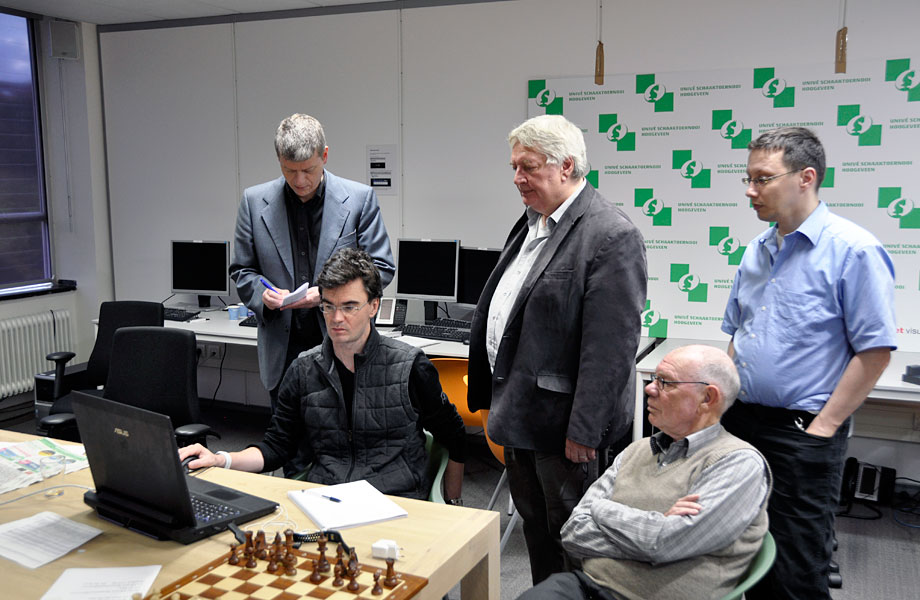
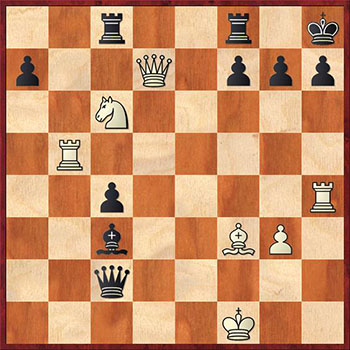
    A number of boards down, Jorgen Henseler achieved a surprising win with a nice combination.

    Henseler – Colijn 

    18.Nxf7! 
    A beautiful trick, based on the long diagonal.
    18…Kxf7 
    18…Qxf7 19.Nxf6+ gxf6 20.Bxd6 Rxd6? 21.e5.
    19.Bxd6 d3 
    19…Rxd6 20.Nc7 Qe7 21.e5 and White wins.
    20.Qxc5 Nxd5 21.Bxb8!? 
    A little more convincing was 21.e5! Bb7 22.Rxd3.
    21…Nb6 22.Qh5+ Kg8 23.Bh3 Qxa2 24.Be5 

    And in the end White converted his extra pawns: 1-0.

  • ​Scherp spel Vovk niet beloond

    ​Scherp spel Vovk niet beloond

    De nummer één op rating in de Open groep, Andrey Vovk, speelt dagelijks partijen die het aanzien meer dan waard zijn. Vandaag, in de derde ronde, leverde het hem echter geen punt op. De verrassend goed voor de dag komende Canadese meester Aman Hambleton veroverde een half punt na een scherpe partij.
    Alexander Beliavsky, Eric Hansen, Bartlomiej Heberla en Victor Mikhalevsky bleven wel scoren en staan nog op honderd procent.

    Vovk – Hambleton

    In deze scherpe stelling speelde Vovk natuurlijk:
    25.Txf5!? gxf5 26.Dxf5 Te6?! 
    Een fraaie truc was 26…Le4! 27.Dxe4 Lxc3 28.Dd3 Lxd2+ en wit heeft te weinig voor het materiaal. Dit kon op de volgende zet ook nog.
    27.h4 Tce8?! 28.h5 Lh8 29.Pd5 Lxd5 30.Dxd5 Dc4 31.Df3 Te2 32.g6 fxg6 33.hxg6 Tc8 
    Nu gaat het er link uitzien. Veiliger was 33…T2e7.
    34.Df7+?! 
    34.c3! gevolgd door 35.Lh6 en pas dan 36.Df7+ was kansrijk.
    34…Dxf7 35.gxf7+ Kf8 36.Lh6+ Lg7 37.Lxg7+ Kxg7 38.Pd4 Te5 39.Pf5+ Kf8 40.Tg1 

    40…Tcc5 
    40…Txc2+ 41.Kxc2 Txf5 is ook remise: 42.Tg8+ Kxf7 43.Ta8 enzovoort.
    41.Pxd6 
    Dreigt een winnend schaak op de bovenste rij, dus zwart moet blijven opponeren, met remise.
    41…Tg5 42.Th1 Th5 43.Tg1 
    En na nog een paar herhalingen werd de vrede getekend.
    Een aantal borden lager boekte Jorgen Henseler een verrassende overwinning met een aardige combinatie.
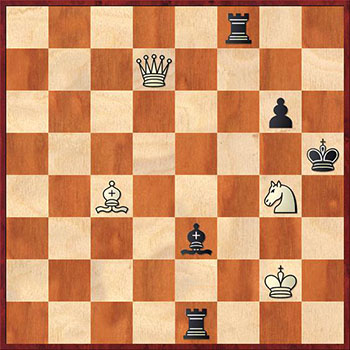
    Henseler – Colijn 

    18.Pxf7! 
    Een mooie truc, gebaseerd op de lange diagonaal.
    18…Kxf7 
    18…Dxf7 19.Pxf6+ gxf6 20.Lxd6 Txd6? 21.e5.
    19.Lxd6 d3 
    19…Txd6 20.Pc7 De7 21.e5 en wit wint.
    20.Dxc5 Pxd5 21.Lxb8!? 
    Nog wat overtuigender was 21.e5! Lb7 22.Txd3.
    21…Pb6 22.Dh5+ Kg8 23.Lh3 Dxa2 24.Le5 

    En wit verzilverde zijn extra pionnen uiteindelijk: 1-0.

  • ​Perfecte voorbereiding Giri, Timman blundert

    ​Perfecte voorbereiding Giri, Timman blundert

    Nodig de juiste spelers uit, en je weet niet wat je meemaakt in twee partijen op een dag. Wat er vandaag in de Univé matches gebeurde tartte elke beschrijving. We doen toch een poging. Anish Giri legde met onvoorstelbaar diepe voorbereiding de basis voor een tweede overwinning in een epische partij. Jan Timman speelde opnieuw lange tijd prima tegen Baadur Jobava, maar blunderde op het moment dat de Georgiër slim de spanning had opgevoerd.

    We beginnen in mineur, vanuit Nederlands standpunt bezien. Timman had lange tijd weinig problemen. Jobava kreeg met wit wel een ietsje, maar besteedde ook veel tijd: “Het was een complex middenspel. Ik had hier en daar moeite om de juiste zet te vinden, ik was steeds degene die naar plannen moest zoeken”, zei de GeorgiĂ«r achteraf. “Ik moet er ook nog een beetje in komen, misschien ben ik gewoon niet zo goed in vorm.” Timman wist daar niet van te profiteren – integendeel, toen Jobava nog maar een minuut of drie bedenktijd over had, ging de Arnhemmer in de fout.

    Jobava – Timman 

    1.d4 Pf6 2.c4 e6 3.Pf3 b6 4.a3 La6 5.Dc2 Lb7 6.Pc3 c5 7.e4 cxd4 8.Pxd4 Pc6 9.Pxc6 Lxc6 10.Lf4 Ph5

    11.Ld2 
    11.Le3 Ld6?? 12.Dd1 1–0 was de fameuze partij Christiansen-Karpov, Wijk aan Zee 1993, waar de heren van Chess24 nog even fijntjes aan refereerden.
    11…Dc7 
    Gusty stelde hier 11…Df6 voor, waarop Jobava off-hand ging voor 12.0–0–0!?. Zo’n gut reaction zegt veel over een speler.
    12.g3 
    Timman volgde een partij Jobava-Iturrizaga, Khanty-Mansiysk 2009, waar 12.Pd5 Db7 werd gespeeld, en wit nu gewoon het stuk liet inslaan: 13.Ld3 Ld6 14.0–0 Db8 15.g3 exd5 16.exd5 Lb7 17.Tfe1+ Kd8 18.Lc3 Pf6 19.b4 Dc7 20.Db2 Kc8 21.Lxf6 gxf6 22.Dxf6 Td8 23.Tac1 Lf8 24.c5 bxc5 25.bxc5 a5 26.c6 dxc6 27.dxc6 La6 28.Lf5+ Kb8 29.Dxd8+ Dxd8 30.c7+ 1–0. Jobava: “Ik probeerde me die partij te herinneren, maar dat lukte natuurlijk niet.”
    12…Lc5 13.Lg2 0–0 14.0–0 Tac8 15.Tac1 Pf6 
    Een lastige, maar moedige beslissing.
    16.b4 Le7 17.Dd3 Db8 18.h3 Tfd8 
    Jobava meende dat dit fout was en gaf 18…d6 aan. Wit krijgt nu wat druk, maar het was toch moeilijk om steeds de juiste zet te vinden en Jobava gebruikte hier veel tijd.
    19.Tfe1 Lb7 20.e5 Pe8 21.Pe4 d6 22.exd6 Lxd6 
    22…Pxd6 werd door de in de perskamer aanwezige (ex-)kampioenen logischer bevonden. Want op 23.Lf4 heeft zwart 23…Da8.
    23.De2  

    23…Le5 
    Ook dit vond Jobava niet goed: 23…Le7 zou veiliger zijn.
    24.c5 
    Gusty opperde hier de truc 24.Pg5! Lxg2 25.Dh5. Nu houdt wit na 25…Db7 26.Dxh7+ Kf8 27.Dh8+ Ke7 28.Txe5 Txd2 29.Dg8 een enorme aanval. “Ja, die problemen heeft hij zelf gecreĂ«erd met 23…Le5”, zei Jobava. Het blijft vreemd dat de Georgische houwdegen hier niet op in ging.
    24…bxc5 25.bxc5 
    Het tussenzetje 25.Lg5 was irritant; zwart moet met 25…Lf6 zijn structuur laten verzwakken.
    25…Lc6 26.La5 Td7 
    26…Td4 werd nog geopperd, dan kan de toren eventueel naar a4. Maar na 27.Lc3 Td7? (beter 27
Td8) 28.Lxe5 Dxe5 wint wit met 29.Pd6!.
    27.Pg5 Lxg2 28.Kxg2 Lf6 
    Timman twijfelde achteraf aan deze zet, maar zwart blijkt nog steeds OK te staan hier.
    29.c6 

    “Om tenminste nog iets te proberen”, zei Jobava. Op 29.Pe4 heeft zwart 29…Da8! net als later in de partij.
    29…Td5?? 
    Een blunder in tijdnood van de tegenstander. 29…Td6 moest.
    30.Pxf7! 
    Dat buitenkansje laat ook een Jobava in vette tijdnood zich niet ontgaan.
    30…Txa5 31.Dxe6 Kf8 

    32.Tcd1? 
    Hier was 32.Dd7! winnend. Wit dreigt Tc1-b1-b7 en als zwart 32…a6 speelt wint 33.Te6! met de dreiging 34.Tce1. Verhindert zwart dit met 33…Pc7 dan loopt het mooi mat met 34.Ph6!.
    32…Dc7? 
    Nu mist Timman de redding, die gelegen was in de subtiele zet 32…Da8!. Dan gaat 33.Pd8 niet op wegens 33…Txd8 34.Td7 Txd7 en de dame dekt Pe8, dus bijvoorbeeld 35.Dxd7 Tc5 en zwart wint.
    33.Pd8! Txd8 34.Td7 
    En opgegeven. “Ongelooflijk stom”, zuchtte Timman. “I guess I was a little bit lucky”, meesmuilde zijn tegenstander.

    Video: Peter Doggers


    Foto: Peter Doggers

    De andere partij werd met verbijstering gadegeslagen in de commentaarzaal. “Alle moeilijke zetten worden binnen een paar seconden gespeeld”, zei Van der Wiel. Dit moet voorbereiding zijn. En dat bleek al snel. En Giri was degene die het best voorbereid was.

    Giri – Shirov 

    1.d4 d5 2.c4 c6 3.Pc3 Pf6 4.e3 e6 5.Pf3 Pbd7 6.Dc2 Ld6 7.Ld3 0–0 8.0–0 dxc4 9.Lxc4 b5 10.Le2 
    In de onderlinge partij in 2010 deed Giri 10.Ld3.
    10…Lb7 11.e4 e5 12.dxe5 Pxe5 13.Pd4 
    Dit oogt bijzonder gevaarlijk vanwege het antwoord:
    13…Peg4

    14.g3! 
    14.h3? Lh2+ 15.Kh1 Pxf2+! 16.Kxh2 Dxd4 is goed voor zwart. Maar Giri had gehoopt dat zijn tegenstander hierop in zou gaan. “Ik denk dat mijn hartslag hier wel even omhoog ging, toen ik merkte dat hij zijn partij uit de Bundesliga van eerder dit jaar zou herhalen. Ik had daar iets gevonden dat naar mijn idee winnend was.”
    14…Lc5 
    Alles Ă  tempo. 14…Lxg3 geeft de mooie loper op: 15.hxg3 Dxd4 16.Dd1 (16.Lf4 Dc5! 17.b4 Dh5) 16…Dxd1 17.Txd1 Tfd8. Blijkbaar heeft wit hier voldoende compensatie, want Shirov ging daar niet op in. Eerder dit jaar niet, en nu weer niet.
    15.Pf5 Te8! 
    15…Db6 16.Lxg4 Pxg4 17.b4 Lxb4 (17…Ld4 18.Lb2) 18.Db2 Lxc3 19.Dxc3 Pf6 20.Le3 geeft wit fraai spel.
    16.Lf4 Db6 17.Kg2! 

    17…Pxf2 
    Als dit niet werkt lijkt 17…g6!? hier een belangrijk alternatief. 18.h3 gxf5 19.hxg4 Pxe4 20.gxf5 Pxc3 21.bxc3 Le7 en wit staat een tikje beter.
    18.e5 
    Niet direct 18.b4? Lxb4 19.Txf2 Lxc3 en e4 hangt.
    18…Pd7 19.b4 Lxb4 20.Txf2 Pxe5 

    Spectaculair. Maar ook deze stelling had Shirov in die Bundesligapartij al op het bord gehad.
    21.Pe4 
    Pas dit is een nieuwtje! In de partij Dennis Wagner-Shirov, Eppingen 2014, volgde het uiterst scherpe 21.Pxg7 c5+ 22.Kh3 Lc8+ 23.g4 Kxg7 24.Lxe5+ Txe5 25.Txf7+ Kxf7 26.Dxh7+ Ke6 27.Dg6+ Ke7 28.Dg7+ Ke6 29.Dh6+ Ke7 30.Dh7+ Ke6 31.Dg6+ Ke7 32.Dg7+ Ke6 33.Dg6+ remise.
    21…c5 22.Kf1! 
    Dit is het idee. De computer gelooft aanvankelijk niet in 21.Pe4, totdat je de tekstzet invoert. Er dreigt allerlei narigheid op d6 en misschien ooit ook wel h6, dus zwart ruilt:
    22…Lxe4 23.Dxe4 Pg6! 
    Na enig nadenken. Vooral niet 23…Pg4?? 24.Pe7+ en op de volgende zet valt Pg4, omdat de toren op a8 blijft hangen.
    24.Dd5 Pxf4 
    24…Tad8 25.Ld6! (na 25.Pd6? is 25…Tf8! gevolgd door 26…c4 heel pijnlijk; Pd6 gaat verloren) 25…Te6 26.Df3 en wit houdt de druk erop.
    25.Pe7+! Kh8 26.Txf4 c4 27.Pc6 Lc3 
    27…De3 lijkt taaier, maar wit loopt er gewoon uit met 28.Lf3 Lc5 29.Kg2.
    28.Tb1 Tac8 29.Lf3 

    29…Da6 
    Vindt nog een zwakte bij wit.
    30.Te4!? 
    30.Txb5 Dxa2 31.Le4 laat zwart zo te zien kansloos: de dreiging 32.Th4 is vernietigend.
    30…Dxa2 31.Txb5 Dxh2 32.Dd7 Tf8 33.Th4 
    Giri: “In de vooruitberekening had ik zwarts antwoord gemist. Nu zag ik dat het na de komende afwikkeling heel moeilijk te winnen was, dus ik heb hier lang gekeken naar 33.Th5 Maar na 33…Dxg3 zag ik het niet.” Er kan volgen: 34.Th3 Tc7 35.Df5 g6.
    33…Dc2 

    34.Txh7+ Dxh7 35.Th5 Dxh5 36.Lxh5 g6 37.Le2 Kg7 38.Lxc4 Tce8 39.Dxa7 Lf6 40.Dd7 Te3 41.Kg2 Tc3 42.Dd5 Te3 43.Kf2 Tee8 44.Dd7 Te4 45.Ld5 Tee8 46.Dc7 Tc8 47.Db7 Tce8 48.Dd7 Ta8 49.Lc4 Tae8 50.Kf3 
    Niet zo slim is 50.Lxf7? Te7! 51.Pxe7 Lxe7 52.Dxe7? Txf7+.
    50…Te1 51.Dd5 Te6 52.Dd7 Te1 53.g4!? 
    De lastigste poging voor zwart.
    53…Lg5 54.Dd5 f5 
    Zwart wil liever 54…Lf6 spelen, maar dan komt met tempo 55.g5 La1 en nu 56.Kg2 (direct 56.Pd8 werkt nog niet wegens 56…Tc1 57.Pxf7? Txc4) 56…Te3 57.Dd6 (weer niet 57.Pd8? Te5) en nu komen de zwarte stukken in de problemen, bv. 57…Te4 58.Dd1 Lb2 59.Dc2. Als de toren e5 loslaat, speelt wit Pe5 en na afruil valt op den duur pion g6.
    Met de zwarte koningsstelling open zorgen de witte stukken voor het slotakkoord.
    55.Pe5 fxg4+ 56.Kg2 Le3 57.Dd7+ Kh6 58.Pxg4+ Kh5 

    59.Pf6+! 
    Wint een kwaliteit.
    59…Txf6 60.Dh3+ Kg5 61.Dg3+ Kh6 62.Dxe1 
    En zwart gaf op op zet 75.

    Video: Peter Doggers