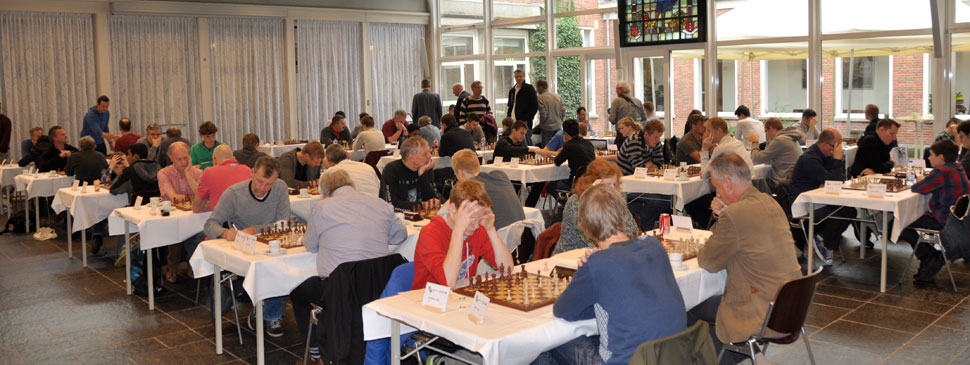
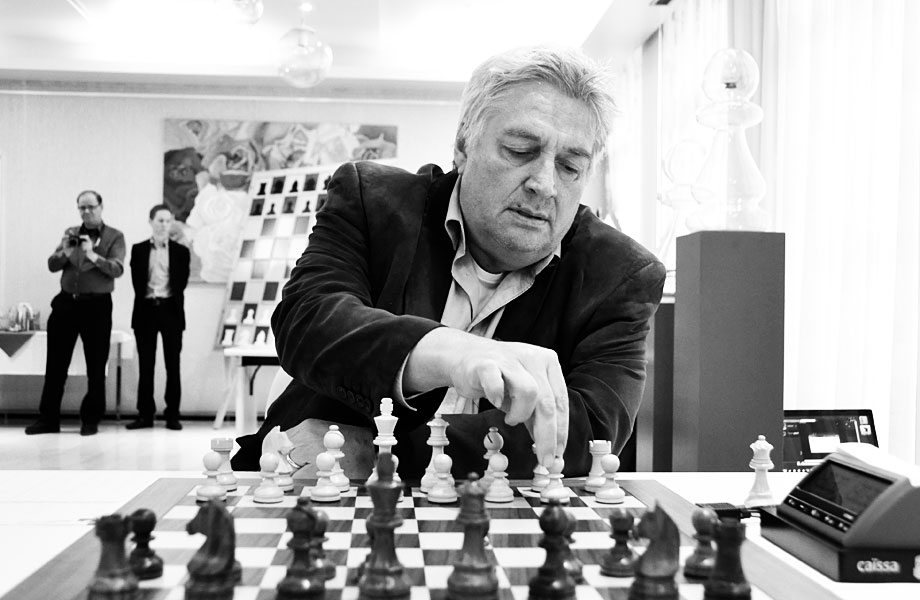
De nummer één op rating in de Open groep, Andrey Vovk, speelt dagelijks partijen die het aanzien meer dan waard zijn. Vandaag, in de derde ronde, leverde het hem echter geen punt op. De verrassend goed voor de dag komende Canadese meester Aman Hambleton veroverde een half punt na een scherpe partij.
Alexander Beliavsky, Eric Hansen, Bartlomiej Heberla en Victor Mikhalevsky bleven wel scoren en staan nog op honderd procent.
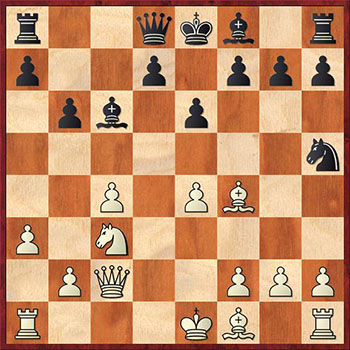
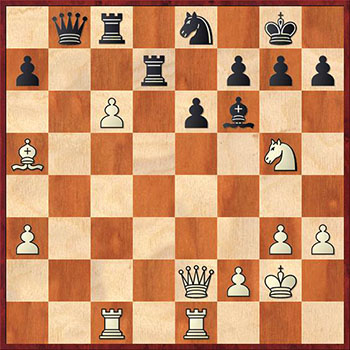
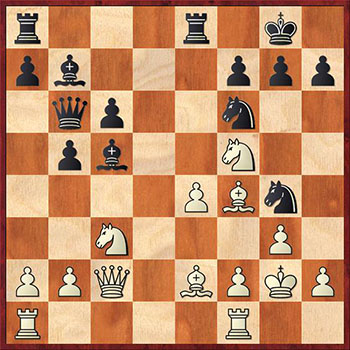
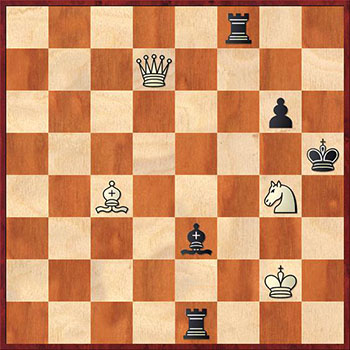
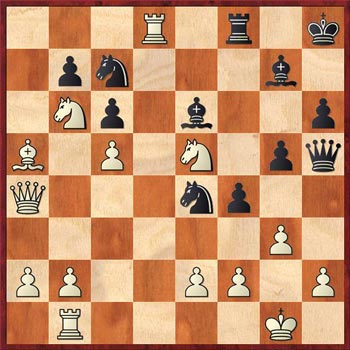
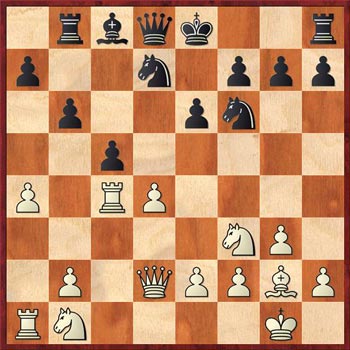
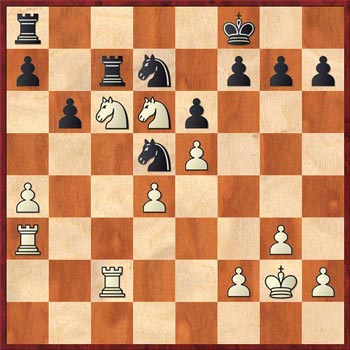
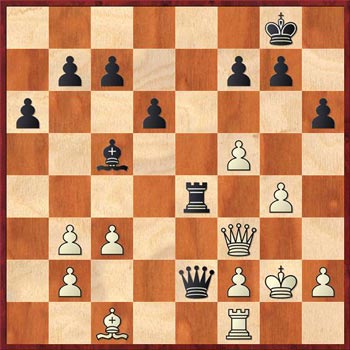
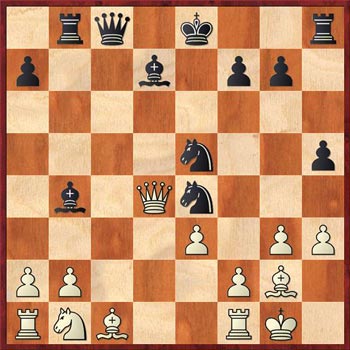
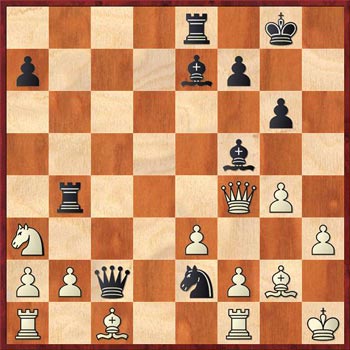
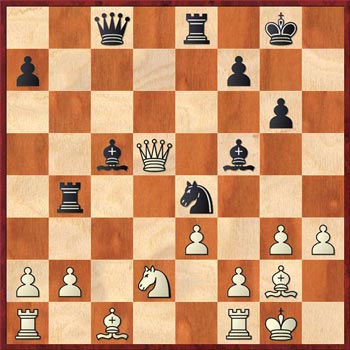
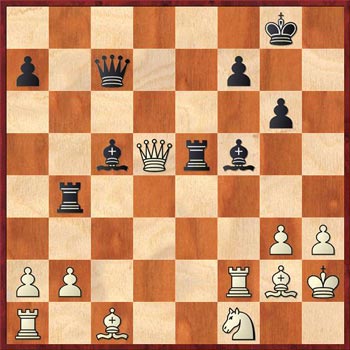
Vovk – Hambleton
In deze scherpe stelling speelde Vovk natuurlijk: 25.Txf5!? gxf5 26.Dxf5 Te6?!
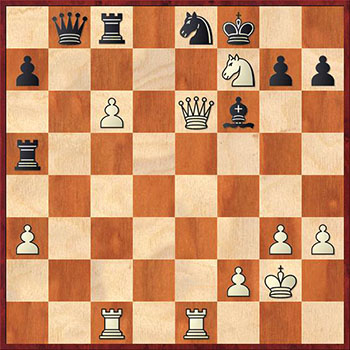
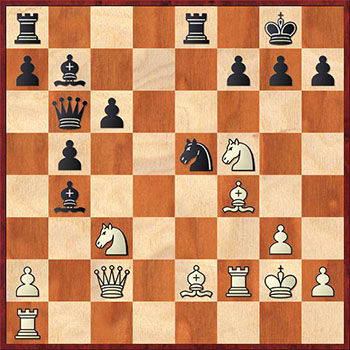
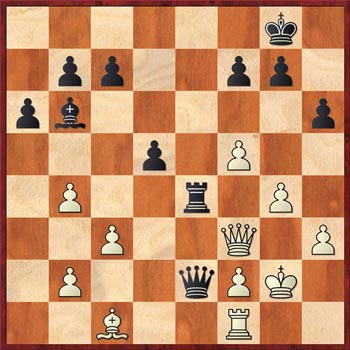
Een fraaie truc was 26…Le4! 27.Dxe4 Lxc3 28.Dd3 Lxd2+ en wit heeft te weinig voor het materiaal. Dit kon op de volgende zet ook nog. 27.h4 Tce8?! 28.h5 Lh8 29.Pd5 Lxd5 30.Dxd5 Dc4 31.Df3 Te2 32.g6 fxg6 33.hxg6 Tc8
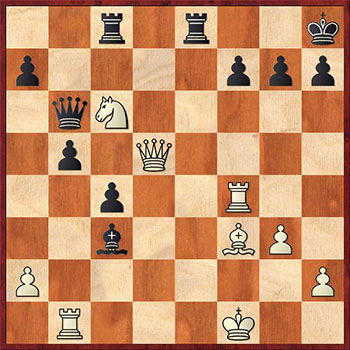
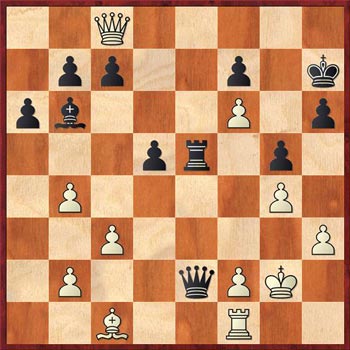
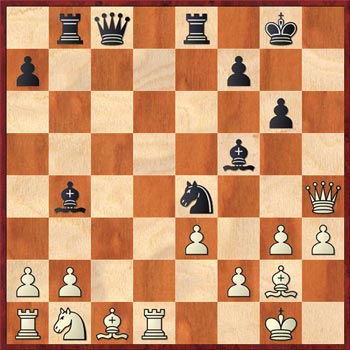
Nu gaat het er link uitzien. Veiliger was 33…T2e7. 34.Df7+?!
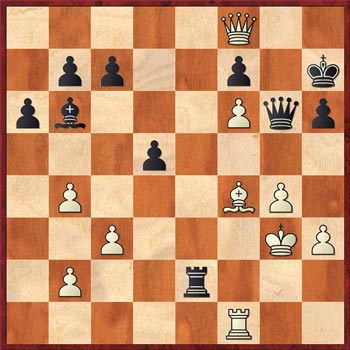
34.c3! gevolgd door 35.Lh6 en pas dan 36.Df7+ was kansrijk. 34…Dxf7 35.gxf7+ Kf8 36.Lh6+ Lg7 37.Lxg7+ Kxg7 38.Pd4 Te5 39.Pf5+ Kf8 40.Tg1
40…Tcc5
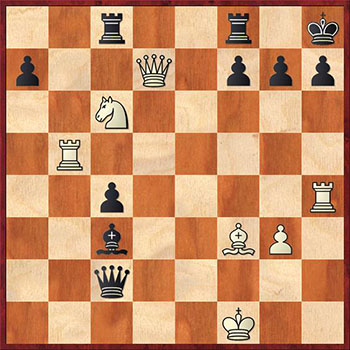
40…Txc2+ 41.Kxc2 Txf5 is ook remise: 42.Tg8+ Kxf7 43.Ta8 enzovoort. 41.Pxd6
Dreigt een winnend schaak op de bovenste rij, dus zwart moet blijven opponeren, met remise. 41…Tg5 42.Th1 Th5 43.Tg1
En na nog een paar herhalingen werd de vrede getekend.
Een aantal borden lager boekte Jorgen Henseler een verrassende overwinning met een aardige combinatie.
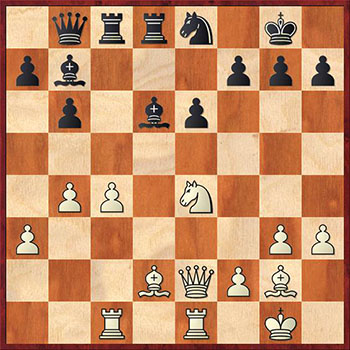
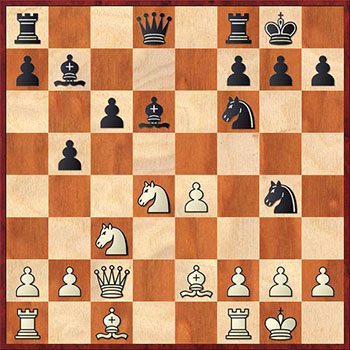
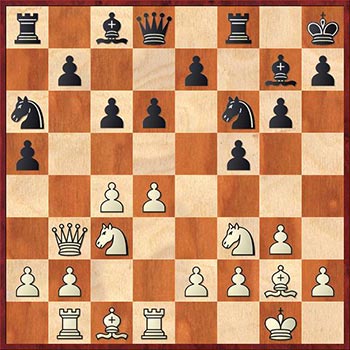
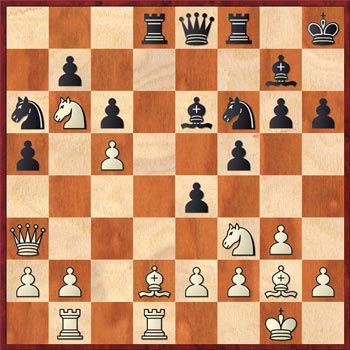
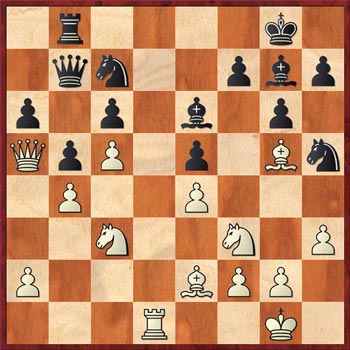
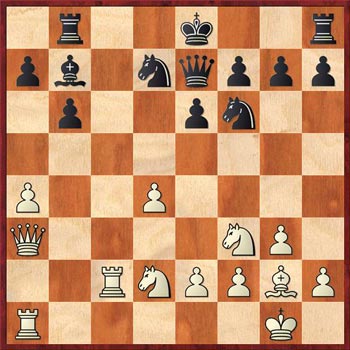
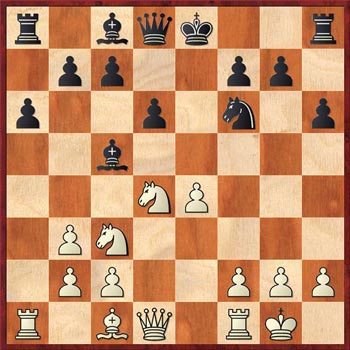
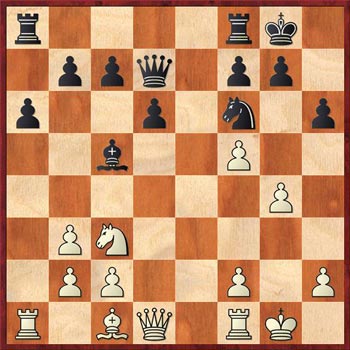
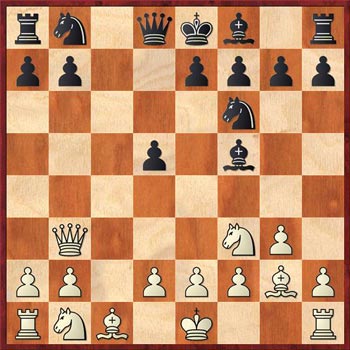
Henseler – Colijn
18.Pxf7!
Een mooie truc, gebaseerd op de lange diagonaal. 18…Kxf7
18…Dxf7 19.Pxf6+ gxf6 20.Lxd6 Txd6? 21.e5. 19.Lxd6 d3
19…Txd6 20.Pc7 De7 21.e5 en wit wint. 20.Dxc5 Pxd5 21.Lxb8!?
Nog wat overtuigender was 21.e5! Lb7 22.Txd3. 21…Pb6 22.Dh5+ Kg8 23.Lh3 Dxa2 24.Le5
En wit verzilverde zijn extra pionnen uiteindelijk: 1-0.
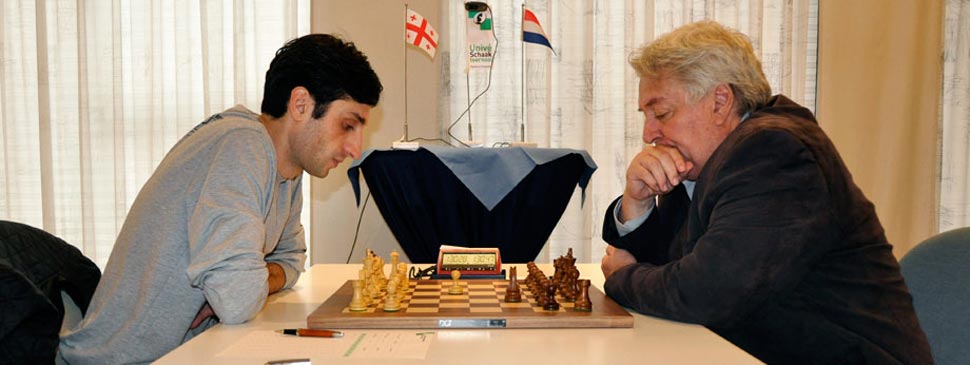
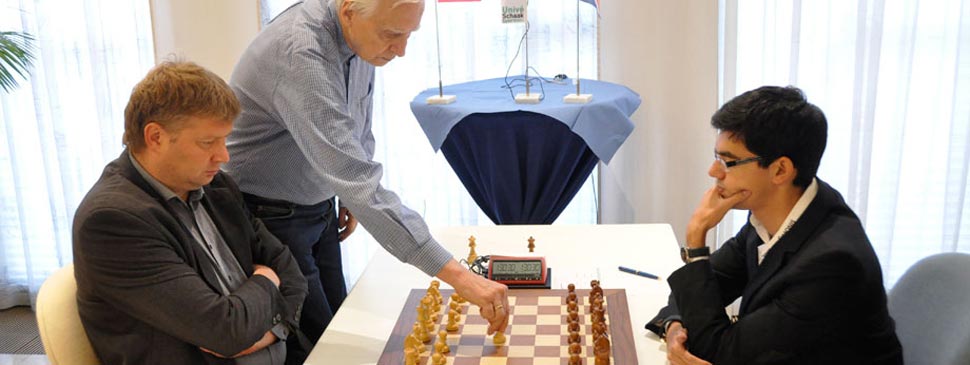
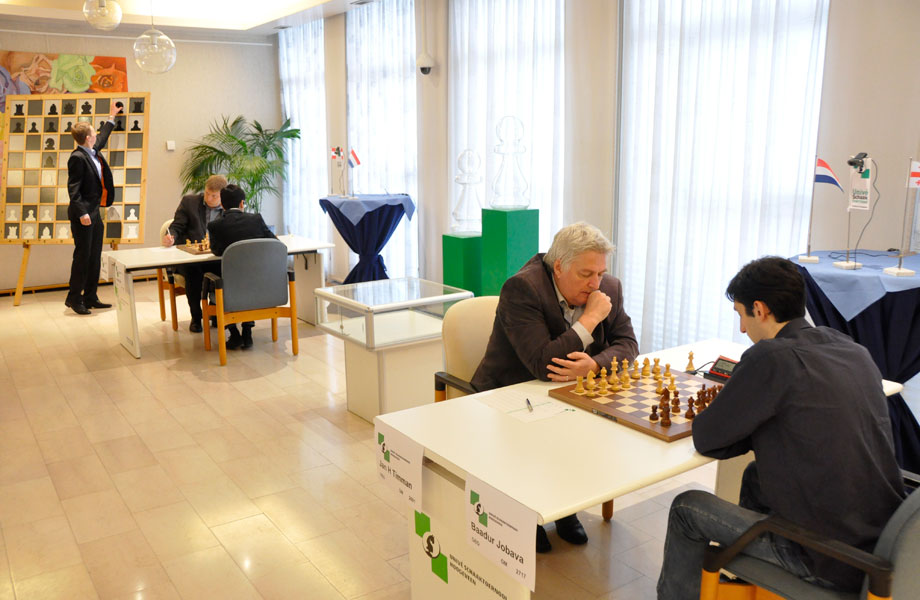
Nodig de juiste spelers uit, en je weet niet wat je meemaakt in twee partijen op een dag. Wat er vandaag in de Univé matches gebeurde tartte elke beschrijving. We doen toch een poging. Anish Giri legde met onvoorstelbaar diepe voorbereiding de basis voor een tweede overwinning in een epische partij. Jan Timman speelde opnieuw lange tijd prima tegen Baadur Jobava, maar blunderde op het moment dat de Georgiër slim de spanning had opgevoerd.
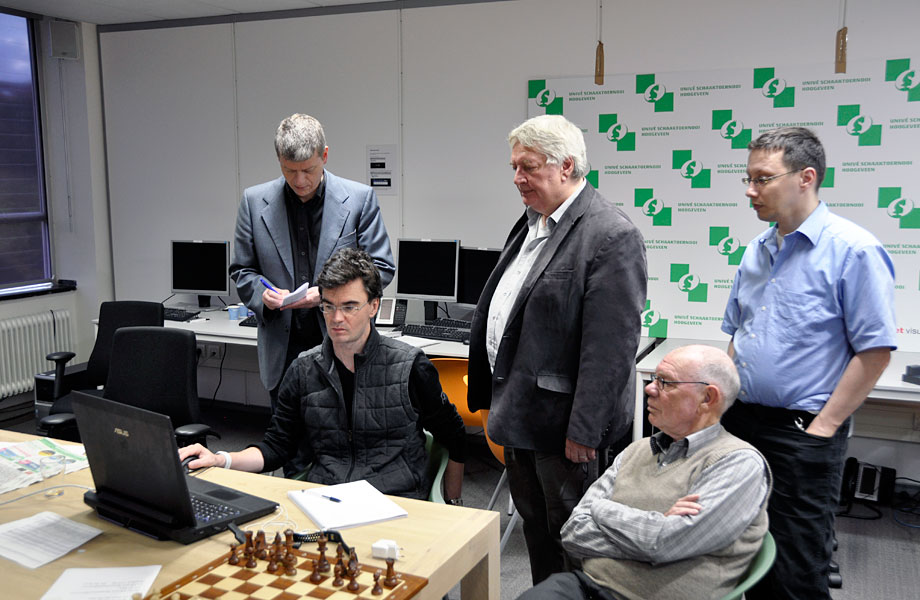
We beginnen in mineur, vanuit Nederlands standpunt bezien. Timman had lange tijd weinig problemen. Jobava kreeg met wit wel een ietsje, maar besteedde ook veel tijd: “Het was een complex middenspel. Ik had hier en daar moeite om de juiste zet te vinden, ik was steeds degene die naar plannen moest zoeken”, zei de Georgiër achteraf. “Ik moet er ook nog een beetje in komen, misschien ben ik gewoon niet zo goed in vorm.” Timman wist daar niet van te profiteren – integendeel, toen Jobava nog maar een minuut of drie bedenktijd over had, ging de Arnhemmer in de fout.
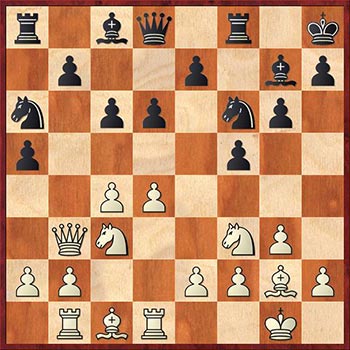
11.Ld2
11.Le3 Ld6?? 12.Dd1 1–0 was de fameuze partij Christiansen-Karpov, Wijk aan Zee 1993, waar de heren van Chess24 nog even fijntjes aan refereerden. 11…Dc7 Gusty stelde hier 11…Df6 voor, waarop Jobava off-hand ging voor 12.0–0–0!?. Zo’n gut reaction zegt veel over een speler. 12.g3
Timman volgde een partij Jobava-Iturrizaga, Khanty-Mansiysk 2009, waar 12.Pd5 Db7 werd gespeeld, en wit nu gewoon het stuk liet inslaan: 13.Ld3 Ld6 14.0–0 Db8 15.g3 exd5 16.exd5 Lb7 17.Tfe1+ Kd8 18.Lc3 Pf6 19.b4 Dc7 20.Db2 Kc8 21.Lxf6 gxf6 22.Dxf6 Td8 23.Tac1 Lf8 24.c5 bxc5 25.bxc5 a5 26.c6 dxc6 27.dxc6 La6 28.Lf5+ Kb8 29.Dxd8+ Dxd8 30.c7+ 1–0. Jobava: “Ik probeerde me die partij te herinneren, maar dat lukte natuurlijk niet.” 12…Lc5 13.Lg2 0–0 14.0–0 Tac8 15.Tac1 Pf6
Een lastige, maar moedige beslissing. 16.b4 Le7 17.Dd3 Db8 18.h3 Tfd8
Jobava meende dat dit fout was en gaf 18…d6 aan. Wit krijgt nu wat druk, maar het was toch moeilijk om steeds de juiste zet te vinden en Jobava gebruikte hier veel tijd. 19.Tfe1 Lb7 20.e5 Pe8 21.Pe4 d6 22.exd6 Lxd6
22…Pxd6 werd door de in de perskamer aanwezige (ex-)kampioenen logischer bevonden. Want op 23.Lf4 heeft zwart 23…Da8. 23.De2
23…Le5
Ook dit vond Jobava niet goed: 23…Le7 zou veiliger zijn. 24.c5
Gusty opperde hier de truc 24.Pg5! Lxg2 25.Dh5. Nu houdt wit na 25…Db7 26.Dxh7+ Kf8 27.Dh8+ Ke7 28.Txe5 Txd2 29.Dg8 een enorme aanval. “Ja, die problemen heeft hij zelf gecreëerd met 23…Le5”, zei Jobava. Het blijft vreemd dat de Georgische houwdegen hier niet op in ging. 24…bxc5 25.bxc5
Het tussenzetje 25.Lg5 was irritant; zwart moet met 25…Lf6 zijn structuur laten verzwakken. 25…Lc6 26.La5 Td7
26…Td4 werd nog geopperd, dan kan de toren eventueel naar a4. Maar na 27.Lc3 Td7? (beter 27…Td8) 28.Lxe5 Dxe5 wint wit met 29.Pd6!. 27.Pg5 Lxg2 28.Kxg2 Lf6
Timman twijfelde achteraf aan deze zet, maar zwart blijkt nog steeds OK te staan hier. 29.c6
“Om tenminste nog iets te proberen”, zei Jobava. Op 29.Pe4 heeft zwart 29…Da8! net als later in de partij. 29…Td5??
Een blunder in tijdnood van de tegenstander. 29…Td6 moest. 30.Pxf7!
Dat buitenkansje laat ook een Jobava in vette tijdnood zich niet ontgaan. 30…Txa5 31.Dxe6 Kf8
32.Tcd1?
Hier was 32.Dd7! winnend. Wit dreigt Tc1-b1-b7 en als zwart 32…a6 speelt wint 33.Te6! met de dreiging 34.Tce1. Verhindert zwart dit met 33…Pc7 dan loopt het mooi mat met 34.Ph6!. 32…Dc7?
Nu mist Timman de redding, die gelegen was in de subtiele zet 32…Da8!. Dan gaat 33.Pd8 niet op wegens 33…Txd8 34.Td7 Txd7 en de dame dekt Pe8, dus bijvoorbeeld 35.Dxd7 Tc5 en zwart wint. 33.Pd8! Txd8 34.Td7
En opgegeven. “Ongelooflijk stom”, zuchtte Timman. “I guess I was a little bit lucky”, meesmuilde zijn tegenstander.
Video: Peter Doggers
Foto: Peter Doggers
De andere partij werd met verbijstering gadegeslagen in de commentaarzaal. “Alle moeilijke zetten worden binnen een paar seconden gespeeld”, zei Van der Wiel. Dit moet voorbereiding zijn. En dat bleek al snel. En Giri was degene die het best voorbereid was.
Giri – Shirov
1.d4 d5 2.c4 c6 3.Pc3 Pf6 4.e3 e6 5.Pf3 Pbd7 6.Dc2 Ld6 7.Ld3 0–0 8.0–0 dxc4 9.Lxc4 b5 10.Le2
In de onderlinge partij in 2010 deed Giri 10.Ld3. 10…Lb7 11.e4 e5 12.dxe5 Pxe5 13.Pd4
Dit oogt bijzonder gevaarlijk vanwege het antwoord: 13…Peg4
14.g3!
14.h3? Lh2+ 15.Kh1 Pxf2+! 16.Kxh2 Dxd4 is goed voor zwart. Maar Giri had gehoopt dat zijn tegenstander hierop in zou gaan. “Ik denk dat mijn hartslag hier wel even omhoog ging, toen ik merkte dat hij zijn partij uit de Bundesliga van eerder dit jaar zou herhalen. Ik had daar iets gevonden dat naar mijn idee winnend was.” 14…Lc5
Alles à tempo. 14…Lxg3 geeft de mooie loper op: 15.hxg3 Dxd4 16.Dd1 (16.Lf4 Dc5! 17.b4 Dh5) 16…Dxd1 17.Txd1 Tfd8. Blijkbaar heeft wit hier voldoende compensatie, want Shirov ging daar niet op in. Eerder dit jaar niet, en nu weer niet. 15.Pf5 Te8!
15…Db6 16.Lxg4 Pxg4 17.b4 Lxb4 (17…Ld4 18.Lb2) 18.Db2 Lxc3 19.Dxc3 Pf6 20.Le3 geeft wit fraai spel. 16.Lf4 Db6 17.Kg2!
17…Pxf2
Als dit niet werkt lijkt 17…g6!? hier een belangrijk alternatief. 18.h3 gxf5 19.hxg4 Pxe4 20.gxf5 Pxc3 21.bxc3 Le7 en wit staat een tikje beter. 18.e5
Niet direct 18.b4? Lxb4 19.Txf2 Lxc3 en e4 hangt. 18…Pd7 19.b4 Lxb4 20.Txf2 Pxe5
Spectaculair. Maar ook deze stelling had Shirov in die Bundesligapartij al op het bord gehad. 21.Pe4
Pas dit is een nieuwtje! In de partij Dennis Wagner-Shirov, Eppingen 2014, volgde het uiterst scherpe 21.Pxg7 c5+ 22.Kh3 Lc8+ 23.g4 Kxg7 24.Lxe5+ Txe5 25.Txf7+ Kxf7 26.Dxh7+ Ke6 27.Dg6+ Ke7 28.Dg7+ Ke6 29.Dh6+ Ke7 30.Dh7+ Ke6 31.Dg6+ Ke7 32.Dg7+ Ke6 33.Dg6+ remise. 21…c5 22.Kf1!
Dit is het idee. De computer gelooft aanvankelijk niet in 21.Pe4, totdat je de tekstzet invoert. Er dreigt allerlei narigheid op d6 en misschien ooit ook wel h6, dus zwart ruilt: 22…Lxe4 23.Dxe4 Pg6!
Na enig nadenken. Vooral niet 23…Pg4?? 24.Pe7+ en op de volgende zet valt Pg4, omdat de toren op a8 blijft hangen. 24.Dd5 Pxf4
24…Tad8 25.Ld6! (na 25.Pd6? is 25…Tf8! gevolgd door 26…c4 heel pijnlijk; Pd6 gaat verloren) 25…Te6 26.Df3 en wit houdt de druk erop. 25.Pe7+! Kh8 26.Txf4 c4 27.Pc6 Lc3
27…De3 lijkt taaier, maar wit loopt er gewoon uit met 28.Lf3 Lc5 29.Kg2. 28.Tb1 Tac8 29.Lf3
29…Da6
Vindt nog een zwakte bij wit. 30.Te4!?
30.Txb5 Dxa2 31.Le4 laat zwart zo te zien kansloos: de dreiging 32.Th4 is vernietigend. 30…Dxa2 31.Txb5 Dxh2 32.Dd7 Tf8 33.Th4
Giri: “In de vooruitberekening had ik zwarts antwoord gemist. Nu zag ik dat het na de komende afwikkeling heel moeilijk te winnen was, dus ik heb hier lang gekeken naar 33.Th5 Maar na 33…Dxg3 zag ik het niet.” Er kan volgen: 34.Th3 Tc7 35.Df5 g6. 33…Dc2
34.Txh7+ Dxh7 35.Th5 Dxh5 36.Lxh5 g6 37.Le2 Kg7 38.Lxc4 Tce8 39.Dxa7 Lf6 40.Dd7 Te3 41.Kg2 Tc3 42.Dd5 Te3 43.Kf2 Tee8 44.Dd7 Te4 45.Ld5 Tee8 46.Dc7 Tc8 47.Db7 Tce8 48.Dd7 Ta8 49.Lc4 Tae8 50.Kf3
Niet zo slim is 50.Lxf7? Te7! 51.Pxe7 Lxe7 52.Dxe7? Txf7+. 50…Te1 51.Dd5 Te6 52.Dd7 Te1 53.g4!?
De lastigste poging voor zwart. 53…Lg5 54.Dd5 f5
Zwart wil liever 54…Lf6 spelen, maar dan komt met tempo 55.g5 La1 en nu 56.Kg2 (direct 56.Pd8 werkt nog niet wegens 56…Tc1 57.Pxf7? Txc4) 56…Te3 57.Dd6 (weer niet 57.Pd8? Te5) en nu komen de zwarte stukken in de problemen, bv. 57…Te4 58.Dd1 Lb2 59.Dc2. Als de toren e5 loslaat, speelt wit Pe5 en na afruil valt op den duur pion g6.
Met de zwarte koningsstelling open zorgen de witte stukken voor het slotakkoord. 55.Pe5 fxg4+ 56.Kg2 Le3 57.Dd7+ Kh6 58.Pxg4+ Kh5
59.Pf6+!
Wint een kwaliteit. 59…Txf6 60.Dh3+ Kg5 61.Dg3+ Kh6 62.Dxe1
En zwart gaf op op zet 75.
In de tweede ronde van de Open groep wonnen de zes topgrootmeesters volgens plan. Maar aan bord zeven herhaalde de geschiedenis zich: eersteklasser Danny de Ruiter speelde zich net als twee jaar geleden in the picture. Opvallend was dat Sergey Kasparov ook vandaag niet verder kwam dan remise.
Aan bord 1 bood Michael Wunnink aanvankelijk goed weerstand, maar opeens was daar een vernietigende koningsaanval van de Oekraïense grootmeester Andrey Vovk.
Zwart heeft de stellingen van een echte ‘Malaniuk-Leningrader’ ingenomen en volgens Delemarre moet hij hier vooral wachten totdat wit een onnauwkeurigheidje begaat. 11.c5!?
Het alternatief is hier 11.Pg5!? om na 11…h6 verder te gaan met 12.Ph3 g5 13.f4. 11…dxc5 12.dxc5 De8
Nu kan wit de thematische opstoot …e7-e5 niet meer verhinderen. 13.Pa4 e5 14.Pb6
Wit kon ook eerst gaan loeren naar veld e6 met 14.Pg5!? Tb8 15.Pb6 Pxc5 16.Da3 en hij wint de pion op a5 terug, met iets vrijer spel. 14…Le6 15.Da3 Td8 16.Lg5 h6 17.Ld2 e4
Zwart heeft nu alles wat hij wil. Daar moet hij wel het pionnetje op a5 voor geven, maar dat is klein bier. 18.Pe5 g5 19.Lxa5 Dh5 20.Td6
Er ontspint zich een spannende strijd: wit beheerst de damevleugel en het centrum, zwart probeert op de koningsvleugel aan te vallen. 20…Pc7 21.Da4 f4 22.Lxe4
De stormloop is al niet goed meer tegen te houden, bijvoorbeeld 22.f3 g4! of 22.Tbd1 Tde8!. 22…Pxe4 23.Txd8?
Nu gaat het hard. Wit miste een goede keepkans met 23.Dxe4! Lf5 24.Dxf5! Txf5 25.Txd8+ Kh7 26.g4! Dh3 27.gxf5 Lxe5 28.Tbd1 en volgens de computer staat dit bijna gelijk. 23…fxg3!! 24.Txf8+ Lxf8 25.Pf3
Zwart heeft ook een beslissende aanval na 25.hxg3 Pxg3! 26.fxg3 (26.Kg2 Dh3+) 26…Lxc5+. 25…gxf2+ 26.Kh1 Pg3+ 27.Kg2 f1D+ 28.Txf1 Dh3+ 29.Kf2 Lxc5+
En opgegeven. Een fraai staaltje aanvalskunst, en smakelijke kost voor de Leningrad-fans.
Danny de Ruiter zorgde vandaag weer eens voor een stunt. Hij versloeg zijn derde grootmeester. Twee jaar geleden was hij achtereenvolgens Ivan Sokolov de baas (uit onze herinnering – deze partij staat niet eens in onze databases!) en in ditzelfde Univétoernooi twee jaar geleden bond hij Jan Timman aan zijn zegekar. Vandaag was Vladimir Malaniuk de klos – en hoe!
De Ruiter – Malaniuk
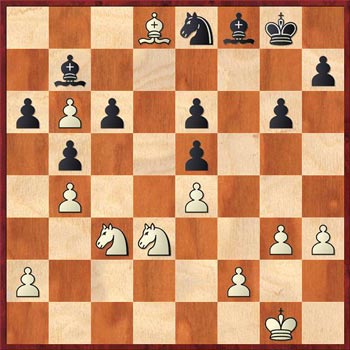
Wit heeft met sterk spel zwart volledig ingesnoerd en wikkelt nu adrem af: 27.Db6! Dxb6 28.cxb6 Pe8
Aan 28…Txb6 29.Td8+ valt niet te denken. Wit staat nu gewonnen, maar voert het eindspel ook met harde hand naar winst. Wie zou dit niet alsnog verpesten tegen een doorgewinterde grootmeester? 29.Td8 Txd8 30.Lxd8 Lc8 31.Pe1 Pf4 32.Lg4 Lb7 33.g3 Pe6 34.Lxe6 fxe6 35.Pd3 Lf8
36.Pb1!
Indrukwekkend. Zwart heeft geen redelijk verweer meer tegen de manoeuvre Pb1-d2-b3-a5. Dan maar onredelijk: 36…c5 37.Pxc5 Lxc5 38.bxc5 a5
Of 38…Lxe4 39.Pd2 Ld5 40.Pb3 enz. Wat een machtsvertoon! 39.f3 Kf7 40.Kf2 Pf6 41.Lxf6 Kxf6 42.Pa3 b4 43.Pc4 a4 44.Ke3
Opgegeven.
En opnieuw rijst de vraag: hoe ver reikt het talent van Danny de Ruiter??
In the second round of the Open, the six top grandmasters won according to plan. But on board 7 history repeated itself: class player Danny de Ruiter pulled off a stunt just like two years ago here. Also notable was that Sergey Kasparov wasn’t able to score more than a draw today after his loss in the first round.
At board 1, Michael Wunnink started quite well, but suddenly there was a devastating king attack by Ukraine grandmaster Andrey Vovk.
Black has built a real ‘Malaniuk-Leningrad’ set-up, and according to commentator Delemarre he has to wait here until White commits an inaccuracy. 11.c5!?
The alternative here is 11.Ng5!? in order after 11…h6 to continue with 12.Nh3 g5 13.f4. 11…dxc5 12.dxc5 Qe8
Now White can no longer prevent the thematic push …e7-e5. 13.Na4 e5 14.Nb6
White could also first eye the e6-square with 14.Ng5!? Rb8 15.Nb6 Nxc5 16.Qa3, winning back the pawn on a5, with a slightly freer game. 14…Be6 15.Qa3 Rd8 16.Bg5 h6 17.Bd2 e4
Now Black has everything he wants. He has to give the pawn on a5, but that is small potatoes. 18.Ne5 g5 19.Bxa5 Qh5 20.Rd6
An exciting struggle starts: White controls the queenside and the centre, Black tries to attack on the kingside. 20…Nc7 21.Qa4 f4 22.Bxe4
The steamroller can hardly be stopped anymore, for example 22.f3 g4! or 22.Rbd1 Rde8!. 22…Nxe4 23.Rxd8?
Now things develop fast. White missed a good chance to hold with 23.Qxe4! Bf5 24.Qxf5! Rxf5 25.Rxd8+ Kh7 26.g4! Qh3 27.gxf5 Bxe5 28.Rbd1 and computer says it’s nearly equal. 23…fxg3!! 24.Rxf8+ Bxf8 25.Nf3
Black also has a decisive attack after 25.hxg3 Nxg3! 26.fxg3 (26.Kg2 Qh3+) 26…Bxc5+. 25…gxf2+ 26.Kh1 Ng3+ 27.Kg2 f1Q+ 28.Rxf1 Qh3+ 29.Kf2 Bxc5+
Resigned. An attacking masterpiece, and a tasty morsel for Leningrad fans.
Danny de Ruiter pulled another stunt today. He defeated his third grandmaster. Two years ago he first took down Ivan Sokolov (if we remember well – this game is not even in our databases!), and then in this same Univé Tournament he beat Jan Timman. Today it was Vladimir Malaniuk’s turn – just watch this!
De Ruiter – Malaniuk
With strong play White has completely surrounded Black and now he adroitly liquidates: 27.Qb6! Qxb6 28.cxb6 Ne8
28…Rxb6 29.Rd8+ wasn’t worth considering. White is winning now, but he converts his advantage with a steady hand. How many of us would let the grandmaster off the hook after all? 29.Rd8 Rxd8 30.Bxd8 Bc8 31.Ne1 Nf4 32.Bg4 Bb7 33.g3 Ne6 34.Bxe6 fxe6 35.Nd3 Bf8
36.Nb1!
Impressive. Black has no reasonable remedy against the manoeuvre Nb1-d2-b3-a5. So he tries something unreasonable: 36…c5 37.Nxc5 Bxc5 38.bxc5 a5
Or 38…Bxe4 39.Nd2 Bd5 40.Nb3, etc. What a display of power! 39.f3 Kf7 40.Kf2 Nf6 41.Bxf6 Kxf6 42.Na3 b4 43.Nc4 a4 44.Ke3
Resigned.
And again the question arises: just how far could Danny de Ruiter’s talent reach??
At two in the afternoon it started. Former chairman of the Dutch House of Commons, Dick Dolman, made the first move on both boards of the matches in the Glass Room of the town hall. And the four matadors immediately went for it. Timman and Jobava played a highly interesting opening where the Dutchman got the upper hand, but at a crucial moment he chose to play it safe. Alexey Shirov almost immediately went for Anish Giri’s throat, but the Dutch number 7 of the world countered very cleverly and made the first try, as they say in rugby.
Photo: Peter Doggers
Timman – Jobava
1.d4 Nf6 2.c4 e6 3.Nf3 Bb4+ 4.Bd2 Bxd2+ 5.Qxd2 d5 6.g3 Nbd7 7.Bg2 c6
This set-up was often employed by Ulf Andersson in the 1980’s. Through the years, Jobava played it several times as well, but no-one had played the most popular move against him: 8.0–0 dxc4 9.a4 Rb8 10.Rc1 b6
In order to meet the natural 11.Na3 with 11…b5!. 11.Rxc4 c5
12.b4
A nice, thematic move, which removes the white weaknesses on the b-file and piles up the pressure. 12…Ba6 13.Rc2
After 13.b5 Bb7, c5 is solidly protected and Black has achieved his aim. 13…cxb4
‘Only move’, said Jobava. The computer also gives 13…0–0 14.dxc5 bxc5 15.bxc5 Ne4 16.Qe3 Nexc5 and due to the check on the bottom rank White cannot take twice on c5. 14.Qxb4 Qe7 15.Qa3 Bb7 16.Nbd2
It looks pretty unpleasant for Black. He cannot ‘pass’ anymore. 16…Qxa3 17.Rxa3 Ke7 18.Ne5 Bxg2 19.Kxg2 Rhc8
A tactical save. After 19…Rb7 20.Nc6+ Kf8 21.a5 White is clearly better, and after 19…Rbc8? 20.Nc6+ Kf8 21.Rac3 the queen’s rook is too passive. 20.Nc6+ Ke8
‘Here I had to choose’, Jobava said. ‘If I play 20…Kf8, then follows 21.Rac3 Tb7 22.Nb4 and White occupies the c-file. If I put my king on e8, it can always go to d8 later. White’s next move looked dangerous.’ 21.e4 Ra8 22.e5 Nd5 23.Ne4 Rc7 24.Nd6+ Kf8
Here Timman went for the draw with… 25.Nb5 Rcc8 26.Nd6 Rc7 27.Nb5
‘I didn’t see how to make progress’, he said. ‘Certainly in the first game of such a match it seemed unwise to take risks.’ Jobava also thought that other attempts by White would be risky, for example: 27.a5 Nb8 28.axb6 Nxb6 29.Nb4 Rxc2 30.Nxc2 a5 and White has to reckon with Black’s passed pawn.
‘Actually it was quite a normal game’, Jobava said. Yet another unique happening in this tournament: Jobava never plays normal games! In any case, the heartbeat of the Georgian didn’t show any significant ups or downs today.
Video: Peter Doggers
Photo: Peter Doggers
The second game started very quietly, but that didn’t last long. After this big fight, Anish Giri was immediately severely questioned by Jan Gustafsson and Paco Vallejo Pons on Chess24.
Shirov – Giri
1.e4 e5 2.Nf3 Nc6 3.Bc4 Bc5 4.d3 Nf6 5.Nc3 d6
Giri: ‘From the beginning I thought I was okay. He copied my moves. Of course he had one tempo more.’ When Jop Delemarre asked in the commentary room why it’s always Black who has to deviate in symmetrical positions, someone in the audience answered philosophically: ‘Because White cannot.’
Why don’t you take a break and let this sink in for a while. In any case, Giri followed Delemarre’s Law: 6.0–0 Na5 7.Bb3 a6
Preventing White from copying with 8.Na4. 8.d4!?
Surprising, and not so good according to Gusty. However, Giri had expected this move: ‘Otherwise I just take the bishop. I’ve had 8.Le3 and 8.Lg5, both in games with Harikrishna. I learned a lot from this ‘trainer’. 8…Nxb3 9.axb3 exd4 10.Nxd4 h6
11.Nf5
Giri had expected this as well: ‘Otherwise I just castle, and, well, I’ve got the bishop pair.’ ‘So you also expected him to lose?’ Gusty snapped, and this was the start of an entertaining bit of trash talk on Skype. 11…Bxf5 12.exf5 0–0 13.g4
This may have been a little premature. On 13.Qf3 Giri wanted to play 13…d5 and consolidate. 13…Qd7
A pretty provocative move, because White’s answer looks strong. 14.Nd5!? Nxd5 15.Qxd5 Qb5!
‘I had underestimated this move’, Shirov admitted. ‘After this I’m already fighting for a draw, try to survive. Right after the opening…’ 16.Qf3 Rfe8 17.Kg2
After 17.c4 Qc6 Black can already enter a favourable endgame, since after 18.Qxc6 bxc6 there follows 19…Reb8 and the b-pawn cannot be saved. But allowing the queen on e2 is no picnic either. 17…Qe2 18.c3 Re4 19.Ra4 Rae8 20.Rxe4 Rxe4
21.h3
For a long time the players analysed the alternative 21.Bf4, which was better according to Giri. The bishop goes to g3 and protects f2, and …d6-d5 is less strong because c7 is hanging. Black replies with 21…a5 (to prevent 22.b4) and then 22…Re8!. ‘I would have had to find that move’, said Giri. 21…d5 22.b4 Bb6
23.f6
Fighting fire with fire. Shirov thought that the to-and-fro-move 23.Rg1 would still have given him some drawing chances. Giri also thought that things weren’t so terrible for White: ‘Perhaps he should just have exchanged the queens.’ 23…g5 24.Qf5 Re5 25.Qc8+ Kh7!
26.Qf8
Giri was temporarily shocked when he saw the treacherous 26.Be3!?, until he found the nice variation 26…Rxe3 27.Qf8 Qf3+ 28.Kg1 Qg3+! 29.fxg3 Re8+ 30.Qc5 Bxc5+ 31.bxc5 Re2 with a winning rook endgame. 26…Qe4+ 27.Kg3 Qg6 28.f4 gxf4+
A second trick: not the originally planned 28…Qxf6 in view of 29.fxg5! Qxf1 30.g6+! and White wins! 29.Bxf4 Re2
30.Bxh6
Shirov prefers to go down in fireworks. The queen ending after 30.Bc1 Be3 31.Bxe3 Rxe3+ 32.Rf3 Rxf3+ 33.Kxf3 Qxf6+ was winning according to Giri. 30…Qxh6 31.Qxf7+ Kh8 32.Rf3 Bg1! 33.h4
More chances would have been offered by 33.Rd3 Re3+ 34.Rxe3 Qxe3+, but this has to be winning for Black. 33…Bh2+ 34.Kh3 Bd6
And resigned. White has to exchange the queens and the endgame offers no more chances.
Video: Peter Doggers
And so, tournament director Loek van Wely hadn’t exaggerated when he said he expected the matches would bring a lot of spectacle. We can hardly wait until the following round.
Om twee uur vanmiddag was het dan zover. Ex-voorzitter van de Tweede Kamer Dick Dolman voerde de eerste zet uit aan beide matchborden in de Glazen Zaal van het raadhuis. En de vier matadoren gingen er meteen flink tegenaan. Timman en Jobava speelden een uiterst interessante opening waarin de Nederlander de overhand verkreeg, maar op een cruciaal moment eieren voor zijn geld koos. En Alexey Shirov vloog Anish Giri vrijwel meteen naar de keel, waarop de Nederlandse nummer 7 van de wereld bijzonder gehaaid counterde en het eerste punt drukte.
Foto: Peter Doggers
Timman – Jobava
1.d4 Pf6 2.c4 e6 3.Pf3 Lb4+ 4.Ld2 Lxd2+ 5.Dxd2 d5 6.g3 Pbd7 7.Lg2 c6
Deze opstelling is veel gespeeld door Andersson in de jaren tachtig. Jobava heeft het door de jaren heen ook enkele malen op het bord gehad, maar nooit kreeg hij de populairste zet tegen: 8.0–0 dxc4 9.a4 Tb8 10.Tc1 b6
Om op het natuurlijke 11.Pa3 11…b5! te spelen. 11.Txc4 c5
12.b4
Een mooie thematische zet, die de zwakten over de b-lijn opheft en de druk opvoert. 12…La6 13.Tc2
Na 13.b5 Lb7 is c5 stevig gedekt en heeft zwart zijn doel bereikt. 13…cxb4
“Only move”, zei Jobava. De computer geeft nog 13…0–0 14.dxc5 bxc5 15.bxc5 Pe4 16.De3 Pexc5 en vanwege het schaak op de onderste rij kan wit niet tweemaal op c5 slaan. 14.Dxb4 De7 15.Da3 Lb7 16.Pbd2
Het ziet er vrij onprettig uit voor zwart. Hij kan niet meer ‘passen’. 16…Dxa3 17.Txa3 Ke7 18.Pe5 Lxg2 19.Kxg2 Thc8
Een tactische save. Na 19…Tb7 20.Pc6+ Kf8 21.a5 staat wit duidelijk beter, en na 19…Tbc8? 20.Pc6+ Kf8 21.Tac3 is de dametoren te passief.
20.Pc6+ Ke8
“Hier moest ik kiezen”, zei Jobava. “Als ik 20…Kf8 speel, dan komt 21.Tac3 Tb7 22.Pb4 en wit pakt de c-lijn. Als ik mijn koning op e8 zet, kan die later altijd nog naar d8. Wits volgende zet zag er gevaarlijk uit.” 21.e4 Ta8 22.e5 Pd5 23.Pe4 Tc7 24.Pd6+ Kf8
Hier pakte Timman de remise met… 25.Pb5 Tcc8 26.Pd6 Tc7 27.Pb5
“Ik zag niet hoe ik verder moest komen”, zei hij. “Zeker aan het begin van zo’n match moet je niet teveel risico nemen.” Jobava was ook van mening dat andere pogingen van wit riskant zouden kunnen zijn.
Bijvoorbeeld 27.a5 Pb8 28.axb6 Pxb6 29.Pb4 Txc2 30.Pxc2 a5 en zwart heeft een vrijpion waarmee wit rekening moet houden.
Video: Peter Doggers
Foto: Peter Doggers
De tweede partij begon erg rustig, maar dat was van korte duur. Na dit gevecht werd Anish Giri meteen danig aan de tand gevoeld door Jan Gustafsson en Paco Vallejo Pons op Chess24.
Shirov – Giri
1.e4 e5 2.Pf3 Pc6 3.Lc4 Lc5 4.d3 Pf6 5.Pc3 d6
Giri: “Vanaf het begin had ik het idee dat ik OK stond. Hij kopieerde mijn zetten. Hij had wel een tempo meer, natuurlijk.” Op de vraag van Jop Delemarre in de commentaarzaal waarom het altijd zwart is die moet afwijken in een symmetrische stelling, kwam het filosofische antwoord: “Omdat wit het niet kan.”
Neemt u even pauze en laat dit bezinken. In ieder geval volgde Giri de gedachtengang van Delemarre: 6.0–0 Pa5 7.Lb3 a6
Voorkomt dat wit met 8.Pa4 hetzelfde geintje kan uithalen. 8.d4!?
Verrassend, en volgens Gusty niet zo goed. Maar Giri had de zet verwacht: “Anders neem ik gewoon de loper. Ik heb 8.Le3 en 8.Lg5 al eens tegen gehad, allebei tegen Harikrishna. Van hem heb ik veel geleerd over deze stelling.” 8…Pxb3 9.axb3 exd4 10.Pxd4 h6
11.Pf5
Ook dit had Giri verwacht: “Anders rokeer ik gewoon, en, nou ja, heb ik het loperpaar.” “Dus je verwachtte dat hij zou verliezen?” riep Gusty en daarmee begon een vermakelijk stukje trash talk over Skype. 11…Lxf5 12.exf5 0–0 13.g4
Dit was mogelijk wat voorbarig. Op 13.Df3 had Giri 13…d5 willen spelen om te consolideren. 13…Dd7
Een vrij uitdagende zet, omdat het witte antwoord sterk lijkt. 14.Pd5!? Pxd5 15.Dxd5 Db5!
“Deze zet had ik overzien”, gaf Shirov toe. “Hierna moet ik al vechten voor remise, proberen te overleven. Zo kort na de opening al.” 16.Df3 Tfe8 17.Kg2
Na 17.c4 Dc6 gaat zwart al een gunstig eindspel in, want na 18.Dxc6 bxc6 volgt 19…Teb8 en de b-pion is niet meer te redden. Maar de dame toelaten op e2 is ook geen feest. 17…De2 18.c3 Te4 19.Ta4 Tae8 20.Txe4 Txe4
21.h3
De spelers analyseerde lang het alternatief 21.Lf4, dat volgens Giri beter was. De loper gaat naar g3 en dekt f2, en …d6–d5 wordt bemoeilijkt omdat c7 hangt. Zwart antwoordt met 21…a5 (om 22.b4 te verhinderen) en daarna 22…Te8!. “Dat had ik dan nog wel even moeten vinden”, zei Giri. 21…d5 22.b4 Lb6
23.f6
Een poging om ijzer met handen te breken. Shirov vermoedde dat hij na de heen-en-weer zet 23.Tg1 nog wel remisekansen had gehad. Giri dacht ook dat het nog niet zo slecht met wit gesteld was: “Misschien had hij gewoon de dames moeten ruilen.” 23…g5 24.Df5 Te5 25.Dc8+ Kh7!
26.Df8
Even schrok Giri van het verraderlijke 26.Le3!? , maar toen vond hij de aardige variant 26…Txe3 27.Df8 Df3+ 28.Kg1 Dg3+! 29.fxg3 Te8+ 30.Dc5 Lxc5+ 31.bxc5 Te2 met een winnend toreneindspel. 26…De4+ 27.Kg3 Dg6 28.f4 gxf4+
Hier een tweede opletmomentje: niet het aanvankelijk geplande 28…Dxf6 wegens 29.fxg5! Dxf1 30.g6+! en wit wint! 29.Lxf4 Te2
30.Lxh6
Shirov gaat liever in vuurwerk ten onder. Het dame-eindspel na 30.Lc1 Le3 31.Lxe3 Txe3+ 32.Tf3 Txf3+ 33.Kxf3 Dxf6+ was volgens Giri gewonnen. 30…Dxh6 31.Dxf7+ Kh8 32.Tf3 Lg1! 33.h4
Meer kansen bood nog 33.Td3 Te3+ 34.Txe3 Dxe3+ maar dat moet gewonnen zijn voor zwart. 33…Lh2+ 34.Kh3 Ld6
En opgegeven. Wit moet dames ruilen en het eindspel biedt geen kans meer.
Video: Peter Doggers
En zo had toernooidirecteur Loek van Wely niets teveel gezegd toen hij de verwachting uitsprak dat de matches veel spektakel zouden opleveren. Wij kunnen nauwelijks wachten tot de volgende ronde.
Chairman Bert van der Haar of the Stichting Schaaktoernooi Noord-Oost Nederland (Foundation for Chess Tournament North-East Netherlands) was really chuffed. Jetta Klijnsma, Dutch State Secretary for Social Affairs and Employment, had returned to his city to open the proud Univé Chess Tournament. ‘We were born in almost the same street’, Van der Haar said. He was just as chuffed with Dace Dobraia’s visit, the deputy head of the Latvian embassy in the Netherlands, who had come to support her countryman, Alexey Shirov. Van der Haar presented the new tournament committee to the audience, and announced the presenter, Hans Böhm, as ‘a man who has met Spassky, Petrosian and Tal at the board. I know I’m making a lot of chess players jealous here.’
The vice-chairman of the foundation (which functions as the board of the Univé Chess Tournament), Sytze Faber, said that he and his fellow board members saw in 2011, after fourteen years of organizing a tournament with a unique formula, that it was time for something new. ‘The government was pulling back, the sponsor market became thinner, and we were running out of former World Champions.’ The board got more actively involved in the tournament and last year this led to a number of changes. ‘We owe a lot of gratitude to those who have done their best for this tournament in the past’, said Faber.
In the days that Faber was a board member for the Dutch chess federation, Loek van Wely won the Dutch title six times in a row. ‘I’ve always thought that one thing had to do with the other’, the Frisian manager said, ‘but now Loek became champion again this year. In the same year he was appointed tournament director here. There are more examples of top sportsmen who became managers, like Michel Platini in football and Richard Krajicek in tennis. But a still active top grandmaster who takes the responsibility to lead a tournament is unique.’
Arbiter Geurt Gijssen drawing the lots. Photo: Jan van Os
With Jan Timman’s nine national titles and three titles for Anish Giri there were in total 19 Dutch Champions present*, as Faber had calculated. But he also cited football trainer Co Adriaanse, who, when Marco van Basten became the trainer with Heerenveen, had said: ‘A good horse isn’t necessarily a good horseman.’ So Faber thought it was a good move that Van Wely had asked the eminent arbiter, Geurt Gijssen, as his adviser: ‘An appealing field of participants, an intriguing formula, and a top chess player who wants to become a horseman – this is going to be a wonderful tournament.’
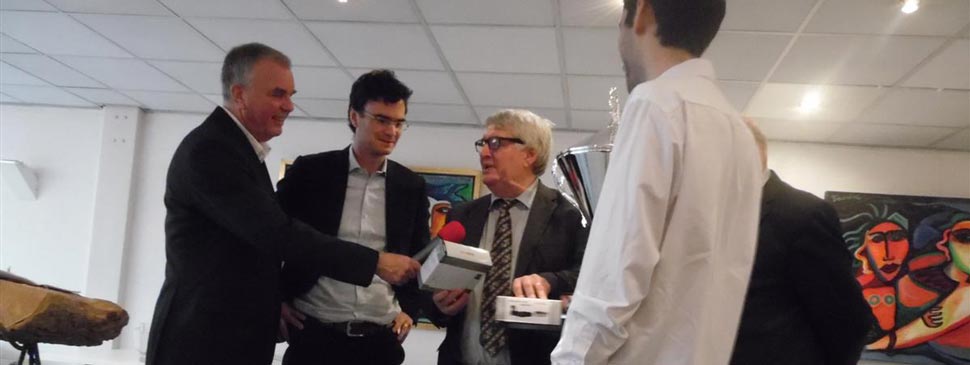
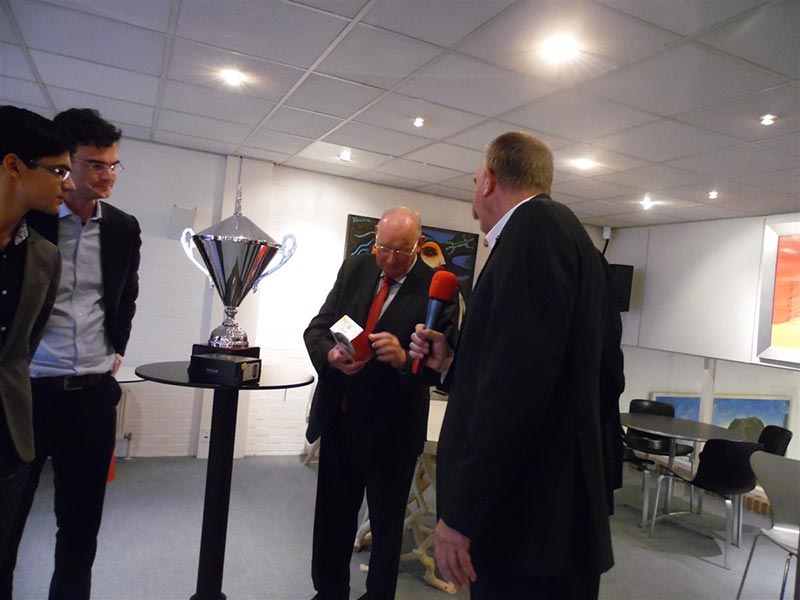
The mayor of Hoogeveen, Karel Loohuis, who had again opened his ‘own house’ to more than 220 chess players, held his speech in English before the prominent foreign invitees. He reported that Hans Böhm hadn’t lost a single game in his simultaneous display on the Kerkplein (Church Square) – and we may add that the Dutch Junior Champion, Nick Maatman, hadn’t even shed half a point during his morning simul at McDonald’s. With pride, the burgomaster then presented the Cup that had been won by the Hoogeveen team in 2012 during the World Championship for cities (team members: Anish Giri, Ivan Sokolov, Sergey Tiviakov, and Jan Smeets) and he announced that the city will send another team to the championship next year. Loohuis said he was curious to find out about the experiment of visualizing the heart rate of the participants in this tournament. To chess players who were afraid, he offered the following quote by an American writer: ‘You are not old until you get out of breath during a game of chess.’
State Secretary Jetta Klijnsma said it was ‘an enormous honour’ to open this chess tournament in her place of birth: ‘Univé is quite a phenomenon’, she said. ‘Every time there is something going on with sport, you hear that name. And they support not only physical sports, but also mind sports. This is a tournament that is strong in a broad sense, but also at the top. That is great.’ Klijnsma doesn’t play chess herself, but she was pondering that it would be good if people would learn to think more analytically, and would count to ten before acting: ‘Then the world would look a lot better.’ And Klijnsma said she trusted that at the end of this tournament ‘the horseman would be a good rider’. We have the same trust, as we know that Van Wely already possesses a horse since 2006. Then he won the first Remco Heite tournament, not far from here: in the town of Wolvega.
Bert van der Haar presented the State Secretary with a chessboard signed by the four match players and Hans Böhm. He also announced that the tournament organization will bring ten chessboards to the refugee centre that will be built in Hoogeveen in the near future. That was a present that Klijnsma thought was ‘maybe even nicer than my board.’
Loek van Wely with Hans Böhm. Photo: Jan van Os
Then Böhm asked Van Wely the cardinal question: why a tournament director? ‘Well, it was a surprise for me as well’, the latter said. ‘Last time I played here I came in last, so I thought, I won’t get invited any more. I didn’t know it would be that bad’, he joked. ‘But after this tournament I will tell you what is worse: coming last in a tournament, or leading one. In any case we do have a good team.’
After some more explanations of the heart rate experiment, the drawing of lots followed. This was done in the form of a quiz for the four participants. He who knew the most about his opponent got to draw the first number. Possibly, Baadur Jobava knew more about Jan Timman than he let on, and he just laughed at the first couple of questions. When asked if he knew any famous endgames by Timman he quickly and firmly replied: ‘No.’ A little later he turned out to know a thing or two, of course. Timman was able to mention some of Jobava’s favourite openings, and so the Dutchman got to draw the first lot. And he drew White.
Anish Giri did not know that in the year of his birth, 1994, Shirov had a rating of no less than 2740. ‘I thought the devaluation was worse’, the Dutchman said. Shirov added that he was third in the world rankings in those days. ‘Actually I was second, as Kasparov wasn’t on the list any more. But I won’t talk about politics here.’ When asked about Anish’s ‘middle name’, Shirov came up with the clever ‘Sanjayevich’, but at the Giri’s the patronym wasn’t used: Anish’s middle name is Kumar. Just thought you’d like to know. And although Shirov couldn’t guess that Giri is most feared for his draw offers (and here we were thinking it was his smileys:)), still he got the first choice.
‘I’m speechless’, the brilliant Latvian said. Tomorrow the white pieces will speak for him.
For the pairings for the first round are as follows:
Shirov-Giri
Timman-Jobava
*Note: As Hans Böhm wrote to us, there were not 19 but 20 Dutch Champions present at the opening ceremony. Gert Ligterink conquered the title in 1979.
The first round of the Univé Open was quite hectic. Overall the tournament is quite strong, and the grandmasters didn’t exactly have an easy time. Especially a couple of talented German youngsters made their life miserable. The Czech Jiri Stocek didn’t get more than a draw against the tenacious defence of Valentin Buckels, Daniel Hausrath’s pupil who we already saw in Dieren earlier this year. But also the experienced player Peter Mijnheer did an excellent job against Oleg Romanishin. The latter was hoping to make his Elo surplus tell in the remote endgame, but he just couldn’t get through.
Sipke Ernst is known for his troubles in first rounds. In 2011 he lost to Arlette van Weersel here. Today he went too far against Sebastian Mueer, a German player who is completely unknown in these parts.
‘If I win in the first round, something’s wrong’, the grandmaster sniggered. ‘So actually nothing strange has happened. I’m simply happy with the draw.’
6…Nc6
This pawn sacrifice has been en vogue in recent years. Black used to play 6…Qb6 or 6…Qc8 here – the latter move was once played by our tournament director. ‘I knew the pawn sac was good’, Ernst said. ‘But I hadn’t really prepared it, of course.’ 7.Qxb7 Bd7 8.Qb3 e5 9.d3 Rb8 10.Qd1
A sad retreat, also seen before. But White doesn’t have any weaknesses in his position. Black has to rely purely on his activity. 10…Bb4+ 11.Nfd2
After 11.Bd2, 11…e4 is already pretty annoying, followed by 12…e3. 11…h5 12.h3?!
12.Nc3 has been played. The text is a little slow, and the answer is a little fast! 12…e4!? 13.dxe4 dxe4 14.e3
Understandably, White wants to prevent …e4-e3, but now he gets a new hole on d3. 14…Ne5 15.0–0 Qc8
Black could grab an exchange with 15…Bb5 16.Nxe4 Bxf1 17.Qxf1 Nxe4 18.Bxe4 0–0, but probably Ernst didn’t give this a second look. 16.Nxe4 Nxe4 17.Qd4!
Stronger than it looks! 17…0–0 18.Qxe5 Re8!?
Again, 18…Bb5 was possible. ‘But I thought I could catch his queen,’ said Ernst. 19.Qxh5 g6 20.Qh4 Bf5 21.Rd1
21…Be7?
In his calculations, the Frisian had missed that the queen could still escape to f4. Had he looked a little further here, then he would surely have seen that 21…Nxf2! wins: 22.Rf1 (22.Kxf2 Qc2+ 23.Rd2 Qxc1) 22…Nxh3+, for example 23.Kh2 Nf2! etcetera. 22.Qf4 Qc2 23.Rf1 Rb4
Optically it looks beautiful for Black. Here Houdini suggest the crazy 24.g4 Nc3 25.Na3 Ne2+ 26.Kh1 (analysis diagram)
And now Black has to retreat: 26…Qc5 27.Qf3 Ld3 28.Td1 La6 29.Dc6 with advantage to White. Mueer’s solution is more human. 24.Qe5 Qc8 25.Nd2 Bc5 26.Qd5
26…Nxf2!?
Again Ernst plays adventurously. ‘I was panicking a little’, he admitted afterwards. Here with 26…Be6 27.Qd3 Rd8 28.Qxd8+ (28.Qe2 Nxd2 29.Bxd2?? Rxb2 30.Rfd1 Bb4) 28…Qxd8 29.Nxe4 Bxh3 30.Bxh3 Rxe4 Black could have obtained good chances. The computer gives 0.00, but there’s no doubt that the grandmaster would have won this. 27.Rxf2 Rxe3!? 28.Kh2 Qc7 29.Nf1 Re5
30.Qd2
‘I must have been losing somewhere’, Ernst said. And indeed, here 30.Bf4! would have won because 30…Rxf4 fails to the intermediate check 31.Qa8+. 30…Rd4 31.Qc3 Rd3 32.Qc4 Rd4 33.Qc3
Here White could make a last-ditch attempt with 33.Qb3!?. After 33…Rd3, the Rf2 now does hang because the bishop is no longer pinned, but 34.Rxf5! Rxb3 35.Rxe5 Qxe5 36.axb3 leads to an interesting endgame. Of course, Mueer was satisfied with the draw after… 33…Rd3 34.Qc4 Rd4 35.Qc3 Rd3 36.Qc4 ½–½
Only half a point lost. That’s more than we can say for Sergey Kasparov. His very young pupil Nazar Poznyak wasn’t so glad with his point by default, and Kasparov himself even went down against Alef Boer, who performed very well. ‘He plays like a machine’, said the grandmaster from Belarus. ‘Not a single mistake.’ Tomorrow Boer can try to repeat this against Anish Giri’s girlfriend, Sopiko Guramishvili, who with a 2381 Elo rating won’t be a walkover either.
Het Univé Open kende een bewogen eerste ronde. Het toernooi is in de breedte uiterst sterk bezet en de grootmeesters kregen het bepaald niet cadeau. Vooral een paar talentvolle jonge Duitsers maakten hen het leven zuur. Zo kwam de Tsjech Jiri Stocek niet verder dan remise tegen de taai verdedigende Valentin Buckels, de pupil van Daniel Hausrath die we eerder dit jaar al in Dieren bezig zagen. Maar ook de ervaren Peter Mijnheer deed het uitstekend tegen Oleg Romanishin, die hoopte in het verre eindspel zijn Elo-overwicht te doen gelden maar er simpelweg niet doorkwam.
Sipke Ernst heeft het in het begin van elk toernooi moeilijk. In 2011 verloor hij hier nog van Arlette van Weersel. Vandaag vergaloppeerde hij zich tegen een in deze contreien volslagen onbekende Duitse speler Sebastian Mueer.
“Als ik in de eerste ronde win, is er iets mis”, meesmuilde de grootmeester. “Dus er zijn eigenlijk geen gekke dingen gebeurd. Ik ben gewoon blij met deze remise.”
6…Pc6
Dit pionoffer is de laatste jaren in zwang. Vroeger deed zwart hier 6…Db6 of 6…Dc8 – de laatste zet is ooit nog door onze toernooidirecteur gespeeld. “Ik wist dat dit pionoffer goed was”, zei Ernst. “maar echt voorbereid had ik het natuurlijk niet.” 7.Dxb7 Ld7 8.Db3 e5 9.d3 Tb8 10.Dd1
Een trieste terugtocht, ook eerder gezien. Maar wit heeft geen zwakten in zijn stelling. Zwart moet het puur hebben van zijn activiteit. 10…Lb4+ 11.Pfd2
Na 11.Ld2 is 11…e4 al heel vervelend, met als vervolg 12…e3. 11…h5 12.h3?!
12.Pc3 is nog wel gespeeld. De tekstzet is wat aarzelend, het antwoord is nogal voortvarend! 12…e4!? 13.dxe4 dxe4 14.e3
Het is begrijpelijk dat wit …e4-e3 uit de stelling wil halen, maar nu ontstaat er een nieuw gat op d3. 14…Pe5 15.0–0 Dc8
Zwart kon een kwaliteit pakken met 15…Lb5 16.Pxe4 Lxf1 17.Dxf1 Pxe4 18.Lxe4 0–0, maar daar zal Ernst niet serieus naar hebben gekeken. 16.Pxe4 Pxe4 17.Dd4!
Sterker dan het lijkt! 17…0–0 18.Dxe5 Te8!?
Opnieuw was 18…Lb5 mogelijk. “Maar ik dacht dat ik zijn dame kon vangen”, aldus Ernst. 19.Dxh5 g6 20.Dh4 Lf5 21.Td1
21…Le7?
In de vooruitberekening had de Fries gemist dat de dame nog naar f4 kon uitwijken. Als hij op dit moment nog even had gekeken had hij vast wel gezien dat 21…Pxf2! wint: 22.Tf1 (22.Kxf2 Dc2+ 23.Td2 Dxc1) 22…Pxh3+, bijvoorbeeld 23.Kh2 Pf2! enzovoort. 22.Df4 Dc2 23.Tf1 Tb4
Optisch is het prachtig voor zwart. Houdini komt hier met het krankzinnige 24.g4 Pc3 25.Pa3 Pe2+ 26.Kh1 (analysediagram)
En nu moet zwart terug: 26…Dc5 27.Df3 Ld3 28.Td1 La6 29.Dc6 met voordeel voor wit. De oplossing van Mueer is humaner. 24.De5 Dc8 25.Pd2 Lc5 26.Dd5
26…Pxf2!?
Ernst kiest opnieuw voor het avontuur. “Een beetje paniek”, gaf hij naderhand toe. Hier kon zwart met 26…Le6 27.Dd3 Td8 28.Dxd8+ (28.De2 Pxd2 29.Lxd2?? Txb2 30.Tfd1 Lb4) 28…Dxd8 29.Pxe4 Lxh3 30.Lxh3 Txe4 goede kansen krijgen. De computer geeft 0.00, maar de grootmeester zou dit ongetwijfeld tot winst hebben gevoerd. 27.Txf2 Txe3!? 28.Kh2 Dc7 29.Pf1 Te5
30.Dd2
“Het zal ongetwijfeld ergens verloren zijn geweest”, zei Ernst. En inderdaad, hier won 30.Lf4! omdat 30…Txf4 faalt op het tussenschaakje 31.Da8+. 30…Td4 31.Dc3 Td3 32.Dc4 Td4 33.Dc3
Hier kon wit nog een laatste poging doen met 33.Db3!?. Na 33…Td3 hangt Tf2 nu echt omdat de loper niet meer gepend staat, maar 34.Txf5! Txb3 35.Txe5 Dxe5 36.axb3 levert nog een interessant eindspel op. Maar natuurlijk ging Mueer hier akkoord met remise na… 33…Td3 34.Dc4 Td4 35.Dc3 Td3 36.Dc4 ½–½
Slechts een halfje afgegeven. Dat kon Sergey Kasparov niet zeggen. Zijn piepjonge pupil Nazar Poznyak was vandaag al niet zo blij met zijn reglementaire punt, Kasparov zelf legde het zelfs af tegen de ijzersterk spelende Alef Boer. “He plays like a machine”, zei de grootmeester uit Wit-Rusland. “Not a single mistake.” Morgen mag Boer proberen dat te herhalen tegen de vriendin van Anish Giri, Sopiko Guramishvili, met haar Elo van 2381 ook niet een van de zwaksten.
Voorzitter Bert van der Haar van de Stichting Schaaktoernooi Noord-Oost Nederland was verguld. Jetta Klijnsma, staatssecretaris van Sociale Zaken en Werkgelegenheid, was teruggekeerd naar zijn stad om het trotse Univé-schaaktoernooi te openen. “En wij zijn nog wel bijna in dezelfde straat geboren”, zei Van der Haar. Even verguld was hij met het hoge bezoek van Dace Dobraia, plaatsvervangend hoofd van de Letse ambassade in Nederland, die hier het optreden van Alexey Shirov kracht bij kwam zetten. Van der Haar stelde het nieuwe toernooicomité voor aan de aanwezigen en kondigde spreekstalmeester Hans Böhm aan als “een man die nog tegen Spassky, Petrosian en Tal heeft gespeeld. En ik weet dat ik daar vele schakers jaloers mee maak.”
De vice-voorzitter van de stichting, die fungeert als bestuur van het Univé Schaaktoernooi, Sytze Faber, vertelde dat hij en zijn mede-bestuursleden na veertien jaar toernooi met een unieke formule, na afloop van de lustrumeditie van 2011 inzagen dat het tijd was voor vernieuwing. “De overheid trad terug, de sponsormarkt werd dunner, en we raakten ook door de oud-wereldkampioenen heen.” Het bestuur ging een grotere stempel drukken op het toernooibeleid en dat heeft vorig jaar tot een aantal veranderingen geleid. “Wij zijn allen die in het verleden hun beste beentje voor hebben gezet voor dit toernooi veel dank verschuldigd”, zei Faber.
In de tijd dat Faber bestuurslid was voor de KNSB, werd Loek van Wely zesmaal achter elkaar Nederlands kampioen. “Ik heb altijd gedacht dat er een causaal verband was”, zei de Friese bestuurder, “maar nu is Loek dit jaar weer kampioen geworden. In hetzelfde jaar wordt hij hier toernooidirecteur. Er zijn meer voorbeelden van topsporters die bestuurders werden, zoals Michel Platini in het voetbal en Richard Krajicek in het tennis. Maar dat een nog actieve topgrootmeester de verantwoordelijkheid neemt om een toernooi te leiden is uniek.”
Arbiter Geurt Gijssen verrichte te loting. Foto: Jan van Os
Met Jan Timman’s negen nationale titels en de drie van Anish Giri zaten er 19 Nederlands kampioenen in de zaal*, had Faber uitgerekend. Maar hij citeerde ook Co Adriaanse, die over het trainerschap van Marco van Basten bij Heerenveen had gezegd: “Een goed paard is nog geen goede ruiter.” Dat Van Wely de gelauwerde arbiter Geurt Gijssen had aangetrokken als raadgever vond Faber dan ook een sterke zet: “Een aansprekend deelnemersveld, een intrigerende formule en een topschaker die ruiter wil worden – dit wordt een wonderschoon toernooi.”
Burgemeester Karel Loohuis, die opnieuw zijn ‘eigen’ huis beschikbaar had gesteld aan meer dan 220 schakers, hield zijn toespraak in het Engels voor alle hoge genodigden uit het buitenland. Hij kon melden dat Hans Böhm geen enkele partij had verloren in zijn simultaanséance op het Kerkplein (en wij kunnen daaraan toevoegen dat Nederlands jeugdkampioen Nick Maatman zelfs geen halfje had afgegeven tijdens zijn ochtendsimultaan bij McDonald’s). Met trots toonde de burgervader vervolgens de Cup die het team van Hoogeveen in 2012 won tijdens het wereldkampioenschap voor steden (teamleden: Anish Giri, Ivan Sokolov, Sergey Tiviakov en Jan Smeets) en hij kondigde aan dat de stad volgend jaar bij het volgende kampioenschap opnieuw een team zal afvaardigen. Loohuis zei nieuwsgierig te zijn naar het experiment met de hartslagmeters dat in dit toernooi wordt geïntroduceerd. Voor de schakers die daarvoor terugschrokken had hij een citaat van een Amerikaanse schrijver: “You are not old until you get out of breath during a game of chess.”
Staatssecretaris Jetta Klijnsma noemde het ‘een enorme eer’ om in haar geboorteplaats dit schaaktoernooi te mogen openen: “Univé is wel een fenomeen. Elke keer als er iets met sport aan de hand is hoor je die naam. En ze steunen dus niet alleen fysieke sporten, maar ook de denksport. Een toernooi dat zowel in de breedte als in de top sterk is. Heel mooi.” Zelf schaakt Klijnsma niet, maar ze mijmerde wel dat het goed zou zijn als meer mensen analytisch leerden denken en eerst tot tien, of verder, zouden tellen: “Dan zou de wereld er mooier uitzien.” Verder sprak Klijnsma het vertrouwen uit dat aan het eind van dit toernooi “de ruiter stevig op zijn paard zal zitten”. Daar hebben wij ook alle vertrouwen in, want zoals bekend is Van Wely al sinds 2006 in het bezit van een paard. Toen won hij namelijk het eerste Remco Heite-toernooi, niet ver hier vandaan in Wolvega.
Bert van der Haar gaf de staatssecretaris een schaakbord met de handtekeningen van de vier matchspelers en Hans Böhm. Hij kondigde ook aan dat de toernooiorganisatie tien schaakborden zal brengen aan het asielzoekerscentrum dat in de nabije toekomst in Hoogeveen verrijst. Dat cadeau noemde Klijnsma “misschien nog wel mooier dan mijn bord.”
Loek van Wely met Hans Böhm. Foto: Jan van Os
Böhm stelde Van Wely vervolgens de hamvraag: waarom toernooidirecteur? “Het was voor mij ook een verrassing”, zei deze. “De laatste keer dat ik hier speelde werd ik laatste en ik dacht, ik word niet meer uitgenodigd hier. Ik wist niet dat het zo erg zou worden…”, grapte hij. “Maar na dit toernooi zal ik je vertellen wat erger is: laatste worden in een toernooi, of een toernooi leiden. In ieder geval hebben we een goed team.”
Na wat nadere uitleg over het hartslagexperiment volgde de loting, in de vorm van een kwis voor de vier deelnemers. Wie het meeste wist over zijn tegenstander, mocht als eerste een nummer trekken dat in een doos met een heuse hartslagmeter was gestopt. Baadur Jobava wist mogelijk veel meer over Jan Timman dan hij kwijt wilde en lachte een paar vragen weg. Op de vraag of hij beroemde eindspelen van hem kende antwoordde hij snel met: “No.” Even later kwam er toch wel een en ander naar boven, natuurlijk. Timman wist wel Jobava’s favoriete openingen te noemen, en mede daardoor mocht de Nederlander als eerste een nummer trekken. Hij trok wit.
Anish Giri wist niet dat in zijn geboortejaar, 1994, Shirov een rating had van liefst 2740. “Ik dacht echt dat de devaluatie erger was”, zei de Nederlander. Shirov voegde toe dat hij in dat jaar derde stond op de wereldranglijst: “Eigenlijk tweede, omdat Kasparov er niet meer op stond. Maar ik ga het hier niet over politiek hebben.” Gevraagd naar de ‘middle name’ van Anish kwam Shirov met het slimme ‘Sanjayevich’, maar in huize Giri is het patroniem niet doorgevoerd: Anish’ middelnaam is Kumar. Zo, dat weet u ook weer. En hoewel Shirov niet wist te raden dat Giri het meest berucht is om zijn remiseaanbiedingen (wij dachten nog wel dat het zijn smileys waren :)) mocht hij toch als eerste kiezen.
“I’m speechless”, zei de briljante Let. Morgen zal hij de witte stukken laten spreken.
Want de indeling voor de eerste ronde is als volgt:
Shirov-Giri
Timman-Jobava
*Noot: Zoals Hans Böhm ons berichtte, waren er bij de opening niet 19 maar 20 Nederlands kampioenen. De eveneens aanwezige Gert Ligterink veroverde de titel in 1979.