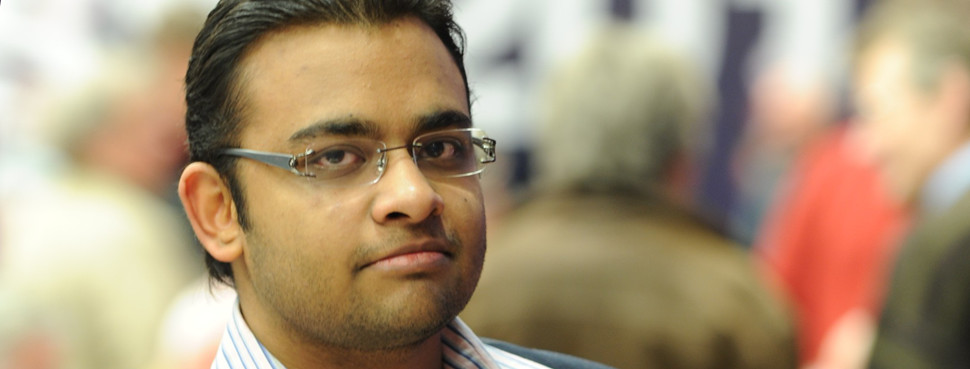
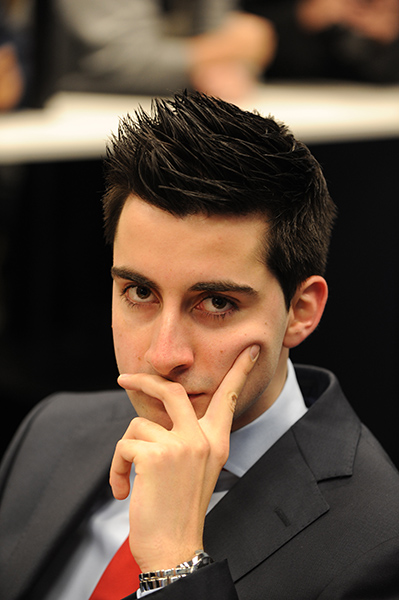
Auteur: Peter Boel

  • Mikhalevski wins Open

    Mikhalevski wins Open

    After beating Beliavsky, Victor Mikhalevski was always high up in the ranks of the Open. But before the last round he was only one of three leaders. When his friend Michael Roiz quickly drew with Beliavsky, Mikhalevski was almost there, since he himself won quickly against Sopiko Guramishvili. It just wasn’t her day today.
     
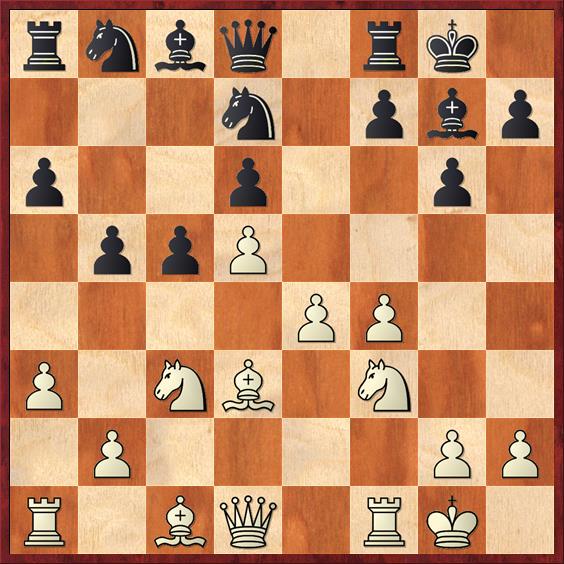
    Guramishvili – Mikhalevski

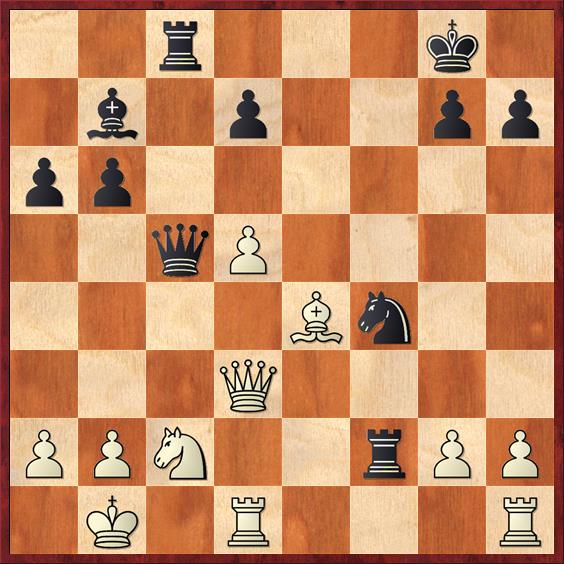
    12.Qc2
    With this move White has a bad score. 12.f4 is more often played.
    12…Be7 13.Rfd1 0–0 14.b3? 
     

    14…b4!
    This more or less forces the coming piece sacrifice, as 15.Bxf6 Nxf6 16.Na2 c3 is a sorry sight.
    15.bxc4 bxc3 16.Bf3 Nxe5 17.dxe5 Nd7
    White didn’t get her piece back, and three moves later she resigned.
     
    After this Mikhalevski had to wait long for events to unfold on board 3. Andrey Vovk had a small plus all the time, and right before the planned time of the prize giving the tension ran high.
     
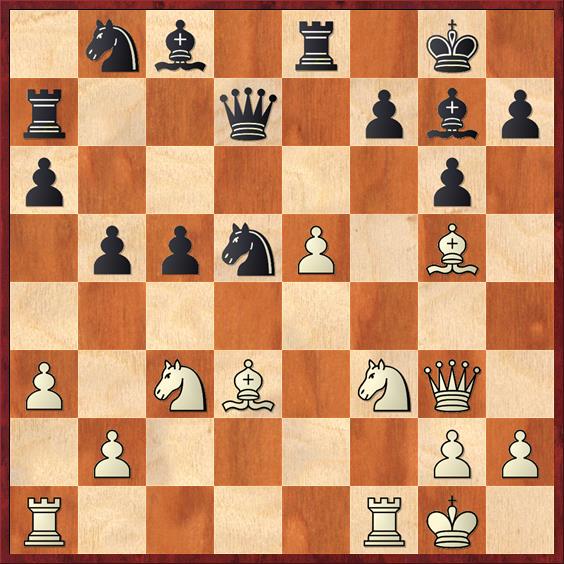
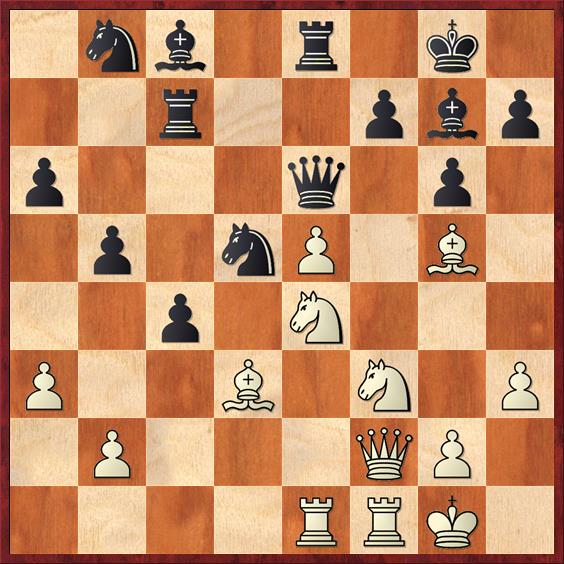
    Vovk – Romanishin
     

    31.b3 Bxf6 32.Nxf6 Nxa3!?
    Allows the knight to be trapped, but of course it isn’t that simple!
    33.Rc3+ Kb7 34.Nd5 Rc8!? 35.Rxc8 Kxc8 36.Kb2 
     

    36…Rxc2+?! 37.Kxa3 Rxf2 38.Kb4 Rxh2 39.Rf1 Rd2 40.Nc3 Rd4+ 41.Ka5 Rd3!
    41…Rxg4 42.Rxf7 gives White better winning chances.
    42.Rc1 Kb7 43.g5 d5 44.Rc2 Ka7 45.Ne2 Kb7
    It’s still quite dangerous for Black, for example: 45…Rxb3 46.Rc7+ Kb8 47.Kb6 Rb4 48.Rxf7 Kc8 49.Rf4.
    46.Rc3 Rd2 47.Nf4 d4 48.Rc5 d3 49.Kb4 Rd1 50.Rd5 d2 51.Ne2 Kc6 
     

    52.Rd8
    Good winning chances were offered by the following subtle find of Houdini: 52.Rd3!! a5+ 53.Kc3 a4 54.b4 and now on the game move 54…Rb1 White suddenly has 55.Nd4+ (55.Rxd2 Rb3+ 56.Kc2 Rxb4) 55…Kb6 56.Rxd2, saving the pawn on b4.
    52…a5+ 53.Kc3 a4 54.b4 Rb1 55.Kxd2
    Now White even loses after 55.Nd4+?? Kc7.
    55…Rxb4
    And Vovk didn’t manage to win this anymore.
     
    That made Mikhalevski the sole winner of the Open tournament. Our congratulations to this sympathetic grandmaster!

  • The Dilemma

    The Dilemma

    The match is approaching the end and you are trailing. What do you do? Play carefully and try to limit the damage, or bang your head against the wall one more time? That was the dilemma both Alexey Shirov and Jan Timman were facing today. Their solutions differed.
     
    After an opening variation in which he hadn’t achieved much, Shirov took what was probably the wisest decision: he went for a forced draw. But this was highly uncharacteristic of the great fighter from Riga, and Shirov himself was visibly unhappy with his decision.
     
    Shirov – Giri
     
    1.d4 Nf6 2.c4 e6 3.Nf3 d5 4.Nc3 Bb4 5.e3
    Deviating from 5.Bg5 in Game 3.
    5…0–0 6.Bd3 c5 7.0–0 dxc4 8.Bxc4 cxd4 9.exd4 b6 10.Bg5 Bb7 11.Ne5
    A pretty straightforward approach. Other plans are 11.Rc1, 11.Qe2 or 11.Re1.
    11…Bxc3 12.bxc3 Nbd7 

    Here Shirov took a long think: should he enter the well-known liquidation to a draw that follows?
    13.Nxd7
    The alternative is 13.Qe2, which of course has been played quite often. But Shirov didn’t expect anything good to come from this. ‘It makes no sense to try this against such a well-prepared opponent. I saw not a single way to set him any traps. It’s been a preparation problem, this whole match. At crucial moments I always had the feeling that I would only take a risk against him if I deviated. It’s a very embarrassing situation. I hope that tomorrow with white he will fight and we will have a good game.’
    The remaining moves were:
    13…Qxd7 14.Bxf6 gxf6 15.d5 Bxd5
    15…exd5? 16.Bd3 is very dangerous, as is well-known.
    16.Qg4+ Kh8 17.Qh4 Bxc4
    For a moment Shirov hoped for 17…Qd8 18.Rfd1 Rc8 19.Ba6 Rxc3 (19…Rg8 20.Bxc8! Rxg2+ 21.Kf1 – this is why White played the f-rook to d1 on move 18) 20.Bd3 and now White wins the exchange because 20…f5 is not possible due to 21.Qd4+. But of course Giri had no reason whatsoever to go for this kind of scenario.
    18.Qxf6+ Kg8 19.Qg5+ Kh8 ½–½
    Match winner Anish Giri had the following explanation: ‘We were both bluffing. He hoped I would not go for this line. I didn’t remember it exactly, but saw it during the game. He seems to be not so well prepared. In his best days he could compensate this with his ideas behind the board, now this has become much more difficult, against players who use a strong computer.”


    Foto: Peter Doggers
     
    Jan Timman went for the other option: head against the wall.
     
    Timman – Jobava
     
    1.d4 e6 2.Nf3 c5 3.e4   

    Perhaps both players were surprised to find themselves in a Sicilian. In any case Jobava thought for a long time here.
    3…cxd4 4.Nxd4 a6 5.Nc3 b5 6.Bd3 Bb7 7.0–0 Nc6 8.Nxc6 Bxc6 9.Qe2 Ne7
    Shirov said he didn’t entirely trust the knight manoeuvre to g6.
    10.Be3 Qc8!?
    And this made Anish Giri frown. What is Black’s plan? Jobava wanted to carry through 11…d5 and for this purpose he moved his queen from the d-file.
    An alternative was 10…b4 11.Nb1. Now Timman prevents this.
    11.a3 d5!?

    If White exchanges on d5 now, the queen is well-placed on c8. But now Timman comes up with a no less remarkable idea:
    12.f3?!
    Creative, but it couldn’t be right in Giri’s opinion: ‘After 12.Bd4 or also 12.Bc5 or one of the rooks to d1 White is fine.’
    12…dxe4 13.fxe4 Ng6 14.Rad1
    14.Bd4!? looks interesting. Possibly Timman didn’t trust 14…e5.
    14.a4 b4 15.Nd5 doesn’t work either: Black can just play 15…exd5 16.exd5 Bxd5 and then he can interpose the bishop on e6 if necessary.
    14…Be7 15.Qh5 Qc7 16.Bd4 0–0 17.Rf3 h6 

    18.Rxf7!?
    Possibly Timman thought that 18.Rdf1 Rad8 19.Be3 Qe5 was too slow. In any case the audience had something to enjoy again. But soon the consensus was that Timman had gone too far.
    18…Rxf7 19.Qxg6 Rd8
    19…Qd6 20.Be2 Be8 was also possible, but it doesn’t really look comfortable. Shirov suggested 19…Bf6. Jobava was afraid of 20.e5, but after 20…Bxe5 21.Ne2 Rf6 22.Qh7+ Kf7 White has no way of continuing the attack.

    20.Nd5!
    The only way to make something out of this – and, of course, spectacular.
    20…Bxd5
    Not 20…exd5? 21.e5! and now White has a winning attack after 21…Kf8 22.Qh7 Bxa3 23.e6 Qf4 24.Bb6.
    21.exd5 Bc5 22.c3
    22.dxe6 Bxd4+ 23.Kh1 Rf4 is winning for Black.
    22…Rxd5 23.Qxe6 Bxd4+ 24.cxd4 Qd6 25.Bf5!?  

    Artistry in chess, Timman knows all about it. The attempts 25.Bh7+ Kf8 26.Qc8+ Qd8 and 25.Qe3 do not offer much.
    25…g6!
    But this way Black remains an exchange up. White had to exchange queens and didn’t get a chance in the endgame.
     
    A quite abrupt end to both matches. In any case the players can go all out tomorrow, and let’s hope, as Alexey Shirov hoped, that this will produce an attractive final round.

  • ​Het Dilemma

    ​Het Dilemma

    De match loopt naar het einde en je staat achter. Wat doe je? Probeer je het voorzichtig en hou je de schade beperkt, of ga je nog een keer met de kop door de muur? Dat is het dilemma waar zowel Alexey Shirov als Jan Timman vandaag voor stond. Hun oplossingen waren verschillend.
     
    Shirov nam, na een openingsvariant waarin hij niet veel bereikte, waarschijnlijk het wijste besluit: hij ging in op een geforceerde remise. Maar dit was heel onkarakteristiek voor de grote vechtjas uit Riga, en hij was er zelf ook zichtbaar ongelukkig mee.
     
    Shirov – Giri
     
    1.d4 Pf6 2.c4 e6 3.Pf3 d5 4.Pc3 Lb4 5.e3
    Wijkt af van 5.Lg5 uit de derde partij.
    5…0–0 6.Ld3 c5 7.0–0 dxc4 8.Lxc4 cxd4 9.exd4 b6 10.Lg5 Lb7 11.Pe5
    Een vrij directe aanpak. Andere plannen zijn 11.Tc1, 11.De2 of 11.Te1.
    11…Lxc3 12.bxc3 Pbd7

    Hier dacht Shirov lang na of hij in zou gaan op de bekende remise-afwikkeling die volgt.
    13.Pxd7
    Het alternatief is 13.De2, wat natuurlijk vaak gespeeld is. Maar Shirov zag er geen heil in. “Het heeft geen zin dit te proberen tegen een tegenstander die zo goed voorbereid is. Ik zag geen enkele manier om hem voor problemen te stellen. Het is een probleem van voorbereiding geweest, deze hele match. Op cruciale momenten had ik steeds het gevoel dat ik tegen hem alleen maar risico loop als ik afwijk. Ik schaam me hier behoorlijk voor. Ik hoop dat we er in de laatste ronde nog een leuke partij van kunnen maken.”
    De resterende zetten waren:
    13…Dxd7 14.Lxf6 gxf6 15.d5 Lxd5
    15…exd5? 16.Ld3 is erg gevaarlijk, zoals bekend.
    16.Dg4+ Kh8 17.Dh4 Lxc4
    Shirov hoopte nog even op 17…Dd8 18.Tfd1 Tc8 19.La6 Txc3 (19…Tg8 20.Lxc8! Txg2+ 21.Kf1 – dit is waarom wit de f-toren naar d1 speelde op zet 18) 20.Ld3 en nu wint wit de kwaliteit omdat 20…f5 niet gaat vanwege 21.Dd4+. Maar er was natuurlijk geen enkele reden voor Giri om op dit soort scenario’s in te gaan.
    18.Dxf6+ Kg8 19.Dg5+ Kh8 ½–½
    Matchwinner Anish Giri legde het als volgt uit: “We bluften allebei. Hij hoopte dat ik niet op deze variant in zou gaan. Ik kon me de variant niet precies herinneren, maar zag het wel tijdens de partij. In het algemeen lijkt Alexey niet zo goed voorbereid te zijn. In zijn toptijd kon hij dat compenseren met zijn ideeën achter het bord, nu is dat veel moeilijker geworden tegen spelers die gebruik maken van een sterke computer.”


    Foto: Peter Doggers
     
    Jan Timman koos dus voor de andere optie: met de kop door de muur.
     
    Timman – Jobava
     
    1.d4 e6 2.Pf3 c5 3.e4   

    Misschien waren beide spelers verrast zich nu in het Siciliaans te bevinden. In ieder geval dacht Jobava hier lang na.
    3…cxd4 4.Pxd4 a6 5.Pc3 b5 6.Ld3 Lb7 7.0–0 Pc6 8.Pxc6 Lxc6 9.De2 Pe7
    De meekijkende Shirov vertrouwde de paardmanoeuvre naar g6 niet helemaal.
    10.Le3 Dc8!?
    En dit veroorzaakte gefronste wenkbrauwen bij Anish Giri. Wat is het zwarte plan? Jobava wilde 11…d5 doorzetten en daartoe zijn dame van de d-lijn afhalen.
    Een alternatief was 10…b4 11.Pb1. Timman verhindert dit nu.
    11.a3 d5!? 

    Als wit nu twee keer ruilt op d5 staat de dame weer goed op c8. Maar Timman komt nu met een minstens zo opmerkelijk idee:
    12.f3?!
    Creatief, maar volgens Giri kon dit niet goed zijn: “Na 12.Ld4 of ook 12.Lc5 of een toren naar d1 staat wit prima.”
    12…dxe4 13.fxe4 Pg6 14.Tad1
    14.Ld4!? ziet er interessant uit. Mogelijk vertrouwde Timman 14…e5 niet.
    14.a4 b4 15.Pd5 werkt ook niet: zwart speelt gewoon 15…exd5 16.exd5 Lxd5 en kan de loper er op e6 tussen zetten indien nodig.
    14…Le7 15.Dh5 Dc7 16.Ld4 0–0 17.Tf3 h6  

    18.Txf7!?
    Mogelijk vond Timman 18.Tdf1 Tad8 19.Le3 De5 te langzaam. In ieder geval was er weer iets te genieten voor het publiek. Maar de consensus was al snel dat Timman te ver was gegaan.
    18…Txf7 19.Dxg6 Td8
    19…Dd6 20.Le2 Le8 was ook mogelijk, maar dat ziet er niet helemaal lekker uit. Shirov stelde 19…Lf6 voor. Jobava was bang voor 20.e5, maar na 20…Lxe5 21.Pe2 Tf6 22.Dh7+ Kf7 heeft wit geen voortzetting van de aanval. 

    20.Pd5!
    De enige manier om er nog iets van te maken – en spectaculair natuurlijk.
    20…Lxd5
    Niet 20…exd5? 21.e5! en nu heeft wit een winnende aanval na 21…Kf8 22.Dh7 Lxa3 23.e6 Df4 24.Lb6.
    21.exd5 Lc5 22.c3
    22.dxe6 Lxd4+ 23.Kh1 Tf4 is winnend voor zwart.
    22…Txd5 23.Dxe6 Lxd4+ 24.cxd4 Dd6 25.Lf5!? 

    Artisticiteit in het schaakspel, dat is Timman wel toevertrouwd. De pogingen 25.Lh7+ Kf8 26.Dc8+ Dd8 en 25.De3 leiden tot weinig.
    25…g6!
    Maar op deze manier blijft zwart toch een kwaliteit voor. Wit moest de dames ruilen en kreeg in het eindspel geen kans meer.
     
    Een tamelijk abrupt einde van beide matches. In ieder geval kunnen de spelers er morgen vol tegenaan, en laten we met Alexey Shirov hopen dat dat nog een aantrekkelijke laatste ronde oplevert.

  • Imperturbable

    Imperturbable

    While around him everything is being drawn, he remains imperturbable, in total concentration, behind the board. The Netherlands is perhaps Alexander Beliavsky’s favourite chess country, because here he has had some of his greatest successes: Tilburg 1986 and 1991, OHRA, Hoogovens. We don’t know if this is the reason, but in any case he is going all the way here, every day. He had prepared well against the namesake of an old rival who eliminated him from the Candidates’ Matches in the crucial year 1983. Today things were quite different: Beliavsky played in superior style and won easily, ranging himself with the three leaders Mikhalevski, Roiz and Vovk.
     
    Beliavsky – Kasparov
     
    1.d4 Nf6 2.c4 c6 3.Bf4!?
    A prepared surprise: ‘I know that Kasparov plays either of two lines: the Volga or the Slav. So I opted for this rare move’, said Beliavsky.
    3…d5 4.e3 a6 5.Nc3 b5
    The Ukrainian chess legend doubted if this was the best move.
    6.cxd5 cxd5 7.Rc1
    Simple play; Black will be having trouble along the open c-file for the rest of the game.
    7…e6 8.Nf3 Bb7 9.Ne5 Be7
    Beliavsky thought the bishop would have been better on d6 or b4.
    10.Bd3 Nbd7 11.Nxd7 Nxd7 12.0–0 0–0 13.a4 b4 14.Na2 Rc8 15.Rxc8 Qxc8 16.Qd2
     

    Crystal-clear play. Another rook will appear on c1.
    16…b3 17.Nc1 Nb6 18.Nxb3 Nxa4 19.Na5 g6
    This loses a piece, but also after 19…Ba8 or 19…Nb6 the black position is depressing.
    20.Rc1 Qa8 
     

    Now on 21.Rc7 Black still has the temporary save 21…Bd8, but:
    21.b3
    Now on 21…Nb6, both 22.Rc7 and first 22.Nxb7 win, so Black resigned.


    Photo: Peter Doggers
     
    The player from Arnhem, Mees van Osch, already had a good tournament, and today he also beat Sipke Ernst with black. Tomorrow, with the white pieces against Jiri Stocek, even if he loses he will have scored an IM-norm.
     
    On a lower board we saw a familiar theme.
     
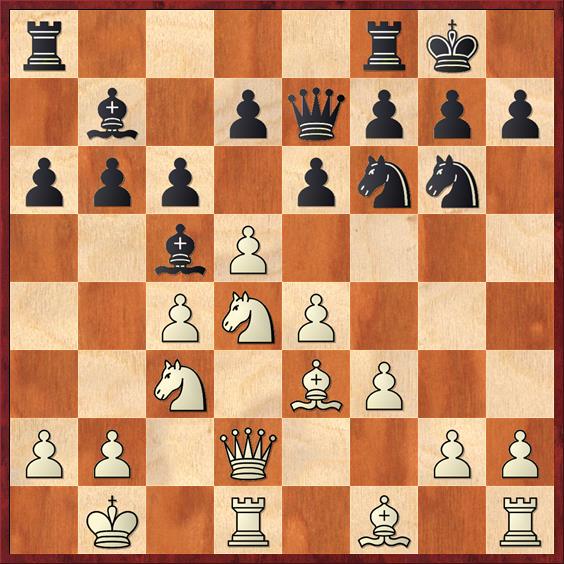
    Henseler – Goossens
     

    17.Nd4!
    A type of positional knight sacrifice that became well-known after the game Anand-Wang Hao, Wijk aan Zee 2011 (there the white queen was on a4 and the b-rook on a1, and Black’s d8-rook on f8), and which was described earlier as ‘The Trojan Horse’ by Viktor Moskalenko in one of his books. This theme also features in Arthur van de Oudeweetering’s new book Improve Your Chess Pattern Recognition. For the piece White gets an enormous pawn roller in the centre.
    17…exd4 18.cxd4 Nbc6 19.Rfd1 Ne7 20.Bf2 Nac6
    Black would be glad to return the piece after d4-d5, but White has all the time to choose a more favourable moment.
    21.Bg3 Qd7 22.Bd6!?
    White tries to achieve complete control, but after Black’s reply this doesn’t entirely work out.
    22…a6 23.Be2 b5 24.Qc2 Nc8 25.d5 
     

    But this is the right moment.
    25…Nxd6 26.cxd6 Qa7+ 27.Kh1 Rxd6 28.dxc6 Rxd1+ 29.Rxd1
    This was a technical win, which didn’t cause White too much trouble.

  • Onverstoorbaar

    Onverstoorbaar

    Terwijl om hem heen alles in remise eindigt, blijft hij onverstoorbaar, in totale concentratie achter zijn bord zitten. Nederland is misschien wel Alexander Beliavsky’s favoriete schaakland omdat hij hier sommige van zijn mooiste successen heeft behaald: Tilburg 1986 en 1991, OHRA, Hoogovens. Of het daaraan ligt weten we niet, maar in ieder geval zet hij hier zijn beste beentje voor. Hij had zich goed voorbereid tegen de naamgenoot van een oude rivaal, die hem in het cruciale jaar 1983 uit de Kandidatenmatches werkte. Vandaag was het andere koek: Beliavsky speelde superieur en won eenvoudig. Daarmee schaarde hij zich bij de drie koplopers Mikhalevsky, Roiz en Vovk.
     
    Beliavsky – Kasparov
     
    1.d4 Pf6 2.c4 c6 3.Lf4!?
    Een voorgebakken surprise: “Ik weet dat Kasparov het Wolga-gambiet of het Slavisch speelt, dus speelde ik deze zeldzame zet”, zei Beliavsky.
    3…d5 4.e3 a6 5.Pc3 b5
    De OekraĂŻense schaaklegende betwijfelde of dit de beste zet was.
    6.cxd5 cxd5 7.Tc1
    Simpel spel; zwart zal de hele partij last hebben van de open c-lijn.
    7…e6 8.Pf3 Lb7 9.Pe5 Le7
    Volgens Beliavsky kon de loper beter naar d6 of b4.
    10.Ld3 Pbd7 11.Pxd7 Pxd7 12.0–0 0–0 13.a4 b4 14.Pa2 Tc8 15.Txc8 Dxc8 16.Dd2
     

    Kristalhelder spel. Er zal weer een toren op c1 komen.
    16…b3 17.Pc1 Pb6 18.Pxb3 Pxa4 19.Pa5 g6
    Dit verliest een stuk, maar ook na 19…La8 of 19…Pb6 is de zwarte stelling deprimerend.
    20.Tc1 Da8
     

    Nu heeft zwart op 21.Tc7 nog de tijdelijke redding 21…Ld8, maar:
    21.b3
    En op 21…Pb6 wint nu zowel 22.Tc7 als eerst 22.Pxb7. Opgegeven dus.


    Photo: Peter Doggers
     
    De Arnhemmer Mees van Osch draaide al een goed toernooi, en versloeg nu ook nog eens Sipke Ernst met zwart. Morgen mag hij met wit tegen Jiri Stocek zelfs verliezen voor een IM-norm.
     
    Op een lager bord zagen we een bekend thema verschijnen.
     
    Henseler – Goossens
     

    17.Pd4!
    Een type positioneel paardoffer dat bekend werd na de partij Anand-Wang Hao, Wijk aan Zee 2011 (daar stond de witte dame op a4 en de b-toren op a1, en de zwarte d8-toren op f8) en dat eerder is beschreven als ‘The Trojan Horse’ door Viktor Moskalenko in zijn boeken. Dit thema wordt ook behandeld in Arthur van de Oudeweetering’s nieuwe boek Improve Your Chess Pattern Recognition. Voor het stuk krijgt wit een enorme pionnenmacht in het centrum.
    17…exd4 18.cxd4 Pbc6 19.Tfd1 Pe7 20.Lf2 Pac6
    Zwart geeft maar al te graag het stuk terug na d4-d5, maar wit kan rustig een gunstiger moment uitkiezen.
    21.Lg3 Dd7 22.Ld6!?
    Wit gaat voor de volledige controle, maar na het zwarte antwoord lukt dat niet helemaal.
    22…a6 23.Le2 b5 24.Dc2 Pc8 25.d5
     

    Dit is wel het juiste moment.
    25…Pxd6 26.cxd6 Da7+ 27.Kh1 Txd6 28.dxc6 Txd1+ 29.Txd1
    En dit was een technische winst, die wit verder weinig moeite kostte.

  • ​Winners daily prizes Open group

    ​Winners daily prizes Open group

    Winners daily prizes Open group
     
    (bold = winner)
     
    1.         Lucas van Foreest    –          Francis Lesmann
    2.         Michael Wunnink      –          Andrey Vovk
                Danny de Ruiter      –          Vladimir Malaniuk (aanmoedigingsprijs)
    3.         Bartlomiej Heberla –          Danny de Ruiter
    4.         Anna Rudolf             –          Ron Hoffman
    5.         Sopiko Guramishvili  –          Sipke Ernst
    6.         Eric Hansen              –          Joaquin Miguel Antoli Royo
    7.         Andries Mellema       –          Anton Bakels (consolation prize)


  • ​Winnaars dagprijzen Open groep

    ​Winnaars dagprijzen Open groep

    Winnaars dagprijzen Open groep
     
    (vetgedrukt = de winnaar)
     
    1.         Lucas van Foreest    –          Francis Lesmann
    2.         Michael Wunnink      –          Andrey Vovk
                Danny de Ruiter      –          Vladimir Malaniuk (aanmoedigingsprijs)
    3.         Bartlomiej Heberla –          Danny de Ruiter
    4.         Anna Rudolf             –          Ron Hoffman
    5.         Sopiko Guramishvili  –          Sipke Ernst
    6.         Eric Hansen              –          Joaquin Miguel Antoli Royo
    7.         Andries Mellema       –          Anton Bakels (troostprijs)


  • Square h3

    Square h3

    Again two draws, and again they were certainly not boring. This time the ‘runners-up’ Jan Timman and Alexey Shirov were in a considerably better mood when they left the playing hall than two days ago. Timman had quickly obtained an advantage with black and forced Jobava to defend himself with subtle manoeuvres – which he did. The elegant defence in the other game came from Shirov, who averted a new drama with a sensational saving combination against Anish Giri.
     
    Timman spoke of ‘a hard and interesting fight’. He’s still trailing by one point, but he was encouraged in a chat with Jan Gustafsson and Paco Vallejo from Chess24: ‘Except for that one loss you’ve been dictating all the games.’ Timman has been trailing before in matches. ‘Against Portisch I won the last two games. That would be a little too much to ask now, but if I can draw even I will be satisfied.’
    Today, in any case, Timman showed again that he had prepared well for his unpredictable opponent.
     
    Jobava – Timman
     
    1.e4 e5 2.Pf3 Pc6 3.Lc4 Lc5 4.c3 Pf6 5.d4 exd4 6.e5 d5 7.Le2

    One of Jobava’s specialties; he played this against Karjakin, amongst others. Timman got the position earlier this year against Naiditsch. Instead of the common 7…Pe4 Timman now came up with an interesting novelty:
    7…d3!?
    If White takes everything is fine for Black: 8.Bxd3 Ng4! 9.0–0 0–0 (9…Ncxe5!?) 10.Bf4 Re8! 11.Qe2?! (11.Bb5) 11…f6 and White is in trouble.
    8.exf6 dxe2 9.Qxe2+ Kf8
    9…Be6 10.fxg7 Rg8 11.Bg5 was played in two rather obscure games in 2013, but Timman called the text move ‘forced’. By the way, Black lost in those two games.
    10.b4 
     

    A do-or-die move Timman hadn’t looked at. Commentator Cor van Wijgerden thought it was ‘a very crazy move’: ‘Activity is good, but you also have to consider vulnerability. Jobava said after the game: ‘I was playing “over-the-board”. Maybe this was wrong, and I should have played 10.Bg5.’
    10…Bd6
    10…Bb6? 11.b5 Na5 12.Ba3+ Kg8 (12…c5 13.bxc6+ Kg8 14.Be7 Qc7 is necessary, but also good for White) 13.Be7 Qd7 14.fxg7 Kxg7 15.Qe5+ and Black gets mated.
    11.b5 Na5 12.Bg5 
     

    12…Qe8
    Van Wijgerden thought there was nothing wrong with 12…gxf6 13.Bh6+ Kg8 followed by …Bf8, but Timman called this line ‘very unpleasant. White has very good compensation for the pawn.’ After the queen exchange, on the other hand, Black has a pleasant endgame.
    13.Qxe8+ Kxe8 14.fxg7 Rg8 15.Bf6 Be7 16.Bxe7
    On 16.Be5, 16…a6! is even stronger than 16…c6 followed by …f7–f6, as after 17.Bxc7 axb5 something may happen on b3, so the g7-pawn is lost.
    16…Kxe7 17.Nbd2 a6 18.a4 Rxg7 19.0–0 Bh3
    Well, well. Did Shirov perhaps see this move?
    20.Rfe1+ Kd6 21.g3 f6 22.Nd4 Re7 
     

    23.Red1
    It’s understandable that with the black king in the centre, Jobava wants to keep all the rooks on the board, but now Black gets the initiative. 23.Rxe7 Kxe7 24.Ne2 was about equal.
    23…c5!
    Improves his own structure and worsens his opponent’s.
    24.bxc6 bxc6 25.Rab1 Kc7 26.Nc2 Bf5 27.Rb2 Bd3
    With hindsight, Timman thought that 27…Bxc2 28.Rxc2 Rb8 might have been better. ‘But I wanted to keep it complicated.’
    28.Nb4 Be2 29.Re1 Rae8 30.Kg2 Kd6?!
    Not the best, Timman said. ‘I had various alternatives here, such as 30…f5 or first 30…Nb7.’
    31.Nc2 Bd3 32.Ne3 Nb7 
     

    33.Rb4!
    A very strong manoeuvre, Timman thought, with which White keeps things under control.
    33…Nc5 34.Rf4 Kc7 35.Rxf6 Nxa4 36.Nb3 Be4+
    The immediate 36…Nxc3? 37.Rc1 loses material.
    37.Kg1
    Timman called this a critical moment. White could also play 37.Kh3, but then what’s his reply to 37…Re6 ?
    37…Nxc3 38.Nd4 Nb5 39.Nxc6 Re6 40.Rxe6 Rxe6 41.Nb4
     

    41…d4
    After the game it was found that 41…Kb7! still offered Black good possibilities here. White has no checks, and he cannot take on d5 on account of the pin along the e-file. There can follow: 42.Ra1 Nc3, intending 43…Rb6 and an exchange of the rooks, after which the black a-pawn is the greatest enemy of the white knights. After this the game peters out to a draw.
    42.Nc4 Nc3 43.f3 a5 44.Nxa5 Rb6 45.fxe4 Rxb4 46.e5 d3 47.Rc1 d2 48.Rxc3+ Kb6 49.Rd3 Rb1+ 50.Kg2 d1Q 51.Rxd1 Rxd1 52.Nc4+ Kc5 53.Ne3 Rd2+ 54.Kh3 Re2 ½–½


     Photo: Peter Doggers

    Shirov again went for the 6.Qc2 Slav, with which he had suffered such a painful loss two rounds ago. That meant he had found something in the line, but of course he didn’t say what. Giri was the one who deviated, and soon after the Latvian was wrongfooted again.
     
    Giri – Shirov
     
    1.d4 d5 2.c4 c6 3.Nc3 Nf6 4.e3 e6 5.Nf3 Nbd7 6.Qc2 Bd6 7.Bd3 0–0 8.0–0 dxc4 9.Bxc4 b5 10.Be2 Bb7 11.Rd1 Qc7 12.Bd2
    ‘But here I had already forgotten what Black should do’, Shirov said, ‘for the last time I studied this was two years ago. But I think my next was the worst possible move.’
    12…Rfe8
    12…a6 13.e4 e5 was the better move order according to Giri. ‘But the way the match was developing, I had hoped he would play like this. This order gives me the opportunity to play a trick on move 15.’
    13.Rac1 a6 14.e4
    The Latvian said on Chess24: ‘Now it is strategically inferior by force. Not so nice when you’re down two points.’
    14…e5 15.Nd5! 
     

    15…Qd8
    After 15…Nxd5 16.exd5 exd4 17.dxc6 Rxe2 18.cxb7 Qxb7 19.Nxd4 Shirov didn’t trust the position. Black will have to retreat with e.g. 19…Ree8 20.Nf5 Bf8, and 20.Qc6 Qxc6 21.Nxc6 Ne5 22.Be3 Bc7 may also be playable.
    16.Nxf6+ Qxf6 17.Bc3
    Giri: ‘I had other possibilities here.’ For instance, 17.Bg5 Qg6 18.h4 h6. Now White has the possibility 19.h5!, since 19…Qxh5 is met by 20.dxe5 Nxe5 21.Nxe5 Qxg5 22.Nxf7! with some advantage.
    17…Rad8 18.g3 

    A pretty move, said Cor van Wijgerden in the commentary room. The knight wants to go to f5 and the white bishop can go to g4.
    18…c5 19.d5 c4
    Quickly played. Giri didn’t mind putting his opponent in a pin (Bh3 versus the Nd7), but with hindsight he thought that the immediate 20.b3 might have been better.
    20.Ba5 Rc8
    The direct 20…Rb8 looks cleverer, but Shirov thought this would give White too many chances on the queenside.
    21.Nh4 g6 22.Bg4 Qe7 23.Qd2 Rb8 24.Bxd7 Qxd7 
     

    25.b3
    In the post mortem Giri opted for 25.Bb4 Bxb4 26.Qxb4. A downside to this line is that Black can react actively with 26…a5. ‘Also, after 26…Rbc8 we could end up in the same position as in the game’, Shirov said.
    25…cxb3 26.axb3 Rbc8
    ‘I’ve looked at 26…Qe7 here, but I thought it was too slow’, said Shirov. ‘Maybe it would have been better.’
    27.Bb4
    The general idea is that after the exchange of the dark-squared bishops White plays b3-b4, after which his knight is completely superior to the black bishop.
    27…Rxc1 28.Rxc1 Rc8 29.Rxc8+ Bxc8 30.Bxd6 Qxd6 31.Qc3
    This runs into a brilliant saving combination. 31.Nf3 was worth considering. Then Shirov wanted to try 31…Bg4!. There can follow: 32.Kg2 f5 33.Qc3 fxe4 34.Nxe5 Bd1!? and the queen on d6 will defend the black king successfully.
     

    31…Bh3!!
    Now where have we seen this square before?
    32.b4
    Now on 32.Nf3 Shirov had planned 32…Qa3, for example 33.Ng5 b4 34.Qe1 Bd7 and the march of the a-pawn gives Black sufficient counterchances.
    32…a5! 33.bxa5 b4 34.Qc6 
     

    34…Qd8!
    Shirov: ‘I saw that the planned 34…Qb8 would mean big trouble for Black after 35.a6. Luckily I found the text move right on time. I did feel intuitively that I had to have something with that bishop on h3.’
    35.a6 Qa5
    The point. Due to the mate threat on the back rank, White now has to give perpetual check, for after 36.f4 the white king won’t survive the attack either.
    36.Qe8+ Kg7 37.Qxe5+ Kg8 38.Qe8+ Kg7 39.Qe5+ Kg8 40.Qe8+ Kg7 ½–½
     
    After the draw agreement, the two players analysed for quite a while in the catacombs, which is quite rare nowadays. ‘Well, I am from an older generation, and I still like to do that’, said Shirov, ‘and apparently Anish does, too.’ The latter said: ‘It’s always interesting to find out what your opponent has been thinking during the game.’


    Photo: Peter Doggers
     

  • Ladies’ Day

    Ladies’ Day

    Today it was Ladies’ Day. Although they were placed high in the rankings, our female participants scored 2.5 points in the Open. Hungarian Anna Rudolf, who had won the day prize for the most beautiful game in round 4, got no more than a draw against grandmaster Malaniuk, but of course she wasn’t dissatisfied with this. Belgian Olympiad player Hanne Goossens lost to Jan Boersma. But Sopiko Guramishvili, who’s been playing right below the top in the entire tournament so far, won convincingly.
     
    Guramishvili – Hambleton

    With some pushing and pulling, Guramishvili has gained a pawn. Now Hambleton starts a counterattack, which at first sight looks sufficient to draw.
    41.e5 Be4 42.Bxe4 Nxe4 43.e6! fxe6 44.dxe6 Nd2
    Setting up a drawing mechanism. But Sopiko has seen a little further.
    45.Ra8+!
    Not the only win, but the most elegant.
    45…Kh7 46.e7 Nf3+ 47.Kf1 Rd2  
     

    48.Nd4!
    Again the most attractive move. 48.Ra3 would also have won. The Canadian resigned.
     
    In this round, Raghavi Nagarajan (Nagarajan is her ‘father’s name’ – what we call the surname, which is put in front in India) defeated an IM with an even more beautiful name: Joaquin Miguel Antoli Royo. The WIM from India hadn’t thought so much about this. It was however, surprising that she’d rounded up a player with 200 Elo points more. ‘But all Indians are underrated’, she claimed. ‘This is because many 2400-2500 players only play in their own country. They are tactically strong, and they don’t blunder very often.’ She told us that the opening went well for the Spaniard. ‘But after that things quickly went wrong for him. I don’t even know exactly how.’
     
    Antoli Royo – Nagarajan
     
    1.d4 Nf6 2.Nf3 e6 3.e3 c5 4.Bd3 Be7 5.0–0 b6 6.c4 cxd4 7.exd4 d5 8.cxd5 Nxd5 9.Ne5 0–0 10.Qh5 f5 11.Bc4!?
    Raghavi said that White should have thought about his development here: 11.Nc3.
    11…Ba6 12.Qe2 Bxc4 13.Nxc4 Qd7!? 14.Re1?
    This cannot be called a developing move either, especially after Black’s reply:
    14…Nc6! 15.Ne5 Nxe5 16.dxe5
    16.Qxe5 Bf6! 17.Qxe6+ Qxe6 18.Rxe6 Bxd4 also favours Black.
    16…Rac8 

    Black already has a terrific position.
    17.a3 Qa4! 18.Bd2 Rc2 19.Qd1 Qb3 20.Bc1 Bc5 21.Rf1

    21…Rxf2!
    An attractive finish. That’s how fast it can go! White resigned, and we don’t have to tell you why.

  • Veld h3

    Veld h3

    Weer twee remises, en weer zeker geen saaie. Ditmaal kwamen de ‘runners-up’ Jan Timman en Alexey Shirov aanzienlijk beter gehumeurd de speelzaal uit dan twee dagen geleden. Timman had snel voordeel gekregen met zwart en dwong Jobava tot subtiel verdedigingsspel – wat lukte. Het elegante verdedigingsspel in de andere partij kwam van Shirov, die met een sensationele reddingscombinatie tegen Anish Giri een nieuw drama wist te voorkomen.
     
    Timman sprak van een ‘hard en interessant gevecht’. Nog steeds staat hij een punt achter, maar op Chess24 staken Jan Gustafsson en Paco Vallejo hem een hart onder de riem: “Behalve die ene verliespartij ben jij steeds aan het roer geweest.” Timman heeft wel eerder achter gestaan in matches. “Tegen Portisch won ik de laatste twee partijen. Dat lijkt me nu wat veel gevraagd, maar als ik het gelijk kan trekken ben ik al tevreden.”
    Vandaag bleek in ieder geval opnieuw dat Timman zich goed had voorbereid op zijn wispelturige tegenstander.
     
    Jobava – Timman
     
    1.e4 e5 2.Pf3 Pc6 3.Lc4 Lc5 4.c3 Pf6 5.d4 exd4 6.e5 d5 7.Le2

    Een specialiteitje van Jobava, die het onder meer al eens tegen Karjakin speelde. Timman had het dit jaar tegen Naiditsch. In plaats van het gangbare 7…Pe4 kwam Timman hier met een interessant nieuwtje:
    7…d3!?
    Als wit die neemt is het prima voor zwart:
    8.exf6
    8.Lxd3 Pg4! 9.0–0 0–0 (9…Pcxe5!?) 10.Lf4 Te8! 11.De2?! (11.Lb5) 11…f6 en wit is in de problemen.
    8…dxe2 9.Dxe2+ Kf8
    9…Le6 10.fxg7 Tg8 11.Lg5 is gespeeld in twee vrij obscure partijen in 2013, maar Timman noemde de tekstzet ‘gedwongen’. Zwart verloor overigens in beide genoemde partijen.
    10.b4
     

    Een do-or-die zet waar Timman geen rekening mee gehouden had. Commentator Cor van Wijgerden vond het een ‘hele gekke zet’: “Activiteit is goed, maar je moet ook rekening houden met kwetsbaarheid.” Jobava zei achteraf: “Ik was ‘over-the-board’ aan het spelen. Misschien was dit fout en had ik 10.Lg5 moeten doen.”
    10…Ld6
    10…Lb6? 11.b5 Pa5 12.La3+ Kg8 (12…c5 13.bxc6+ Kg8 14.Le7 Dc7 is nodig, maar ook goed voor wit) 13.Le7 Dd7 14.fxg7 Kxg7 15.De5+ loopt mat.
    11.b5 Pa5 12.Lg5
     

    12…De8
    Volgens Van Wijgerden was er niks mis met 12…gxf6 13.Lh6+ Kg8 gevolgd door …Lf8, maar Timman noemde deze lijn “heel onplezierig. Wit heeft heel goede compensatie voor de pion.” Na dameruil daarentegen heeft zwart een prettig eindspel.
    13.Dxe8+ Kxe8 14.fxg7 Tg8 15.Lf6 Le7 16.Lxe7
    Op 16.Le5 is 16…a6! nog sterker dan 16…c6 gevolgd door …f7–f6, want na 17.Lxc7 axb5 dreigt er iets op b3, dus pion g7 gaat eraf.
    16…Kxe7 17.Pbd2 a6 18.a4 Txg7 19.0–0 Lh3
    Kijk aan. Zou Shirov dit hebben gezien?
    20.Tfe1+ Kd6 21.g3 f6 22.Pd4 Te7
     

    23.Ted1
    Het is begrijpelijk dat Jobava met de zwarte koning in het centrum alle torens op het bord wil houden, maar nu krijgt zwart het initiatief. 23.Txe7 Kxe7 24.Pe2 was ongeveer gelijk.
    23…c5!
    Verbetert zijn eigen structuur en verslechtert die van wit.
    24.bxc6 bxc6 25.Tab1 Kc7 26.Pc2 Lf5 27.Tb2 Ld3
    27…Lxc2 28.Txc2 Tb8 was achteraf mogelijk beter, volgens Timman, “maar ik wilde het gecompliceerd houden”.
    28.Pb4 Le2 29.Te1 Tae8 30.Kg2 Kd6?!
    Niet de beste volgens Timman. “Ik had hier verschillende andere mogelijkheden, bijvoorbeeld 30…f5 of eerst; 30…Pb7.”
    31.Pc2 Ld3 32.Pe3 Pb7
     

    33.Tb4!
    Een erg sterke manoeuvre volgens Timman, waarmee wit de zaak onder controle houdt.
    33…Pc5 34.Tf4 Kc7 35.Txf6 Pxa4 36.Pb3 Le4+
    Direct 36…Pxc3? 37.Tc1 kost materiaal.
    37.Kg1
    Dit noemde Timman een kritiek moment. Wit kon ook 37.Kh3 spelen, maar wat komt er dan op 37…Te6 ?
    37…Pxc3 38.Pd4 Pb5 39.Pxc6 Te6 40.Txe6 Txe6 41.Pb4
     

    41…d4
    Achteraf werd gevonden dat 41…Kb7! zwart hier nog goede mogelijkheden bood. Wit heeft geen schaakjes en kan niet op d5 nemen vanwege de penning over de e-lijn. Er kan volgen: 42.Ta1 Pc3 met de bedoeling 43…Tb6 en torenruil, waarna de zwarte a-pion de grootste vijand is van de witte paarden. Hierna sijpelt het naar remise.
    42.Pc4 Pc3 43.f3 a5 44.Pxa5 Tb6 45.fxe4 Txb4 46.e5 d3 47.Tc1 d2 48.Txc3+ Kb6 49.Td3 Tb1+ 50.Kg2 d1D 51.Txd1 Txd1 52.Pc4+ Kc5 53.Pe3 Td2+ 54.Kh3 Te2 ½–½


    Foto: Peter Doggers
     
    Shirov ging opnieuw in op de 6.Dc2-SlaviĂŤr waarmee hij twee ronden geleden zo hard tegen de lamp was gelopen. Hij had dus weer iets gevonden, maar daar zei hij natuurlijk niets over. Giri week af, en al snel stond de Let weer op het verkeerde been.
     
    Giri – Shirov
     
    1.d4 d5 2.c4 c6 3.Pc3 Pf6 4.e3 e6 5.Pf3 Pbd7 6.Dc2 Ld6 7.Ld3 0–0 8.0–0 dxc4 9.Lxc4 b5 10.Le2 Lb7 11.Td1 Dc7 12.Ld2
    “Maar nu was ik al vergeten wat ik hier moest doen”, zei Shirov, “want ik had dit twee jaar geleden voor het laatst bestudeerd. Maar ik denk dat mijn volgende zet de slechtst denkbare was.”
    12…Tfe8
    12…a6 13.e4 e5 was volgens Giri de betere volgorde. “Gezien het matchverloop had ik al wel gehoopt dat hij het zo zou spelen. Dat geeft me net de gelegenheid tot de truc op zet 15.”
    13.Tac1 a6 14.e4
    Tegen Chess24 zei de Let: “Nu is het geforceerd strategisch slecht voor zwart. Niet zo leuk als je twee punten achter staat.”
    14…e5 15.Pd5!
     

    15…Dd8
    Na 15…Pxd5 16.exd5 exd4 17.dxc6 Txe2 18.cxb7 Dxb7 19.Pxd4 vertrouwde Shirov de stelling niet. Zwart zal zich moeten terugtrekken met bv. 19…Tee8 20.Pf5 Lf8, en 20.Dc6 Dxc6 21.Pxc6 Pe5 22.Le3 Lc7 is misschien ook nog speelbaar.
    16.Pxf6+ Dxf6 17.Lc3
    Giri: “Ik had hier wel andere mogelijkheden.” Bijvoorbeeld 17.Lg5 Dg6 18.h4 h6. Nu heeft wit de mogelijkheid 19.h5! want op 19…Dxh5 komt 20.dxe5 Pxe5 21.Pxe5 Dxg5 22.Pxf7! met enig voordeel.
    17…Tad8 18.g3

    Mooie zet, vond Cor van Wijgerden in de commentaarzaal. Het paard lonkt naar f5 en de witte loper kan naar g4.
    18…c5 19.d5 c4
    Snel gespeeld. Giri wilde zijn tegenstander wel even in de penning zetten (Lh3 tegen Pd7), maar meende achteraf dat direct 20.b3 misschien beter was.
    20.La5 Tc8
    Direct 20…Tb8 lijkt handiger, maar Shirov meende dat dit wit teveel kansen gaf op de damevleugel.
    21.Ph4 g6 22.Lg4 De7 23.Dd2 Tb8 24.Lxd7 Dxd7
     

    25.b3
    Giri opteerde achteraf voor 25.Lb4 Lxb4 26.Dxb4. Een bezwaar kan zijn dat zwart actief kan reageren met 26…a5. “Maar na 26…Tbc8 kan het ook weer hetzelfde worden als in de partij”, zei Shirov.
    25…cxb3 26.axb3 Tbc8
    “Ik heb naar 26…De7 gekeken”, zei Shirov, “maar ik dacht dat dat te langzaam was. Misschien was dat toch beter.”
    27.Lb4
    Het algemene idee is dat wit na het ruilen van de zwartveldige lopers b3-b4 speelt, waarna zijn paard volkomen superieur is aan de zwarte loper.
    27…Txc1 28.Txc1 Tc8 29.Txc8+ Lxc8 30.Lxd6 Dxd6 31.Dc3
    Dit stuit op een briljante redding. 31.Pf3 viel te overwegen. Dan wilde Shirov 31…Lg4! proberen. Er kan volgen: 32.Kg2 f5 33.Dc3 fxe4 34.Pxe5 Ld1!? en de dame op d6 verdedigt de zwarte koning voldoende.
     

    31…Lh3!!
    Waar kennen we dat veld toch van?
    32.b4
    Nu was op 32.Pf3 Da3 gepland, bijvoorbeeld 33.Pg5 b4 34.De1 Ld7 en de opmars van de a-pion geeft zwart voldoende tegenkansen.
    32…a5! 33.bxa5 b4 34.Dc6
     

    34…Dd8!
    Shirov: “Ik zag dat het geplande 34…Db8 na 35.a6 een groot probleem was voor zwart. Gelukkig vond ik de tekstzet net op tijd. Ik voelde wel intuĂŻtief aan dat ik iets moest hebben met die loper op h3.”
    35.a6 Da5
    De pointe. Wegens de matdreiging op de onderste rij moet wit nu eeuwig schaak geven, want ook na 36.f4 overleeft de witte koning de aanval niet.
    36.De8+ Kg7 37.Dxe5+ Kg8 38.De8+ Kg7 39.De5+ Kg8 40.De8+ Kg7 ½–½
     
    Na deze uitslag analyseerden de twee nog lang na in de catacomben, wat tegenwoordig zeldzaam is. “Ik ben nog van de oude stempel en ik vind dat leuk”, zei Shirov. “Gelukkig Anish ook.” Deze zei; “Het is altijd interessant om te weten wat je tegenstander tijdens de partij heeft gedacht.”


    Foto: Peter Doggers