

Categorie: Uncategorized

  • Short wins match, Sokolov takes lead again

    Short wins match, Sokolov takes lead again

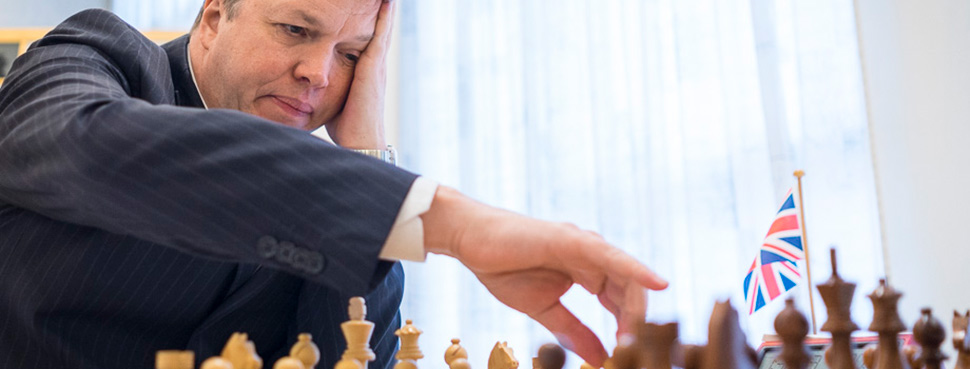
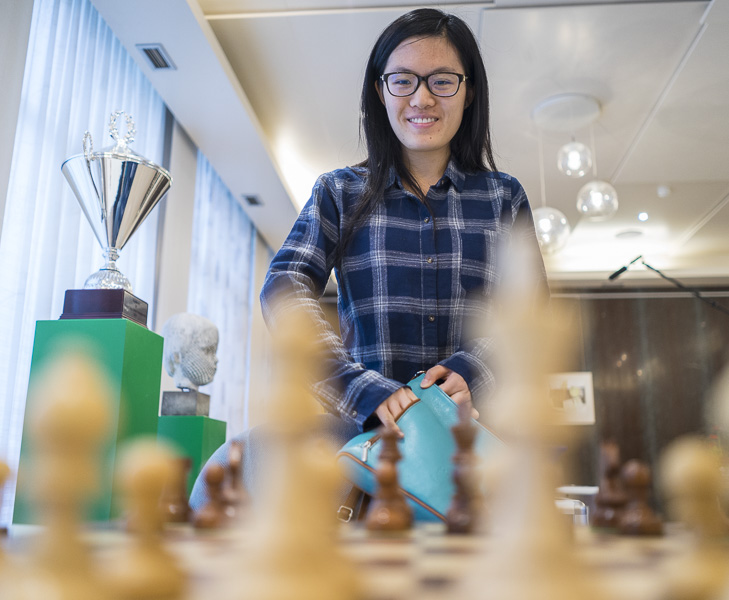
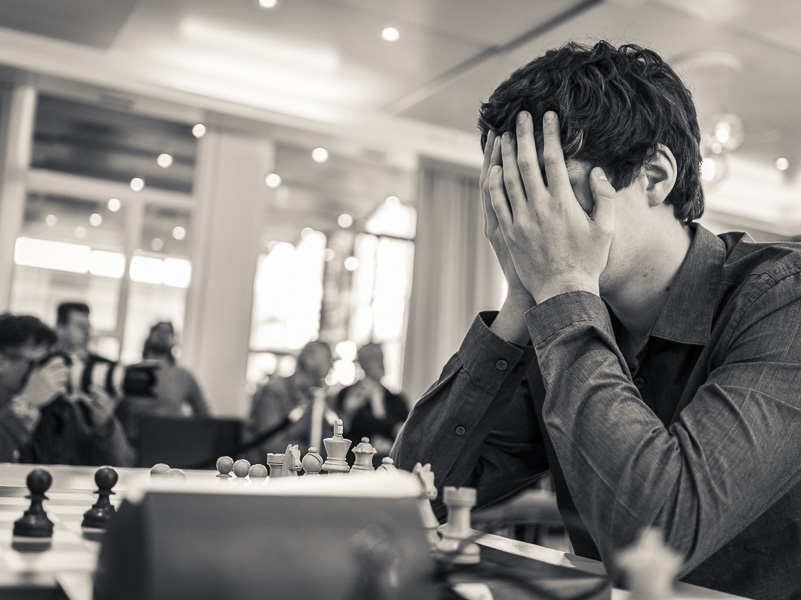
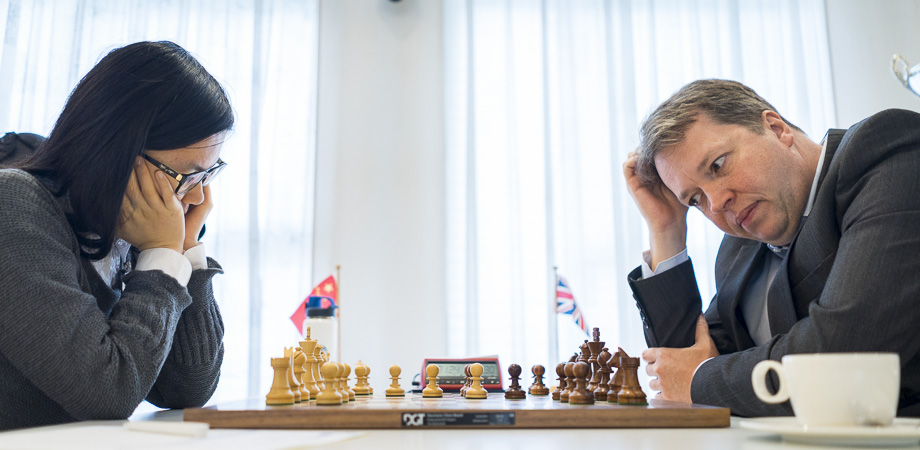
    The match between Hou Yifan and Nigel Short was decided today. After two successive victories, a solid draw was enough for Short to win the match. Tomorrow Hou Yifan can try to conclude the event on a high note by a win with White.


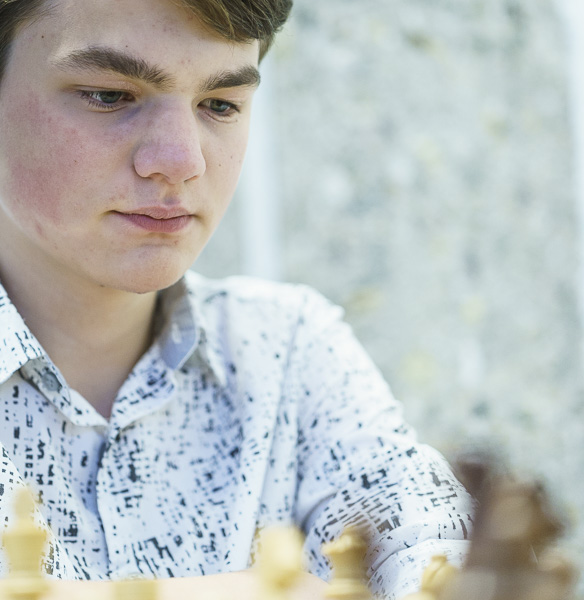
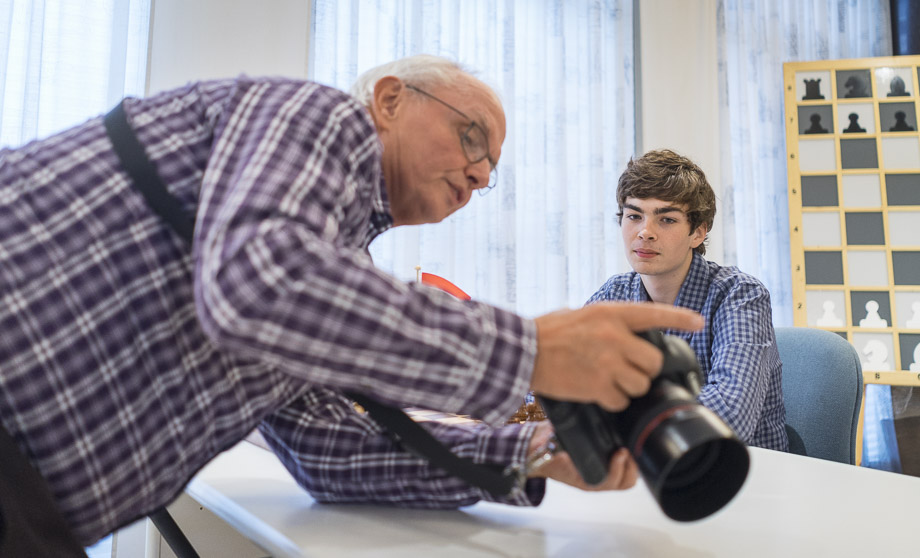
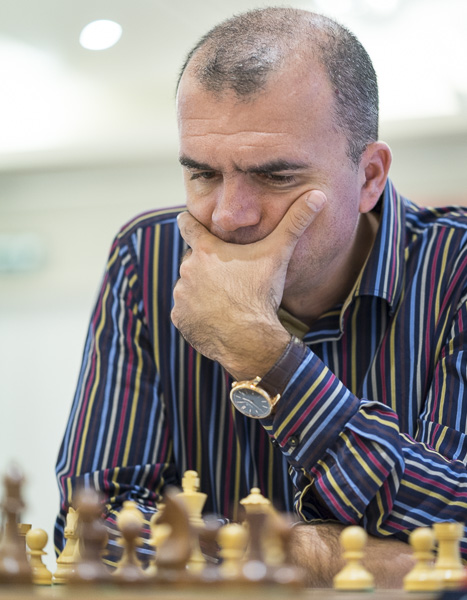
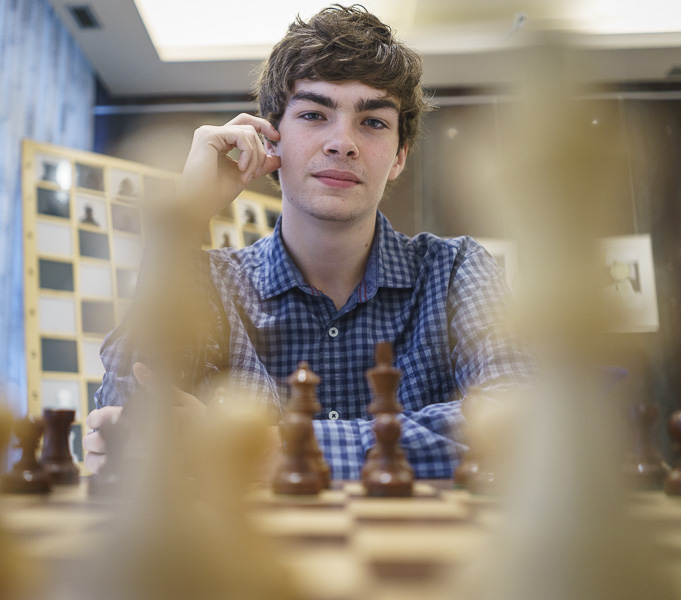
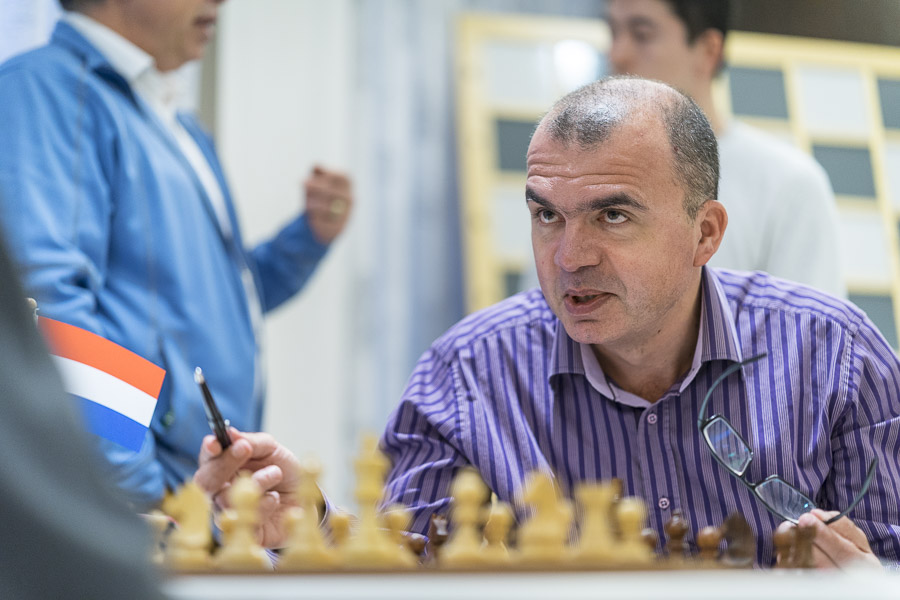
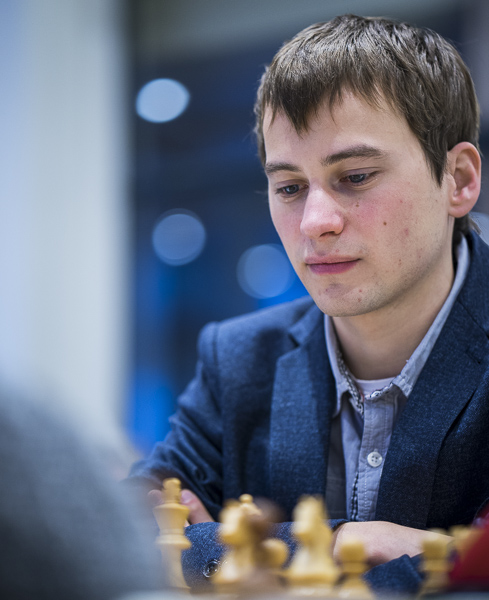
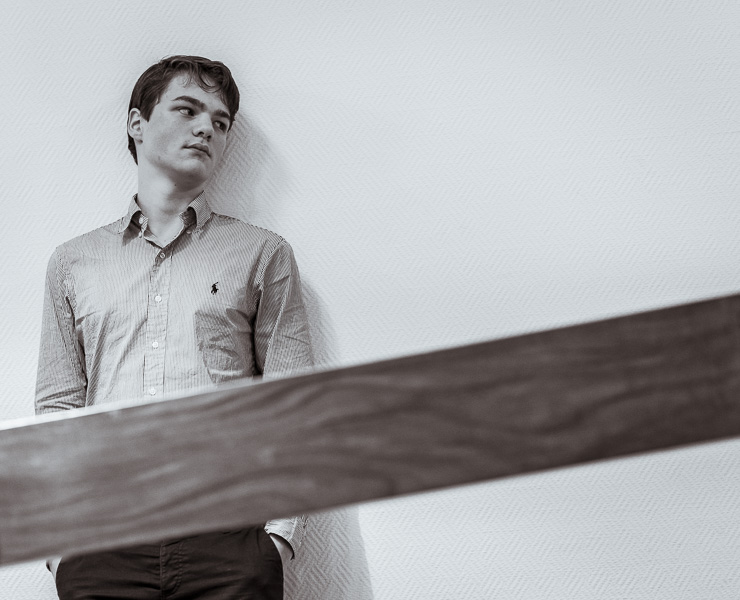
    Jorden met fotograaf Harry Gielen. Foto: Lennart Ootes
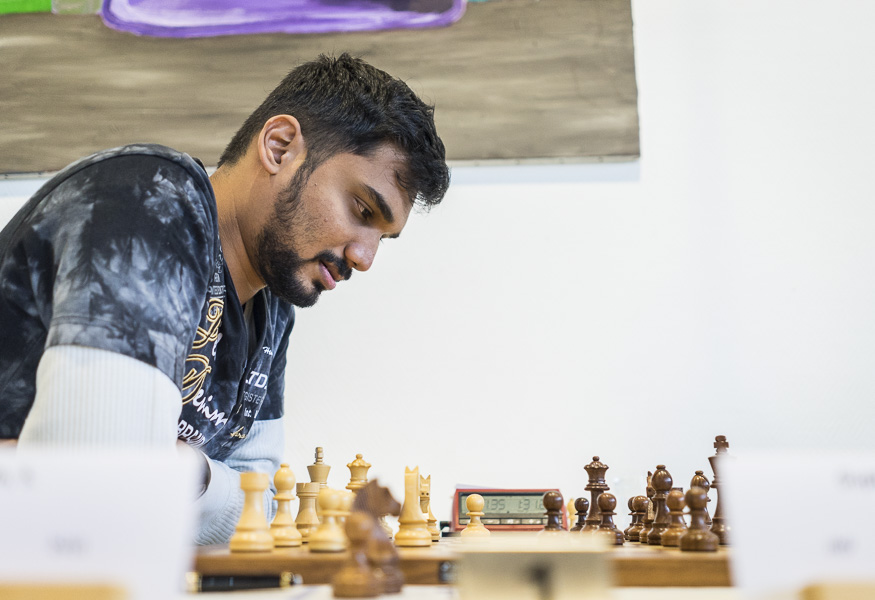
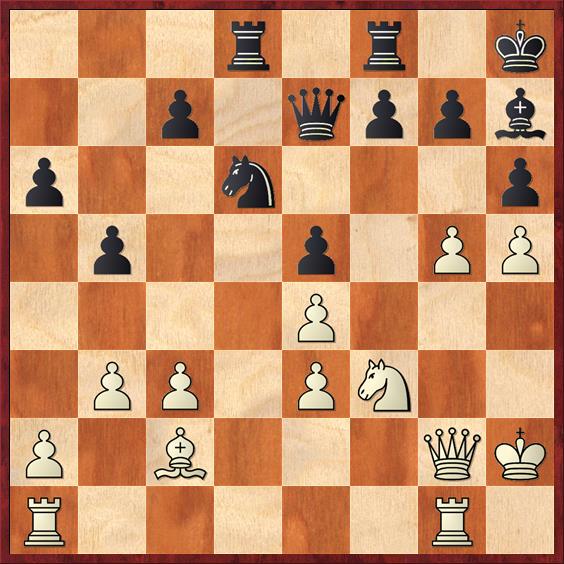
    In the match Sokolov-Van Foreest, the throwing of rocks merrily continued. Jorden did not deviate from his King’s Indian, but he had cooked up something special. Something very special – something provocative.

    Sokolov – Van Foreest

    1.c4 Nf6 2.Nc3 g6 3.e4 d6 4.d4 Bg7 5.Be2 0–0 6.Be3 Nc6

    New in this match. Earlier Van Foreest played 6…e5 and 7…a5 resp. 7…Na6.

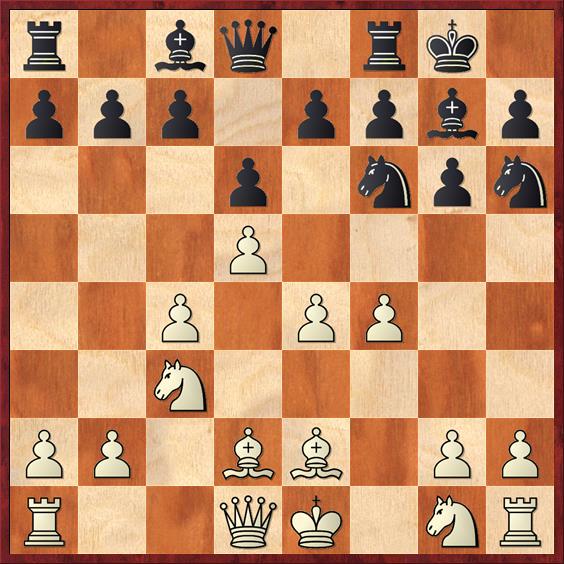
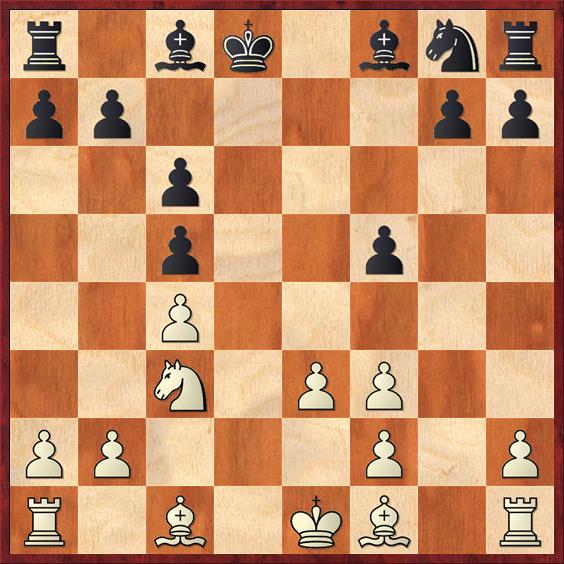
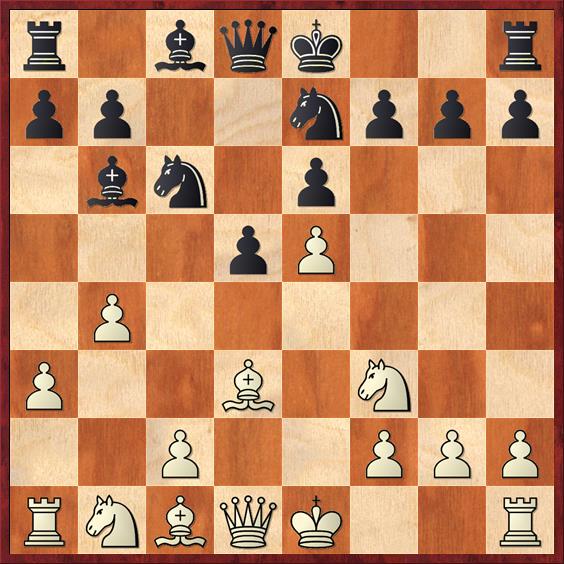
    7.d5 Ne5 8.f4 Neg4 9.Bd2 Nh6!?

    A novelty prepared at home, and a rather bizarre-looking positioning for the knight. In this position, the more logical 9…h5 was tried twice. Sokolov’s verdict was more or less clear: ‘Nakamura also played 1.e4 e5 2.Qh5 once… but that was Nakamura. There are also other moves.’

    10.Nf3 c6 11.0–0 cxd5 12.cxd5 b5

    Now Black’s play does begin to take shape. Sokolov consolidates his centre.

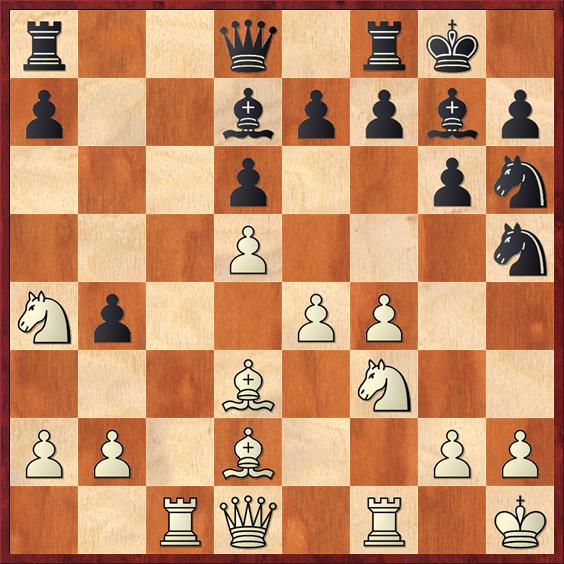
    13.Bd3 b4 14.Na4 Bd7 15.Kh1 Nh5 16.Rc1


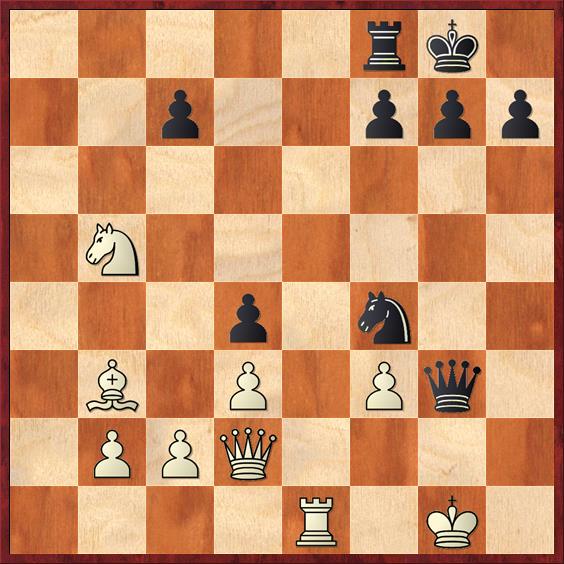
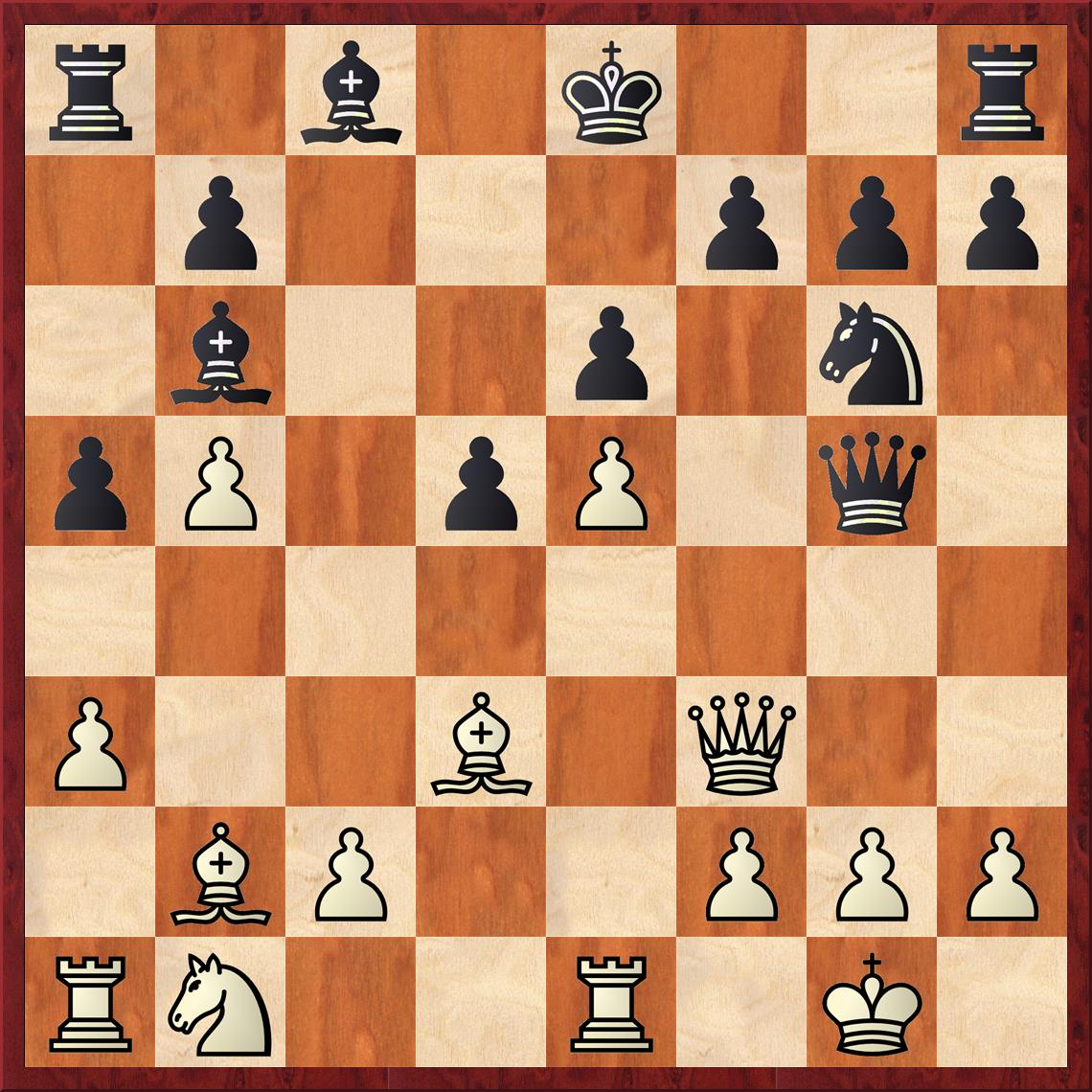
    16…Qa5?!

    This doesn’t turn out well. Alternatives were 16…Ng4 or, if necessary, first 16…f5 17.e5 and then 17…Ng4. But 16…Rc8 looks the most logical.

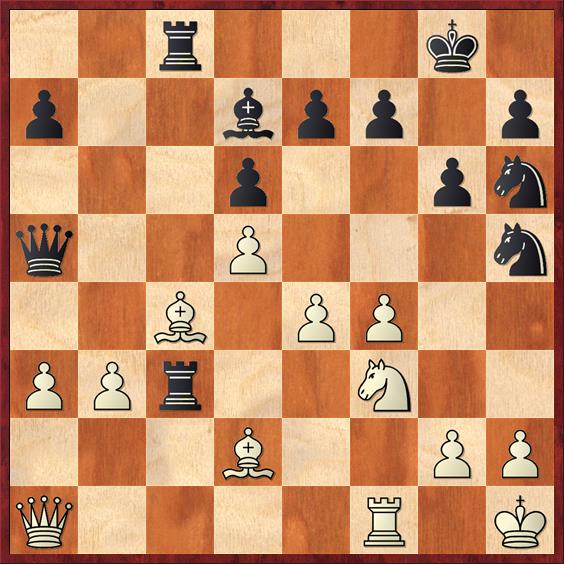
    17.b3 Rac8

    And here, 17…Bb5 18.Bxb5 Qxb5 was interesting, so as after 19.Rc4 Rac8 20.Rxb4 to play 20…Qd3, with active play as compensation for the pawn.

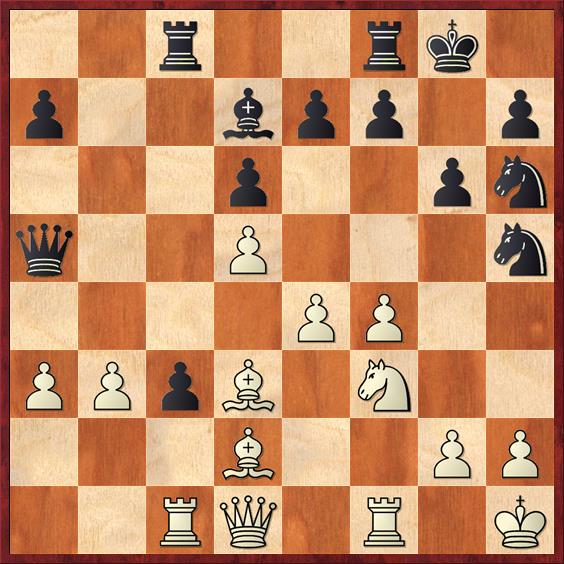
    18.a3 Bc3 19.Nxc3 bxc3


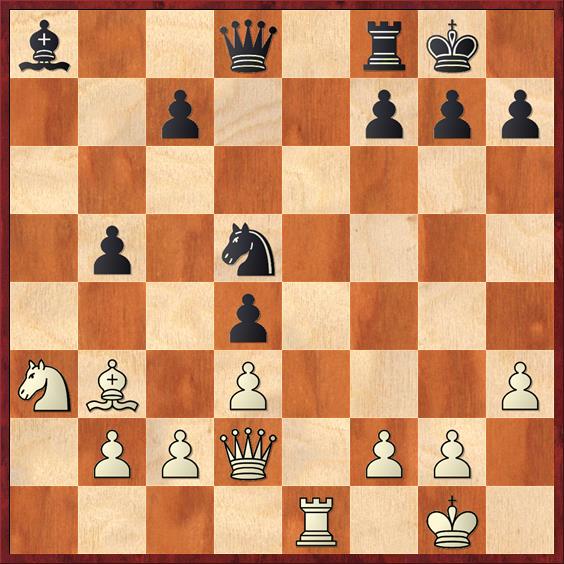
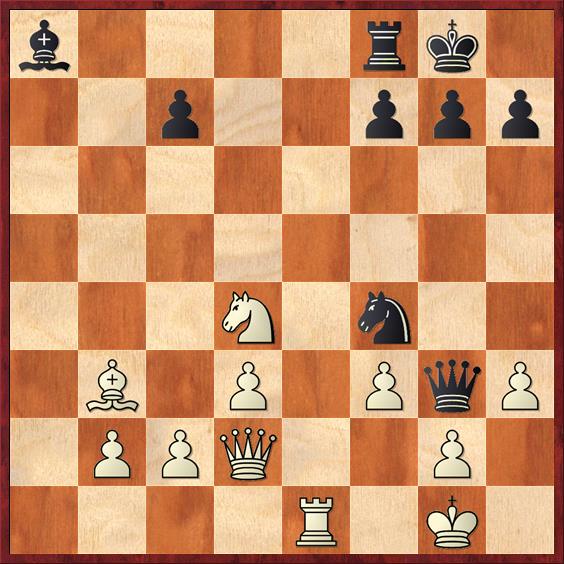
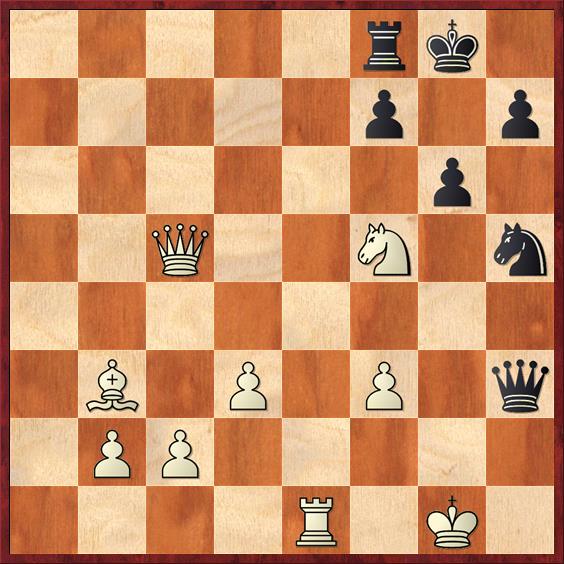
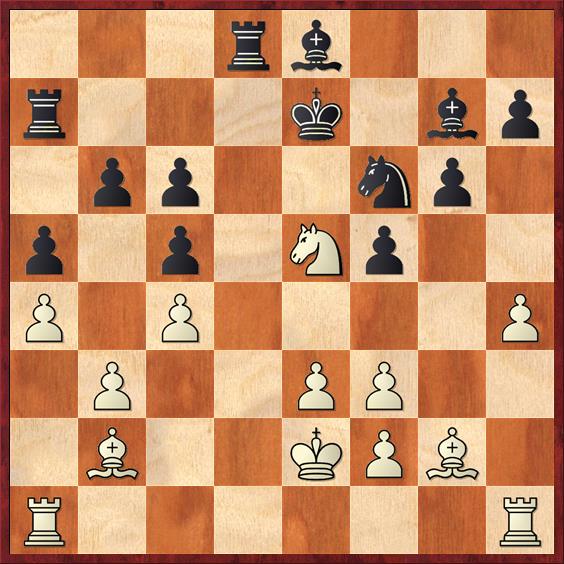
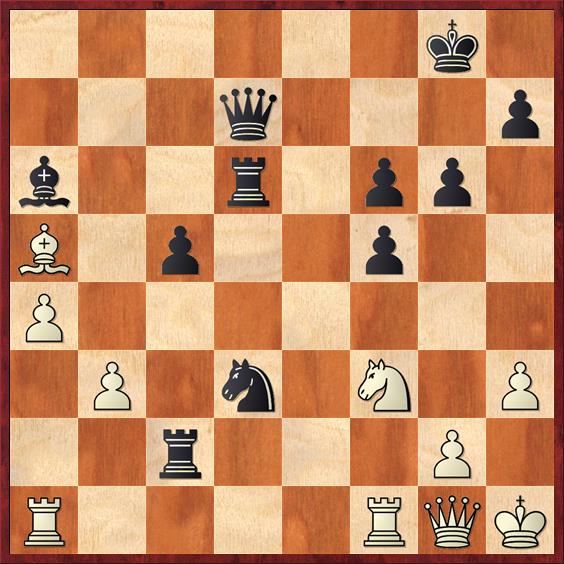
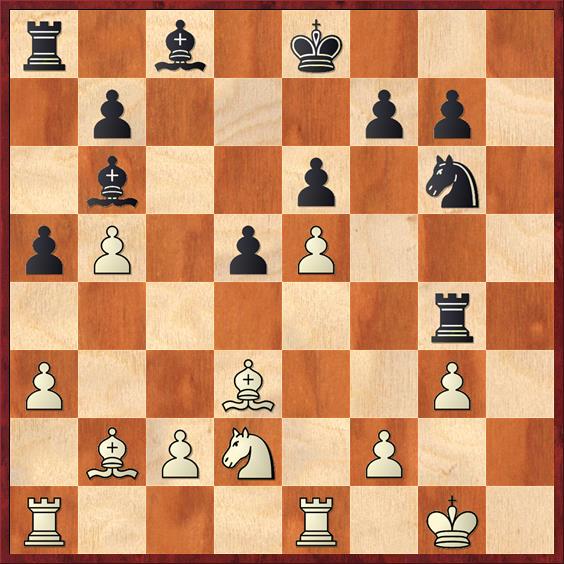
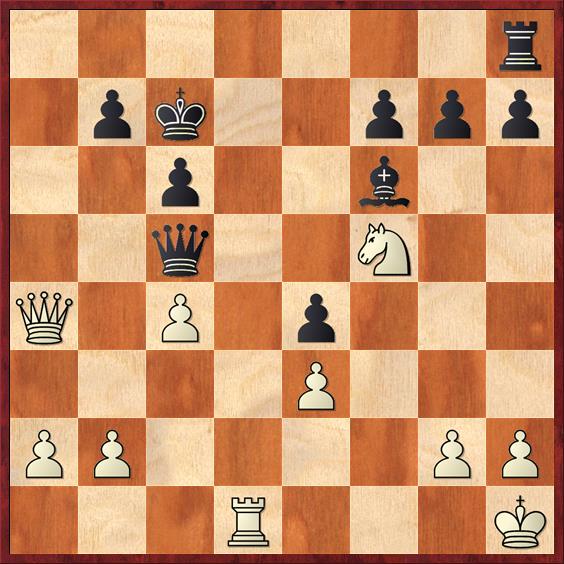
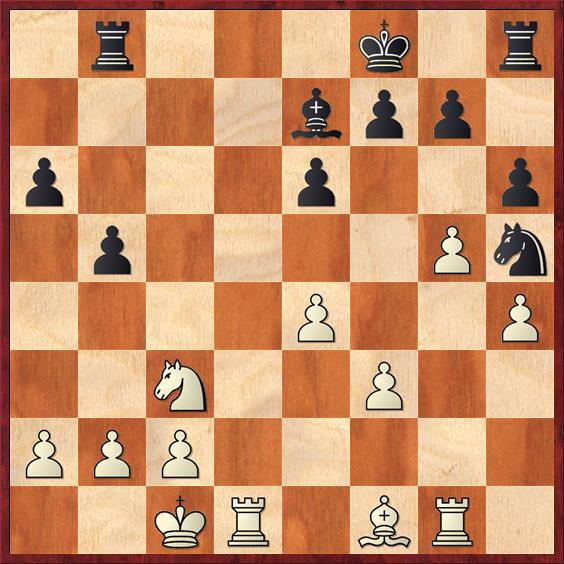
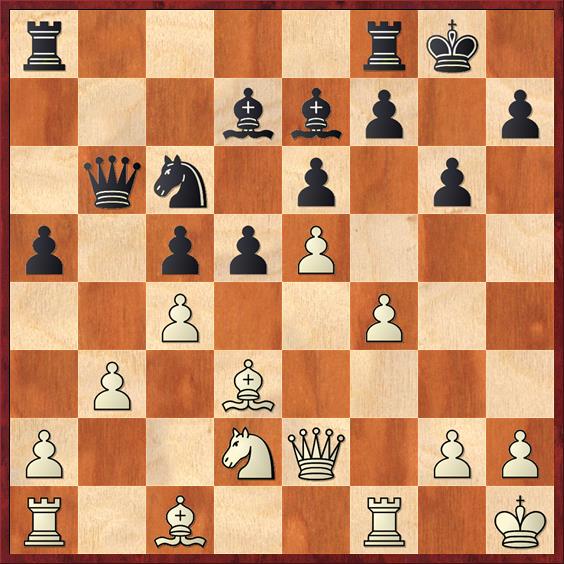
    20.Rxc3!

    A wonderful combination.

    20…Rxc3 21.Qa1

    21.Qe1 Qxa3 22.Bxc3 Qxb3 was less clear.

    21…Rfc8

    Led by Robert Ris, the audience in the commentary room enthusiastically analysed the queen sacrifice 21…Qxd5!, which looks like best chance under the circumstances. White has a choice: he can either accept with 22.exd5 Rxd3, after which Black has some activity for the material at least, or White can play it safe with 22.Qxc3, for example: 22…Qb7 23.Qb4 or 22…Qa8 23.Qd4.

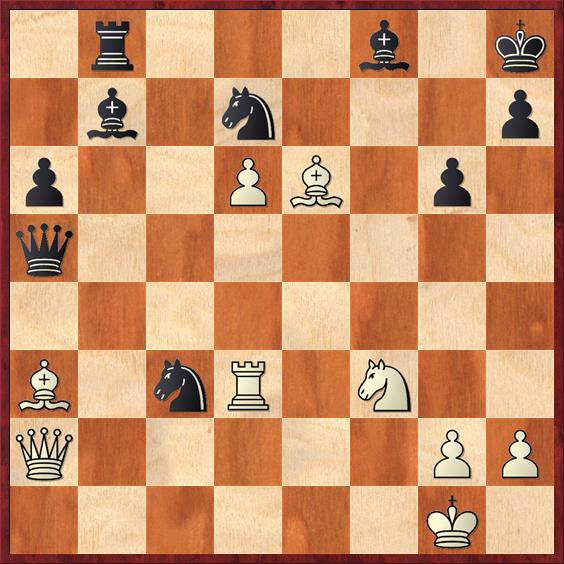
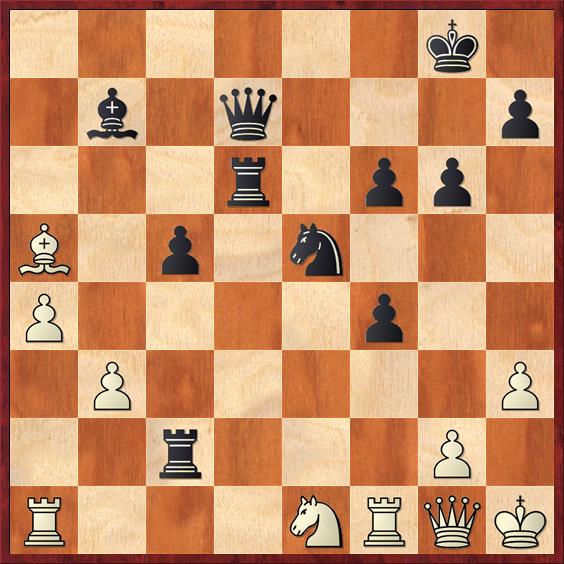
    22.Bc4!


    But this spells big trouble for Black.

    22…Bb5

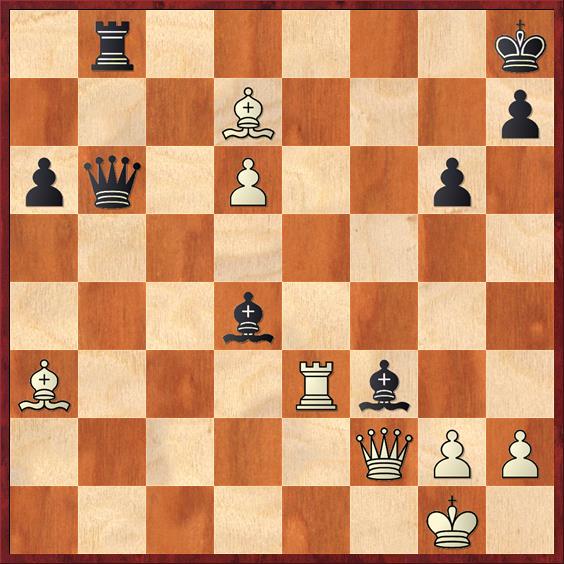
    Also here Van Foreest could have tried a queen sacrifice: 22…R3xc4! 23.Bxa5 Rxe4 and this too would have offered some practical chances. ‘This seemed to me to be his only chance’, Sokolov said. ‘It has to be good for White, but it’s certainly not easy.’ The best reaction seems to be 24.Rc1 or 24.Re1.

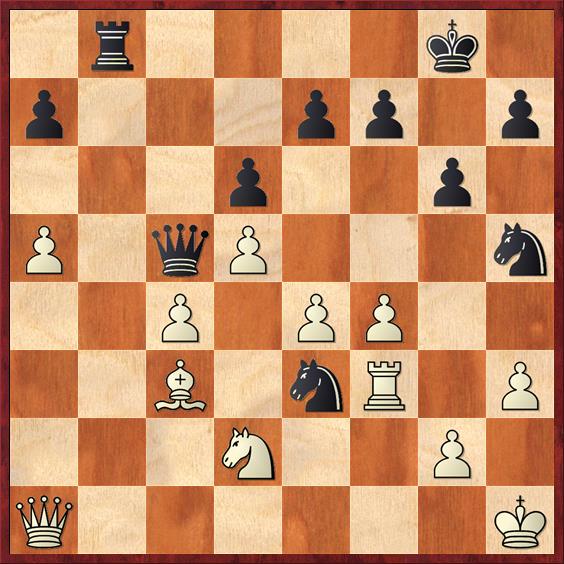
    23.Bxc3 Qa6 24.Nd2 Bxc4 25.bxc4

    Now White is simply a healthy pawn up, and the black knights still don’t have much to do.

    25…Rb8 26.a4 Ng4 27.Rf3

    Preventing all counterplay.

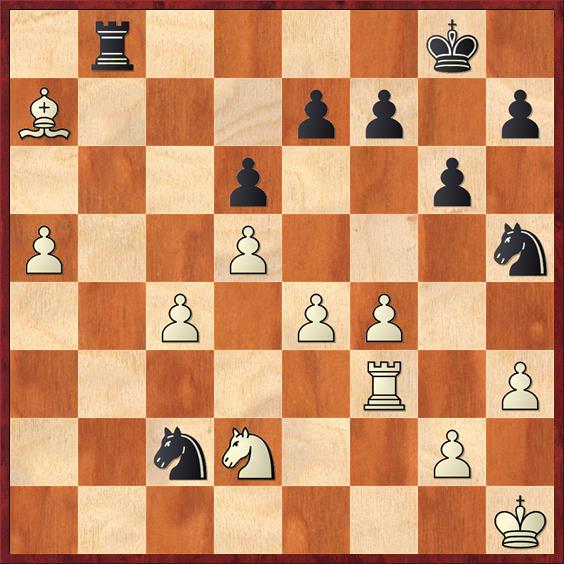
    27…Qb6 28.h3 Ne3 29.a5 Qc5

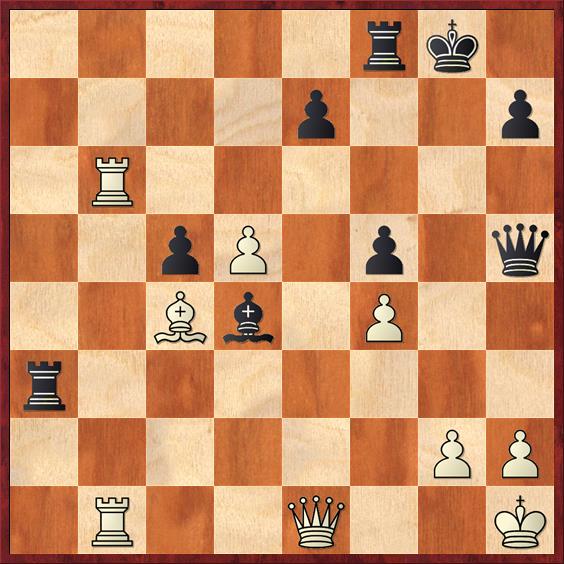
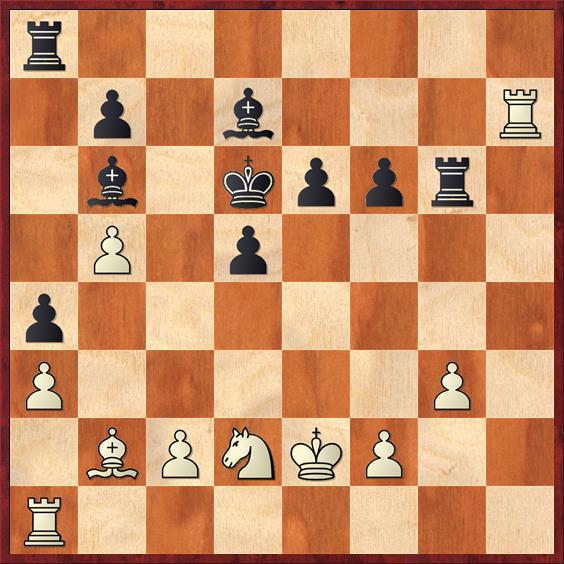
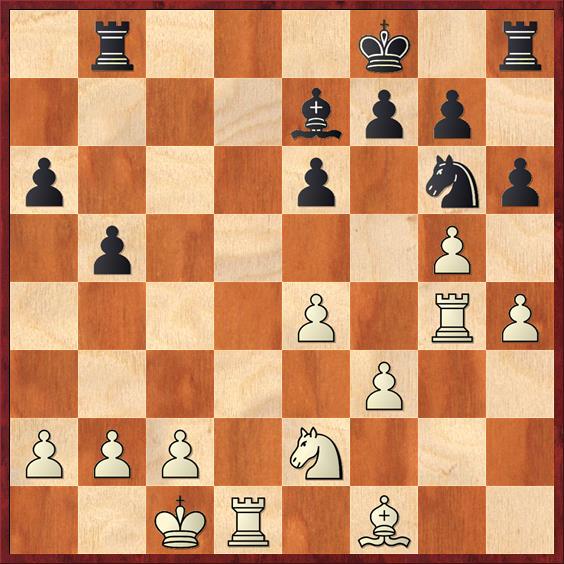
    30.Bd4 Nc2 31.Bxc5 Nxa1 32.Bd4

    A small subtlety: after the immediate 32.Bxa7 Rb2, the white knight is under attack. It doesn’t matter much: after 33.Rf2 Nxf4? 34.Bd4 White wins a piece, while 34.Nf1 also wins easily due to the passed a-pawn.

    32…Nc2 33.Bxa7


    The black player could have saved himself the rest.

    33…Rb2 34. g4
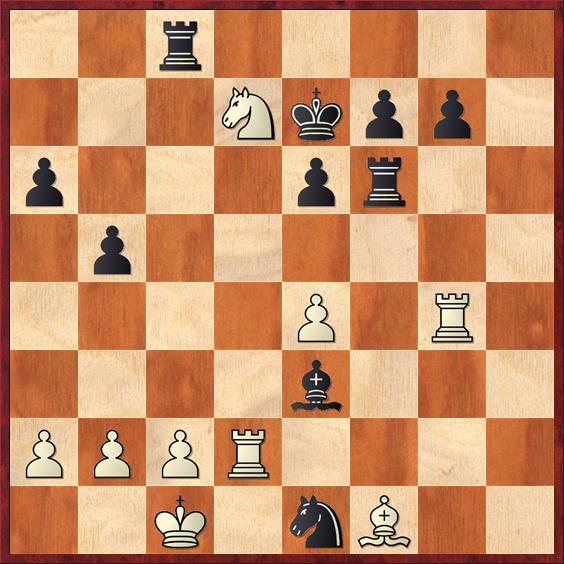
    Nf6 35. e5 dxe5 36. fxe5 Nd7 37. Rb3 Ra2 38. Rb7 Nxe5 39. Rxe7 Rxa5 40. Nb3 Kf8
    41. Rxf7+ Kxf7 42. Nxa5 Na3 43. c5 Nb5 44. Bb6 Nc3 45. d6 Ke6 46. c6 Nxc6 47.
    Nxc6 Kxd6 48. Nb4 Ke5 49. Kg2 h5 50. Nd3+ Ke4 51. Nf2+ Kf4 52. Bc7+ Ke3 53. g5
    Nd5 54. Bg3 Ke2 55. h4 Ne3+ 56. Kh3 Nf1 57. Nh1 Kf3 58. Be5 Ne3 59. Ng3 Nc4 60.
    Bc7 Ne3 61. Bb8 Nc4 62. Nxh5 Ke4 1-0


    Photo: Lennart Ootes


    Photo: Lennart Ootes


    Photo: Lennart Ootes

    The game from the other match had roughly the same course as the first two: quiet, positional – White presses but doesn’t really achieve anything.

    Short – Hou Yifan

    1.c4 c5 2.Nf3 Nc6 3.Nc3 e5 4.e3 f5

    Hou Yifan tries to liven up the game – unfortunately for her, White can virtually force a queenless middlegame on the board here where he doesn’t run any risk.

    5.d4 e4 6.d5 exf3 7.dxc6 dxc6

    7…fxg2 8.cxd7+ Qxd7 9.Qxd7+ Bxd7 10.Bxg2 would produce a somewhat ‘tidier’ pawn structure; after 10…0–0–0 White is a tad better.

    8.Qxd8+ Kxd8 9.gxf3

    A kind of Berlin Wall with for White a bishop pair and a doubled pawn as well.

    9…Nf6 10.b3 g6 11.Bb2 Bg7 12.Ne2

    First White secures the long diagonal.

    12…Ke7 13.Nf4 a5 14.Nd3 b6 15.Bg2 Bd7

    Black could have ventured 15…a4!? here. Whether 16.b4 a3 17.Bc3 Ra4!? was any good, is unclear. In any case, Short now definitively prevents it.

    16.a4 Rhd8 17.h4 Be8 18.Ke2 Ra7 19.Ne5


    19…Ke6

    So as not to run into a check on g6 after a knight move. Here, today’s commentator Robert Ris came up with the interesting idea 19…f4!?, which mainly serves to keep the long diagonal closed. Short thought he could then play 20.Bh3 Nh5 and Lg4 – which cannot be played right away in view of 21…fxe3 22.fxe3?? Ng3+ – therefore first, let’s say, 21.Rhd1. On the h3-c8 diagonal the bishop is also good, but this looks playable for Black.

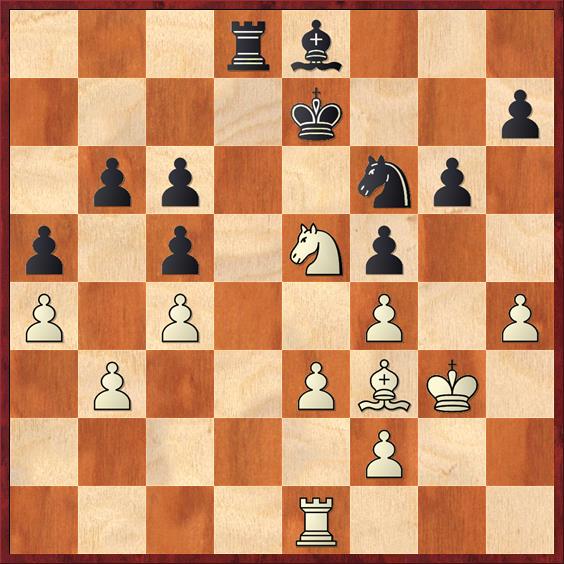
    20.Rad1 Raa8 21.Nd3 Nh5 22.Bxg7 Nxg7 23.f4 Nh5 24.Ne5 Rxd1 25.Rxd1 Rc8 26.Bf3 Nf6 27.Kf1 Ke7 28.Kg2 Ke6 29.Kg3 Ke7 30.Re1

    For a long time, Short was contemplating the idea of 30.h5 gxh5 31.Kh4. The problem is here that Black first prevents the passage of the king by 31…h6 and then has …Ng4.

    30…Rd8

    31.e4 fxe4 32.Bxe4 Nxe4+ 33.Rxe4 Kf6 34.Re3

    This doesn’t yield White anything either. While the black bishop is certainly bad, there are no targets in her position.

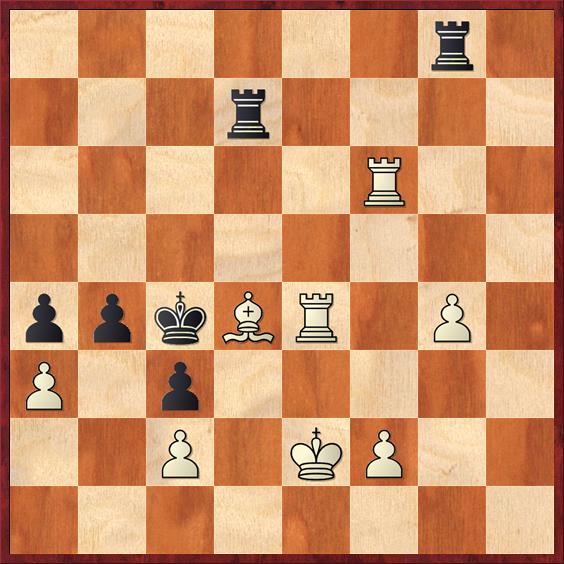
    34…Rd1 35.Ng4+ Kf7 36.Ne5+ Kg7 37.f3 Bd7 38.Nxd7 Rxd7 39.h5 Kf7 40.hxg6+ hxg6 41.Kg4 Kf6 42.Re8 Rd1 43.Rf8+ Ke6 44.Rb8 Rg1+ 45.Kh3 Kf5 46.Rf8+

    Both players keep the door shut.

    46…Ke6 47.Rb8 Kf5 48.Rf8+ ½–½

    This draw put Short on 3½-1½, and so Hou Yifan can no longer draw level in the match.


    Foto: Lennart Ootes


    Foto: Lennart Ootes
  • Short wint match, Sokolov pakt weer de leiding

    Short wint match, Sokolov pakt weer de leiding

    De match tussen Hou Yifan en Nigel Short werd vandaag beslist. Na twee overwinningen had Nigel Short aan een solide remise genoeg voor de totaalzege. Hou Yifan kan morgen met wit proberen om via een overwinning toch nog met een goed gevoel af te sluiten.


    Jorden met fotograaf Harry Gielen. Foto: Lennart Ootes
    Bij Sokolov-Van Foreest ging het smijten met rotsblokken vrolijk door. Jorden week niet af van zijn Koningsindiër, maar had wel iets speciaals voorgekookt. Iets heel speciaals – iets provocerends.

    Sokolov – Van Foreest

    1.c4 Pf6 2.Pc3 g6 3.e4 d6 4.d4 Lg7 5.Le2 0–0 6.Le3 Pc6

    Nieuw in deze match. Eerder speelde Van Foreest 6…e5 en 7…a5 c.q. 7…Pa6.

    7.d5 Pe5 8.f4 Peg4 9.Ld2 Ph6!?


    Een thuis uitgedokterd nieuwtje en een nogal bizar ogende opstelling voor het paard. In deze stelling is nog twee keer het logischere 9…h5 gespeeld. Sokolov’s oordeel was min of meer duidelijk: “Nakamura heeft ook weleens 1.e4 e5 2.Dh5 gespeeld… maar dat was Nakamura. Er zijn ook andere zetten.”

    10.Pf3 c6 11.0–0 cxd5 12.cxd5 b5

    Het spel van zwart begint toch vorm te krijgen. Sokolov consolideert zijn centrum.

    13.Ld3 b4 14.Pa4 Ld7 15.Kh1 Ph5 16.Tc1

    16…Da5?!

    Dit blijkt net niet goed te gaan. Alternatieven waren 16…Pg4 of desnoods 16…f5 17.e5 Pg4. Maar het meest logisch ziet 16…Tc8 er uit.

    17.b3 Tac8

    En hier was 17…Lb5 18.Lxb5 Dxb5 interessant, om na 19.Tc4 Tac8 20.Txb4 Dd3 te spelen, met actief spel in compensatie voor de pion.

    18.a3 Lc3 19.Pxc3 bxc3


    20.Txc3!

    Een schitterende combinatie.

    20…Txc3 21.Da1

    21.De1 Dxa3 22.Lxc3 Dxb3 was minder duidelijk.

    21…Tfc8

    Onder leiding van Robert Ris werd in de commentaarzaal enthousiast geanalyseerd op het dameoffer 21…Dxd5!, wat in de omstandigheden zwarts beste kans lijkt. Wit heeft de keus: hij kan het aannemen met 22.exd5 Txd3, waarna zwart in ieder geval wat activiteit heeft voor het materiaal, of hij kan op safe spelen met 22.Dxc3, bijvoorbeeld 22…Db7 23.Db4 of 22…Da8 23.Dd4.

    22.Lc4!


    Maar dit is een kwalijke zaak voor zwart.

    22…Lb5

    Ook hier had Van Foreest een dameoffer kunnen proberen: 22…T3xc4! 23.Lxa5 Txe4 en ook dit had praktische kansen geboden. “Dit leek me zijn enige kans”, zei Sokolov. “Het moet goed zijn voor wit, maar het is zeker niet makkelijk.” De beste reactie lijkt 24.Tc1 of 24.Te1.

    23.Lxc3 Da6 24.Pd2 Lxc4 25.bxc4

    Nu staat wit gewoon een gezonde pion voor, en de zwarte paarden hebben nog steeds niet veel emplooi.

    25…Tb8 26.a4 Pg4 27.Tf3

    Haalt alle tegenspel eruit.

    27…Db6 28.h3 Pe3 29.a5 Dc5


    30.Ld4 Pc2 31.Lxc5 Pxa1 32.Ld4

    Een klein subtiliteitje: na direct 32.Lxa7 Tb2 staat het witte paard aangevallen. Veel maakt het niet uit: na 33.Tf2 Pxf4? 34.Ld4 wint wit een stuk, terwijl ook 34.Pf1 eenvoudig wint met de vrije a-pion.

    32…Pc2 33.Lxa7


    De rest had de zwartspeler zich kunnen besparen.

    33…Tb2 34.g4 Pf6 35.e5 dxe5 36.fxe5 Pd7 37.Tb3 Ta2 38.Tb7 Pxe5 39.Txe7 Txa5 40.Pb3 Kf8 41.Txf7+ Kxf7 42.Pxa5 Pa3 43.c5 Pb5 44.Lb6 Pc3 45.d6 Ke6 46.c6 Pxc6 47.Pxc6 Kxd6 48.Pb4 Ke5 49.Kg2 h5 50.Pd3+ Ke4 51.Pf2+ Kf4 52.Lc7+ Ke3 53.g5 Pd5 54.Lg3 Ke2 55.h4 Pe3+ 56.Kh3 Pf1 57.Ph1 Kf3 58.Le5 Pe3 59.Pg3 Pc4 60.Lc7 Pe3 61.Lb8 Pc4 62.Pxh5 Ke4 1–0


    Foto: Lennart Ootes

    Foto: Lennart Ootes
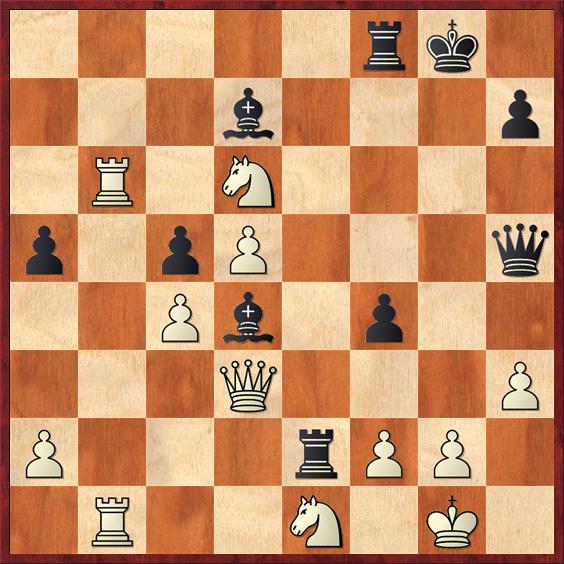

    Foto: Lennart Ootes
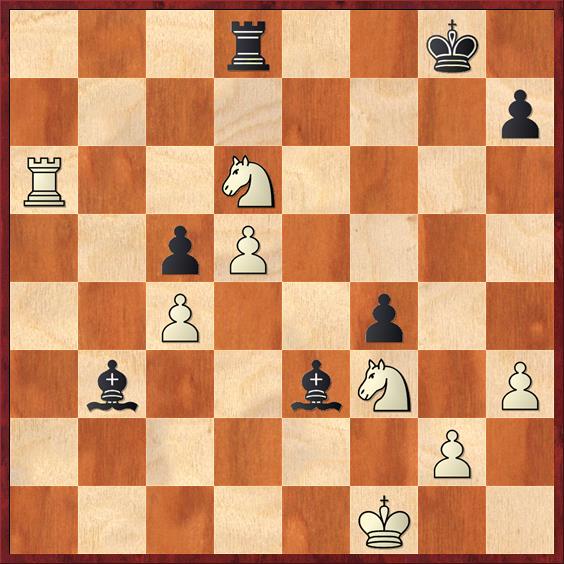
     

    De partij uit de andere match had een zelfde soort verloop als de eerste twee: rustig, positioneel, wit drukt wat maar krijgt niet echt een poot aan de grond.

    Short – Hou Yifan

    1.c4 c5 2.Pf3 Pc6 3.Pc3 e5 4.e3 f5

    Hou Yifan probeert er iets van te maken – helaas voor haar kan wit hier vrijwel geforceerd een dameloos middenspel op het bord brengen waarin wit weinig risico loopt.

    5.d4 e4 6.d5 exf3 7.dxc6 dxc6

    7…fxg2 8.cxd7+ Dxd7 9.Dxd7+ Lxd7 10.Lxg2 levert een wat ‘nettere’ pionnenstructuur op; na 10…0–0–0 staat wit een tikje beter.

    8.Dxd8+ Kxd8 9.gxf3


    Een soort Berlijner met voor wit een loperpaar en ook een dubbelpion.

    9…Pf6 10.b3 g6 11.Lb2 Lg7 12.Pe2

    Eerst de lange diagonaal bezetten.

    12…Ke7 13.Pf4 a5 14.Pd3 b6 15.Lg2 Ld7

    Zwart kon zich hier wagen aan 15…a4!?. Of 16.b4 a3 17.Lc3 Ta4!? goed was, is onduidelijk. In ieder geval verhindert Short het nu definitief.

    16.a4 Thd8 17.h4 Le8 18.Ke2 Ta7 19.Pe5


    19…Ke6

    Om na een paardzet het schaak op g6 eruit te halen. Commentator Robert Ris kwam hier met het interessante idee 19…f4!?, met name om de lange diagonaal gesloten te houden. Short meende dat hij dan 20.Lh3 Ph5 en dan Lg4 kon spelen – direct gaat dat nog niet wegens 21…fxe3 22.fxe3?? Pg3+, dus eerst 21.Thd1. Op de diagonaal h3-c8 staat de loper ook goed, maar het lijkt speelbaar voor zwart.

    20.Tad1 Taa8 21.Pd3 Ph5 22.Lxg7 Pxg7 23.f4 Ph5 24.Pe5 Txd1 25.Txd1 Tc8 26.Lf3 Pf6 27.Kf1 Ke7 28.Kg2 Ke6 29.Kg3 Ke7 30.Te1

    Short broedde lang op de actie 30.h5 gxh5 31.Kh4. Het probleem is hier dat zwart eerst de doortocht van de koning verhindert met 31…h6 en daarna …Pg4 heeft.

    30…Td8


    31.e4 fxe4 32.Lxe4 Pxe4+ 33.Txe4 Kf6 34.Te3

    Dit levert wit ook niets op. De zwarte loper is weliswaar slecht, maar er zijn geen aanknopingspunten in de zwarte stelling.

    34…Td1 35.Pg4+ Kf7 36.Pe5+ Kg7 37.f3 Ld7 38.Pxd7 Txd7 39.h5 Kf7 40.hxg6+ hxg6 41.Kg4 Kf6 42.Te8 Td1 43.Tf8+ Ke6 44.Tb8 Tg1+ 45.Kh3 Kf5 46.Tf8+

    Beide spelers houden de deur dicht.

    46…Ke6 47.Tb8 Kf5 48.Tf8+ ½–½

    Daarmee kwam Short op 3½-1½ en kan Hou Yifan de match niet meer gelijk trekken.


    Foto: Lennart Ootes
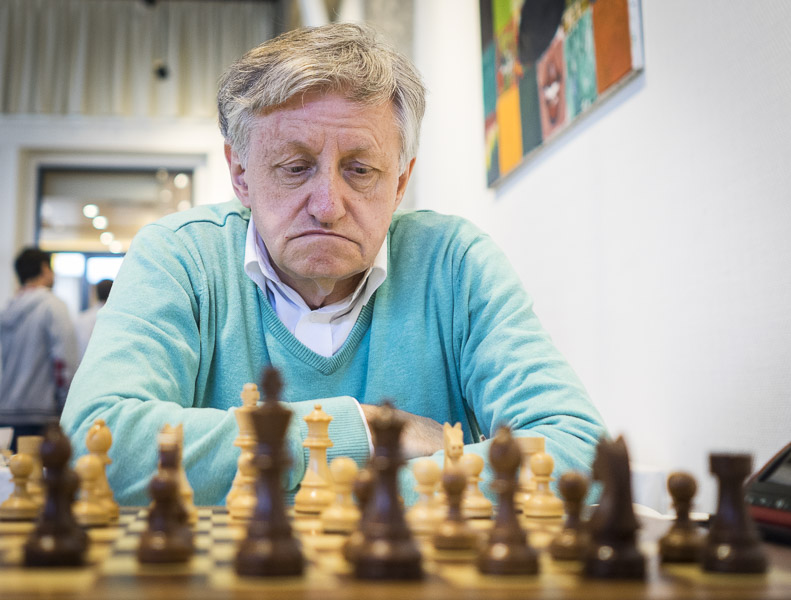


    Foto: Lennart Ootes
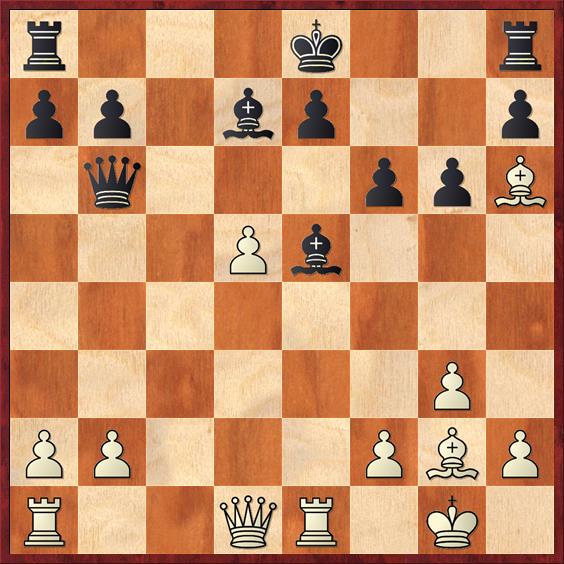
  • Gupta and Lalith unapproachable

    Gupta and Lalith unapproachable

    In the Open tournament, the battle-hardenedness and the dexterity of the two leaders Gupta and Lalith are uncanny. Today they vanquished respectively S. Nitin and Sipke Ernst, and remained a point ahead of their fellow countryman who is now unshared third: Chanda Sandipan.


    S. Nitin Photo: Lennart Ootes
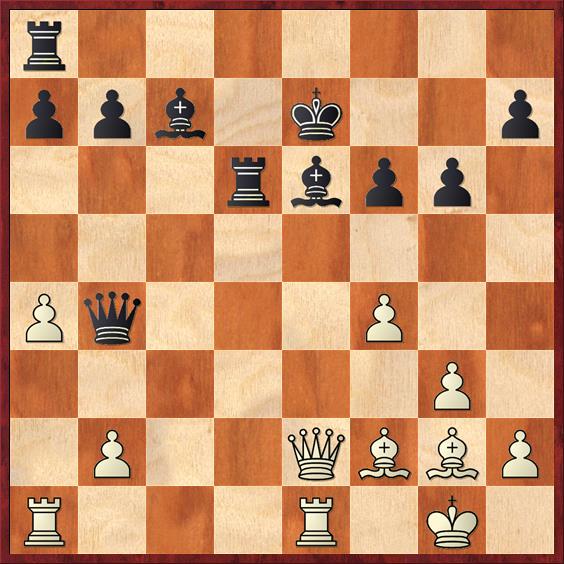
    Nitin – Gupta


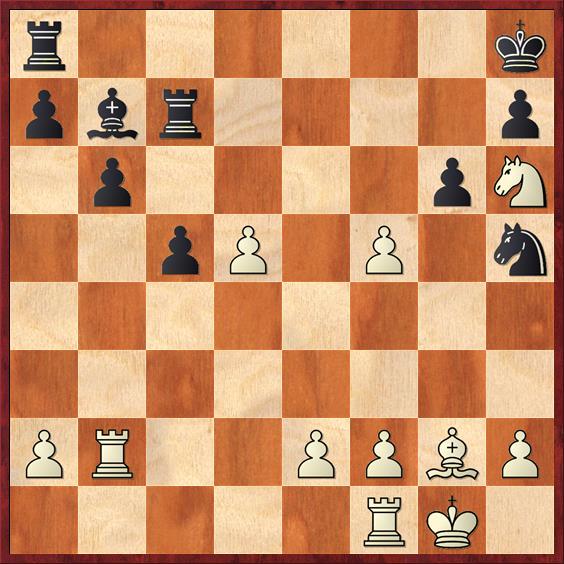
    In this interesting position, Nitin made a promising exchange sacrifice:

    14.dxe6! Bxh1 15.exd7+ Rxd7 16.Nxf5 Bg5+

    16…Qe6 17.Qxe6 fxe6 18.Nxe7+ Rxe7 19.Bxb5 axb5 20.Rxh1 probably yields White enough for the exchange; or 16…Qc5 17.Bh3! Rxd1+ 18.Qxd1 and White emerges with two pieces versus rook.

    17.f4 Bxf4+ 18.Kb1! Qe6 19.Rxd7?!

    19.Nd4! Qxe2 20.Bxe2 Rxd4! 21.Rxd4 Be5 and, as tends to happen in such situations, miraculously material is exactly equal again. White is a little more active.

    19…Qxd7 20.Bh3 Kb8 21.gxf4 Re8


    22.Qd1

    In the endgame, the rook rules supreme. More chances to hold were offered by 22.Qf2, even if the white pieces look a little clumsy here. He does threaten 23.Ng7 though.

    22…Qxd1+ 23.Nxd1 Re2 24.Nfe3 Rxh2

    White manages to organize his troops, but now the well-supported passed h-pawn prevails against White’s minor pieces.

    25.Bf1 Bf3 26.a4 bxa4 27.Bxa6 h5 28.Bc4 f6 29.Bd5


    29…Bxd1 30.Nxd1 Rd2 31.Bf3 h4 32.Kc1 Rd4 33.f5 Rf4 34.Bc6 Rxf5 35.Ne3 Rg5 36.Bd7 h3 37.Bxa4 Kb7

    Keeping the bishop from the diagonal, after which the pawn marches on unhindered: 0–1


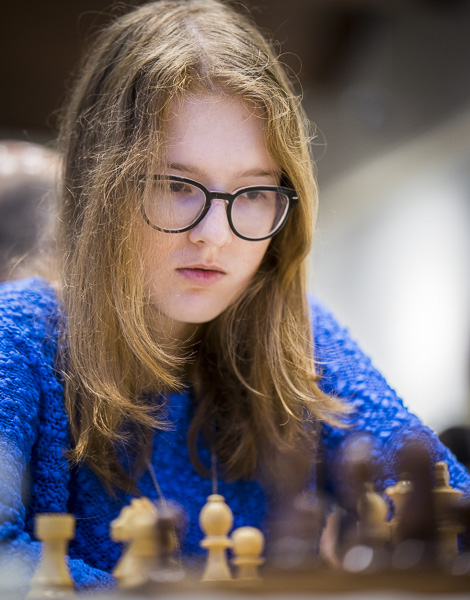
    Lalith – Ernst


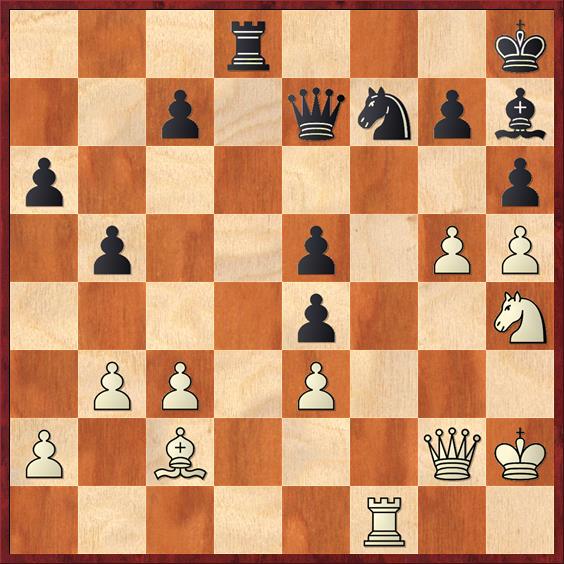
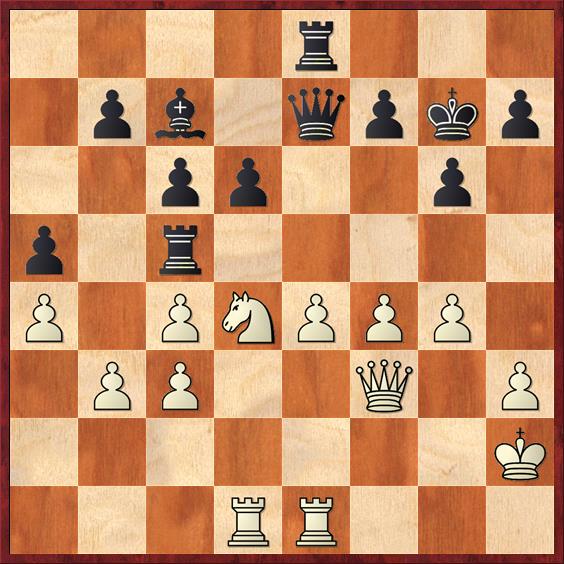
    Ernst had carried out a rather circuitous manoeuvre with his knight on the queenside, but because Lalith was playing his light-squared bishop up and down a little irresolutely, Black is doing fine here. However, with his next move Ernst goes a little too far:

    24…f4!? 25.Nxe4 Rae8?

    25…Bf5 26.f3 Bd4+ 27.Kh2 Rae8 would have given just enough compensation: 28.Nxd6!? Be3 29.Qb2 Bd4 with repetition, since as soon as the queen leaves the second rank, for instance with 30.Qa3, then 30…Bxh3! is the signal for the mate attack.

    26.Nxd6 Re2 27.Qd3 Bd4


    This too looks great for Black, but White has a brilliant parry:

    28.Qf3!! Bxf2+ 29.Kf1!

    And now Black has to enter an unfavourable endgame:

    29…Qxf3 30.Nxf3 Rxa2 31.Rb7 Ba4

    Now he loses the a-pawn in the end, but 31…Be8 32.Nxe8 Rxe8 33.d6 would go badly wrong.

    32.R7b2! Rxb2 33.Rxb2 Be3 34.Ra2 Bb3 35.Rxa5 Rd8 36.Ra6

    Very frustrating: nothing works for Black here. White converted the endgame on move 67.


    Shyam had to bite the dust today against the ruling Open Dutch champion Chanda Sandipan. Black suffered from lack of space in this game, and his problems mounted after White’s breakthrough with 21.e5.


    Oleg Romanishin .Photo: Lennart Ootes
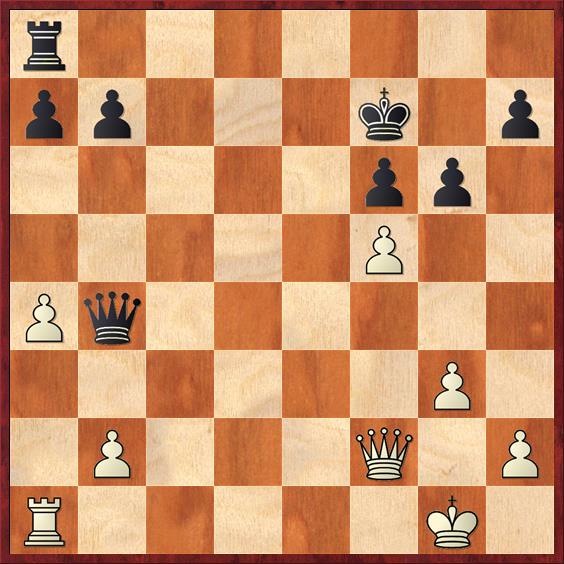
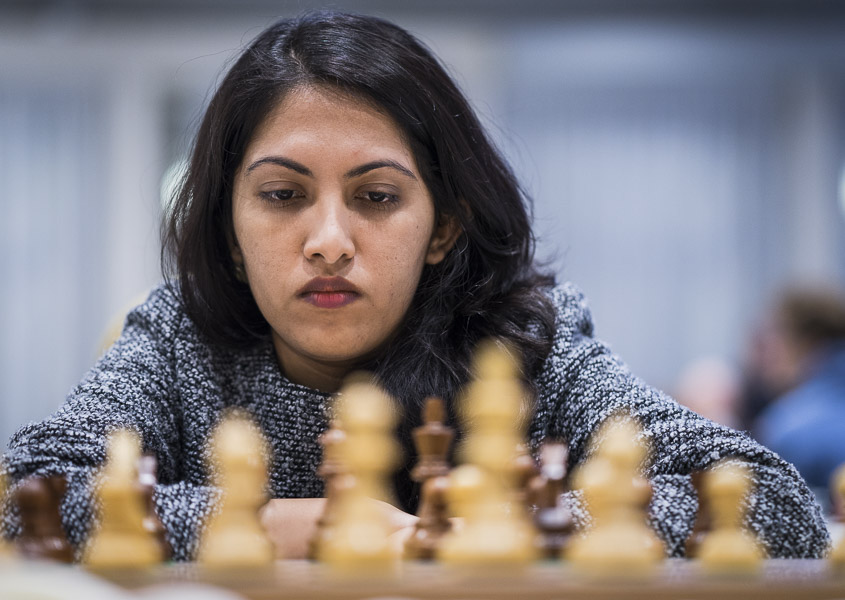
    In spite of the fact that the tournament is not going well for him, Romanishin played on board four today. Eesha Karavade made her moves quickly, and the Ukrainian feared deep preparation. But still Romanishin obtained a winning position.

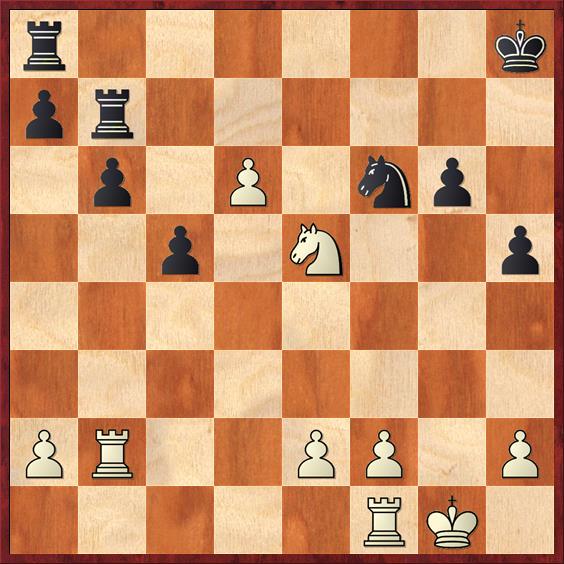
    Romanishin – Karavade


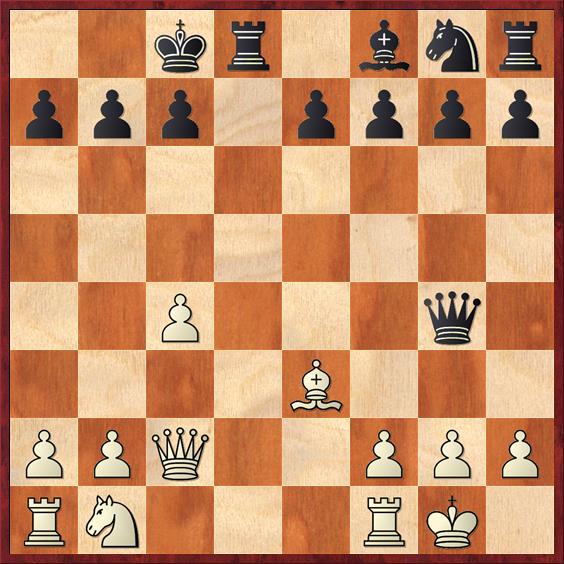
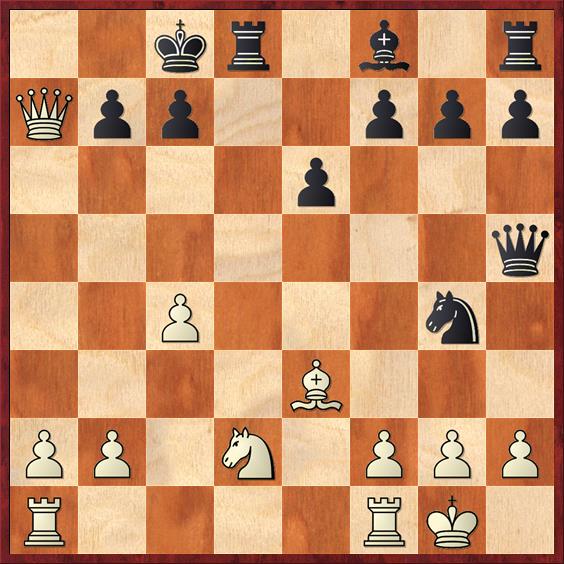
    16.d6

    Also interesting was 16.Bg7 Rg8 17.Rxe5!.

    16…Be6?

    She had to try 16…Bxd6. Then after 17.Qd5 Bb4 18.Rec1 White has nice compensation.

    17.dxe7 Kxe7

    This position is untenable after the best move, 18.Qf3!.

    18.Be3!? Qb5 19.a4 Qb4 20.f4 Rhd8 21.Qe2 Bc7 22.Bf2 Rd6


    23.Bd5?!

    Brilliant – Romanishin thinks that e6 can’t be protected a third time. But it can!

    23…Bb6! 24.Bxe6

    Also interesting is 24.f5!? Bxf2+ 25.Qxf2 Rxd5 26.Rxe6+ Kf7 27.Rae1 Rxf5 28.Qe3 Qxb2!? and White’s attack is not decisive; also here chances are equal.

    24…Bxf2+

    Also possible was 24…Rd2 25.Qe4 (25.Qxd2!?) 25…Bxf2+ 26.Kf1 Qxe4.

    25.Qxf2

    Not 25.Kxf2?? Rd2.

    25…Rxe6 26.Rxe6+ Kxe6 27.f5+ Kf7


    This also looks dangerous for Black, but White’s king is just as vulnerable as Black’s, and Karavade defends accurately.

    28.Rd1 Re8 29.Rd4 Re1+ 30.Kg2 Qe7 31.Kh3 Re4 32.fxg6+ ½–½


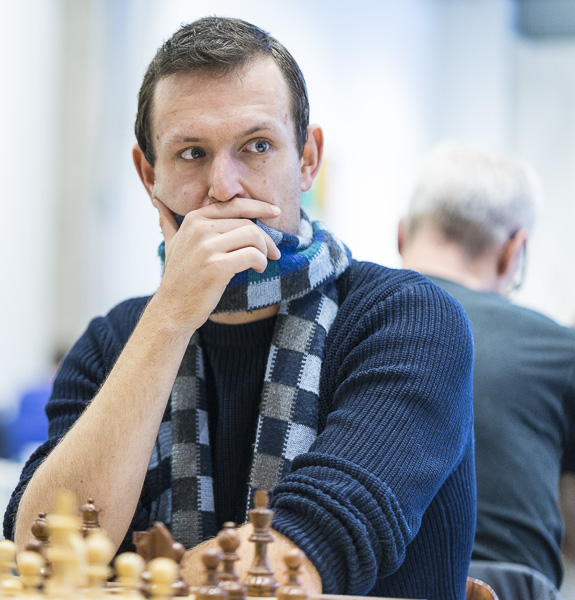
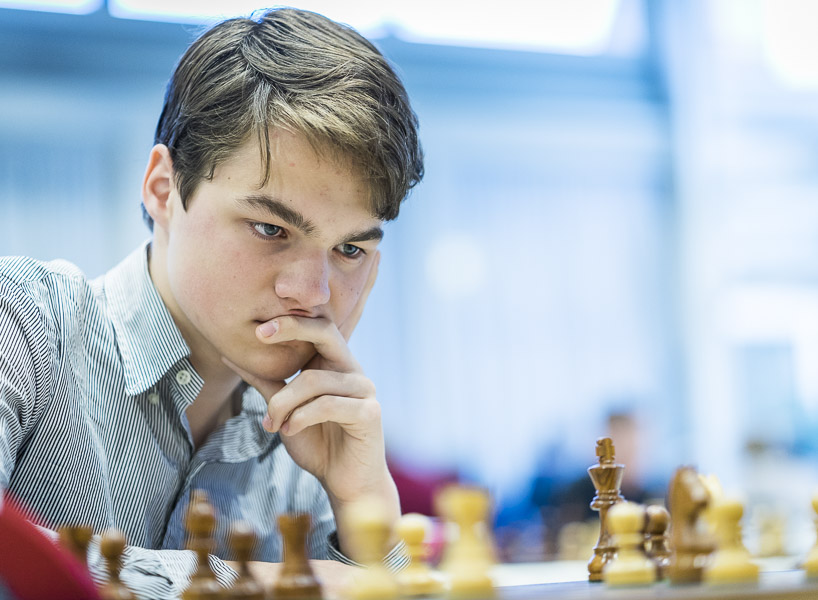
    Lucas van Foreest. Foto: Lennart Ootes
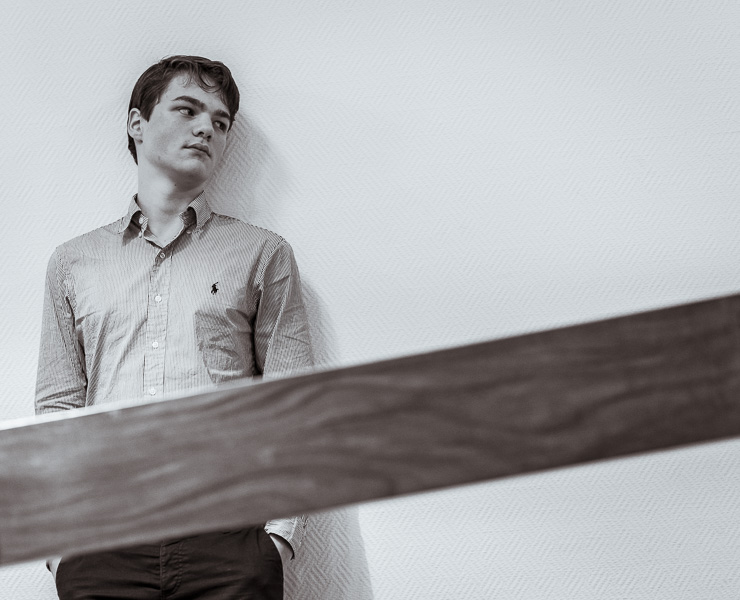
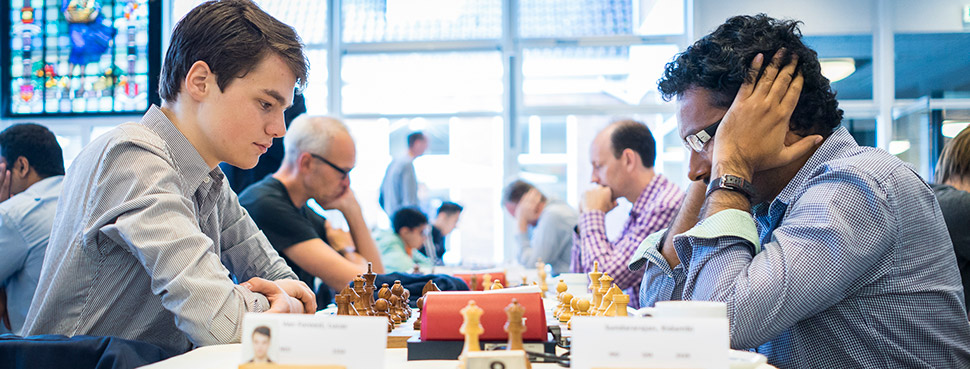
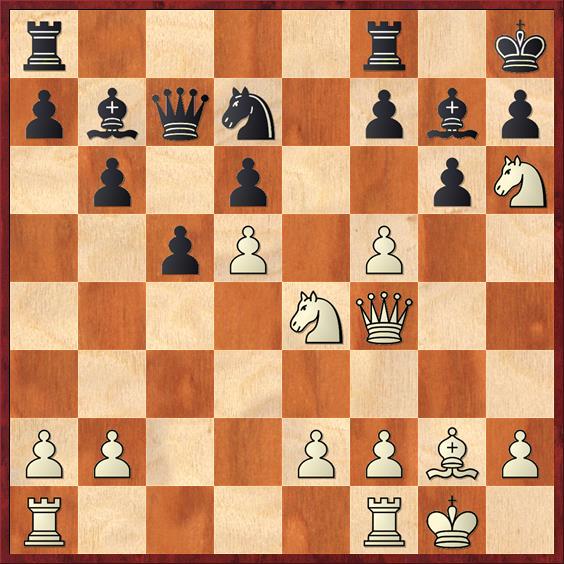
    After all this violence, the best Dutchman on the ranking list is suddenly Lucas van Foreest. He defeated grandmaster Sundararajan Kidambi in a precarious but admirable game.

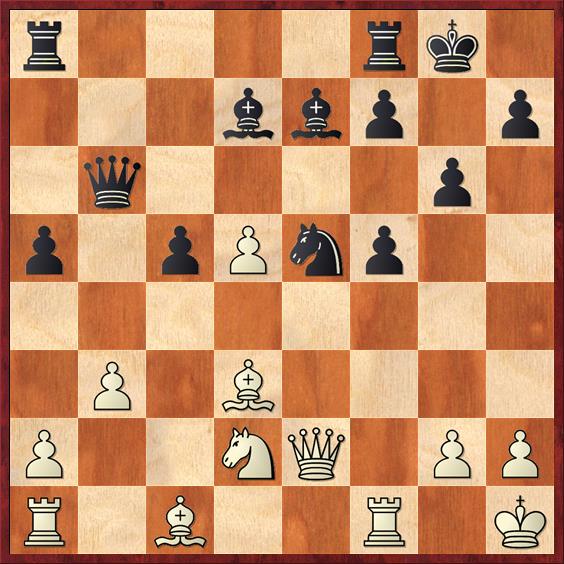
    Kidambi – Van Foreest


    18…Bxb2?!!?

    That takes guts.

    19.Nxd6 Nf6

    This offers better defensive chances for Black than 19…Be5 20.Nhxf7+ Kg8 21.Nxe5 Qxd6 22.Nxg6 Qxf4 (22…Qxg6?! 23.Qc7) 23.Nxf4 Rxf5 24.Ne6.

    20.Rab1

    Better was 20.fxg6 fxg6 21.Rab1, as now Black has a nasty defensive move:

    20…Nh5! 21.Ndxf7+ Rxf7 22.Qxc7 Rxc7 23.Rxb2

    23…Nf4

    Giving White another chance to obtain an advantage. Black could consolidate (does Lucas even know the term?) with 23…Kg7 24.Ng4 gxf5, for example: 25.d6 Bxg2!.

    24.d6! Rg7

    Now on 24…Bxg2 White has 25.dxc7 followed by 26.Rd1 (or, after 25…Bxf1, 26.Rd2).

    25.Bxb7 Rxb7 26.f6 Nd5 27.Ng4 h5 28.Ne5 Nxf6


    29.Nxg6+?!

    The opening of the g-file works in favour of Black’s counterplay. White could have kept some hopes for a win after, for instance, 29.f4.

    29…Kh7 30.Ne5 Rg7+ 31.Kh1 Rd8

    If White now protects the pawn, there always follows 32…Ne4.

    32.d7 Ng4!

    Salvation.

    33.Nxg4 hxg4

    In this rook ending Black is even better because his c-pawn is further advanced, and Van Foreest did a fine job converting.


    Lucas van Foreest. Photo: Lennart Ootes

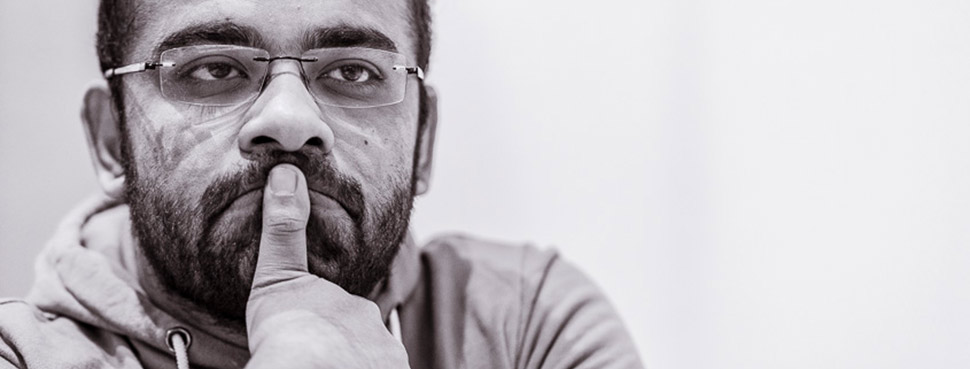
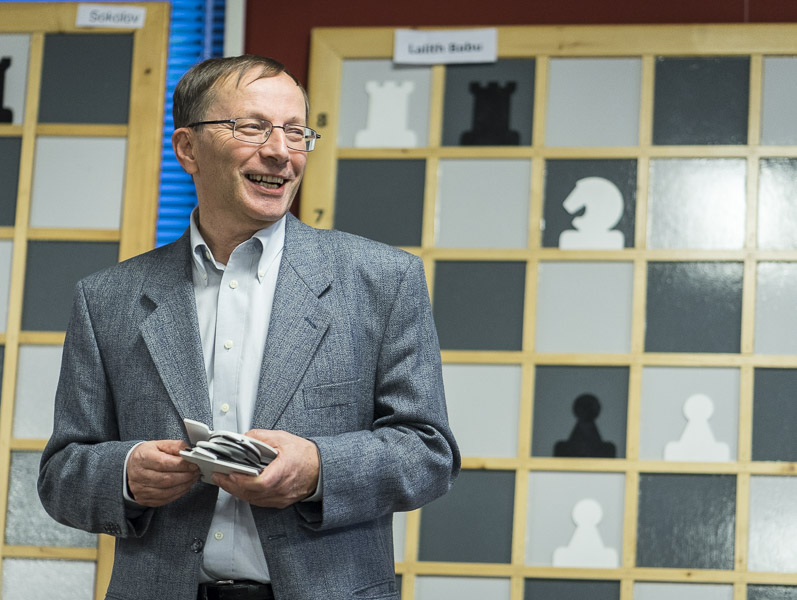
    Commentator Cor van Wijgerden. Photo: Lennart Ootes

    Participant of the amateur event. Photo: Lennart Ootes
  • Gupta en Lalith ongenaakbaar

    Gupta en Lalith ongenaakbaar

    De handigheid en slagvaardigheid van Gupta en Lalith zijn bijna buitenaards. Vandaag bleven ze respectievelijk S. Nitin en Sipke Ernst de baas en bleven ze een punt voor op een landgenoot die nu alleen op plek 3 staat: Chanda Sandipan.


    S. Nitin. Foto: Lennart Ootes
    Nitin – Gupta


    In deze boeiende stelling plaatste Nitin een kansrijk kwaliteitsoffer:

    14.dxe6! Lxh1 15.exd7+ Txd7 16.Pxf5 Lg5+

    16…De6 17.Dxe6 fxe6 18.Pxe7+ Txe7 19.Lxb5 axb5 20.Txh1 geeft wit waarschijnlijk genoeg voor de kwaliteit;; of 16…Dc5 17.Lh3! Txd1+ 18.Dxd1 en wit komt een kleine kwaliteit voor.

    17.f4 Lxf4+ 18.Kb1! De6 19.Txd7?!

    19.Pd4! Dxe2 20.Lxe2 Txd4! 21.Txd4 Le5 en zoals wel vaker gebeurt – als door een wonder staat het materieel weer gelijk. Wit staat dan nog iets actiever.

    19…Dxd7 20.Lh3 Kb8 21.gxf4 Te8


    22.Dd1

    In het eindspel is de toren oppermachtig. Meer kansen op behoud bood 22.Df2, ook al staan ook dan de witte stukken wat onhandig. Hij dreigt wel 23.Pg7.

    22…Dxd1+ 23.Pxd1 Te2 24.Pfe3 Txh2

    Wit weet nu alles te organiseren, maar de goed ondersteunde vrije h-pion tegen de witte lichte stukken gaat nu de doorslag geven.

    25.Lf1 Lf3 26.a4 bxa4 27.Lxa6 h5 28.Lc4 f6 29.Ld5


    29…Lxd1 30.Pxd1 Td2 31.Lf3 h4 32.Kc1 Td4 33.f5 Tf4 34.Lc6 Txf5 35.Pe3 Tg5 36.Ld7 h3 37.Lxa4 Kb7

    Houdt de loper van de diagonaal af, waarna de pion definitief doorloopt: 0–1


    Lalith – Ernst


    Ernst had een nogal omslachtig ogende manoeuvre uitgevoerd met zijn paard op de damevleugel, maar doordat Lalith zijn witveldige loper wat besluiteloos op en neer speelde, staat zwart hier toch weer prima. Met zijn volgende zet wil Ernst echter teveel:

    24…f4!? 25.Pxe4 Tae8?

    25…Lf5 26.f3 Ld4+ 27.Kh2 Tae8 geeft nog net genoeg compensatie: 28.Pxd6!? Le3 29.Db2 Ld4 met zetherhaling, want als de dame de tweede rij verlaat met bijvoorbeeld 30.Da3 luidt 30…Lxh3! een mataanval in.

    26.Pxd6 Te2 27.Dd3 Ld4


    Ook dit ziet er geweldig uit voor zwart, maar wit heeft een briljante parade:

    28.Df3!! Lxf2+ 29.Kf1!

    En nu moet zwart een ongunstig eindspel in:

    29…Dxf3 30.Pxf3 Txa2 31.Tb7 La4

    Verliest uiteindelijk de a-pion, maar 31…Le8 32.Pxe8 Txe8 33.d6 gaat hard fout.

    32.T7b2! Txb2 33.Txb2 Le3 34.Ta2 Lb3 35.Txa5 Td8 36.Ta6


    Heel frustrerend: niets werkt hier voor zwart. Wit verzilverde het eindspel op zet 67.

    Shyam moest vandaag onder het juk door bij de regerend Open Nederlands kampioen Chanda Sandipan. Zwart had weinig ruimte in deze partij, en zijn problemen groeiden na de witte doorbraak met 21.e5.


    Oleg Romanishin. Foto: Lennart Ootes
    Ondanks het feit dat hij niet lekker draait, speelde Romanishin vandaag toch aan het vierde bord. Eesha Karavade speelde snel tegen hem en de Oekraïener vreesde diepgaande voorbereiding. Maar daarvan was geen sprake, en Romanishin kwam gewonnen te staan.

    Romanishin – Karavade


    16.d6

    Ook interessant was 16.Lg7 Tg8 17.Txe5!.

    16…Le6?

    Ze moest 16…Lxd6 proberen. Dan heeft wit na 17.Dd5 Lb4 18.Tec1 mooie compensatie.

    17.dxe7 Kxe7

    Dit is onhoudbaar na de beste zet, 18.Df3!.

    18.Le3!? Db5 19.a4 Db4 20.f4 Thd8 21.De2 Lc7 22.Lf2 Td6


    23.Ld5?!

    Geniaal – Romanishin meent dat e6 niet een derde keer te dekken is. Maar dat is het wel!

    23…Lb6! 24.Lxe6

    Eveneens boeiend is 24.f5!? Lxf2+ 25.Dxf2 Txd5 26.Txe6+ Kf7 27.Tae1 Txf5 28.De3 Dxb2!? en de witte aanval slaat niet door: ook hier staat het gelijk.

    24…Lxf2+

    Ook 24…Td2 25.De4 (25.Dxd2!?) 25…Lxf2+ 26.Kf1 Dxe4 was mogelijk.

    25.Dxf2

    Niet 25.Kxf2?? Td2.

    25…Txe6 26.Txe6+ Kxe6 27.f5+ Kf7


    Ook dit lijkt nog gevaarlijk, maar de witte koning is net zo kwetsbaar als de zwarte, en Karavade verdedigt nauwkeurig.

    28.Td1 Te8 29.Td4 Te1+ 30.Kg2 De7 31.Kh3 Te4 32.fxg6+ ½–½


    Lucas van Foreest. Foto: Lennart Ootes

    De beste Nederlander na al dit geweld is ineens Lucas van Foreest. Hij versloeg grootmeester Sundararajan Kidambi in een wisselvallige, maar zeker bewonderenswaardige partij.

    Kidambi – Van Foreest


    18…Lxb2?!!?

    Daar moet je wel lef voor hebben.

    19.Pxd6 Pf6

    Dit biedt zwart betere verdedigingskansen dan 19…Le5 20.Phxf7+ Kg8 21.Pxe5 Dxd6 22.Pxg6 Dxf4 (22…Dxg6?! 23.Dc7) 23.Pxf4 Txf5 24.Pe6.

    20.Tab1

    Beter was 20.fxg6 fxg6 21.Tab1, want nu heeft zwart een venijnige verdediging:

    20…Ph5! 21.Pdxf7+ Txf7 22.Dxc7 Txc7 23.Txb2


    23…Pf4

    Geeft wit weer een kans op voordeel. Zwart kon consolideren (kent Lucas die term?) met 23…Kg7 24.Pg4 gxf5 , bijvoorbeeld 25.d6 Lxg2!.

    24.d6! Tg7

    Nu heeft wit op 24…Lxg2 25.dxc7 gevolgd door 26.Td1 (of, na 25…Lxf1, 26.Td2).

    25.Lxb7 Txb7 26.f6 Pd5 27.Pg4 h5 28.Pe5 Pxf6

    29.Pxg6+?!

    De opening van de g-lijn komt het zwarte tegenspel ten goede. Wit had nog op winst mogen hopen na bijvoorbeeld 29.f4.

    29…Kh7 30.Pe5 Tg7+ 31.Kh1 Td8

    Als wit de pion nu dekt volgt steeds 32…Pe4.

    32.d7 Pg4!

    De redding.

    33.Pxg4 hxg4

    In dit toreneindspel staat zwart zelfs beter omdat zijn c-pion verder is, en Van Foreest speelde het keurig uit.


    Lucas van Foreest. Foto: Lennart Ootes

    Commentator Cor van Wijgerden. Foto: Lennart Ootes


    Een deelnemer aan de Amateur I groep. Foto: Lennart Ootes
  • Beastly and razor-sharp

    Beastly and razor-sharp

    Loek van Wely’s prediction of six decided games in the match Van Foreest-Sokolov can still come true. Today the 17-year-old Dutch champion drew even again; in a relatively strategic game this time. ‘Those guys are animals’, said Nigel Short. ‘If either one of them has the initiative, it’s over.’ Hou Yifan has an unfortunate event so far; today she tried to attack but she walked right into a razor-sharp counter by Short and is now trailing 1-3.
    We will start with the Hou Yifan-Short match this time – today their game was at least as interesting as the other one.


    Photo: Lennart Ootes

    Hou Yifan – Short

    1.e4 e6 2.d4 d5 3.e5 c5 4.c3 Bd7 5.Nf3 Qb6 6.Bd3 cxd4 7.Nxd4!?

    A curious move, avoiding the standard French structures in which Short is so well at home.

    7…Nc6 8.Nxc6 bxc6 9.0–0 Ne7

    At this moment, on move 8 in Van Foreest-Sokolov the same central structure was on the board, and Black played …Ne7 too.

    10.Qe2 a5 11.Nd2 c5

    Black is going to put pressure on e5 after all.

    12.c4 Nc6 13.f4 g6 14.Kh1

    At this moment Loek van Wely was wondering aloud in the commentary room where Black was going to put his king. Kingside castling looks risky, but still this is Short’s choice.

    14…Be7 15.b3 0–0


    It looks as if White has something, but Short was content here: ‘The position is interesting and unbalanced.’

    16.f5!

    And yet, this was the best move! What else should White do? About this situation Short told a little story: ‘In 1988 I played a Candidates match with Speelman. After two draws I lost a game, and with White in the next game I felt the psychological pressure: time was running out, I had to do something. I pushed, and then he broke out.’ Hou Yifan had never been in such a situation before, but ‘I understand this very well’, she said.

    16…exf5!

    Commentator Cor van Wijgerden and his audience were expecting the natural move 16…Nd4 followed by 17…gxf5, when White can develop some promising attacking plans with, for instance, Nf3. But Short had a good think and came up with something completely different.

    17.cxd5 Nxe5!


    18.Nf3?

    This is the actual mistake. 18.Nc4! was still OK: 18…Nxc4 19.Qxe7 Qd6 20.Qxd6 Nxd6 21.Be3, and now Black can play 21…Ne4, but also 21…Rfe8 (21…Nb7 is possible too, but a little passive) 22.Bxc5 Re5! 23.Rad1 Rxd5 24.Bxf5! Rxc5! 25.Bxd7 Ne4 . ‘Perhaps this isn’t even bad for me’, Hou Yifan said. ‘In any case, this was the way to play’, agreed Short.

    18…Nxd3! 19.Qxe7

    19.Qxd3 loses an exchange after 19…Bb5, but now Black gets a ‘giant sprawling lobster’ on d3, as Short put it. The term ‘octopus’ was once wrongly translated by Helmut Pfleger after the famous Karpov-Kasparov game, the Englishman told us. By the way, the Dutch newspaper de Volkskrant published a quite sensational interview with him today.

    19…Bb5 20.Qh4 f6 21.Bd2 Rad8 22.Bc3 Rxd5 23.Qh6 Qc7 24.a4 Ba6 25.Qe3 Qd7 26.Bxa5 Re8 27.Qg1 Re2 28.Bc3 Rd6 29.h3 Tc2 30.Ba5


    30…Bb7

    The lobster on d3 has done its job, and now Black is going to crush the white constellation Nf3-g2-h3.

    31.Qh2 f4 32.Qg1 Ne5 33.Ne1


    33…Rxg2

    This combination, simple for a grandmaster, was played a tempo.

    34.Nxg2 Qxh3+ 35.Qh2 Bxg2+ 36.Kg1 Bxf1

    And White resigned. After 37.Rxf1 Nf3+ 38.Rxf3 Rd1+ it is mate.

    Obviously, Short was quite content with his second full point, and Hou Yifan was very sporting: ‘He played very well’, she said.


    Photo: Lennart Ootes


    Photo: Lennart Ootes


    Photo: Lennart Ootes

    Jorden van Foreest entered the playing room with a highly resolute look on his face (as his opponent is also wont to do). After all, he was White today. ‘With Black it was very bad up to now’, he said, ‘so I have to do it today.’ And he didn’t disappoint us.


    Photo: Lennart Ootes

    Van Foreest – Sokolov

    1.e4 c6

    Surely this was a surprise? ‘Ah well, everybody plays this against me nowadays’, Van Foreest said.

    2.d4 d5 3.e5 c5 4.Nf3 Nc6 5.dxc5 e6

    After this the white player was ‘out of book’. The most popular moves now are 6.Be3 and 6.Bd3.

    6.a3 Bxc5 7.b4 Bb6 8.Bd3 Nge7


    9.0–0

    Van Foreest was not very satisfied with this move, and with hindsight he thought that he should have played 9.Bb2 first. His visiting colleague GM Eric Hansen told him that 9…Ng6 10.0–0 Nf4 11.Re1 Nxd3 12.Qxd3, with the plan Nbd2 and c2-c4, is commonly played here, and is good for White.

    9…a5!? 10.b5 Nd4 11.Re1 Nxf3+ 12.Qxf3 Ng6 13.Bb2

    13.a4 was considered in the commentary room, but as Jeroen Bosch said, Black can play 13…Nxe5 here. 14.Rxe5 Bd4 looks quite dangerous, but it is possible.

    13…Qg5

    Posing White a difficult problem. Jorden had been ‘dreaming’ of g2-g3 and h2-h4, but here after 14.g3 he feared 14…h5. In a short analysis with Short, Seirawan and Hansen all kinds of wild sacrificial lines appeared on the board. Van Foreest opts for a quieter continuation, but he wasn’t happy with his position.

    14.Qg3 Dxg3 15.hxg3 h5 16.Nd2

    Looking at the structure, you might consider 16.Bxg6, but this would also give Black some more elbow room.

    16…h4!? 17.gxh4 Rxh4 18.g3 Rg4


    19.Kf1!

    Here Van Foreest became more optimistic again. The less subtle 19.Kg2!? Nf4+ 20.Kf3 Nxd3 21.cxd3 was in fact possible. Either way, White gets chances on the c-file and, especially, the h-file.

    19…Bd7 20.Ke2 a4?!

    A thematic move, but now Black has to watch out that his rook on g4 won’t be trapped. Moreover, later, deep in the endgame, Black doesn’t have the a4-square at his disposal, as Seirawan remarked. 20…Rc8 was slightly better.

    21.Rh1 Ke7 22.Rh5 f5?

    The well-known evil: the black player is not good at doing nothing. Now White obtains an advantage by force. Better was, again, 22…Rc8.

    23.exf6+ gxf6 24.Rh7+ Kd6 25.Bxg6 Rxg6


    26.Nc4+!

    A nice combination. After the game Van Foreest thought that 26.Ne4+ would have been even better, as then after Rxe6 the pawn on e4 is also hanging. For some dark reason the computer disagrees.

    26…dxc4 27.Rd1+ Kc5 28.Rhxd7

    Possibly, 28.Bd4+ Kxb5 29.Rb1+ Kc6 30.Rxb6+ Kc7 31.Rxe6 was even more accurate. True, the bishop on d7 is of the opposite colour, but it is also weak. And White is already threatening 32.Bb6+, for instance: 31…Ra6 32.Bb6+ Rxb6 33.Rxd7+ Kxd7 34.Rxb6 followed by 35.Rb4, netting a pawn.

    28…Kxb5 29.R1d6 Rc8 30.Rxe6 c3 31.Bc1 Rc7?!

    Perhaps a little better was 31…Rc6 32.Re4, but here also the black monarch is in trouble.

    32.Rd5+ Kc4

    Certainly not 32…Rc5?? 33.Rxb6+ Kxb6 34.Be3; 32…Bc5 33.Be3 b6 34.Bxc5 Kc4 (34…bxc5 35.Kd3) 35.Rf5 bxc5 36.Re4+! Kb5 37.Kd3. After the text move Black lands in an annoying pin.

    33.Rf5 Bd4 34.Re4 Rg8 35.Be3 Rd7 36.Rxf6 b5 37.g4 b4 38.Bxd4

    38.Rff4 Rgd8 39.Bxd4 Rxd4 40.Ke3! Rxe4+ 41.Rxe4+ Kc5 42.Rxb4 Rd2 43.g5 would have won a little more quickly.

    However, Sokolov resigned here – ‘a little early, I think’, Van Foreest said. There can follow: 38…Rxd4 39.Rxd4+ Kxd4 40.Rf4+ Kc5 41.Rxb4 Rd8 42.g5 or 42.Rxa4, and in spite of the fact that Black gets the c-pawn, the rook ending should win for White.


    Photo: Lennart Ootes


    Photo: Lennart Ootes

  • Beestachtig en messcherp

    Beestachtig en messcherp

    De voorspelling van Loek van Wely kan nog steeds uitkomen: zes besliste partijen in de match Van Foreest-Sokolov. Vandaag trok de 17-jarige Nederlands kampioen de stand weer gelijk, ditmaal in een relatief strategische partij. “Die jongens zijn beesten”, zei Nigel Short over deze match. “Als er eentje het initiatief heeft, is het afgelopen.” Hou Yifan speelt tot dusver ongelukkig; zij probeerde aan te vallen maar liep in een messcherpe counter van Short en staat nu met 1-3 achter.

    We beginnen nu eens met de match Hou Yifan-Short – vandaag was hun partij ook minstens zo interessant als die andere.


    Foto: Lennart Ootes

    Hou Yifan – Short

    1.e4 e6 2.d4 d5 3.e5 c5 4.c3 Ld7 5.Pf3 Db6 6.Ld3 cxd4 7.Pxd4!?

    Een opmerkelijke zet, waarmee wit de standaard Franse structuren, waarin Short natuurlijk zeer goed thuis is, ontwijkt.

    7…Pc6 8.Pxc6 bxc6 9.0–0 Pe7

    Op dit moment stond in Van Foreest-Sokolov een zet eerder dezelfde centrumstructuur op het bord, en speelde zwart ook …Pe7.

    10.De2 a5 11.Pd2 c5

    Zwart gaat toch weer op e5 drukken.

    12.c4 Pc6 13.f4 g6 14.Kh1

    Op dit moment vroeg Loek van Wely zich in de commentaarzaal hardop af waar zwart zijn koning wilde zetten. Korte rokade lijkt riskant, toch kiest Short er nu voor.

    14…Le7 15.b3 0–0


    Het lijkt wel wat voor wit, maar Short was tevreden hier: “De stelling is interessant en ongebalanceerd.”

    16.f5!

    Toch de beste zet! Wat moet wit anders? Over deze situatie vertelde Short: “In 1988 speelde ik een match met Speelman. Na twee remises verloor ik en toen ik in de volgende partij wit had, voelde ik de psychologische druk: ik heb nog maar weinig tijd, ik moet nu iets doen. Toen ging ik pushen, en hij sloeg hard terug.” Hou Yifan had nog nooit eerder in zo’n situatie gezeten, maar “ik begrijp het heel goed”, zei ze.

    16…exf5!

    Van Wijgerden en zijn publiek verwachtten de natuurlijke zet 16…Pd4 en daarna 17…gxf5, waarna wit wel veelbelovende aanvalsplannen ontwikkelt met bijvoorbeeld Pf3. Maar Short ging er eens goed voor zitten en kwam met iets heel anders.

    17.cxd5 Pxe5!


    18.Pf3?

    Dit is de echte fout. Nog steeds OK was 18.Pc4! Pxc4 19.Dxe7 Dd6 20.Dxd6 Pxd6 21.Le3 en nu kan zwart 21…Pe4 spelen, maar ook 21…Tfe8 (21…Pb7 is ook mogelijk, maar wat passief) 22.Lxc5 Te5! 23.Tad1 Txd5 24.Lxf5! Txc5! 25.Lxd7 Pe4 . “Misschien sta ik hier nog niet zo slecht”, zei Hou Yifan. “In ieder geval was dit de beste manier om te spelen”, zei Short.

    18…Pxd3! 19.Dxe7

    19.Dxd3 verliest een kwaliteit na 19…Lb5, maar nu krijgt zwart op d3 een ‘gigantische spartelende kreeft’, zoals Short zei. De term ‘octopus’ werd na de beroemde partij Karpov-Kasparov een keer op die manier verkeerd vertaald door Helmut Pfleger, vertelde de Engelsman, met wie vandaag ook een geruchtmakend interview in de Volkskrant stond.

    19…Lb5 20.Dh4 f6 21.Ld2 Tad8 22.Lc3 Txd5 23.Dh6 Dc7 24.a4 La6 25.De3 Dd7 26.Lxa5 Te8 27.Dg1 Te2 28.Lc3 Td6 29.h3 Tc2 30.La5


    30…Lb7

    De kreeft op d3 heeft zijn werk gedaan, en nu gaat de witte constructie Pf3-g2-h3 slopen.

    31.Dh2 f4 32.Dg1 Pe5 33.Pe1


    33…Txg2

    Deze voor een grootmeester simpele combinatie werd à tempo uitgevoerd.

    34.Pxg2 Dxh3+ 35.Dh2 Lxg2+ 36.Kg1 Lxf1

    En opgegeven. Na 37.Txf1 Pf3+ 38.Txf3 Td1+ loopt het mat.

    Short was natuurlijk zeer content met zijn tweede volle punt, en Hou Yifan uitte zich zeer sportief: “Hij heeft het heel sterk gespeeld”, zei ze.


    Foto: Lennart Ootes


    Foto: Lennart Ootes


    Foto: Lennart Ootes


    Jorden van Foreest beende (net als zijn tegenstander overigens) met een resoluut gezicht de trouwzaal in. Immers: hij had wit. “Met zwart is het tot nu toe niks”, zei hij, “dus vandaag moest het weer gebeuren.” En hij stelde ons niet teleur.


    Foto: Lennart Ootes

    Van Foreest – Sokolov

    1.e4 c6

    Dat moet toch een verrassing geweest zijn? “Ach, tegenwoordig speelt iedereen dit tegen mij”, zei Van Foreest.

    2.d4 d5 3.e5 c5 4.Pf3 Pc6 5.dxc5 e6

    Hierna was de witspeler ‘uit zijn boek’. De meest gespeelde zetten zijn nu 6.Le3 en 6.Ld3.

    6.a3 Lxc5 7.b4 Lb6 8.Ld3 Pge7

    9.0–0

    Van Foreest was hier minder tevreden over en meende achteraf dat hij eerst 9.Lb2 had moeten spelen. Zijn bezoekende collega-GM Eric Hansen meldde dat 9…Pg6 10.0–0 Pf4 11.Te1 Pxd3 12.Dxd3, met het plan Pbd2 en c2-c4, gangbaar is, en goed voor wit.

    9…a5!? 10.b5 Pd4 11.Te1 Pxf3+ 12.Dxf3 Pg6 13.Lb2

    Hier werd in de commentaarzaal gekeken naar 13.a4, maar zoals Jeroen Bosch meldde kan zwart hier 13…Pxe5 spelen. 14.Txe5 Ld4 ziet er best gevaarlijk uit, maar het kan.

    13…Dg5


    Stelt wit voor een lastig probleem. Jorden had zitten ‘dromen’ over g2–g3 en h2–h4, maar was hier na 14.g3 bang voor 14…h5 Met Short, Seirawan en Hansen erbij vlogen er vanaf deze stelling allerlei offervarianten over het bord. Van Foreest kiest een kalmere voortzetting, maar was niet happy met zijn stelling.

    14.Dg3 Dxg3 15.hxg3 h5 16.Pd2

    Lettend op de structuur zou je aan 16.Lxg6 denken, maar dat geeft zwart ook meer ruimte.

    16…h4!? 17.gxh4 Txh4 18.g3 Tg4


    19.Kf1!

    Hier leefde Van Foreest al weer wat op. Het minder subtiele 19.Kg2!? Pf4+ 20.Kf3 Pxd3 21.cxd3 was ook goed mogelijk. Wit krijgt in ieder geval kansen over de c-lijn en vooral de h-lijn.

    19…Ld7 20.Ke2 a4?!

    Een thematische zet, maar nu moet zwart wel uitkijken dat zijn toren op g4 niet wordt ingesloten. Bovendien heeft zwart later, in het verre eindspel, veld a4 niet meer tot zijn beschikking, zoals Seirawan opmerkte. 20…Tc8 was een tikje beter.

    21.Th1 Ke7 22.Th5 f5?

    Het bekende euvel: zwart kan niet goed niks doen. Wit komt nu geforceerd in het voordeel. Beter was weer 22…Tc8.

    23.exf6+ gxf6 24.Th7+ Kd6 25.Lxg6 Txg6


    26.Pc4+!

    Leuke combinatie. De uitvoerder dacht achteraf overigens dat 26.Pe4+ nog beter was geweest, omdat dan na Txe6 ook de pion op e4 hangt. Om onduidelijke redenen is de computer het niet met hem eens.

    26…dxc4 27.Td1+ Kc5 28.Thxd7

    Mogelijk was 28.Ld4+ Kxb5 29.Tb1+ Kc6 30.Txb6+ Kc7 31.Txe6 nog nauwkeuriger. De loper op d7 is wel van de andere kleur, maar ook zwak. En er dreigt al 32.Lb6+, bijvoorbeeld 31…Ta6 32.Lb6+ Txb6 33.Txd7+ Kxd7 34.Txb6 gevolgd door 35.Tb4 met pionwinst.

    28…Kxb5 29.T1d6 Tc8 30.Txe6 c3 31.Lc1 Tc7?!

    Wat beter was misschien 31…Tc6 32.Te4, maar ook hier zit de zwarte monarch in de problemen.

    32.Td5+ Kc4

    Zeker niet 32…Tc5?? 33.Txb6+ Kxb6 34.Le3; 32…Lc5 33.Le3 b6 34.Lxc5 Kc4 (34…bxc5 35.Kd3) 35.Tf5 bxc5 36.Te4+! Kb5 37.Kd3. Na de tekstzet komt zwart in een vervelende penning te staan.

    33.Tf5 Ld4 34.Te4 Tg8 35.Le3 Td7 36.Txf6 b5 37.g4 b4 38.Lxd4

    38.Tff4 Tgd8 39.Lxd4 Txd4 40.Ke3! Txe4+ 41.Txe4+ Kc5 42.Txb4 Td2 43.g5 won wat sneller.


    Sokolov gaf hier echter op – “een beetje vroeg, leek me”, zei Van Foreest. Er kan volgen: 38…Txd4 39.Txd4+ Kxd4 40.Tf4+ Kc5 41.Txb4 Td8 42.g5 of 42.Txa4, en ondanks het feit dat zwart de c-pion krijgt, is het toreneindspel gewonnen.


    Foto: Lennart Ootes


    Foto: Lennart Ootes

  • Hegemony

    Hegemony

    After this sixth round, six Indians are leading in the Open, with only Sipke Ernst in between. He and Jan Werle, who might have been able to break this spell, took a bye for this second game of the day. Migchiel de Jong and Thomas Beerdsen lost. Bungalowpark Westerbergen, where the Indian delegation is staying, has become a true chess stronghold.


    Abhijeet Gupta. Photo: Lennart Ootes

    Abhijeet Gupta led De Jong almost noiselessly to a lost endgame, although the Frisian master mumbled afterwards that he thought his position had been OK. In order to keep track, Lalith had to beat his fellow countryman Sundar Shyam. He was helped by the fact that the white player attacked with reckless abandon.

    Shyam – Lalith


    White has gone too far with his pawn march on the kingside. Behind the pawns there are several holes, and the white centre looks neglected.

    25…f5! 26.Raf1

    After 26.g6 Black crashes through with 26…fxe4! 27.Bxe4 Nxe4 28.gxh7? (28.Rad1 Rxd1 29.Rxd1 Nxc3 is over as well) 28…Rxf3! 29.Qxf3 Qh4+ 30.Qh3 Rd2+ 31.Rg2 Rxg2+ 32.Kxg2 Qf2+ 33.Kh1 Ng3+.

    26…fxe4 27.Nh4 Rxf1 28.Rxf1 Nf7!?

    A funny follow-up. After 28…Qxg5 29.Qxg5 hxg5 30.Ng6+ Bxg6 31.hxg6 Kg8 32.b4 White might have been able to hold.


    29.Bxe4 Nxg5 30.Bxh7 Kxh7

    And after some more wrangling, Black converted his plus pawn.


    Eesha Karavade. Photo: Lennart Ootes

    The female IM Eesha Karavade also overcame Thomas Beerdsen in a technical game. The winner of this summer’s Dutch Open took a quite different approach.

    Van Osch – Sandipan

    1.e4 d5 2.exd5 Qxd5 3.Nf3 Bg4 4.Be2 Nc6 5.d4 0–0–0 6.c4 Qf5 7.Be3 Bxf3 8.Bxf3 Nxd4 9.Bg4 Nc2+

    This looks fierce, but it has been played several times before.

    10.Qxc2 Qxg4 11.0–0


    11…e6

    However, funnily enough this natural-looking move is new. It’s not that the a7-pawn is hanging, as apart from 11…a6, 11…Nf6/h6 and 11…Qg6 have also been tried here.

    12.Nd2 Nf6 13.Qa4 Qh5!?

    Rather provocative.

    14.Qxa7 Ng4

    15.Nf3

    Surely Sandipan wouldn’t have been satisfied with 15.Qa8+ Kd7 16.Qa4+ Kc8 and a draw? For 16…c6 17.Bf4 looks very unattractive for Black.

    15…Nxe3 16.fxe3

    Now Black has a target as well: the weakling on e3.

    16…c6 17.Rad1 Be7 18.Nd4 Qc5

    Black is perfectly safe.

    19.Qa8+

    Giving Black an unnecessary tempo – better was 19.Qa4. White was probably still hoping for an attack, with b2-b4, for example.

    19…Kc7 20.Qa4 e5 21.Nf5 Bf6 22.Kh1?!

    This introduces some back-rank tricks in the position (22.Qb3!?).

    22…Rxd1 23.Rxd1 e4


    24.Nd6?

    24.Nd4 Rd8 25.b4 Qh5 26.Qc2 was the lesser evil. The text move fails to a sequence that is a faint reminder of the famous game (analysis??) Adams-Torre, New Orleans 1920.

    24…Rd8 25.Nxe4?

    25.b4 Qxe3 26.c5 was the only feasible attempt.

    25…Qb4! 26.Qc2 Qxb2! 27.Qb1 Qxa2

    And Black was a pawn up. And that was not all, as the black pieces are more active here. Sandipan won on the 43th move.


    Mees van Osch. Photo: Lennart Ootes

    The legendary grandmaster Oleg Romanishin is in terrible shape in this tournament. Today he rose to 4 points with a very lucky break.

    Bunyatov – Romanishin


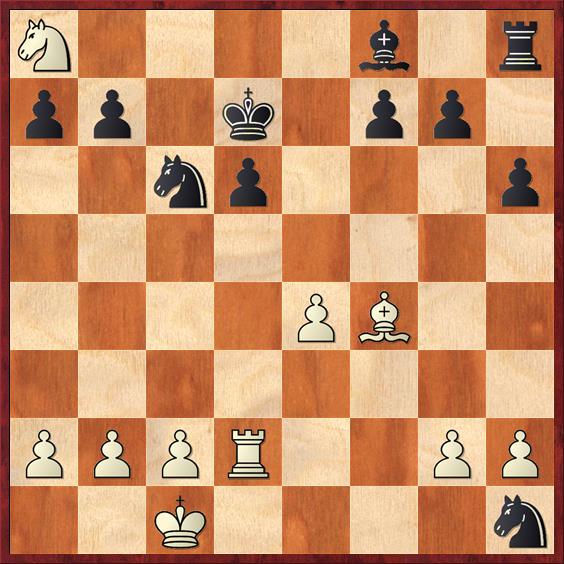
    In this position, Bunyatov exceeded the time limit, doubtlessly considering whether to play his queen to f1, e2 or d3. In either case, the threat is 37.b4, winning a rook, and Black can only prevent this by giving a second pawn by 36…b5. Bunyatov thought he remembered from two years ago, when he also played here, that he would get an extra half hour after 35 instead of 40 moves…


    Maaike Keetman. Photo: Lennart Ootes

    Maaike Keetman reached 50% after a game that was full of tricks and funny positions.

    Van Dael – Keetman

    1.e4 c5 2.Nf3 e6 3.d4 cxd4 4.Nxd4 Nc6 5.Nc3 Qc7 6.Be3 a6 7.Qd2 Nf6 8.f3 Be7 9.0–0–0 b5 10.g4 Nxd4 11.Bxd4 Bb7 12.g5 Nh5 13.Be5 Qxe5 14.Qxd7+ Kf8 15.Qxb7 Qb8 16.Qxb8+ Rxb8 17.Rg1 h6 18.h4


    18…Nf4

    The entire tactical sequence is known, and this position also occurred in the game Hentrich-Jorden van Foreest from the Staufer Open early this year. Keetman deviates here. Van Foreest played 18…Bc5 19.Rg4 Nf4 and the game ended in a draw. Keetman immediately applies pressure on the white kingside pawns.

    19.Ne2 Ng6 20.Rg4?!

    20…Nxh4! 21.gxh6 Rxh6 22.Nd4 Bc5 23.Nc6?

    This only helps the black pieces.

    23…Rc8 24.Ne5 Bf2?!

    24…Be3+ 25.Kb1 g5.

    25.Rd7 Rf6 26.Rd6?

    After the protecting move 26.Be2 White would have been a tad better.

    26…Nxf3! 27.Nd7+ Ke7 28.Rd3 Ne1! 29.Rd2?

    White should have gone for 29.Nxf6 Nxd3+ 30.Bxd3 Be3+ 31.Kb1 gxf6, with good drawing chances. Now his position suddenly is a disaster.

    29…Be3

    One more picture.


    30.Nxf6 Rxc2+ 31.Kd1 Rxd2+ 32.Kxe1 Kxf6

    And now White was two pawns behind. He resigned after:

    33.Rg3 Bh6 34.Rf3+ Ke5 35.Rxf7 Rxb2 0–1

  • Hegemonie

    Hegemonie

    Na deze zesde ronde staan er zes Indiërs bovenaan in het Open, met alleen Sipke Ernst ertussen. Hij en Jan Werle, die misschien potten hadden kunnen breken, namen een bye op deze tweede partij van de dag. Migchiel de Jong en Thomas Beerdsen verloren. Bungalowpark Westerbergen, waar de delegatie uit India verblijft, is een heus schaakbolwerk geworden.


    Abhijeet Gupta. Foto: Lennart Ootes

    Abhijeet Gupta loodste De Jong bijna geruisloos naar een verloren eindspel, hoewel de Fries naderhand mompelde dat hij meende toch wel OK te hebben gestaan. Lalith moest, om bij te blijven, zijn landgenoot Sundar Shyam verslaan. Daarbij werd hij geholpen door het feit dat wit wel erg roekeloos te werk ging.

    Shyam – Lalith


    Wit is te ver gegaan met zijn pionnenmars op de koningsvleugel. Erachter liggen wat gaten en zijn centrum ziet er verwaarloosd uit.

    25…f5! 26.Taf1

    Na 26.g6 gaat zwart er dwars doorheen met 26…fxe4! 27.Lxe4 Pxe4 28.gxh7? (28.Tad1 Txd1 29.Txd1 Pxc3 is ook uit) 28…Txf3! 29.Dxf3 Dh4+ 30.Dh3 Td2+ 31.Tg2 Txg2+ 32.Kxg2 Df2+ 33.Kh1 Pg3+.

    26…fxe4 27.Ph4 Txf1 28.Txf1 Pf7!?

    Een grappige zet tot vervolg. Na 28…Dxg5 29.Dxg5 hxg5 30.Pg6+ Lxg6 31.hxg6 Kg8 32.b4 kan wit misschien nog keepen.


    29.Lxe4 Pxg5 30.Lxh7 Kxh7

    En na nog wat geharrewar bracht zwart zijn pluspion tot gelding.


    Eesha Karavade. Foto: Lennart Ootes

    De vrouwelijke IM Eesha Karavade overtroefde Thomas Beerdsen ook in een technische partij. De winnaar van het Open NK in Dieren van deze zomer deed het heel anders.

    Van Osch – Sandipan

    1.e4 d5 2.exd5 Dxd5 3.Pf3 Lg4 4.Le2 Pc6 5.d4 0–0–0 6.c4 Df5 7.Le3 Lxf3 8.Lxf3 Pxd4 9.Lg4 Pc2+

    Dit ziet er heftig uit, maar is al diverse malen eerder gespeeld.

    10.Dxc2 Dxg4 11.0–0


    11…e6

    Maar gek genoeg is deze natuurlijk aandoende zet nieuw. Aan het instaan van pion a7 ligt het niet, want naast 11…a6 zijn hier ook 11…Pf6/h6 en 11…Dg6 geprobeerd.

    12.Pd2 Pf6 13.Da4 Dh5!?

    Behoorlijk provocerend.

    14.Dxa7 Pg4


    15.Pf3

    Sandipan zal toch niet tevreden zijn geweest met 15.Da8+ Kd7 16.Da4+ Kc8 en remise? 16…c6 17.Lf4 ziet er erg onaantrekkelijk uit voor zwart.

    15…Pxe3 16.fxe3

    Nu heeft ook zwart iets om op te spelen: de zwakke broeder op e3.

    16…c6 17.Tad1 Le7 18.Pd4 Dc5

    Nu staat zwart volkomen veilig.

    19.Da8+

    Geeft zwart onnodig een tempo – beter 19.Da4. Wit zal nog steeds hebben gehoopt op een aanval, via b2-b4 bijvoorbeeld.

    19…Kc7 20.Da4 e5 21.Pf5 Lf6 22.Kh1?!

    Dit brengt achterste rij-trucjes in de stelling (22.Db3!?).

    22…Txd1 23.Txd1 e4


    24.Pd6?

    24.Pd4 Td8 25.b4 Dh5 26.Dc2 was het kleinere euvel. De tekstzet faalt op een zettenreeks die in de verte doet denken aan de beroemde partij(-analyse??) Adams-Torre, New Orleans 1920.

    24…Td8 25.Pxe4?

    25.b4 Dxe3 26.c5 was nog de enige poging.

    25…Db4! 26.Dc2 Dxb2! 27.Db1 Dxa2

    En zwart stond een pion voor. Daar bleef het niet bij, omdat de zwarte stukken actiever staan. Sandipan won op de 43e zet.


    Mees van Osch. Foto: Lennart Ootes

    De legendarische grootmeester Oleg Romanishin is vreselijk uit vorm in dit toernooi. Vandaag kwam hij met veel geluk op 4 punten.

    Bunyatov – Romanishin


    In deze stelling ging Bunyatov door zijn vlag, ongetwijfeld nadenkend of hij zijn dame naar f1, e2 of d3 zou spelen. Dan dreigt 37.b4 met torenwinst, en zwart kan dat alleen verhinderen door een tweede pion te offeren met 36…b5. Bunyatov meende zich van twee jaar geleden, toen hij hier ook al speelde, te herinneren dat hij er na 35 zetten een half uur bedenktijd bij zou krijgen in plaats van na 40 zetten…


    Maaike Keetman. Foto: Lennart Ootes

    Maaike Keetman kwam op 50% na een partij die vol zat met tactische grappen en grollen.

    Van Dael – Keetman

    1.e4 c5 2.Pf3 e6 3.d4 cxd4 4.Pxd4 Pc6 5.Pc3 Dc7 6.Le3 a6 7.Dd2 Pf6 8.f3 Le7 9.0–0–0 b5 10.g4 Pxd4 11.Lxd4 Lb7 12.g5 Ph5 13.Le5 Dxe5 14.Dxd7+ Kf8 15.Dxb7 Db8 16.Dxb8+ Txb8 17.Tg1 h6 18.h4


    18…Pf4

    De hele tactische zettenreeks is bekend, en deze stelling kwam nog voor in de partij Hentrich-Jorden van Foreest uit de Staufer Open van begin dit jaar. Keetman wijkt nu af; Van Foreest speelde hier 18…Lc5 19.Tg4 Pf4 en het werd remise. Keetman gaat onmiddellijk drukken op de witte koningsvleugelpionnen.

    19.Pe2 Pg6 20.Tg4?!


    20…Pxh4! 21.gxh6 Txh6 22.Pd4 Lc5 23.Pc6?

    Dit helpt alleen de zwarte stukken maar.

    23…Tc8 24.Pe5 Lf2?!

    24…Le3+ 25.Kb1 g5.

    25.Td7 Tf6 26.Td6?

    Na de dekzet 26.Le2 had wit een tikje beter gestaan.

    26…Pxf3! 27.Pd7+ Ke7 28.Td3 Pe1! 29.Td2?

    Wit had moeten ingaan op 29.Pxf6 Pxd3+ 30.Lxd3 Le3+ 31.Kb1 gxf6 met goede remisekansen. Nu is het ineens helemaal mis met zijn stelling.

    29…Le3

    Nog een plaatje.


    30.Pxf6 Txc2+ 31.Kd1 Txd2+ 32.Kxe1 Kxf6

    En nu stond wit twee pionnen achter. Hij gaf op na:

    33.Tg3 Lh6 34.Tf3+ Ke5 35.Txf7 Txb2 0–1

  • Frisia in pursuit

    Frisia in pursuit

    After round 5, this morning, three Indians are leading the Open. This round, the two Frisians Sipke Ernst and Migchiel de Jong upheld the Dutch honour, as well as Thomas Beerdsen – they all won their games. Jan Werle didn’t manage to get past Lucas van Foreest.

    On the top board, the expected draw was realized within half an hour. 29 moves were made by Babu Lalith and Abhijeet Gupta in those 30 minutes. A well-known version of the once so notorious Botwinnik Variation ended in perpetual check.

    On board 2, an Indian had to bite the dust. With black, Sundar Shyam beat S. Nitin in a technical game, and joined the leaders on 4½ point.

    Jan Werle also seemed to be heading for a technical victory over Lucas van Foreest, but something went wrong.

    Werle – L van Foreest


    40.h4?

    Here I should have shouldered off his king with 40.Ke5!’, said Werle during lunch. Of course, 40.Ke6 is less good in view of 40…h4. After the shouldering of the black king White does play h3-h4, and then the bishop is no game for the king, knight and pawn.

    40…Kf6 41.c6 Ke7

    Otherwise 42.c7!.

    42.Pxf5+ Kf6 43.Pd6 Ke7 44.Pe4 Lc7 45.a4 g6 46.Kc4 Ke6 47.Kb5 Kd5 48.Pc3+ Kd6 49.Pe4+ Kd5 50.Pf6+ Ke6


    51.Ph7

    Another crucial moment. Couldn’t White play 51.Pe8 here? Werle feared that in that case a quick …g6-g5 could become dangerous. And so it does, but still there seems to be a win for White thanks to a couple of bizarre knight jumps: 51…Lxg3 52.Ka6 and now:

    A) 52…g5? 53.hxg5 h4 54.Pg7+! Kd5 55.Pf5 Kxc6 (or 55…Le5 56.Pxh4 Kxc6 57.g6) 56.g6 Le5 57.Pxh4;

    B) 52…Kf5 53.Pg7+! (53.Kxa7 g5 54.Pg7+ Kg6 55.Pxh5! gxh4 56.Pxg3 hxg3 is a drawn queen ending) 53…Kg4 54.Pe6! Kxh4 55.Pc5! g5 56.Kxa7 g4 57.Kb7 Ld6 58.Pe4 g3 (otherwise the white a-pawn is faster) 59.Pxd6! g2 60.c7 g1D 61.c8D and with the extra knight, this should win.

    51…Kd6

    Now White does not manage to get the favourable constellation on the board any more.

    52.Pg5 Kd5 53.Ph7 Lxg3 54.Pf6+ Ke6 55.Pe4 Le5 56.a5 Kd5 57.Pf6+ Ke6 58.Pd7 Lc7 59.Pf8+ Kd6 60.Pxg6


    60…a6+! 61.Kxa6 Kxc6 62.Pe7+ Kc5 63.Pf5 Kb4 64.Pd4

    And of course Lucas now opts for the most humoristic way to draw:

    64…Lxa5 65.Pc6+ Kc5 66.Pxa5 Kd5 67.Kb5 Ke4 68.Pc6 Kf5 69.Kc4 Kg4 70.Kd3 ½–½


    Lucas van Foreest. Photo: Lennart Ootes

    Sipke Ernst was shaking his head after his victory over Harsha Bharathakoti. ‘It was quite dubious’, he said. ‘I sacrificed two pawns, but I’d missed 18…Pc5, and after that I didn’t have enough compensation. But you know how it is – there will always be another chance.’ And Ernst didn’t have to wait long.

    Ernst – Bharathakoti


    25…Lc7?

    Too passive! It would have been better to give back some material for an initiative: 25…Th4! 26.Lxb6+ Pxb6 27.fxe5 Lxe5 28.Lxb7 Ta7 29.Pb4 (29.Lxa6 Ld6! 30.Le2 Ta5 and Black obtains a strong attack) 29…Tf4+ 30.Kg2 Txb7 31.Pc6+ Kd7 32.Pxe5+ Kd6 33.Pd3 Tf5 34.h4 Pd5 with a clear advantage.

    26.Pb4! exf4 27.Txc7!?


    A beautiful little move. Objectively, possibly 27.Lxb7 was strongest, for example: 27…Pe5+ 28.Ke4 Te8 (after 28…Ta7 29.Lxb6 White captures everything, and at the end the knight on e5 is hanging) 29.Lxa8 Pxa8 30.Lxc7+ Pxc7 31.Kxf4 and White remains an exchange up after 31…a5 32.Pc6+.

    27…Pe5+?

    Things are getting too complicated for Bharathakoti. Better was 27…Kxc7 28.Pd5+ Kd6 29.Pxb6 and now 29…Pe5+ 30.Kxf4 Th4+ 31.Kg3 Txe4 32.Pxa8 Te3+ 33.Kg2 Te2+ 34.Kg3 Txb2, and with three pawns for the piece, Black has good chances to draw.

    28.Kxf4

    His own zwischenschach now costs Black material – in most cases it is the other way around.

    28…Kxc7 29.Kxe5 Tae8+ 30.Kxd4 Th4 31.Te1 f5 32.gxf6 gxf6

    Black is just too late with this. The finish of the game nicely shows the power of the minor pieces:

    33.Pd5+ Kb8 34.Lxb6 f5 35.Lc7+ Ka7 36.Lb6+ Kb8 37.Lc7+ Ka7 38.Pf6 Tc8


    39.Lg3! Txh3 40.Te3 Td8+ 41.Ld5 Ka8 42.Ta3

    And Black resigned. The threat is 43.Txa6 mate, and 42…Ka7 fails to 43.Lb8+.


    Sipke Ernst. Photo: Lennart Ootes

    Ernst and Migchiel de Jong, who beat K. Rathnakaran with black in a good game, are now on 4 points – half a point behind the leading threesome. Thomas Beerdsen also reached 4 by beating Sander Taams.

    In this round, Liam Vrolijk made a good impression again. With a strong exchange sacrifice he posed problems for Leonardo Valdes Romero, but the latter defended tenaciously and an epic fight ensued where Black barely managed to hold the draw. Andries Mellema achieved the same result against grandmaster Sundararajan Kidambi.


    Liam Vrolijk. Photos: Lennart Ootes

    In the meantime we had already seen many shorter draws, and also a quick and quite unexpected win of a piece.

    Colijn – Cornelisse


    Black has just captured on d4, which proves unwise for a highly surprising reason.

    16.e5! Pxe5

    So as not to lose a piece, he would have had to play something like 16…Lxf3 17.exf6 Le2 here, but then Black is not to be envied after 18.fxg7 Kxg7 19.Df5 and 20.Le4. But who would expect

    17.Pxe5 Lxg2


    18.Pef3!

    Winning a piece!

    Not much later, Black resigned.


    Eesha Karavade. Foto: Lennart Ootes


    Simon Bensaid. Foto: Lennart Ootes

  • Friesland in de achtervolging

    Friesland in de achtervolging

    Na ronde 5, vanochtend, staan er drie Indiërs bovenaan. De Nederlandse eer werd in deze ronde hoogehouden door de twee Friezen Sipke Ernst en Migchiel de Jong, die beiden hun partij wonnen, en Thomas Beerdsen. Jan Werle kwam net niet door Lucas van Foreest heen.

    Aan het topbord was de verwachte remise binnen een half uur een feit. 29 zetten deden Babu Lalith en Abhijeet Gupta in dat halfuur. Een bekende versie van de eens zo beruchte Botwinnik-variant eindigde in eeuwig schaak.

    Aan bord 2 moest er wel een Indiër sneuvelen. Sundar Shyam versloeg met zwart S. Nitin in een technische partij en voegde zich bij de leiders met 4½ punt.

    Jan Werle leek ook op weg naar een technische zege tegen Lucas van Foreest, maar er haperde iets.

    Werle – L van Foreest


    40.h4?

    “Hier had ik zijn koning moeten afhouden met 40.Ke5!”, zei Werle bij de lunch. Natuurlijk is 40.Ke6 minder goed wegens 40…h4. Na het afhouden van de koning speelt wit wel h3-h4, en daarna is de loper geen partij voor koning, paard en pion.

    40…Kf6 41.c6 Ke7

    Anders 42.c7!.

    42.Pxf5+ Kf6 43.Pd6 Ke7 44.Pe4 Lc7 45.a4 g6 46.Kc4 Ke6 47.Kb5 Kd5 48.Pc3+ Kd6 49.Pe4+ Kd5 50.Pf6+ Ke6

    51.Ph7

    Weer een cruciaal moment. Kon wit hier niet 51.Pe8 spelen? Werle vreesde dat het dan na een snel …g6-g5 gevaarlijk kon worden. Dat wordt het ook, maar er lijkt toch winst in te zitten voor wit met een paar bizarre paardsprongen: 51…Lxg3 52.Ka6 en nu:

    A) 52…g5? 53.hxg5 h4 54.Pg7+! Kd5 55.Pf5 Kxc6 (of 55…Le5 56.Pxh4 Kxc6 57.g6) 56.g6 Le5 57.Pxh4;

    B) 52…Kf5 53.Pg7+! (53.Kxa7 g5 54.Pg7+ Kg6 55.Pxh5! gxh4 56.Pxg3 hxg3 is een remise dame-eindspel) 53…Kg4 54.Pe6! Kxh4 55.Pc5! g5 56.Kxa7 g4 57.Kb7 Ld6 58.Pe4 g3 (anders loopt de witte a-pion harder) 59.Pxd6! g2 60.c7 g1D 61.c8D en met het extra paard zou dit moeten winnen.

    51…Kd6

    Nu krijgt wit de gunstige constellatie niet meer voor elkaar.

    52.Pg5 Kd5 53.Ph7 Lxg3 54.Pf6+ Ke6 55.Pe4 Le5 56.a5 Kd5 57.Pf6+ Ke6 58.Pd7 Lc7 59.Pf8+ Kd6 60.Pxg6

    60…a6+! 61.Kxa6 Kxc6 62.Pe7+ Kc5 63.Pf5 Kb4 64.Pd4

    En natuurlijk kiest Lucas nu de meest humoristische manier om remise te maken:

    64…Lxa5 65.Pc6+ Kc5 66.Pxa5 Kd5 67.Kb5 Ke4 68.Pc6 Kf5 69.Kc4 Kg4 70.Kd3 ½–½


    Lucas van Foreest. Foto: Lennart Ootes

    Sipke Ernst liep na zijn overwinning op Harsha Bharathakoti met het hoofd te schudden. “Het was behoorlijk dubieus”, zei hij. “Ik offerde twee pionnen, maar ik had 18…Pc5 overzien, en daarna had ik te weinig compensatie. Maar je weet het – er komt altijd weer een kans.” En die liet niet al te lang op zich wachten.

    Ernst – Bharathakoti


    25…Lc7?

    Te passief! Hij had beter wat materiaal terug kunnen geven voor een initiatief: 25…Th4! 26.Lxb6+ Pxb6 27.fxe5 Lxe5 28.Lxb7 Ta7 29.Pb4 (29.Lxa6 Ld6! 30.Le2 Ta5 en zwart krijgt een sterke aanval) 29…Tf4+ 30.Kg2 Txb7 31.Pc6+ Kd7 32.Pxe5+ Kd6 33.Pd3 Tf5 34.h4 Pd5 met duidelijk voordeel.

    26.Pb4! exf4 27.Txc7!?

    Mooi zetje. Objectief was mogelijk 27.Lxb7 het sterkst, bijvoorbeeld 27…Pe5+ 28.Ke4 Te8 (na 28…Ta7 29.Lxb6 slaat wit alles en blijft aan het eind het paard op e5 hangen) 29.Lxa8 Pxa8 30.Lxc7+ Pxc7 31.Kxf4 en wit blijft een kwaliteit voor na 31…a5 32.Pc6+.

    27…Pe5+?

    De complicaties stijgen Bharathakoti boven het hoofd. Beter was 27…Kxc7 28.Pd5+ Kd6 29.Pxb6 en nu 29…Pe5+ 30.Kxf4 Th4+ 31.Kg3 Txe4 32.Pxa8 Te3+ 33.Kg2 Te2+ 34.Kg3 Txb2 en met drie pionnen voor het stuk heeft zwart goede remisekansen.

    28.Kxf4

    Zijn eigen tussenschaakje kost zwart materiaal – meestal is het andersom.

    28…Kxc7 29.Kxe5 Tae8+ 30.Kxd4 Th4 31.Te1 f5 32.gxf6 gxf6

    Hiermee is zwart net te laat. Het einde laat mooi de kracht van de lichte stukken zien:

    33.Pd5+ Kb8 34.Lxb6 f5 35.Lc7+ Ka7 36.Lb6+ Kb8 37.Lc7+ Ka7 38.Pf6 Tc8


    39.Lg3! Txh3 40.Te3 Td8+ 41.Ld5 Ka8 42.Ta3

    En opgegeven. Er dreigt 43.Txa6 mat, en 42…Ka7 strandt op 43.Lb8+.


    Sipke Ernst. Foto: Lennart Ootes
     

    Ernst en Migchiel de Jong, die in een knappe partij K. Rathnakaran versloeg met zwart, staan nu met 4 punten een half punt achter het leidende drietal. Thomas Beerdsen kwam ook op 4 door Sander Taams te verslaan.

    In deze ronde maakte Liam Vrolijk opnieuw een goede indruk. Met een sterk kwaliteitsoffer bracht hij Leonardo Valdes Romero in de problemen, maar deze verdedigde taai en er ontstond een episch gevecht dat zwart net remise wist te houden. Dat lukte ook Andries Mellema tegen grootmeester Sundararajan Kidambi.


    Liam Vrolijk. Foto: Lennart Ootes

    In de tussentijd waren er al vele kortere remises genoteerd, en ook een snelle stukwinst die erg verrassend was.

    Colijn – Cornelisse


    Zwart heeft net op d4 geslagen, en dat blijkt om een verrassende reden onverstandig te zijn.

    16.e5! Pxe5

    Om geen stuk te verliezen zou hij hier iets als 16…Lxf3 17.exf6 Le2 moeten spelen, maar dan is zwart niet te benijden na 18.fxg7 Kxg7 19.Df5 en 20.Le4. Maar wie verwacht er nu…

    17.Pxe5 Lxg2


    18.Pef3!

    Met stukwinst!

    Niet veel later gaf zwart op.


    Eesha Karavade. Foto: Lennart Ootes


    Simon Bensaid. Foto: Lennart Ootes